Everyday Realism

César Aira, Argentinian Writer Par Excellence

What’s the first thing you do when you wake up? Put on your tuxedo and cummerbund? Sit in bed lolling over a tray of sumptuous breakfast delicacies? Write the Great American Novel? No, no, no. What you do is stagger to the bathroom and empty your bladder. That before anything else—unless you want an untoward accident to put a damper on your day. I realize it would be boring to show these simple rituals in a movie, in which every minute costs a small fortune. But even in fiction, where words are cheap, there is no acknowledgment of a simple biological need.

None to speak of, anyway, until I saw the following line in César Aira’s Ema the Captive:

A sleepy soldier had come out onto the veranda of his house and stopped there, right on the edge, to pee, swaying dangerously.

Hallelujah! This line was in all probability written by a human, and not an android.

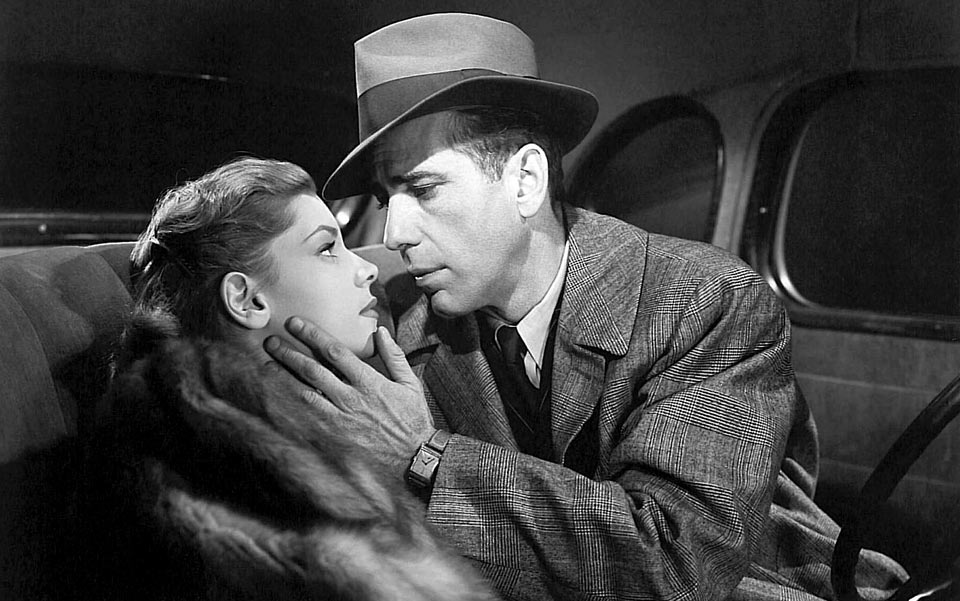
Another example of a simple reality not observed, especially in films, is that the hero always finds a parking place directly in front of his destination. In The Big Sleep, Bogart always finds the ideal parking space without even trying. I guess there weren’t that many people around in the 1940s.

Finally, with some rare exceptions, guns almost never misfire. If you look at Wikipedia’s entry on Firearm Malfunction, you will find twelve things that can happen to prevent your gun from shooting. In the real world, not everyone that has firearms is careful with them, or does everything needed to guarantee 100% functionality. Yet one rarely sees a misfire of any sort.

I guess most movies are fantasies, as our parents told us.


Hollywood’s Own Muse

Eve Babitz, Author of Black Swans

Perhaps the saddest thing about Southern California is that so much that has been written about the area comes from clueless East Coast authors who whose work is characterized by a kind of extreme cultural tone-deafness. If you want a true picture of Los Angeles, you have to read Eve Babitz who, alone, seems to understand what the city in which I live is all about. In her story “Self-Enchanted City” in her story collection Black Swan, she writes:

When people would first arrive from New York, they’d say stuff like “This place is full of fruits and nuts and you have no seasons.” So I knew they saw through the cheap thrills of shallow sunshine and were principled easterners determined to be unimpressed. But after a few weeks, even they would show up at Barney’s Beanery driving a brown Porsche, and they’d move into one of those Snow White wishing-well houses where all they could hear were birdies in the trees and all they could see were hollyhocks, roses, and lemon blossoms. And then they’d undergo a kind of molecular transformation, losing all their winter fat, their bad teeth, and their attitude that life was about artists being screwed by “the establishment.” And if they were fast enough on their feet, they’d soon become the establishment themselves. Or, at the very least, they’d wind up writing screenplays about Marxist good guys disguised as cat burglars.

The Chateau Marmont, Archetypal Hollywood Hotel on the Sunset Strip

Eve neglects to mention that they still kept one foot in the East by wearing a New York Times baseball cap. Earlier, she describes what has happened to Hollywood:

But for anything to age gracefully, eternal vigilance is necessary, and Hollywood has not been carefully tended. It has been knocked down flights of stairs, abandoned, left for dead, and sold into slavery. Still, if you ask me, some parts are just as beautiful as my dream version—even more beautiful if you subscribe to the Tennessee Williams decadence-as-poetry theory that ravaged radiance is even better than earnest maintenance.

I am only about a third of the way into Black Swan, but am continuing to make further discoveries every page.


French Noir? Obscurité Française?

Still from Jean-Pierre Melville’s Le Samouraï (1967)

It sounds a bit odd to talk about French noir literature and films, mainly because noir is a French word. Perhaps I should be talking about Obscurité Française. This afternoon, I watched a work of that master of French noir, Jean-Pierre Melville. His film Le Samouraï is a masterpiece, both in its spare visual style and its typical noir attributes. Alain Delon as Jef Costello, the hit man, is a pleasure to watch, as is François Périer, the police superintendent, who goes all out to arrest Jef based on his belief that his alibi would not hold up.

Melville has made other excellent noir films as well, including Bob le Flambeur (1956) and Le Doulos (1963). But Le Samouraï is his best by far.

In addition to noir films, the French are no strangers to noir fiction. Yesterday, I read Three to Kill (1976) by the late Jean-Patrick Manchette (1942-1995), who also wrote Fatale (1977) and Ivory Pearl (1996), the latter of which was unfinished. I am also interested in reading works by Boris Vian (1920-1959), author of I Spit On Your Graves (1946).

The United States has an embarrassment of riches in the genre, starting with Raymond Chandler and Dashiell Hammett, and continuing with David Goodis, Cornell Woolrich, James M. Cain, Mickey Spillane, Charles Willeford, Jim Thompson, Dorothy B. Hughes, Kenneth Fearing, W. R. Burnett, and a host of others. They are one of the joys of recent American literature which I have been taking advantage of during this long, hot summer.


TBR

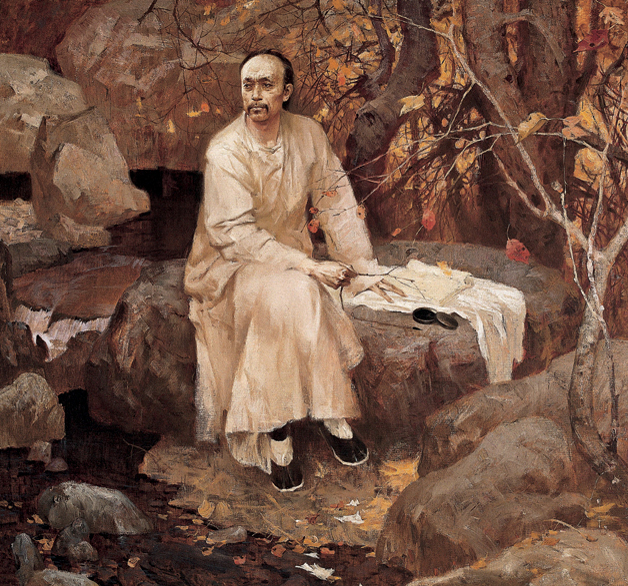
Chinese Author Cao Xueqin (1715-1763)

TBR is a real bookworm’s term: It’s an acronym for To Be Read. We all have our TBR piles. Here is a look at mine, consisting mostly of Asian classics (some of which are multi-volume) and various Medieval and Ancient Greek and Roman classics. Here are some 22 classics which I will attempt, in my own desultory fashion, to read while I am able:

  • Anonymous, The Mahabharata (India)
  • Giovanni Boccaccio, The Decameron (Italy)
  • Hermann Broch, The Sleepwalkers (Austria)
  • Cao Xueqin, The Dream of the Red Chamber (aka The Story of the Stone) (China)
  • Geoffrey Chaucer, The Canterbury Tales (England)
  • Fyodor Dostoyevsky, A Raw Youth (aka The Adolescent) (Russia)
  • Ralph Ellison, The Invisible Man (USA)
  • William Faulkner, A Fable (USA)
  • Gunter Grass, The Tin Drum (Germany)
  • João Guimarães Rosa, The Devil to Pay in the Backlands (Brazil)
  • Henry James, The Bostonians (USA)
  • Kalidasa, The Shakuntala (India)
  • Yasunari Kawabata, The Sound of the Mountain (Japan)
  • Lucretius, On the Nature of Things (Ancient Rome)
  • Michel Eyquem de Montaigne, Complete Essays (France)
  • Shikibu Murasaki, The Tale of Genji (Japan)
  • Robert Musil, The Man Without Qualities (Germany)
  • Ovid, Metamorphoses (Ancient Rome)
  • Plato, The Republic (Ancient Greece)
  • Alexander Pushkin, Eugene Onegin (Russia)
  • Salman Rushdie, Midnight’s Children (India)
  • Valmiki, Ramayana (India)

Some of the above works are major; others are relatively minor. The Faulkner and Dostoyevsky, for instance, are there only because they are the only novels by the two authors I have not read. I have already picked up a copy of Henry James’s The Bostonians to read next month.


What Is Truth?

Alec Guinness as George Smiley in John Le Carré’s Tinker Tailor Soldier Spy (1979)

Even though the Soviet Menace has long since disappeared, I am still a devotee of spy fiction. These days, it’s harder to find a spy service that is a worthy adversary for the great British agents of MI-5 and MI-6. Oh, Vladimir Putin is still around; and he is a bona fide graduate of the KGB Academy; but the situation has morphed beyond recognition since the old Marxist-Leninist days.

The one constant in the genre is the frangibility of truth. Who is it that decides what actually happened? I have just finished reading Len Deighton’s Spy Line, which ends with a scene on the autobahn in East German territory. There are two KGB men killed; one British agent; the sister-in-law of the book’s hero Bernard Samson; leaving behins Samson and his wife, who had defected to the Soviets and was returning to the West; and one man named Turkettle, who appears to be a CIA asset who has reputedly performed assassinations for the Soviets. Amidst this confusing welter, a British agent must try to make sense of all this so that he can get his “K” (Knighthood). He has to construct a plausible truth while the survivors of the incident have their own reasons for hiding facts.

Here is a short list of spy novels that I think are worthy of your attention:

  • Erskine Childers: The Riddle of the Sands (1903). Spying on the German naval buildup leading to WWI.
  • W. Somerset Maugham: Ashenden (1928). Made into a film by Hitchcock called The Secret Agent (1936).
  • Ian Fleming: From Russia With Love (1957). Very fanciful, but great fun.
  • Graham Greene: The Honorary Consul (1973). Set along the border between Argentina and Paraguay.
  • Len Deighton: The “Harry Palmer” and Bernard Samson novels, especially Funeral in Berlin (1964)
  • John Le Carré: The George Smiley novels, particularly Tinker Tailor Soldier Spy (1974). Adapted into two films, of which the 1979 BBC series with Alec Guinness was the better.

If any others come to mind, I’ll expand this list in the future.


The Kid from Cleveland

Of Course, It Helps If You Have Harlan’s Imagination

No, not me, but a much more talented writer. Harlan Ellison (1934-2018) was born in Cleveland and raised there and in nearby Painesville, Ohio. It is a pity that Ellison is almost as well known for his legendary abrasiveness as for his speculative fiction, which ranks with the best ever written. As he himself wrote in Danse Macabre:

My work is foursquare for chaos. I spend my life personally, and my work professionally, keeping the soup boiling. Gadfly is what they call you when you are no longer dangerous; I much prefer troublemaker, malcontent, desperado. I see myself as a combination of Zorro and Jiminy Cricket.. My stories go out from here and raise hell. From time to time some denigrater or critic with umbrage will say of my work, ‘He only wrote that to shock.’ I smile and nod. Precisely.

On the plus side, I think that he was not only a prophet, but a kind of self-conscious priest of the Brotherhood of the Imagination. The auuthor of literally thousands of stories, mostly speculative fiction (he preferred that to the term “science fiction”), Ellison knew how much it cost to keep churning out stories that succeeded in appealing to the reader’s imagination. Speaking of his famous script for “The City on the Edge of Forever” episode of the original Star Trek TV series, he wrote:

Understand that WRITTEN BY precedes the name of the man who sat long hours alone and concerned, to create a dream for an actor of Leonard Nimoy’s stature to work with. And remember the names of the writers who have done their work well. Honor them. And when the writers have been bad, then condemn them. For a man who mutilates his craft is less than dirt. He is a traitor to all the holy chores Man has ever been entrusted with….

I Am Currently Reading the Revised and Expanded Edition of This Collection

Below is a partial list of the Harlan Ellison collections which I have read and admired:

  • I Have No Mouth and I Must Scream (1967)
  • The Beast That Shouted Love at the Heart of the World (1969)
  • Approaching Oblivion (1974)
  • Deathbird Stories (1975)
  • Over the Edge: Stories and Essays (1996). A substantially revised version of the 1970 Over the Edge whose cover is illustrated above

This is only a small fraction of what the man has written. I plan to continue my exploration of his work.


Travel Without Leaving Home

Vicuñas Seen on the Road to Puno, Peru

Why should I care that you become an armchair traveler rather than an actual traveler? Curmudgeon that I am, if I ran into you on my travels, all eager to talk about your lovely home town of East Jesus, Arkansas, you would be met with a torrent of Hungarian and not a word of English. I would be perfectly happy to see you indulge your desire for travel by reading a book rather than obtruding with your actual presence.

As for myself, I not only like to travel, but I like to read about travel. Here is a list of an even dozen travel classics. Curiously, they are all written by English or American travelers. Not that other peoples have not written travel classics: Only, they tend to be more obscure in the Anglo-American world of publishing. And besides, the English are so damned good at it!

The following are presented in alphabetical order by author:

  • Robert Byron: The Road to Oxiana (1937). Driving through Persia to reach Afghanistan at a time when roads were few and hairy.
  • Bruce Chatwin: In Patagonia (1977). Not everything Chatwin says is 100% true, but it always is 100% fascinating.
  • Lawrence Durrell: Prospero’s Cell, A Guide to the Landscape and manners of Corcyra (1945). All Durrell’s travel books are worth reading.
  • Patrick Leigh Fermor: A Time to Keep Silence (1957). About the first part of a walking tour from Holland to Istanbul, just as the Second World War is about to break out.
  • John Gimlette: At the Tomb of the Inflatable Pig (2003). A fascinating book about Paraguay, its history and people.
  • Graham Greene: The Lawless Roads (1939). Greene’s research for his novel The Power and the Glory, about a trip to Mexico during a persecution of the Catholic Church.
  • Eric Newby: Slowly Down the Ganges (1966). About an attempt to navigate the sacred river of India all the way to the Indian Ocean.
  • Freya Stark: The Valley of the Assassins and Other Persian Travels (1934). By a woman traveling alone in the Middle East!
  • John Steinbeck: The Log from the Sea of Cortez (1951). Travels in the Gulf of California doing oceanographic research.
  • John Lloyd Stephens: Incidents of Travel in Central America, Chiapas, and Yucatán (1841). Travels in Maya land in the middle of a civil war.
  • Paul Theroux: The Old Patagonian Express (1979). The book that inspired my own travels to South America.
  • Colin Thubron: To a Mountain in Tibet (2011). A religious pilgrimage to Mount Meru, a magnet for three religions.

I could have added another twelve without too much further thought. Hell, I could have added another hundred.

Born in Cleveland, we were too poor to afford travel far beyond Northeastern Ohio. That resulted in my case with an insatuiable desire to see the world, which I started to do in 1975. God, how I wish I could live long enough to continue in the same vein.


Frustration

Russian Writer Kirill Kobrin

There is an Italian saying which applies here: “Traddutore, traditore!” Or, in other words, to translate is to betray.

Today I finished reading the Dalkey Press Edition of Kirill Kobrin’s Eleven Prague Corpses. It was a work that hovered on the edge of brilliance. The author was even conversant with G. K. Chesterton, one of my favorite authors. The only problem was that I had a feeling that one of two things was happening:

  1. The work was badly translated from the original Russian.
  2. The author has problems following a story through to its conclusion.

I tend to think the Option 1 is the case here. Each of the eleven stories that make up this volume aroused my interest, but usually stumbled before the close. Throughout, I had this feeling that Kobrin is the kind of writer I really like, at least from what I have been able to determine.

Old Soviet Poster: “I Redeemed My Guilt Before the Motherland. There Will Be No Return to the Past.”

The above poster was from Kirill Kobrin’s Twitter feed. It caught my eye and I include it here for no particular reason except that I like it. So there!

As for following Kirill’s work in future, I am hopeful that he will take a more active role in translating his own work as he now lives in London and knows English. And presumably, his own English will improve.

I certainly hope so, as I think he has a lot to say.


Better Than Ever

Monaco Stamp Commemorating Honoré de Balzac

It has been over six years since I opened a book by one of my favorite authors, Honoré de Balzac (1799-1850). Sometimes when I revisit a favorite author after a long absence, I find that my ardor has cooled somewhat. Not so with Balzac!

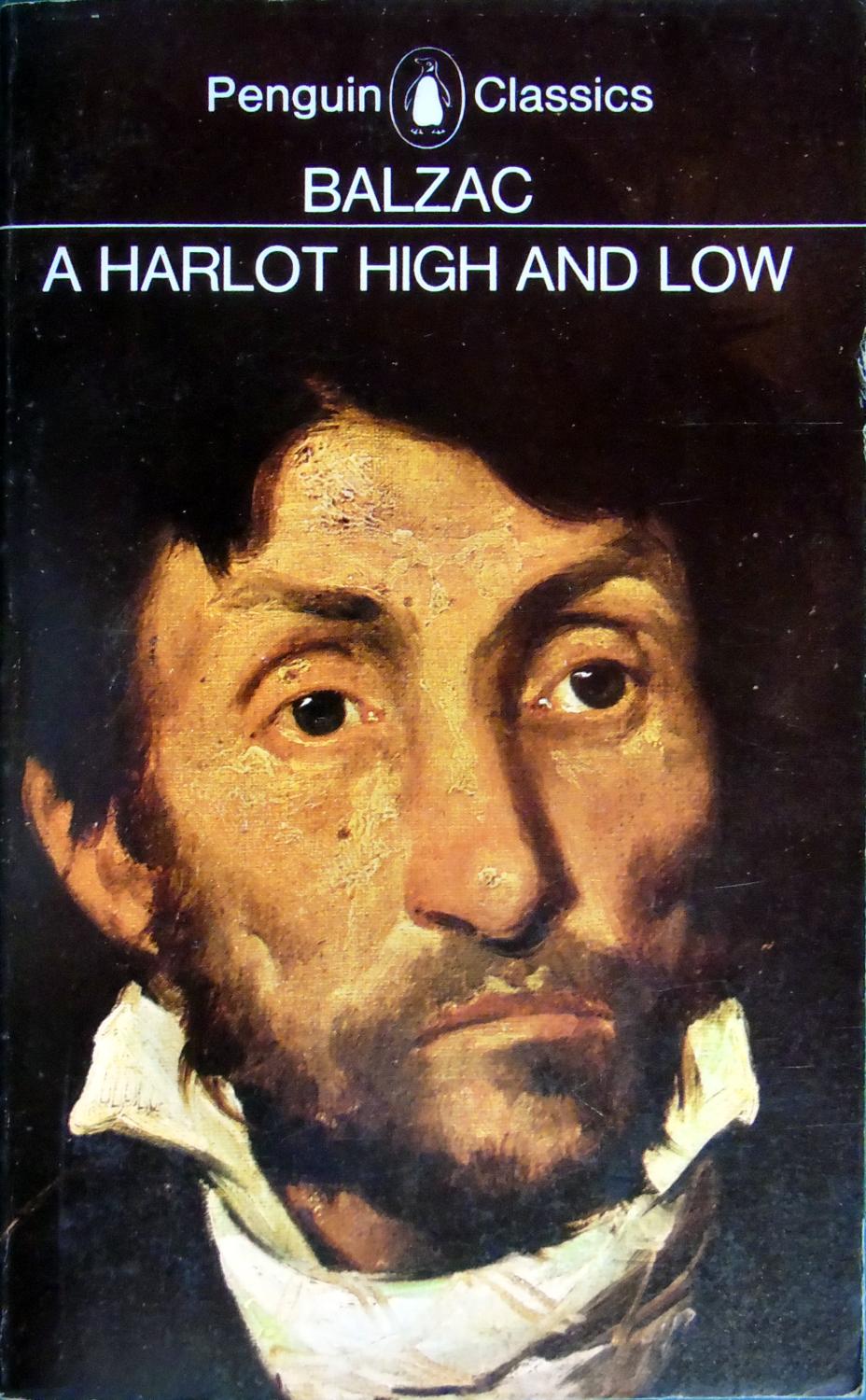
In the Yahoo French Literature Reading Group, I recommended that we select A Harlot High and Low, a.k.a. Splendeurs et misères des courtisanes (1838-1847) for our July read. It didn’t take too many pages before I was as entranced as ever. It was almost half a century ago that I first undertook to read Père Goriot (1835), still my favorite among his works. Interestingly, two of the characters from the earlier book—Eugène de Rastignac and Vautrin—appear in the work I am re-reading.

The period of the author’s life somehow tied together the French Revolution (1789-1799), the reign of Napoleon Bonaparte, the Bourbon Restoration, the reign of Louis-Philippe “The Citizen King,” and the Revolutions of 1848. No other writer on the Continent was able to bridge these critical periods as Balzac did with his Comédie Humaine series of stories and novels, although Charles Dickens at times came close.

Balzac was the first writer to share characters between stories. As one reads his works, one gains a deeper understanding not only of the characters, but the times and milieus in which they lived.

The Work I’m Re-Reading Now

As I re-read A Harlot High and Low, I see myself returning to my favorites among his works:

  • The Wild Ass’s Skin (Le Peau de Chagrin), 1831
  • Eugénie Grandet, 1833
  • Old Goriot (Le Père Goriot), 1835—probably the best place to start if you want to read Balzac
  • César Birotteau, 1837
  • Lost Illusions (Illusions Perdues),  1837-1842
  • Cousin Bette (La Cousine Bette), 1846
  • Cousin Pons (Le Cousin Pons), 1847
  • A Harlot High and Low (Splendeurs et Misères des Courtisanes), 1838-1847

Over the years, I have actually read all 50-odd novels and all 20-odd short stories that have been translated into English, some more than once. And it appears that I’m not finished yet.


Hard-Boiled

Lauren Bacall and Humphrey Bogart in Howard Hawks’s Masterpiece The Big Sleep (1946)

I’ve written before about American film noir, which includes many of my favorite films, such as The Big Sleep, High Sierra (1941), Double Indemnity (1944), and The Big Heat (1953)—not to mention several hundred other likely prospects.

Today I would like to say a few words about the literary genre that spawned these films. Although it was not until 1945 that the French publishing house Gallimard introduced its Serie Noir editions that gave birth the the genre’s name, noir novels had been written for years. There was even an early noir film by D. W. Griffith entitled The Musketeers of Pig Alley (1913).

What is it about the United States that produced this genre of hard-boiled urban crime fiction? It probably has something to do with our fascination with hard-boiled dicks, cigarettes, hard-luck losers, cheap booze, hot floozies, and guns. Here are just a few mileposts in the genre, alphabetically ordered:

  • W. R. Burnett: High Sierra (1941)
  • James M. Cain: The Postman Always Rings Twice (1934)
  • Raymond Chandler: The Long Goodbye (1953), probably my favorite of all the noir writers.
  • James Ellroy: L.A. Confidential (1990)
  • Kenneth Fearing: The Big Clock (1946)
  • David Goodis: The Moon in the Gutter (1953), which I’m reading now.
  • William Lindsay Gresham: Nightmare Alley (1946)
  • Dashiell Hammett: The Maltese Falcon (1930)
  • Patricia Highsmith: Strangers on a Train (1950)
  • Chester Himes: The Real Cool Killers (1959)
  • Dorothy B. Hughes: In a Lonely Place (1947)
  • Jim Thompson: The Killer Inside Me (1952)
  • Cornell Woolrich: Night Has a Thousand Eyes (1945)

I think I’ll stop at thirteen writers—a most appropriate number for this list. Not coincidentally, all have been made into classic films, both in the U.S. and France. Without straining my mind too much, I could probably double the size of the list. What’s interesting is that this list includes women (Highsmith and Hughes) and one African-American (Himes).

While none of the above names fit in with Beckett, Joyce, Faulkner, and the other literary heavyweights of the last hundred years, I would not be surprised if their works could be found on their night-stands.