

Yes: To be precise, I practice assorted bits and pieces of several religions, most particularly the Roman Catholicism in which I was raised, to which have been added bits of Buddhism, Hinduism, and Taoism. But in no sense do I belong to any organized religion.
Home » religion (Page 2)
Category Archives: religion
“God and the Devil Are Blood Brothers”

“Satan Before the Lord” by Corrado Giaquinto (1703-1768)
The following is from Mircea Eliade’s “Mephistopheles and the Androgyne or the Mystery of the Whole” in his The Two and the One.
The motif of the association, indeed the friendship, between God and the Devil is particularly noticeable in a type of cosmogenic myth that is extremely widespread and can be summed up as follows: In the beginning there were only the Waters, and on those Waters walked God and the Devil. God sent the Devil to the bottom of the ocean with orders to bring him a little clay with which to make the World. I omit the details of this cosmic dive and the results of this collaboration by the Devil in the work of Creation. All that concerns our purpose are the Central Asian and South-Eastern European variants which stress the fact that God and the Devil are blood-brothers, or that they are co-eternal or, indeed, God’s inability to complete the World without the Devil’s help.
Looking Past Uayeb

The Mayan Glyph for Uayeb
In the Mayan Haab calendar, there are eighteen months of twenty days each. Being extraordinary astronomers, the Mayans saw that they were five days short of a full year. They made up for it by adding a nineteenth month consisting of only five days. This period they called uayeb or wayeb.
According to La Vaca Independiente, this short month had some interesting features:
Despite the fact that these days share the calendar with 18 other periods lasting 20 days each, the Uayeb had a bad reputation among the Maya people. According to writings found during the colonial period, these days were considered black periods in which the universe had released dark forces and therefore they didn’t share in the blessings of time.
In the Songs of Dzibalche, a codex found in 1942, a series of allusions to the Uayeb were discovered. These expressed the discomfort the days caused the Maya people:
The days of weeping, the days of evil/ The devil is loose, hell is open/ There is no goodness, only evil… the month of nameless days has come/ Days of pain, days of evil, the black days.
Several theories describe how the Maya passed through such dark times. Some specialists maintain that during these periods they stayed in their homes and washed their hair. Others claim they undertook great processions in thanks for what they’d experienced during the year. One thing that’s certain is that the word Uayeb could be translated as “bewitched staircase.”
Of course, the ancient Mayan uayeb occurred during the summer, around July or August. But because our calendar year ends on December 31, I’ve moved it to the period between Christmas and New Years Eve, where it seeme to make more sense.
I don’t know how you plan to celebrate it, but for myself, I’m going to wash my hair while I still have some left.
All Saints’ Day

Saint George Slaying the Dragon
Today is All Saints’ Day, which has become something of a non-event ensconced as it is between Halloween and the Dia de los Muertos (All Souls’ Day).
Growing up as a Catholic in the eastern suburbs of Cleveland, Ohio, I was very aware of the saints. As a reward for good behavior in class, the Dominican sisters at Saint Henry’s would hand out holy pictures. There were so many saints! One of my favorites was Saint Maurice and the Theban Legion. The whole legion was ordered to be put to death by the Emperor Maximian in the 3rd Century for not following his orders to kill Egyptian Christians. If the legion was at full strength, that means 5,000 martyrs for Holy Mother the Church at one fell swoop!
Even though it’s a Holy Day of Obligation (at least I think it still is) requiring attendance at Mass, I¹ve backslid. I’m not even entirely sold on the saints any more … especially after Fra Junípero Serra was canonized by Pope Francis in 2015. Not too many descendants of Indians who were forced to live at the California Missions would agree with his elevation to sainthood.
I wonder how many other saints were outright stinkers.
Jains: The Most Gentle People

Detail, Pilgrimage to a Jain Shrine c. 1850
Compared to the Jains of India, the Quakers and other pietists seem positively warlike. I am currently reading William Dalrymple’s Nine Lives: In Search of the Sacred in Modern India (2009). In it, a Jain adept describes her initiation:
[W]e were led back onto the stage, and told our new names. I was no longer Rekha; for the first time in my life I was addressed as Prasannamati Mataji…. Then we were both lectured by our guruji. He told us clearly what was expected of us: never again to use a vehicle [to avoid crushing insects], to take food only once a day, not to use Western medicine, to abstain from emotion, never to hurt any living creature. He told us we must not react to attacks, must not beg, must not cry, must not complain, must not demand, must not feel superiority, must learn not to be disturbed by illusory things. He told us we must be the lions that kill the elephant of sexual desire. He told us we must cultivate a revulsion for the world, and a deep desire for release and salvation. And he told us all the different kinds of difficulties we should be prepared to bear: hunger, thirst, cold, heat, mosquitoes. He warned us that none of this would be easy.
As they would walk along, Jains would sweep a peacock feather fan in front of them lest they inadvertently took the life of any creature, regardless how small. During the wet monsoon season, they stayed indoors because the omnipresent puddles were teeming with microscopic life.
Dalrymple’s source, a Jain nun called Prasannamati, blamed herself for being closely attached for twenty years to another Jain nun until the latter died of tuberculosis and malaria. Toward the end, the friend gradually cut down on her intake of food until she in effect died of starvation. Although she was only 38 years old and still healthy, Prasannamati was in the beginning stages of the same kind of starvation suicide, called sallekhana.
As Prasannamati said to her questioner, “Sallekhana is the aim of all Jain [monks or nuns]. First you give up your home, then your possessions. Finally you give up your body.”
Tolstoy’s Journal

Count Leo Tolstoy (1828-1910)
Toward the end of his life, Count Leo Tolstoy wrote entries in a journal. He was a desultory writer by this time, frequently skipping days, weeks, and even months. Many entries end with the expression “If I Live,” highlighting to Tolstoy that he was approaching the end of his life. Most of his entries are about man’s relationship with his Creator and frequently end with short criticisms of what he wrote, such as “Stupid,” “Not clear and not what I want to say,” “I have not succeeded,” “Again, not what I want to to say,” and “I feel that there is something in this, but I can not yet express it clearly.” But then, even when he is struggling, Tolstoy is worth reading. Following are several excerpts from the first 80 pages.
Oh, not to forget death for a moment, into which at any moment you can fall! If we would only remember that we are not standing upon an even plain (if you think we are standing so, then you are only imagining that those who have gone away have fallen overboard and you yourself are afraid you will fall overboard), but that we are rolling on, without stopping, running into each other, getting ahead and being got ahead of, yonder behind the curtain which hides from us those who are going away, and will hide us from those who remain. If we remember that always, then, how easy and joyous it is to live and roll together, yonder down the same incline, in the power of God, with Whom we have been and in Whose power we are now and will be afterwards and forever. I have been feeling this very keenly.
§
I am alive, but I don’t live…. I lay down to sleep, but could not sleep, and there appeared before me so clearly and brightly, an understanding of life whereby we would feel ourselves to be travellers. Before us lies a stage of the road with the same well-known conditions. How can one walk along that road otherwise than eagerly, gaily, friendly, and actively together, not grieving over the fact that you yourself are going away or that others are going ahead of you thither, where we shall again be still more together.
§
I was going from the Chertkovs on the 5th of July. It was evening, and beauty, happiness, blessedness, lay on everything. But in the world of men? There was greed, malice, envy, cruelty, lust, debauchery. When will it be among men as it is in nature? Here there is a struggle, but it is honest, simple, beautiful. But there it is base. I know it and I hate it, because I myself am a man.
Bad Brujo
Speaking of Cajamarca …
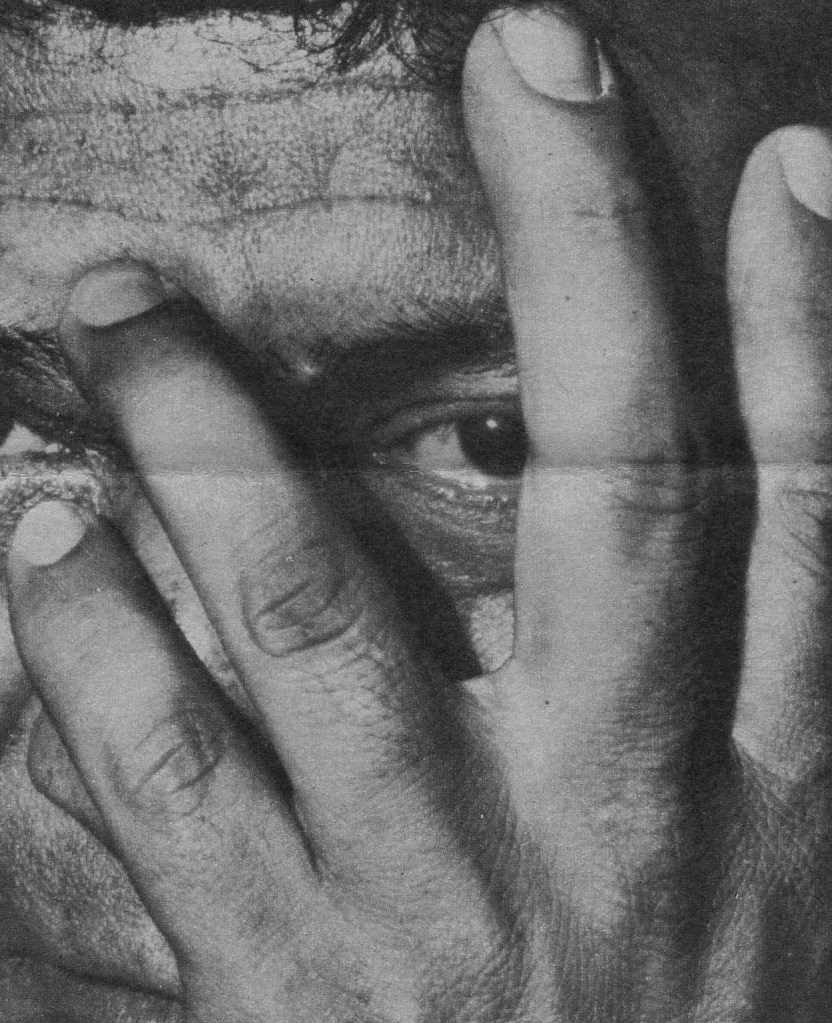
Although he did as much as possible to hide all information about his origins, Carlos Castaneda, whose books about the sorcery of a Yaqui Indian named Don Juan Matus were best sellers in the 1960s and 1970s, was actually born in Cajamarca, Peru. If I ever went there, I sincerely doubt there will be monuments or museums dedicated to him. Nonetheless, Northern Peru, about which I have been writing posts for the last week, is known for its brujos, or sorcerers.
I am currently re-reading in order of publication the books written by Castaneda. Even though it is generally known that there probably never was a Don Juan Matus, Carlos was in fact a spiritual leader whose work clicked with the American public of that time. And his work is in fact very interesting to me.
Do I care whether Castaneda was telling the literal truth? Not at all. But he was intent on describing a way of power that, in the end, caught him up in its web. I am also reading Amy Wallace’s Sorcerer’s Apprentice: My Life with Carlos Castaneda.
To be sure, Carlos would not have liked this tell-all biography, in which he is surrounded by a cadre of adoring females whom he dominates. But then, in it Carlos tells the tale of his encounter with Alan Watts, another more or less legitimate spiritual leader, who attempted to seduce him—even as Carlos seduced Amy Wallace and probably others.
One can point the way toward the path to be followed, even as one, being human, cannot follow it perfectly. In one of his works, he writes, “If [the warrior’s] spirit is distorted he should simply fix it-purge it, make it perfect-because there is no other task in our entire lives which is more worthwhile…To seek the perfection of the warrior’s spirit is the only task worthy of our temporariness, our manhood.”
Yes, but there is this problem about being human.
A Fragment of the Golden Eternity
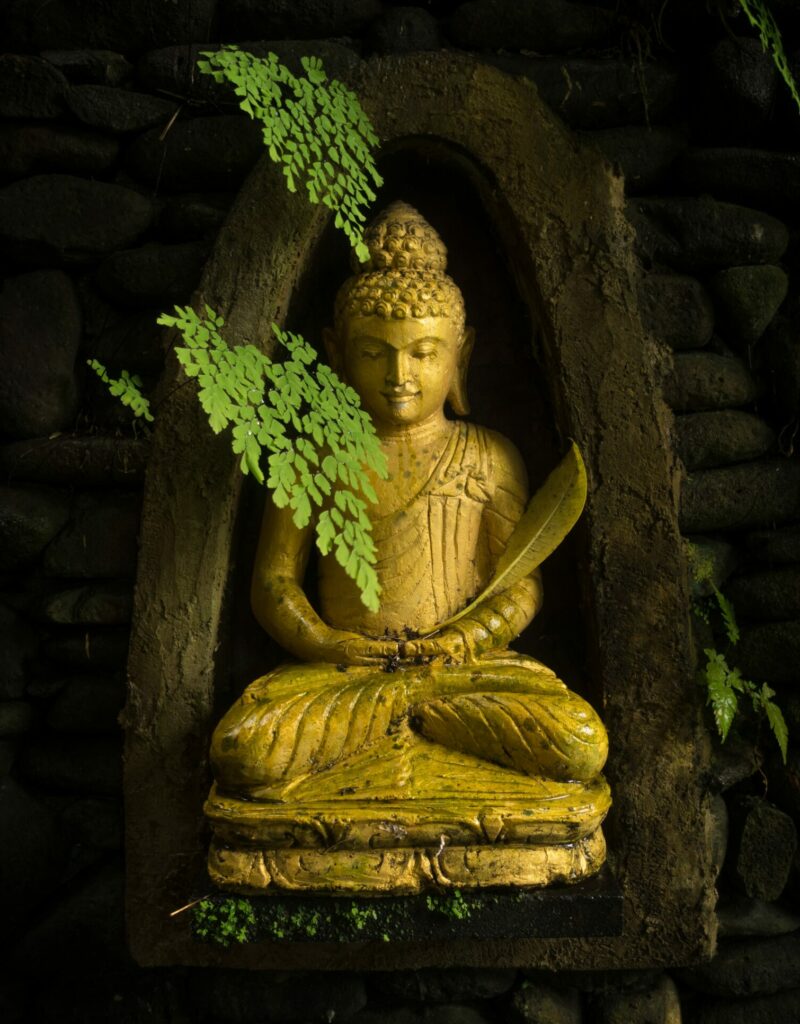
Jack Kerouac spent many years studying the Dharma of Buddhism. It shows up in many of his earlier works, particularly in his The Scripture of the Golden Eternity, from which the following excerpts are taken:
11.
If we were not all the golden eternity we wouldn’t be here. Because we are here we cant help being pure. To tell man to be pure on account of the punishing angel that punishes the bad and the rewarding angel that rewards the good would be like telling the water “Be Wet”—Never the less, all things depend on supreme reality, which is already established as the record of Karma-earned fate.
16.
The point is we’re waiting, not how comfortable we are while waiting. Paleolithic man waited by caves for the realization of why he was there, and hunted; modern men wait in beautiful homes and try to forget death and birth. We’re waiting for the realization that this is the golden eternity.
22.
Stare deep into the world before you as if it were the void: innumerable holy ghosts, buddhies, and savior gods there hide, smiling. All the atoms emitting light inside wavehood, there is no personal separation of any of it. A hummingbird can come into a house and a hawk will not: so rest and be assured. While looking for the light, you may suddenly be devoured by the darkness and find the true light.
I am not sure that Kerouac’s Buddhism is the genuine article, but in a way it doesn’t matter. His questing had its value and brushes against the truth at a wide number of places.
Saints and Angels

I suppose I was always something of an unbeliever. Even when I was twelve years old and had to choose a confirmation name at St. Henry, instead of picking Michael or Joseph like all my classmates, I selected Alexander. When asked who was St. Alexander by my friends, I said it referred to Alexander VI, the notorious Borgia pope who was possibly the worst of the so called bad popes.
This evening, I was reading an amusing review of a book by Eliot Weinberger entitled Angels and Saints. Among the angels described are:
- Nadiel, the angel of migration
- Memuneh, the dispenser of dreams
- Maktiel, who rules over trees
- Taliahad, the angel of water
- Hanum, the angel of Monday
The saints could be even more outrageous. Anne Enright’s review in the New York Review of Books includes the following tidbit:
Many of the beatified were early Christian martyrs who were hard to kill, and the details of their deaths receive more space than the manner of their lives. (I will never find again those two Roman martyrs who died by being turned upside down while milk and mustard were put up their noses, nor check through the multiple volumes [of Butler’s The Lives of the Saints] to see if I dreamed this, which surely I did not.)
One saint to whom I regularly pray is …
Genesius of Arles
(France, d. 303 or 308)
A decapitated martyr, his body was buried in France but his head was transported “in the hands of angels” to Spain, where he is invoked as a protection against dandruff.
To this day, I wish I still had my collection of holy pictures of saints, which the pious Dominican sisters of St. Henry handed out to good students. (I was sometimes good.)
Clarity and Emptiness
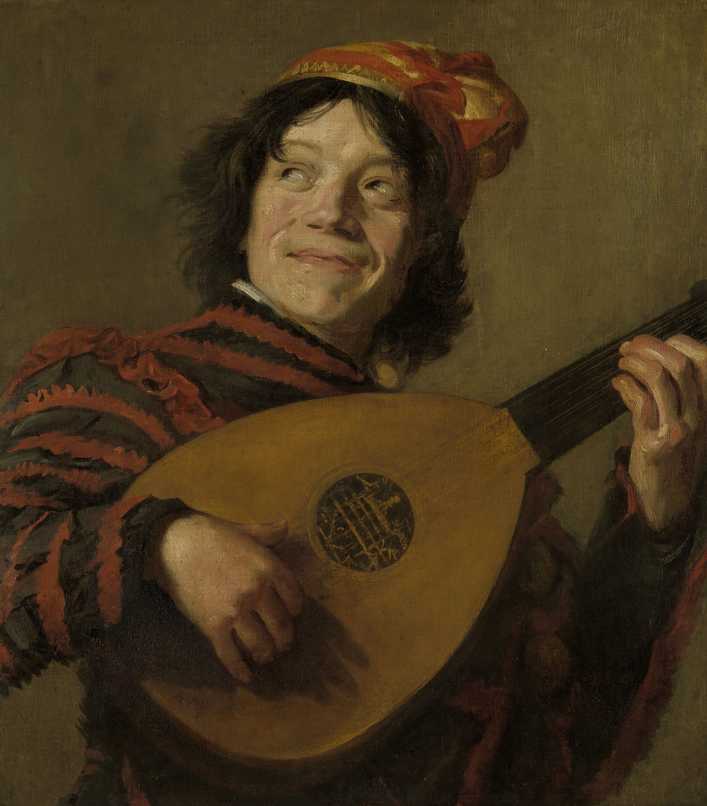
Lute Player (After Frans Hals)
From time to time, I love to read books of original source material on Eastern Religions. The following is taken from the Visuddhi Maga as quoted in a collection edited by Anne Bancroft entitled The Pocket Buddha Reader (Boston: Shambhala, 2001):
When a lute is played, there is no previous store of playing that it comes from. When the music stops, it does not go anywhere else. It came into existence by way of the structure of the lute and the playing of the performer. When the playing ceases, the music goes out of existence.
In the same way all the components of being, both material and nonmaterial, come into existence, play their part, and pass away.
That which we call a person is the bringing together of components and their actions with one another. It is impossible to find a permanent self there. And yet there is a paradox. For there is a path to follow and there is walking to be done, and yet there is no walker. There are actions but there is no actor. The air moves, but there is no wind. The idea of a specific self is a mistake. Existence is clarity and emptiness.


You must be logged in to post a comment.