“Tears of the Lord”

Paul Pletka’s Paintings “Tears of the Lord” at the Autry National Center

Paul Pletka’s Paintings “Tears of the Lord” at the Autry National Center

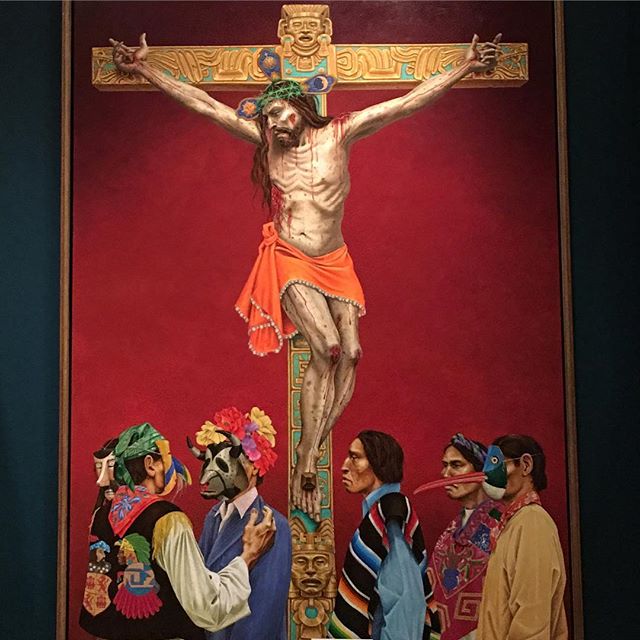
One of the paintings I saw on Saturday’s visit to the Autry National Center is Paul Pletka’s “Tears of the Lord,” which depicts a bloody crucifixion on an Aztec cross, with native Americans in ceremonial garb walking by the foot of the cross.

It reminds me of the strange mix of Christianity with Andean religions that I saw in Peru in 2014. As one who has had a Catholic education through age 17, I was amazed by the beauty and ornateness of the churches in Lima, Arequipa, Puno, and Cusco. The farther I got from the larger cities, however, the more I saw signs of local religious practices alongside the Catholic images.

In the 1980s, when my brother and I visited the State of Chiapas in southern Mexico, we saw something even more extreme—so extreme, in fact, that we were made to sign statements in advance that we would not photograph inside the church or any of the religious ceremonies. The penalty for violation? Tourists had been killed for disrespect of the local customs. In the church of San Juan Chamula, the Christian statuary was decked out with corncobs and flowers. All pews had been removed, and the Mayans prayed by lying on their stomachs with their arms outstretched. The altar was de-emphasized altogether. Instead, there were various worship stations scattered around the nave.

And where was the local priest? The Catholic clergy had been kicked out more than a hundred years previously as part of a revolt. The churches they left behind were adapted to highland Mayan religion.

As I look at Pletka’s painting, I see the native peoples of the Americas incorporating all or part of Christianity, but insisting on their own brand of religious syncretism as well. At the tiny church in Corporaque, Peru, near Colca Canyon, I felt very far indeed from the Cathedral at Cusco. The only modern touch was that I was being filmed. Apparently, a nearby church was ransacked by thieves; and many of the small churches took measures to protect their ecclesiastical treasures.

A Halo for Judas Iscariot?

Twelve Apostles—All With Haloes—Watching Christ Entering Jerusalem

Twelve Apostles—All With Haloes—Watching Christ Entering Jerusalem

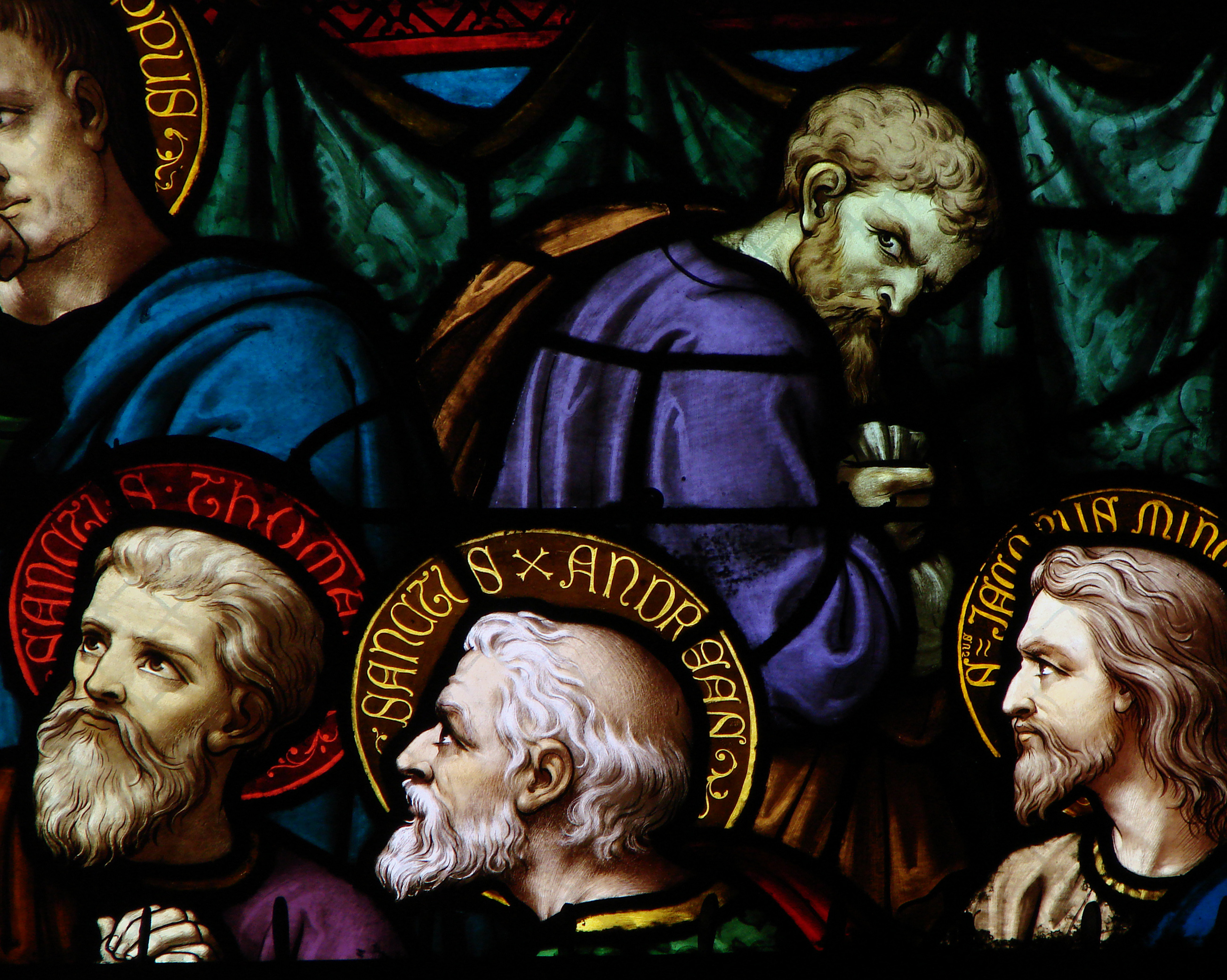
Today Martine and I attended the Valley Greek Festival at St. Nicholas Greek Orthodox Church in North Hills. Please excuse the lack of sharpness in the above photo. What is clear is that twelve men wearing haloes are watching Christ enter Jerusalem on Palm Sunday. Now, my question is this: If these men are, in fact, the Apostles, why do all twelve have haloes, which would invariably include Judas Iscariot?

It was not until after Palm Sunday that Judas ratted the Messiah out to the Sanhedrin for thirty pieces of silver. Afterwords, he felt remorse and hanged himself with a halter.

After Christ’s resurrection, Judas was replaced by Matthias:

Matthias was selected to replace Judas as recorded in Acts 1:15-26. The other man who was also in consideration was named Joseph or Barsabas, and surnamed Justus. Lots were cast and eventually Matthias was chosen. Acts 1:24-26 records the following, “And they prayed and said, “You, O Lord, who know the hearts of all, show which of these two You have chosen to take part in this ministry and apostleship from which Judas by transgression fell, that he might go to his own place.” And he was numbered with the eleven apostles.” The Bible is sparse on additional details relating to Matthias, but it does say that Matthias was with Jesus since His baptism until his resurrection. Besides the book of Acts, Matthias isn’t mentioned anywhere else in the Bible. According to historical sources Matthias lived til 80 A.D. and spread the gospel on the shores of the Caspian and Cappadocia.

Judas Is Pointedly Depicted Without a Halo at the Cathedral of Moulins

Judas Is Pointedly Depicted Without a Halo at the Cathedral of Moulins

Note that at this time, Paul was not an apostle. He was known as Saul and actively persecuted the Christians until, on the road to Damascus, God spoke to him from the heavens:

As he neared Damascus on his journey, suddenly a light from heaven flashed around him. He fell to the ground and heard a voice say to him, “Saul, Saul, why do you persecute me?”

“Who are you, Lord?” Saul asked.

“I am Jesus, whom you are persecuting,” he replied. “Now get up and go into the city, and you will be told what you must do.”

The men traveling with Saul stood there speechless; they heard the sound but did not see anyone. Saul got up from the ground, but when he opened his eyes he could see nothing. So they led him by the hand into Damascus. For three days he was blind, and did not eat or drink anything.

— Acts 9:3–9, NIV

One final observation. In his short story (in the form of an essay) entitled “Three Versions of Judas” published in Ficciones, Argentinian writer Jorge Luis Borges speculated on a different role for Judas Iscariot in the story of Man’s Redemption:
God became a man completely, a man to the point of infamy, a man to the point of being reprehensible—all the way to the abyss. In order to save us, He could have chosen any of the destinies which together weave the uncertain web of history; He could have been Alexander, or Pythagoras, or Rurik, or Jesus; He chose an infamous destiny: He was Judas.
*  *  *  *  *
What, in fact, do I believe? I think twelve holy men depicted as wearing haloes are shown watching Christ enter Jerusalem. It is merely interesting to speculate whether Judas is one of them.

What, No Hajj?

Saudi Arabia Has Halted All Flights To/From Iran

Saudi Arabia Has Halted All Flights To/From Iran

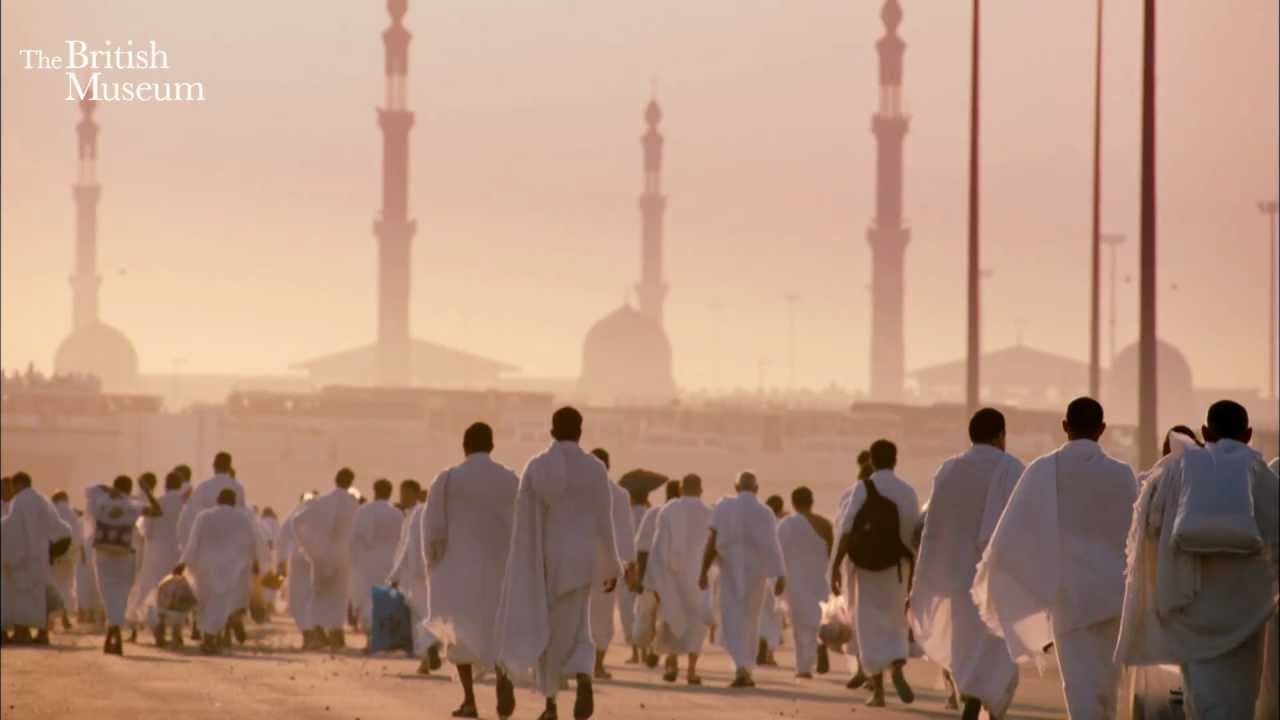
It is a mandatory religious duty for all Muslims, at least once in their life, to make a pilgrimage to Mecca. Now that Saudi Arabia and Iran are on the outs, the Saudis have forbidden all flights linking their two countries. This alone has the potential of leading to further nastiness. Admittedly, Iranian pilgrims can still go by boat (and risk being robbed by Somali pirates) or by land (and risk being robbed by bandits).

I cannot help but think that the real reason for all this nastiness is the conflict in Yemen between Shi’a rebels (called the Houthis) and the Saudis and their allies. In the end, the Saudis may think now is the time to rid themselves of the Shi’a menace once and for all.

Now what is this Sunni/Shi’a split all about? According to the BBC:

In early Islamic history, the Shia were a movement – literally “Shiat Ali” or the “Party of Ali”. They claimed that Ali was the rightful successor to the Prophet Muhammad as leader (imam) of the Muslim community following his death in 632.

Ali was assassinated in 661 after a five-year caliphate that was marred by civil war. His sons, Hassan and Hussein, were denied what they thought was their legitimate right of accession to the caliphate.

Hassan is believed to have been poisoned in 680 by Muawiyah, the first caliph of the Sunni Umayyad dynasty, while Hussein was killed on the battlefield by the Umayyads in 681. These events gave rise to the Shia concept of martyrdom and the rituals of grieving.

There are three main branches of Shia Islam today—the Zaidis, Ismailis and Ithna Asharis (Twelvers or Imamis). The Ithna Asharis are the largest group and believe that Muhammad’s religious leadership, spiritual authority and divine guidance were passed on to 12 of his descendants, beginning with Ali, Hassan and Hussein.

The 12th Imam, Muhammad al-Mahdi, is said to have disappeared from a cave below a mosque in 878. Ithna Asharis believe the so-called “awaited imam” did not die and will return at the end of time to restore justice on earth.

In other words, the roots of the conflict go all the way back 1,400 years and show no signs of slackening.

It’s a sobering thought that we, who cannot even pronounce the name “Muawiyah,” may be affected in some way by this stramash.

Not the Epicene Nordic Christ

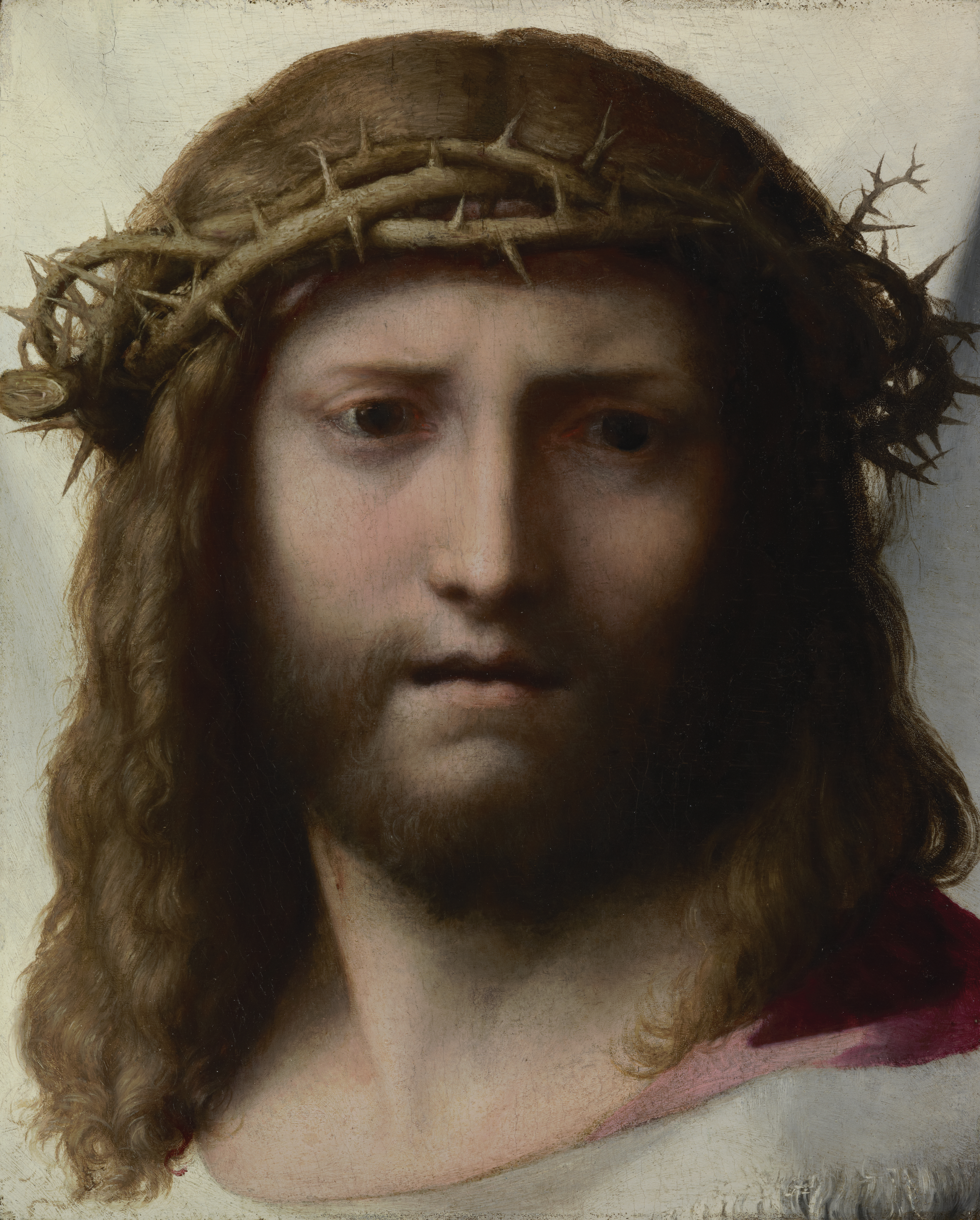
Head of Christ by Antonio Allegri aka Correggio (1489-1534)

Head of Christ by Antonio Allegri aka Correggio (1489-1534)

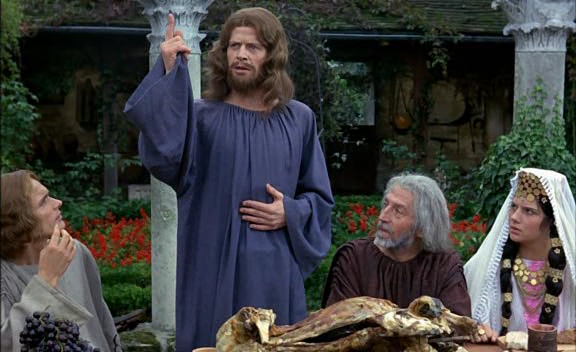
In all of art, there are only two depictions of Christ that I—a notorious renegade Catholic—admire. One is in a Luis Buñuel film called La voie lactée, or The Milky Way (1969). In it, Bernard Verley played the role of the Son of Man (below) as a likable guy who just happens to turn water into wine at the wedding at Cana, because his mother kept insisting, “But they have no more wine!” I could see wanting to become his disciple.

Christ (Bernard Verley) at the Miracle of Cana

Christ (Bernard Verley) at the Miracle of Cana

Today, I visited my favorite painted depiction of Christ at the Getty Center. It was the work of Antonio Allegri, better known as Correggio, sometime between 1525 and 1530. According to the museum’s website, the small (28.6 cm x 23.5 cm) painting represents the face of Christ on the veil offered to Him by St. Veronica on the road to Calvary—though I am not convinced of that. He is wearing the crown of thorns, which looks as if it had just been placed on his head without any sweat or bleeding in evidence.

What there is is an expression on Christ’s face that is a somber acknowledgment of the horrible death to come, the same death that He had asked to be relieved of in the Garden of Gethsemane the night before: “My Father, if it is possible, may this cup be taken from me. Yet not as I will, but as you will.” (Luke 22:39)

Neither of them show us the namby-pamby Evangelical Christ which is fed as pabulum to brainless children (and adults). I can believe in Correggio’s Christ, as I do in Buñuel’s Christ. They both portray the innate tragedy of the Redemption and the strange mismatch between God’s nature and man’s in the same body.

The Shield Wall

Anglo-Saxon Battle Helmet

Anglo-Saxon Battle Helmet

I am continuing to undergo a period of interest in the Anglo-Saxons. It started with some old poetry, and now I am reading the latest in Bernard Cornwell’s excellent series various called Warrior Chronicles and Saxon Tales. Set in the Tenth Century, we see the half-pagan, half-Christian Uhtred of Bebbanburg and his son of the same name battling internal enemies in the Mercian kingdom as well as Viking raiders.

Warfare among the Anglo-Saxons was a bloody affair. The warriors on each side linked their shields together and proceeded to hack above and below them with swords and axes to bring down their foe. In The Empty Throne, we find the senior Uhtred laid up with battle scars, but pretending to be hurt more than he is.

Reading this description of shield wall battle from Cornwell’s earlier The Pagan Lord, one wonders that he is alive at all:

There is a way of battle. In the end the shield walls must meet and the slaughter will begin and one side will prevail and the other will be beaten down in a welter of butchery, but before the blades clash and before the shields crash, men must summon the nerve to make the charge. The two sides stare at each other, they taunt and insult each other. The young fools of each army will prance ahead of the wall and challenge their enemy to single combat, they will boast of the widows they plan to make and of the orphans who will weep for their fathers’ deaths. And the young fools fight and half of them will die, and the other half strut their bloody victory, but there is still no true victory because the shield walls have not met. And still the waiting goes on. Some men vomit with fear, others sing, some pray, but then at last one side will advance. It is usually a slow advance. Men crouch behind their shields, knowing that spears, axes and arrows will greet them before the shields slam together, and only when they are close, really close, does the attacker charge. Then there is a great bellow of noise, a roar of anger and fear, and the shields meet like thunder and the big blades fall and the swords stab and the shrieks fill the sky as the two shield walls fight to the death. That is the way of battle.

After years of reading Cornwell’s Richard Sharpe novels of the Napoleonic Wars, which I devoured with great pleasure, I find the Warrior Chronicles to be at least as good.

I AM That Demon


A Representation of the Mandaean Demon Dinanukht

A Representation of the Mandaean Demon Dinanukht

It is strange how reading a few lines on some abstruse subject can set your mind going. I was reading Christian Caryl’s review of Gerard Russell’s book Heirs to Forgotten Kingdoms: Journeys into the Disappearing Religions of the Middle East in the December 4, 2014 issue of The New York Review of Books. There I came upon this quote from the book regarding the Mandaeans from the marshes of Southern Iraq:

There is Krun, the flesh mountain, who sounds a bit like Jabba the Hutt; as [E. S.] Drower wrote, “The whole visible world rests on this king of darkness, and his shape is that of a huge house.” There is Abraham, who appears as a failed Mandaean guided by an evil spirit to leave and found his own community. There is the dragon Ur, whose belly is made of fire and sits above an ocean of flammable oil. There is Ptahil, “who takes souls to be weighed and sends his spirits to fetch souls from their bodies.” My favorite was the demon Dinanukht, who is half man and half book and “sits by the waters between the worlds, reading himself.” [Italics mine]

Omigosh, that sounds like me.


The Pope and the Politicians

May God Protect You from the Evil Politicians

May God Protect You from the Evil Politicians

The Catholic Church has always had this problem with Papal bureaucrats. Yesterday, Pope Francis lit into them at a Christmas gathering and nailed them on fifteen counts, including the “sickness” of considering themselves immortal, immune, or indispensable as well as “spiritual Alzheimer’s Disease.” These clerical politicians have needed to be taken down a peg—for at least two thousand years or so.

I admire Pope Francis and sincerely hope that he watches lest one of these cassock-wearing baddies slips rat poison into his hot chocolate. They are probably saying to themselves, “Yes, Pope Francis is a saint. And the sooner we send him to heaven, the better!”

During my lifetime, their have been two popes I’ve liked, John XXIII and John Paul II—both of whom have recently been elevated to sainthood. I hope Francis can somehow reform the Vatican bureaucracy while he is still walking among us. I may still have numerous disagreements with the Catholic Church, but spiritual leaders like Francis keep me from severing all connections.

He is a man of the people, whereas his targets are men of power. Kind of like corporation executives.


Serendipity: David Stofsky Talks with God

To Me, This Was the Highlight of John Clellon Holmes’s Go

To Me, This Was the Highlight of John Clellon Holmes’s Go

In the book, David Stofsky is Beat poet Allen Ginsberg. His poet and dope fiend friend Ancke (Herbert Huncke) is staying with him and has just been tucked him for the night. The chapter continues:

But that night he had a dream, without trappings, without symbols; a dream of extraordinary clarity while he dreamt it, but which he could not remember at all clearly when he awoke.

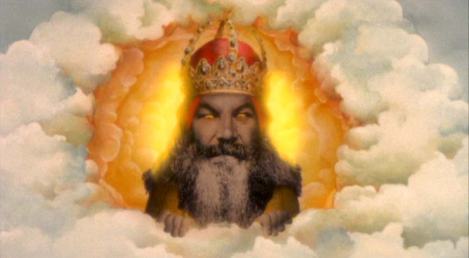
He walked down an inky corridor, which like one of those in [his friend] Waters’ building or in his own, and he was out of breath, as if he had come up many long and tiring flights. The door at the end of that corridor did not surprise him, nor, when he opened it without knocking, did the large and shadowy hall beyond it; a hall such as one can rent for fifteen dollars a night in Harlem brownstones; long, the fancy moldings, and dusty crepe streamers giving it a pathetic and abandoned appearance. Nor was he surprised by the throne at one end of it, a throne that was not surrounded by an ambient light, or even very clean and polished, but still somehow regal and entirely proper to the figure sitting there: an aging man of once powerful physique, now vaguely weary, His untrimmed beard fanned out in white folds upon His chest, His eyes shining with muted brightness as only an old man’s eyes can shine out of the limpid stillness of an old face. God.

Stofsky approached, without fear or excitement, and found himself on his knees, looking up, still conscious of his breathlessness. He paused for an instant, peering at the face, realizing an old, skeptical curiosity concerning it which he somehow knew would be tolerated; noting the wrinkles, the faint pink glow of the cheeks, the expression of weary passivity.

Then he began to tell all that had happened since [he had] the visions, endeavoring to stick close to the facts and keep the report brief and accurate. All the same, it seemed to him to take an inexcusable time to go through it all. Finally, reaching Ancke and mentioning his worry over his future, he came to the end.

“I should have had you here before, I know,” God said with an audible sigh. “But then…” And He looked down at Stofsky with an expression of such sadness and such resignation that Stofsky was actually embarrassed to have been the cause of such a look on God’s face.

“But what am I do do next, Sir?” he managed to say.

At that, he thought that God might lean forward and touch his head with one of those large, veinless hands, so gentle and sorrowful was the light which bathed His Face. But He did not.

“How shall I help them now? You see, I’m so confused and tired—,” forgetting that God must know everything.

“You must go back, and even doubt,” God said after a moment’s pause, ”and remember none of this. There’s an end which you shall discover. It waits there for you. Without you, it cannot happen. And it must.”

“But what shall I do?”, wanting, with childlike earnestness, some sign to guide him, to make acceptance easier.

“Being saved is like being damned,” God said with thoughtful simplicity, as though it was one of the unutterable secrets of the universe given to Stofsky now because he had been patient, because he had come so far.

Then God did lean forward until His beard fell straight down into His lap and Stofsky could see the wet brilliance of His large eyes. “You must go,“ He said, “Go, and love without the help of any Thing on earth.”

For a second, Stofsky seemed to recall the words; then remembered a line like that in [the poems of William] Blake, and thought that perhaps this was not God at all, but Blake himself. But then, looking closer, he knew it was God, and thought it wonderful and just that God should quote Blake, too.

As he was about to rise, however, a question rose in his mind, something almost irreverent and certainly mortal, and even though he suspected that he had no right to ask it, he could not let the opportunity pass somehow.

“Things are so terrible,” he began. “The violence, misery, the hate … war and hopelessness … I wonder,” and he gave one fearful and yet challenging glance into Those Eyes. “Why can’t You help all that? Do You know how human beings suffer? … Can you help them, Sir?” [Ellipses are in the original]

God’s face grew dim and drawn, as though the question gave Him pain He knew there was no sense to feel, but pain He took upon Himself in spite of that. He seemed for that moment a majestic and lonely man in His rented hall, on His dusty throne, who had received too many petitioners, too long, and understood too much to speak anything but the truth, even though it could not help.

“I try,” He replied simply. “I do all I can.”

Then Stofsky woke, and it was still dark.He could remember most of it, as though it had just happened, and felt a kind of heavy peace. But very soon he fell off to sleep again, and dreamt no more, and had forgotten when the morning came.


The Deal

Dancers from Karpatok

Dancers from Karpatok

The deal was made at some point before I was born. Because my father was a Roman Catholic Slovak and my mother was a Protestant adhering to the Calvinist Hungarian Reformed Church, my parents decided that any boys in the family were going to be Catholic and any girls, Protestant. As it happened, there were two boys born to Alex and Sophie Paris, my brother and I.

We were a religiously tolerant family: My father (occasionally) went to Mass, and my mother (occasionally) listened to the Reverend Csutoros’s weekly radio program and his sonorous sermons.

So what am I today? In Peru, I was a Catholic. Here in Los Angeles, I am evenly torn between the Hungarian Reformed Church—in honor of my mother—and the Greek Orthodox Church. Wherever I go, I find God.

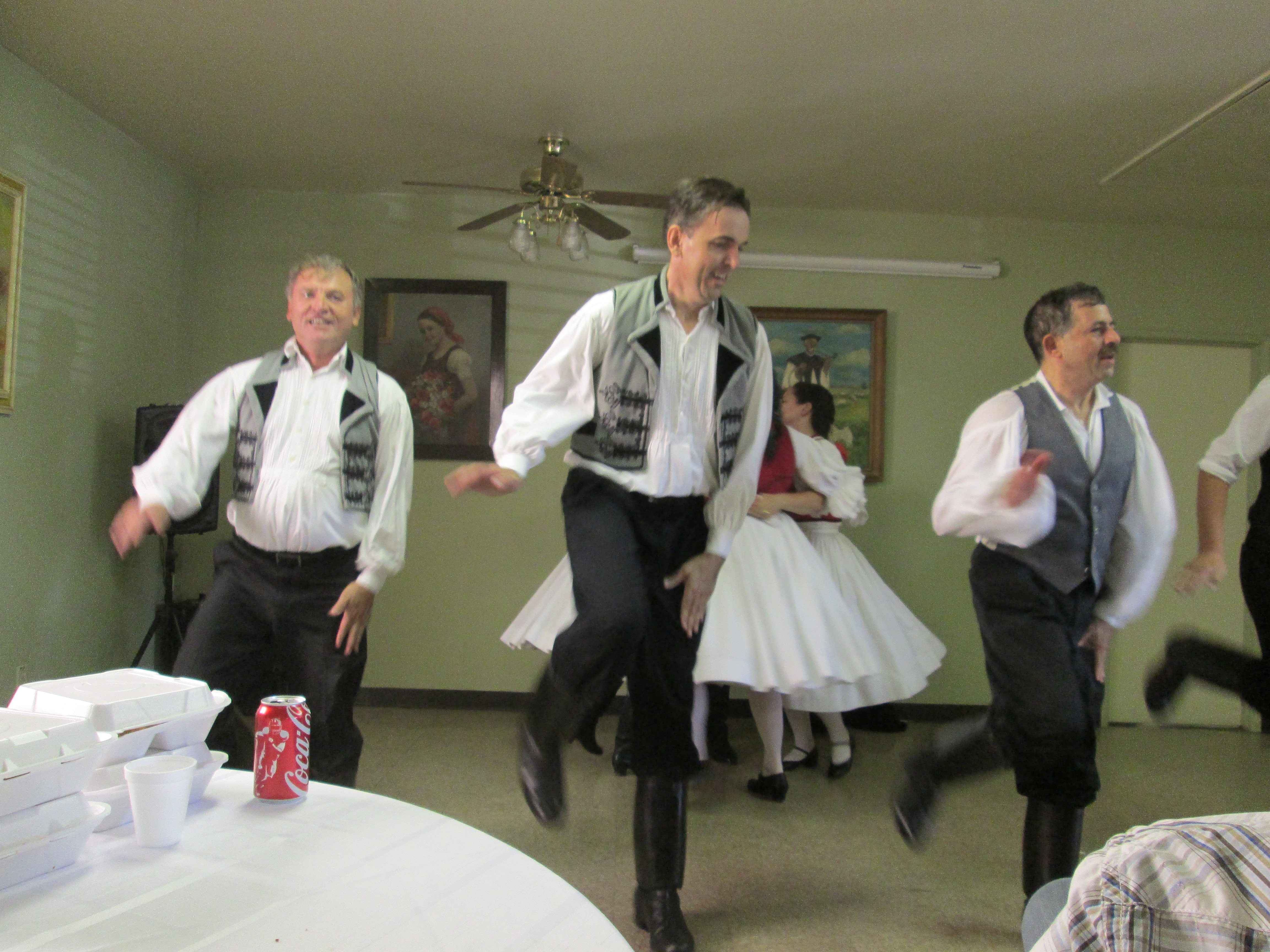
Today, Martine and I attended the church fall bazaar at the First Hungarian Reformed Church of Los Angeles in nearby Hawthorne. We had some good Magyar home cooking, renewed our friendship with several families active in the church, and listened to the usual excellent program of music and dance. Present were members of the Karpatok Hungarian Dance Ensemble (shown above) who put on the usual spirited performance.

It is good to be a Hungarian from time to time, to speak the language of my youth with some good people and share a few hours with them.


The Truth Is Fragmented

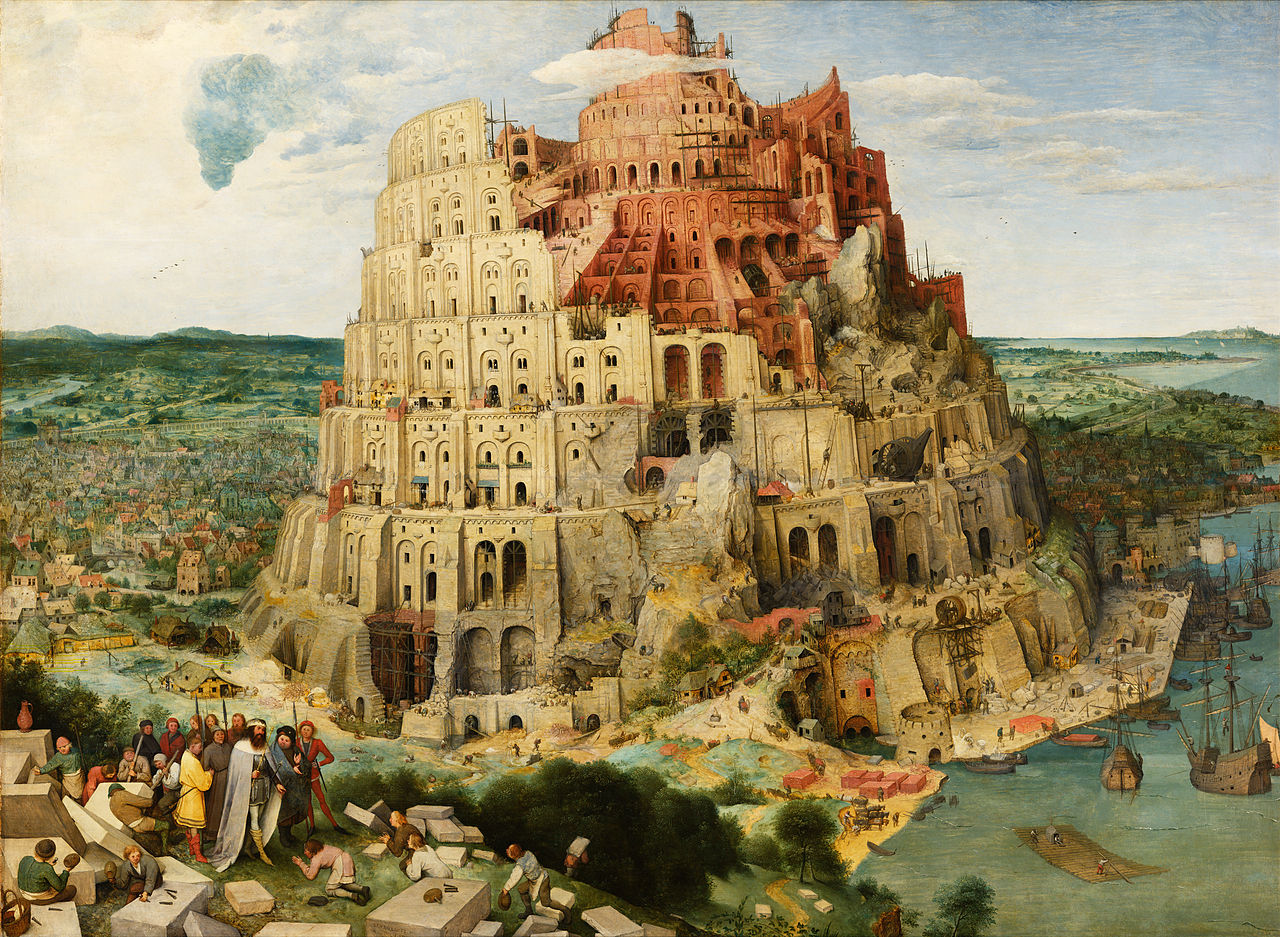
Peter Breughel the Elder’s “The Tower of Babel”

Peter Breughel the Elder’s “The Tower of Babel”

I love the story from Genesis of the Tower of Babel. Here it is from Verses 1-9 of Chapter 11 in the King James Bible:

And the whole earth was of one language, and of one speech.

And it came to pass, as they journeyed from the east, that they found a plain in the land of Shi’nar; and they dwelt there. And they said to one another, Go to, let us make brick, and burn them thoroughly. And they had brick for stone, and slime had they for mortar.

And they said, Go to, let us build us a city and a tower, whose top may reach unto heaven; and let us make us a name, lest we be scattered abroad upon the face of the whole earth.

And the Lord came down to see the city and the tower, which the children of men builded. And the Lord said, Behold, the people is one, and they all have one language: and this they begin to do: and now nothing will be restrained from them, which they have imagined to do.

Go to, let us go down, and there confound their language, that they may not understand one another’s speech. So the Lord scattered them abroad from thence upon the face of all the earth: and they left off to build the city.

Therefore is the name of it be called Babel; because the Lord did there confound the language of all the earth: and from thence did the Lord scatter them abroad upon the face of all the earth.

It is my opinion that language was not the only thing that was confounded at that point: So was religion. Across the face of the earth, there are at least as many religions as there are languages, or even dialects.

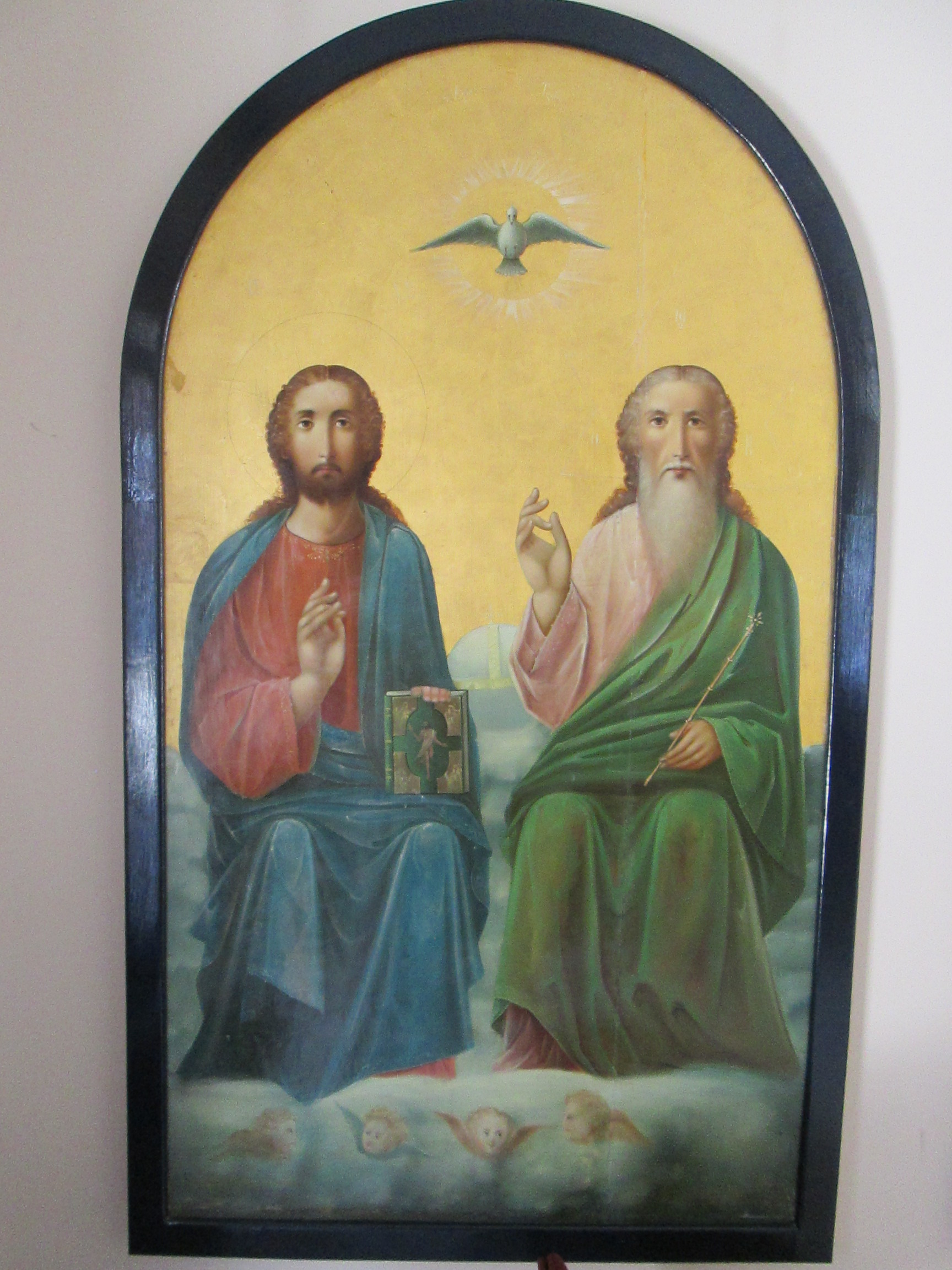
Today Martine and I went to the L.A. Greek Festival at Santa Sophia Cathedral near downtown. Once again we were stunned by the beauty of Saint Sophia, with éclat of all the glittering gold in the icons and decorations. I am curiously drawn toward Eastern Orthodoxy. But then I am also drawn to Roman Catholicism, in which I was raised; Buddhism; Hinduism. Probably to all major religions except the youngest, Islam, which seems to be entering a self-destructive death cult phase.

Depiction of the Trinity in St. Constantine’s Chapel at Saint Sophia

Depiction of the Trinity in St. Constantine’s Chapel at Saint Sophia

I not only believe in God, but in a sense I believe in all of them. I do not currently attend church, but I am thinking of attending services at Saint Sophia when I return from Peru. And while I am in Peru, I will visit scores of Catholic churches built by the Spanish. Also, on the flip side, I will visit the Museum of the Inquisition in Lima.

When the languages of man were all “confounded,” so also was the truth. It was fragmented into thousands of discrete pieces, some of which are beautiful, others of which are damaged, losing whatever truth was originally there.

I believe that, in this life, man must find fragments of the truth and hold on to them, irrespective of their origin. Truth and beauty abound, but also horrors unimaginable. Putting the right pieces together, very like a mosaic, is what life is all about.