Within a Stone’s Throw

Buenos Aires’s Recoleta Cemetery

Buenos Aires’s Recoleta Cemetery

As I have written on earlier occasions, Recoleta Cemetery is one of the major tourist attractions in Buenos Aires. I have visited it during my two previous trips to Argentina, in 2006 and 2011. And now, I will be staying in a hotel within sight of the tombs on Avenida Azcuénaga. It is possible that the blue-green building in the left background could be on Azcuénaga, but I’m not sure.

One of the nice things about staying in the Recoleta area is that it is full of classical old café/restaurants such as La Biela, El Sanjuanino, El Rincón, La Cocina, La Barra, and the Rodi-Bar—places that have been around for a hundred years or more and become national treasures.

On Saturdays, the Plaza Francia in front of the cemetery is the site of a craft fair  that features leather goods; items made with rhodochrosite, a magnesium carbonate mineral that is the national precious stone of Argentina; and yummy snacks. Nearby is La Biela, under the shade of a giant old ombú tree, where one can enjoy a cold Imperial beer and a light lunch.

I will be leaving a week from Tuesday, and as the time gets closer, I am looking forward to the trip more and more.


Termed Out

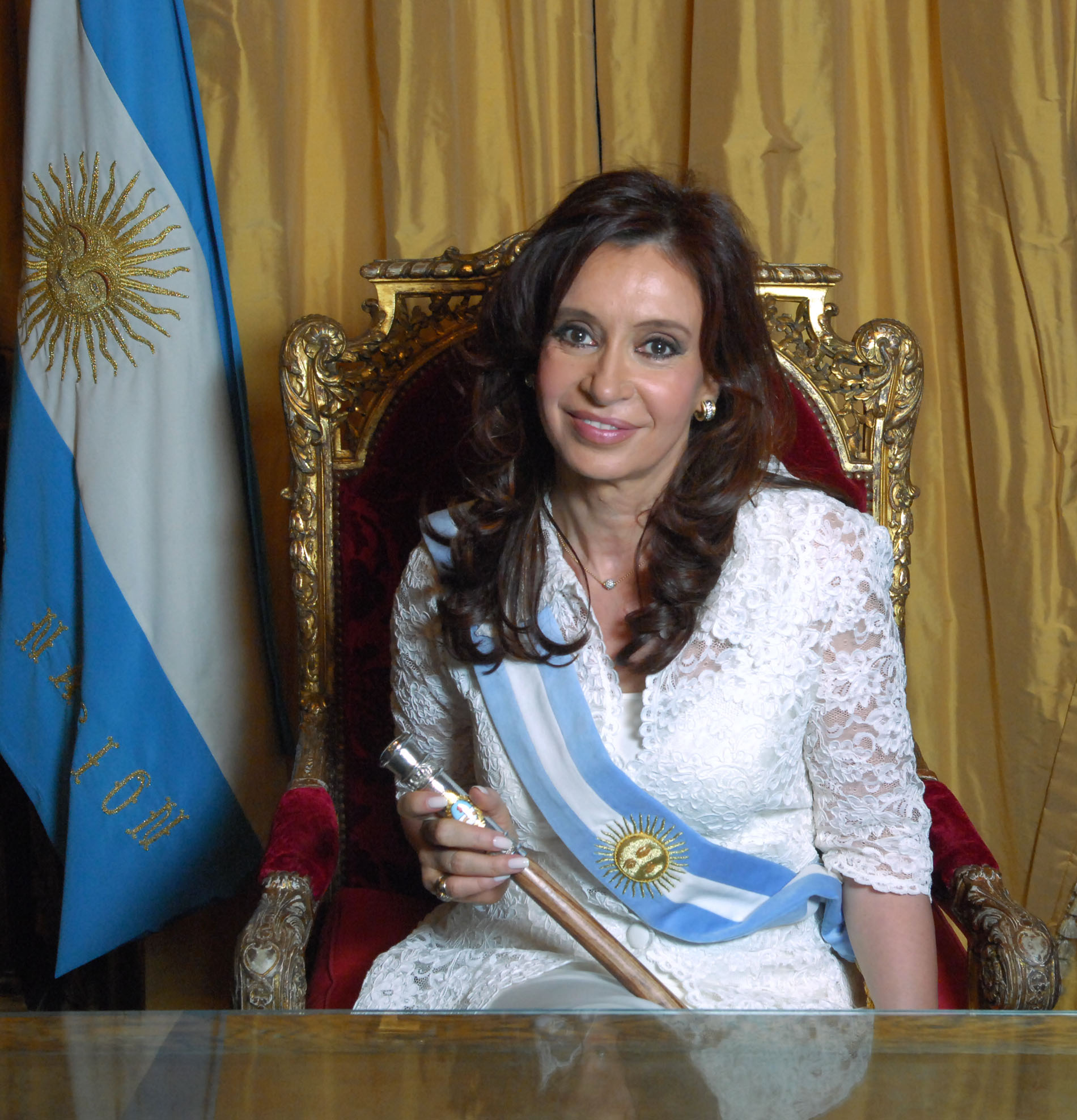
Official Photo of Argentinian President Cristina Fernández de Kirchner

Official Photo of Argentinian President Cristina Fernández de Kirchner

Later this month, a new presidential election will be held in Argentina to replace Cristina Fernández de Kirchner, the widow of the former president, Néstor Kirchner. As long as I have been visiting South America, a Kirchner was at the helm. As far as I could tell from my distant perch in the EEUU, as our country is abbreviated down there, they have been fairly good leaders. And I always enjoyed watching Cristina speak on television, even if I understood a mere fraction of what she had to say.

The previous widow to hold office in Buenos Aires was Isabelita Perón, the wife of former strong man Juan Domingo Perón, who died a scant year after returning from exile in Spain. Isabelita was not nearly in Cristina’s class and was quickly forced out of office.

Because of her looks, Cristina has been the target of some unfair attacks, such as the Italian newspaper Corriere de la Sera publishing a story in 2008 stating that she had gone on a spree at Rome’s famed Enigma Jewelry, purchasing Bulgari earrings, watches, and golden bracelets to the tune of €140,000 while she was attending the Food and Agricultural Organization (FAO) summit of the United Nations. Today, the Buenos Aires Herald announced that Cristina’s suit for defamation was judged in her favor by the Italian courts and that the story was a complete fabrication. The newspaper had to pay €40,000, which she turned around and donated to the children’s hospital in La Plata, where she was born.

It’s hard to believe that Sra. Fernández de Kirchner was born in 1953. The years have been kind to her.

Buenos Aires News in English

My Source for News from Argenina

My Source for News from Argentina

In both 2011 and 2015, I have relied heavily on the website of The Buenos Aires Herald for my news about Argentina, South America, the United States, and also the World. Every day, there is an article about the value of the dollar in pesos—both the official rate and the “blue” rate. Based on the photo above, it is also published in a newsprint edition, which I will check up on when I arrive in B.A.

Occasionally, I will find stories which are not even well covered in the U.S. For instance, Israel has banned most Palestinians from the Old City of Jerusalem for a two day period during Jewish holiday observances.

It is interesting to see that Argentina is still going hammer and tongs after the British for doing oil exploration in what the Brits call the Falklands and the Argentinians the Islas Malvinas. Firms that are involved may have their property confiscated if they should anchor at an Argentinian port.

Restlessness

My Vacation Is Getting Closer

My Vacation Is Getting Closer

In the last few weeks before my vacation, I am feeling restless. All other things aside, here are the books I plan to read before the month is over:

  • Christopher Hill, The World Turned Upside-Down. Revolutionary movements in 17th century England.
  • Guy de Maupassant, Afloat. For my French literature group on Yahoo!
  • Pablo Neruda, Canto General. I plan to visit the poet’s houses in Chile.
  • Macedonio Fernandez, The Museum of Eterna’s Novel, by a friend and hero of Jorge Luis Borges.
  • John Lynch, San Martin: Argentine Soldier, American Hero. A biography of the Founding Father of Argentina.
  • Aldous Huxley, Complete Essays, Vol. 1, 1920-1925.

And that’s probably half of what I will end up reading this month. Only, it’s always more difficult when one faces a deadline. One thing I will not do is stuff my suitcase full of books, nor concrete blocks either. While I am traveling, I will be reading exclusively from my two Kindles.

As usual, I have a dental emergency just before my vacation. Two small pyramidal chunks of tooth came loose the other day, so I will have to go to the dentist tomorrow. Plus I have two medical appointments this month.

Most of my shopping is done, but I will need a new belt: My old one fell to pieces a couple weeks ago. Plus I will have to get some mosquito repellent (for the Iguasu Falls area), and possibly a two-pocket shirt if I can find one. Oh, and I’m sure I’ll find a couple of other things I will need, or at least feel I’ll need.

The picture above is by Paulo Zerbato and nicely expresses what I am feeling right now.

¡Cuidado! Falsificatión Peligro

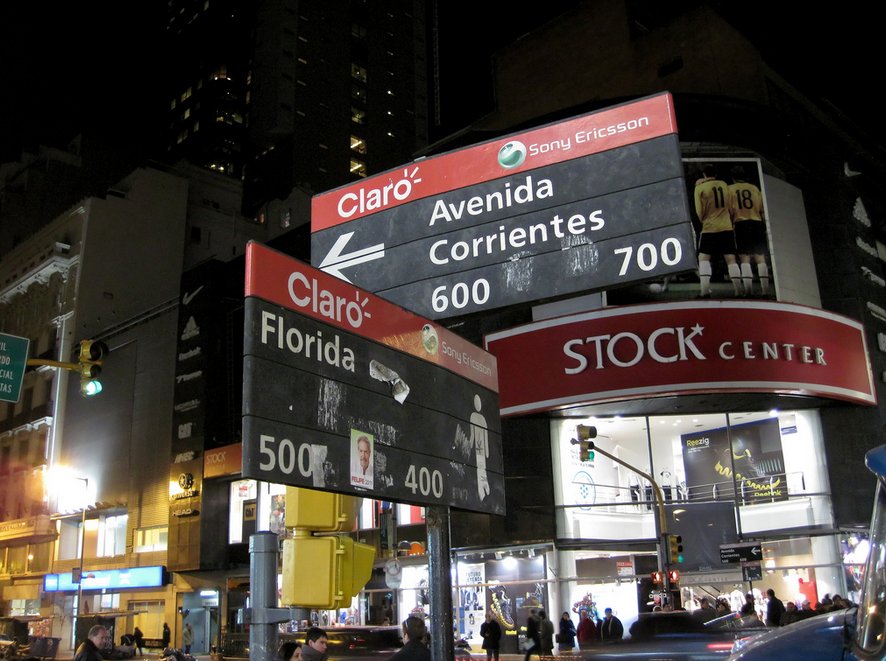
The Blue Dollar Market Is Centered on Calle Florida

The Blue Dollar Market Is Centered on Calle Florida

There are at least two ways that tourists in Argentina can be passed counterfeit notes. Both ways are common enough that tourists have to know how to tell a real peso from a fake.

In June I wrote a post about Blue Dollars. There are two peso to dollar rates in Argentina: the official one and the “blue” dollar rate, which is available primarily from money changers on Calle Florida in Buenos Aires. When I wrote the post in June, the rate was 9.07 pesos to the dollar at the official rate and 13.00 pesos to the dollar on the blue market. Today the rate is 9.425 pesos to the dollar at the official rate, and 16 to the dollar at the blue rate.

If you stick to the official rate only, you will be paying more for everything; but you will probably not wind up with fake pesos—if you stick to major bank ATMs. (Money changers and dicey private ATMs are a different story.) First of all, to deal on the blue market, you need crisp, fresh Benjamins, that is to say, one hundred dollar notes. When dealing with a money changer, you have to indicate you want money at the blue rate, and you have to be willing to closely examine the bills you get in return. You can look at San Telmo Loft’s posting on “Fake Money in Argentina” for starter. And be sure to take their quiz.

Another common way of getting stuck with counterfeit notes is to use legitimate big bills and having the following happen: Let’s say you give a taxi driver a real 100 peso note. He turns around, gives it back to you, saying it’s a fake. In the meantime, he’s pulled a switch on you. Before handing over a big bill, be sure to memorize the last three digits of the serial number. That way you can accuse the driver of having passed a fake to you. You might not want to be standing where he can run you down at that point.

Fortunately, it’s easy to tell fake from real notes; but note that a lot of fake pesos are in circulation. If you get stuck holding them, there is no real recourse.


Traveling by Mexican Rules

Benito Juarez Airport in Mexico City

Benito Juarez Airport in Mexico City

It all started in 1979. My brother and I were booked on a flight to Villahermosa, Mexico, one of the less enchanting cities of that great land. Suddenly, our flight disappeared off the departure screens, followed by a garbled PA announcement in Spanish. Dan and I looked at each other, and right then and there, we developed the notion of traveling by Mexican Rules.

Consequently, we hunkered down in our seats and waited for new developments. We disbelieved all announcements until we heard one (that was actually clear) that said our “canceled” flight was boarding at Gate 72. We hurried over to the gate and, sure enough, the flight was boarding; and its destination was the unlovely swamp city of Villahermosa. Within two hours, we were landed.

(It turned out that was only the beginning of our problems: We had to find a room in a city where all hotel rooms were block-booked by the Pemex oil monopoly employees. But that’s another story.)

The point I am trying to make is that one has to make allowance for mass confusion, not only when traveling, but even at home. A week ago, we had a freak rainstorm that forced the evacuation of the high rise in which I work. Until I received authoritative word from the building management, I heard no end of estimates of how long it would be before we could return to our offices. They ranged from one hour to two or three hours to half a day. In the end, the building was shut down for the day until the fire department and the Department of Water & Power was sure the transformer in the parking garage would not be flooded.

So when I am in Argentina and Chile in November, I will still be traveling by Mexican Rules. It’s the only way to fly.


La Bandera Oficial

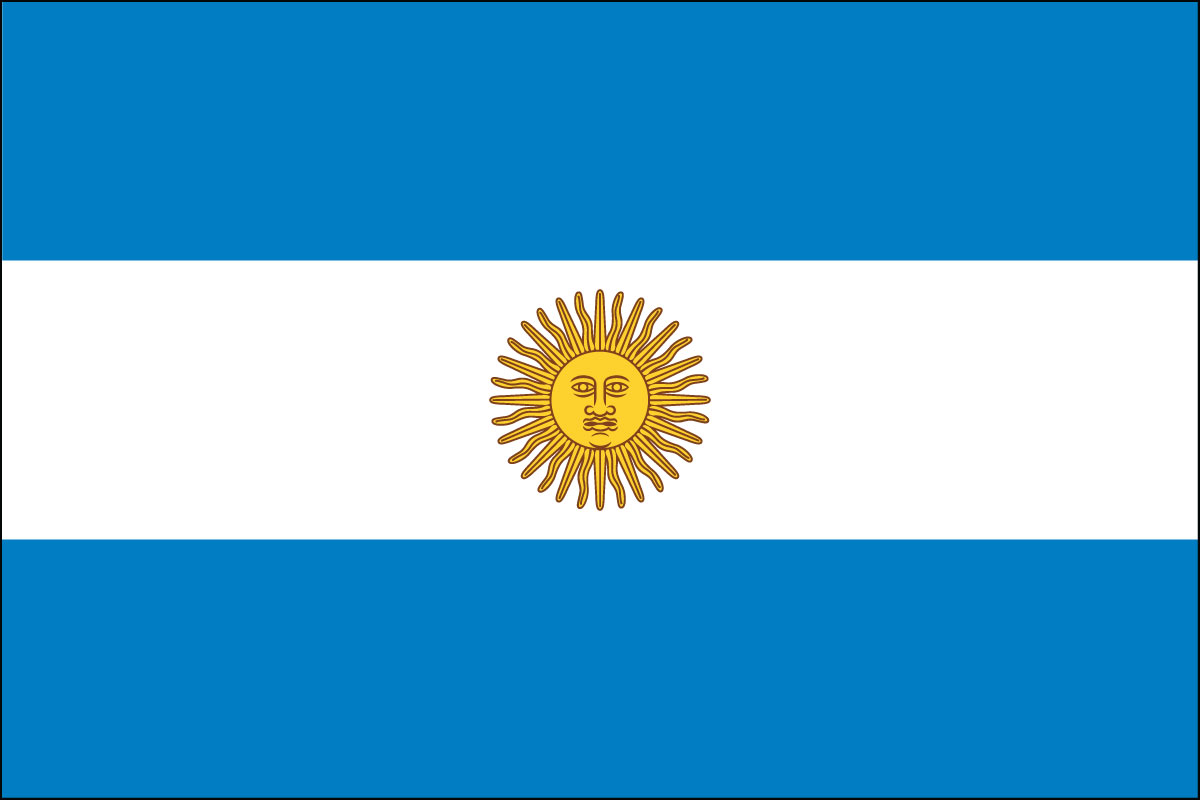
The Official Flag of Argentina

The Official Flag of Argentina

Today, Martine and I went for a walk on the spectacular campus of Pepperdine University in Malibu. It was a hot, but crystal-clear day with clear views toward Catalina and Palos Verdes. What was different today was a display of some 3,000 flags, mostly the stars and stripes. I guessed that they represented the students on campus and their country of origin. Instead, it was a commemoration of the September 11 attacks on the World Trade Center, in which 2,996 people died. The non-American flags represented the country of origin of the victims of the Al Qaeda terrorists.

Toward the end of the display, I stopped by a flag of Argentina. At the same time I felt sad for the Argentinian victim of the attack, I felt a warm glow in anticipation of my upcoming trip to Argentina and Chile in November.

It was Manuel Belgrano who designed the flag in Rosario in 1812 during his country’s war of independence from Spain. It was officially accepted as the nation’s official flag at the Congress of Tucumán on July 20, 1816, complete with the stylized image of the sun. An alternate ornamental version of the flag is minus the sun.

At one point last week, I fell afoul of a clique of rabid Little Englander trolls by suggesting that this flag should by rights be flying over the Falkland Islands. I have since decided to moderate my enthusiasm for all things Argentinian and cede the archipelago to the Brits.

¡Temblor!

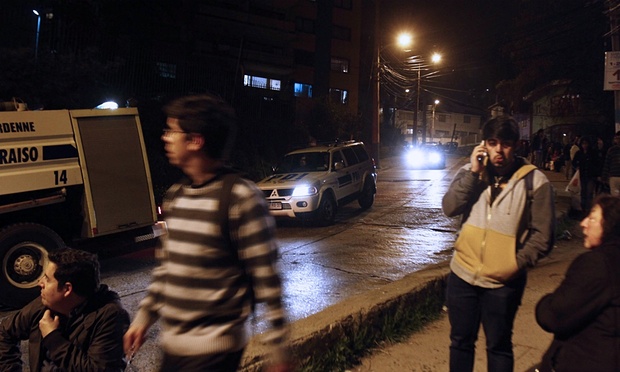
Street Crowds in Valparaíso During Tsunami Alert

Street Crowds in Valparaíso During Tsunami Alert

In about two months from now, I will be in one of the Ring of Fire’s “Hot Zones”—coastal Chile, where a Richter 8.3 quake has just struck not more than a couple of hours ago. Most articles centered on the effects of the quake on Santiago, though the epicenter was 144 miles northwest of the capital, which suffered minimal danger because  it is built on rock, namely the foothills of the Andes.

The city of Coquimbo, nearer the epicenter, has already seen tsunami waves as high as 4.5 meters (about 14 feet), and even California and New Zealand are expected to feel some activity.

I will be in Valparaíso for several days in late November, though I will be on higher ground on Cerro Alegre. The port area is probably the most dangerous area: If there is another major earthquake, people will be running for the forty-three hills that surround the city in a semicircle.

Crowds Gather on High Ground in Valparaíso

Crowds Gather on High Ground in Valparaíso

Oh, I suppose I could visit less dangerous areas, like North Dakota or Manitoba, but I’ve always wanted to visit Chile, even if for just a few days. By then, with luck, the aftershocks will have died down some.

Today, I checked the volcanic activity at Calbuco and was delighted to find that its alert status has been lowered to green.

Live dangerously!


Atacama

The Driest Place on Earth

The Driest Place on Earth

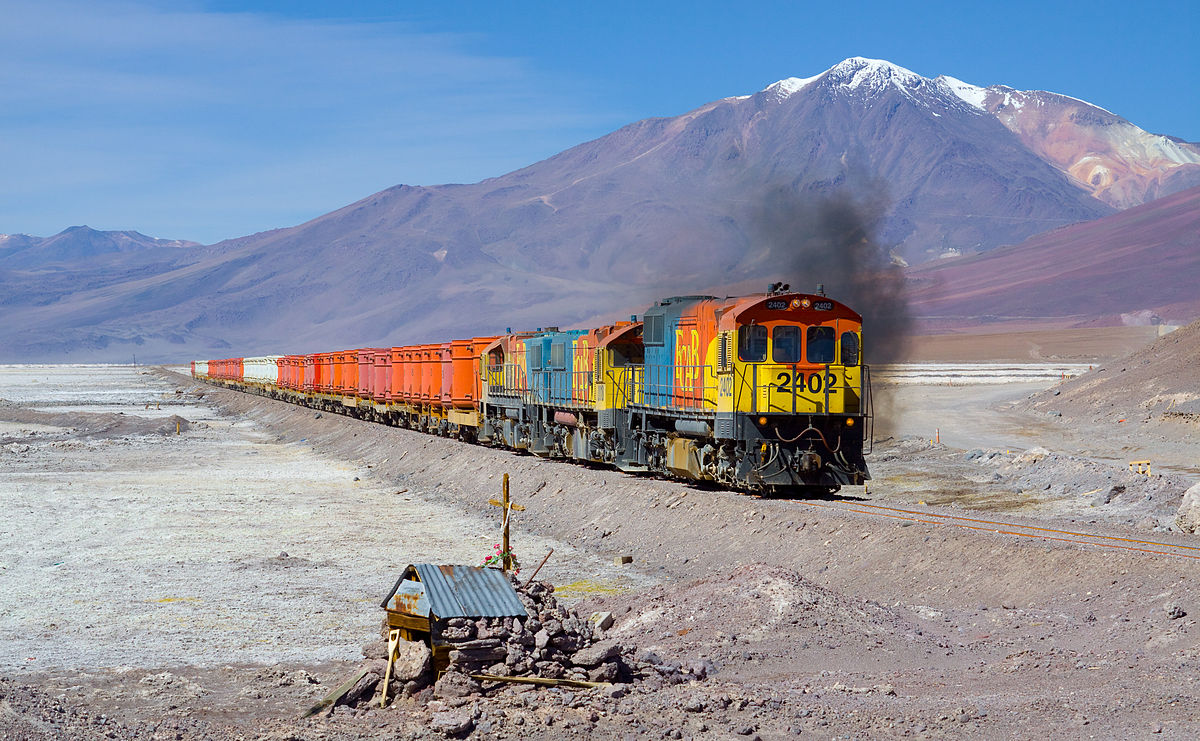
As we in Southern California swelter through a seemingly endless series of hot, humid weather, my mind turns to the Norte Grande of Chile, where the Atacama Desert is the driest place on earth. At one time, I desperately wanted to take the Ferrocarril Antofagasta a Bolivia (FCAB), which ran passenger trains between Antofagasta, Chile and Oruro, Bolivia, from which it was possible to change trains to La Paz.

Years ago, I saw a television documentary about one such trip: I was instantly sold. Unfortunately, although trains still run along the FCAB route, they are all freights.

In My Invented Country, Isabel Allende describes fleeing Chile by this train in 1973 after her cousin Salvador was killed with the participation of the CIA. She remembers an endless, hot, dry expanse.

The FCAB Today

The FCAB Today

Another refugee from Augusto Pinochet’s dictatorship was writer Ariel Dorfman, who has this to say about the Atacama in Desert Memories: Journeys Through the Chilean North:

Less rain falls on these sands than on any other similarly blighted expanse on Earth. I talked to men born in Arica, a woman brought up in Pisagua, men and women who had never ventured forth from the nitrate town of María Elena or who have never left the oasis of Pica, which produces the most fragrant oranges your tongue has ever rolled over, and none of them had felt one drop of rain on their bodies in their lives….

Oh yes, it rained once, some years ago, in Antofagasta. Two millimeters. And several residents died in the ensuing mudslide…. That semi-sprinkle had not reached Antofagasta itself, though there was an unusual front of turbulence sweeping in from the sea, so the reporter on the local radio was already trying to calm down a populace that had begun to panic, a woman had called in to say—much to our cruel mirth—that she thought she had felt a drop of rain on her cheek, and what should she do, should she evacuate her children?

We might smirk a bit at that, though with our California drought, we ought to be prepared for anything. With luck, we might see some appreciable rain this winter … or else!


Laki

Looks Peaceful, Doesn’t It?

Looks Peaceful Today, Doesn’t It?

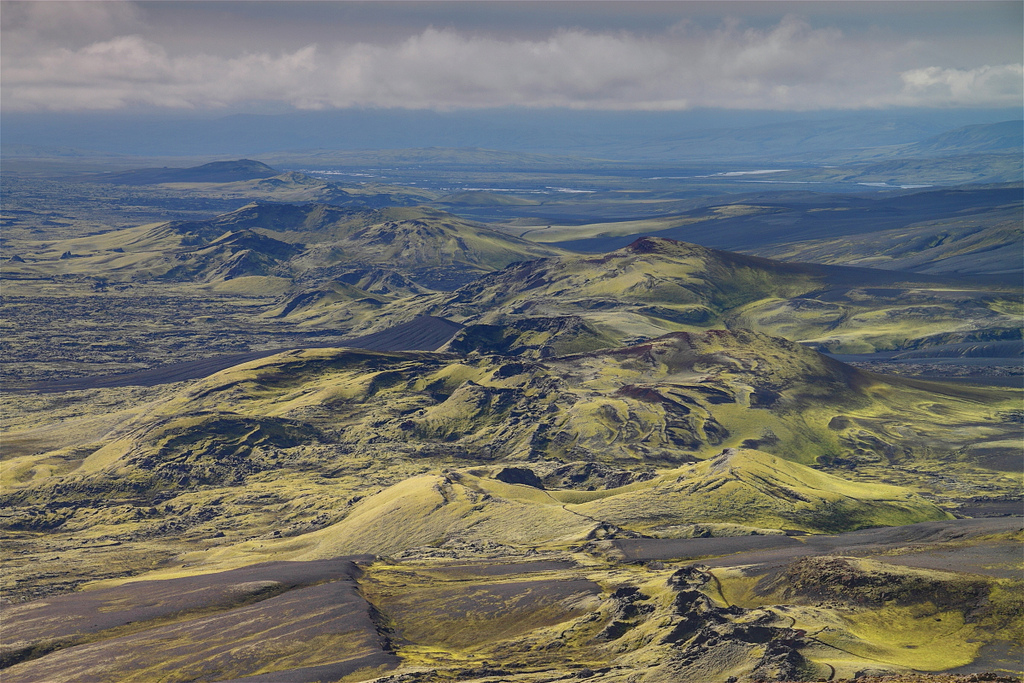
It was during the American Revolution that one of the world’s great climatic disasters occurred. It happened at Lakagigar—“The Craters of Laki”—where a volcanic fissure opened up during an eight-month period between 1783 and 1784 near the village of Kirkjubæjarklaustur in South Iceland. Before it had finished, it had pumped 3.4 cubic miles (14 cubic km) of basaltic lava, hydrofluoric acid, and sulfur dioxide that killed 50% of Iceland’s livestock and, after the ensuing famine, 25% of Iceland’s population.

The effluents from the eruption caused a drop in temperature that caused massive crop failures in Europe and a drought in India. According to Wikipedia, in the end as many as six million deaths were attributed the after-effects of Laki. That would make it the most deadly eruption in modern times.

Today, the moss-covered mountains are crowded with European tourists visiting Vatnajökull National Park, of which Laki is now a part. In her column in the Iceland Review, writer Zoë Robert complains of the tourists’ heedlessness:

While chatting to the park ranger the next day, I expressed my shock at the recent incident at Þingvellir National Park where several campers ripped up large amounts of moss in order to insulate their tents, causing many open scars in the land. While the ranger too indicated her dissatisfaction, she pointed out that large moss areas, like those which exist in Iceland, are rare in other countries and that some people may not realize their true value. This I understand, but I still find it difficult to accept that people can willingly uproot large areas of vegetation, especially in or near a national park, and think that is admissible.