Hunting for Wales in Argentina

Flag of Argentina with Welsh Dragon

Flag of Argentina with a Welsh Dragon

It was almost exactly one hundred fifty years ago that a large group of Welsh colonists arrived at Puerto Madryn and proceeded to settle in the State of Chubut. Today, the Welsh speaking members of Y Wladfa Gymreig  (the Welsh Colony) number somewhere between 1,500 and 5,000. They are centered in the towns of Gaiman, Trelew, and, farther inland, Trevelin.

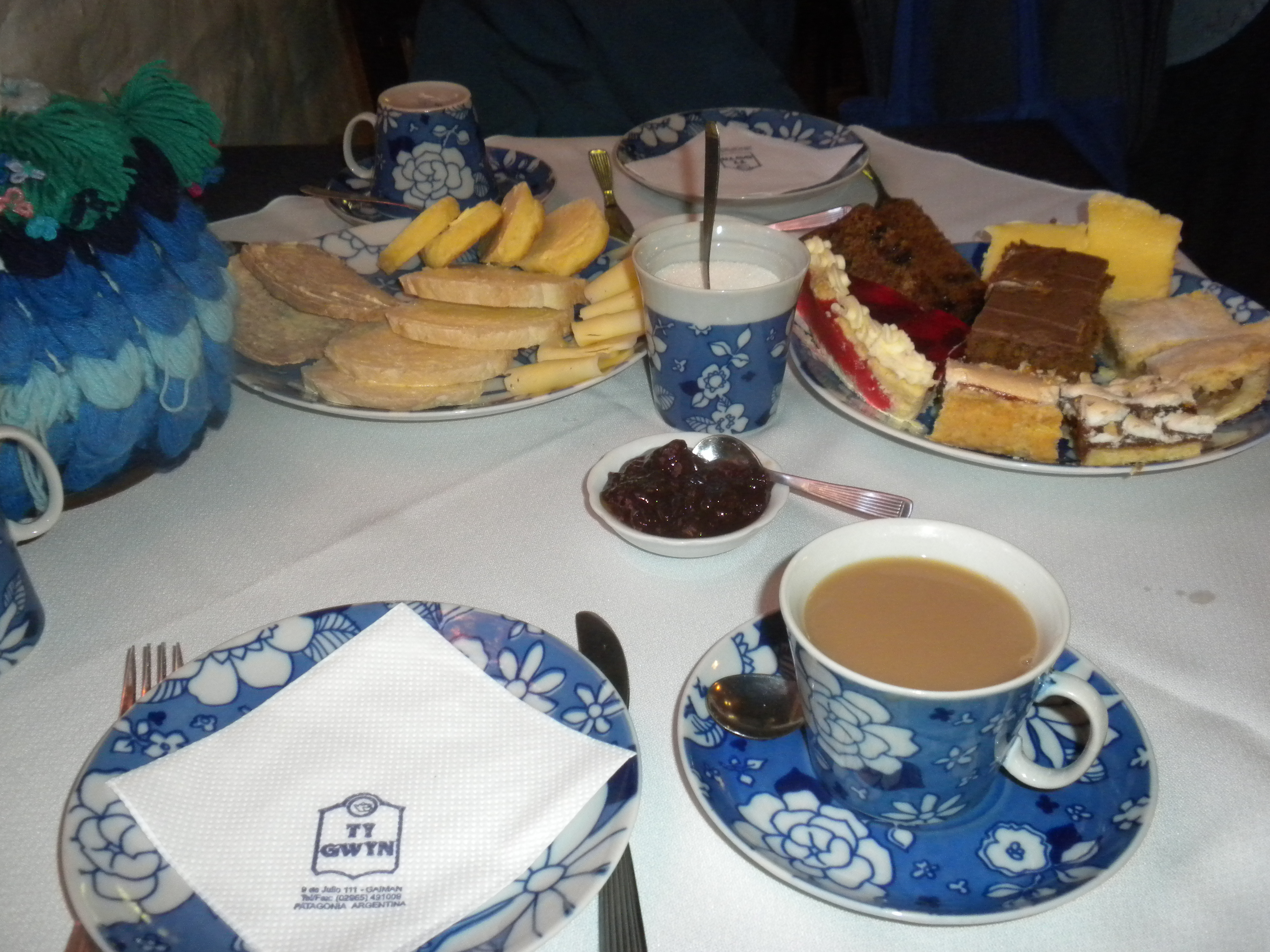
In 2011, Martine and I visited Gaiman with our guide (shown below), Rogelio Rhys. We had a fantastic Welsh Tea at the Ty Gwyn and, on a subsequent visit, saw a number of the historical sights of the colony. I had a read a book by Rogelio’s grandfather William Casnodyn Rhys entitled A Welsh Song in Patagonia: Memories of the Welsh Colonization.  Our guide was astonished that I was familiar with the book.

Rogelio Rhys in Gaiman

Rogelio Rhys in Gaiman

Shown below is a typical Welsh Tea at the Ty Gwyn. It is heavy in carbohydrates, but I threw all caution to the winds and determined to make up for it in the days to come.

A Welsh Tea at the Ty Gwyn Teahouse in Gaiman

A Welsh Tea at the Ty Gwyn Teahouse in Gaiman

So, if you should find yourself in Patagonia, don’t forget to visit the Welsh heart of the State of Chubut. In addition to the Welsh Colony, you will find the best place in the Americas to see whales (Peninsula Valdez) and penguins (Punta Tombo). And don’t forget to sit down and have some tea. It’s really great.

Demoted!

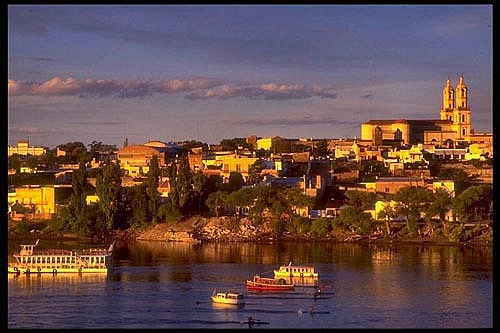
Carmen de Patagones Seen from Viedma

Carmen de Patagones Seen from Viedma

The two cities sit on opposite banks of the Rio Negro. Carmen de Patagones, on the north bank, is the southernmost city of the State of Buenos Aires; Viedma, occupying he south bank, is the capital of the State of Rio Negro, which extends west as far as the Andes and the Chilean border.

It seems that the current edition of the Lonely Planet Guide to Argentina no longer has chapters for the twin cities on the Rio Negro. I guess they’re not Disneyfied enough to draw all the tour groups. For travelers driving from Buenos Aires to Patagonia, it is at best a stopping place for the night before big chunk of attractions around Puerto Madryn and Trelew.

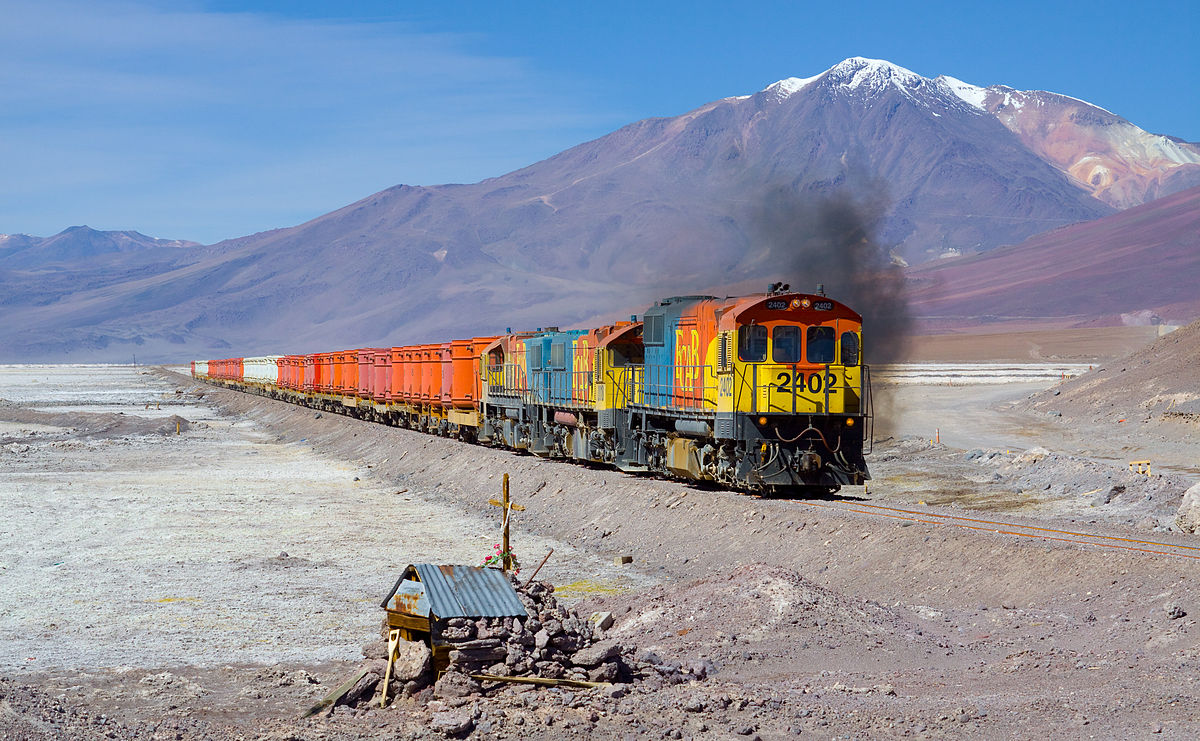
Viedma also happens to be the terminus of the Tren Patagonico, about which I wrote yesterday. From there, it goes clear across the State of Rio Negro to the Patagonian Lake District around San Carlos de Bariloche. Today, I finally got an e-mail response from the Tren Patagonico people telling me they’ll be ready to take my reservation for November in a week or so.

If my reservation is confirmed, I’ll spend a couple of nights in either Viedma or Carmen de Patagones and wander around both towns seeing the local museums.

In 2001, I remember being the only visitor in a two-hour period to the old fish canning museum in Heimaey in Iceland’s Vestmanneyjar Islands. I loved every minute. The curator gave me a personal tour and explained how Heimaey was the main fishing port in Iceland, a country whose GDP is based on their fish catch. Even though the museum is no more (I looked for it in 2013 but couldn’t find it), I have special memories of my visit. And that is much better than being jostled by huge crowds of tourists who distractedly push their way past all the exhibits on their way to the next destination.

So Viedma and Carmen de Patagones have been demoted! So much more for me to see!

Argentina: One Remaining Question

An Overnight Train Trip Clear Across Patagonia

An Overnight Train Trip Clear Across Patagonia

Right smack in the middle of my trip, there is a question of how I’m going to get from Buenos Aires to San Carlos de Bariloche. Most people would probably elect to fly, but I want to minimize my exposure to Aerolineas Argentinas, a state-run airline with a laughably intricate labor union structure. There are a dozen or more unions, any of which can decide to call a strike any time. In 2011, they decided to fly us to Ezeiza’s Ministro Pistarini Airport rather than Aeroparque Jorge Newberry, necessitating a fifty dollar cab ride in the middle of the night to our hotel in the Congreso district.

(As currently planned, I will use Aerolineas to fly from Puerto Iguazu to Aeroparque, and Santiago, Chile, to Aeroparque. Let’s see how badly they screw me up this time.)

What I would like to do is to take an overnight bus to Viedma on the coast, and the Tren Patagonico from Viedma to Bariloche. Below is a map of the route:

Cutting Across the State of Rio Negro

Cutting Across the State of Rio Negro

Part of this was traveled by Paul Theroux on the trip covered by his book The Old Patagonian Express—except he got off at Ingeniero Jacobacci and transferred to a southbound narrow-gauge train from Jacobacci to Esquel.

The only problem is that I have not so far succeeded in making a reservation for the November 13 train. If they do not respond to my reservation request by October 15, I will take a bus from Buenos Aires to San Martín de los Andes. From there, I will take the scenic Ruta de Siete Lagos (Route of the Seven Lakes) to Bariloche. In either case, I have a reservation for Bariloche beginning November 14.

Either way, I’ll probably have a good time.


Felix Culpa

I Profit from My Booking Error

I Profit from My Booking Error

Until a few days ago, I thought my flight to and from South America was going to set me back slightly over $2,200. That’s mostly because flights from Santiago, Chile to Los Angeles are not cheap. Poring over my ticket confirmation, I find that the $900 for my flight to Buenos Aires via São Paolo is actually a round trip flight. Instead of forking over $1,300 for a flight from Santiago, I just need a much cheaper flight (about $300) from Santiago to Buenos Aires—provided I fly back on Thanksgiving Day via TAM Airlines, again via São Paolo.

I’m not sure how this all happened, but I have verified that my TAM ticket is round trip, and that I will have almost one thousand dollars more to spend on my vacation. Of course, I will have to loll around for six hours at São Paolo’s Guarulhos International Airport, but that’s all right with me. I will have my two Kindles fully charged and can sample some tasty Brazilian chow at my leisure.

As far as missing out on some turkey on Thanksgiving, too bad. Don’t like it much anyhow.


Surprise: They’re Not All Blondes

Some Surprising Results from Gene Studies

Some Surprising Results from Gene Studies

All the people in the above photograph are Icelanders. What you are looking at are some of the contestants in the Irish Days festival in Akranes, a small city just north of Reykjavík. Now why would Iceland be having an Irish Days festival?

Apparently Iceland was first settled by Irish hermit monks for about a century before Ingólfur Arnarson became the first Scandinavian settler in A.D. 874. These papar (“Papists”), as they were called, did not stick around once they were surrounded by hyper-aggressive heathens. And, being celibate, they probably did not add their genes to the population of Iceland; but the Vikings did raid Ireland for slaves, and that’s where things suddenly become interesting.

Genetic studies taken of the Icelandic population show that 20% of the males and 63% of the females have Irish ancestry. I find that statistic to be interesting, but I have some trouble wrapping my head around it. Even if the Vikings preferred Irish redheads to the Scandinavian blondes, the Irish women would give birth to as many if not more males than females (the ratio is 21:20 in the U.S.). Perhaps the male Irish slaves had a harder life and were not permitted to mate, while the women were encouraged to bear children, whether within or outside of wedlock. If so, it’s just another instance of the hard life that the Irish have suffered through the ages.

Prizewinner at Akranes

Prizewinner at Akranes

By the way, the winner of the Akranes competition was one Laufey Heiða from the Westfjords. Runner-up was Vígdis Birna, who is shown above receiving her prize.

One thing I can say with certainty is that Icelandic women tend to be beautiful, whether they are blondes or redheads.


Mexican Bus Ride

Model of an ADO Bus With 1980s Logo

Model of an ADO Bus With 1980s Logo

It was in the 1970s and 1980s that I first fell in love with Latin America. Unfortunately, at that time, many of the countries that I wished to visit such as Guatemala, Chile, Argentina, Peru, and Uruguay were ruled by dictators and—in the case of Peru—marked by a violent Maoist insurgency (the Sendero Luminoso). But Mexico was okay at the time. Now there are parts of Mexico I would fear to visit because of violent narcotraficante gangs. And Central and South America are generally safer.

I remember traveling thousands of miles by bus—all on buses built in Mexico by such companies as Masa, Sultana, and Dina. I remember one Cristóbal Colón bus between Mazatlán and Durango that crossed the Sierra Madre Occidental and forded several (then) unbridged rivers on roads that would have left a GM bus in pieces.

In central Mexico, I fell in love with the Flecha Amarilla (Yellow Arrow) line of clean second class buses one could board within minutes to destinations such as Guanajuato, San Miguel Allende, Querétaro, Pátzcuaro, and Mexico City. Along the Gulf, there were the buses of ADO (Autobuses de Oriente) that went clear to Yucatán. Only in Yucatán itself were the intercity buses broken-down wrecks, especially the ones operated by Union de Camioneros de Yucatán. (This may no longer be the case, but it was when I traveled there.)

All through my travels, I kept thinking of a Luis Buñuel film entitled (in the U.S.) Mexican Bus Ride (1952), although the original title is Subida al Cielo (“Ascent to Heaven”). Most of the story takes place during a long bus ride from a coastal fishing village over the mountains to the interior. During the film, there is a death, a birth, a seduction—in other words, just about all of life. It is probably one of Buñuel’s best films, and certainly his best production made in Mexico.


Tarnmoor’s ABCs: Yucatán

Temple of the Dwarf at Uxmal

Temple of the Dwarf at Uxmal

All the blog posts in this series are based on Czeslaw Milosz’s book Milosz’s ABC’s. There, in the form of a brief and alphabetically-ordered personal encyclopedia, was the story of the life of a Nobel Prize winning poet, of the people, places, and things that meant the most to him.

My own ABCs consist of places I have loved (Iceland, Patagonia, Quebec, Scotland), things I feared (Earthquakes), writers I have admired (Chesterton, Balzac, Proust, Borges, and Shakespeare); locales associated with my past life (Cleveland, Dartmouth College, and UCLA), people who have influenced me (John F. Kennedy), foods I love (Olives and Tea), and things I love to do (Automobiles and Books). This blog entry is my own humble attempt to imitate a writer whom I have read on and off for thirty years without having sated my curiosity. Consequently, in the next couple of weeks, you will see one remaining posting under the heading “Tarnmoor’s ABCs.” To see my other entries under this category, hit the tag below marked “ABCs”. We are approaching the end of the alphabet today with “Y” for “Yucatán.”

It was the start of my travels: November 1975. Before then, all my traveling was at the behest of my parents or schools. That year, I suddenly decided I wanted to see Mayan ruins—on my own. My parents were appalled. They were sure I would be captured by bandidos, roasted and eaten. It didn’t turn out that way: I had the time of my life. Over a period of two and a half weeks, I saw the ruins at Dzibilchaltún, Uxmal, Chichén Itzá, Kabah, Acanceh, and Mayapan. I went to a Mexican tourist agency called Turistica Yucateca and arranged, in Spanish, for tour guides. (When did I ever learn Spanish? I just winged it and have been winging it ever since.)

From the moment I landed at Manuel Crescencio Rejón Airport in Merida, I was in a world of wonders. It was a warm evening, and I saw shops open to the street and people sitting outside drinking beer and sodas and chatting with their friends and neighbors. I had great food at places like the Restaurant Express on Calle 60 and Alberto’s Continental Patio and Los Tulipanes. I stayed at fascinating hotels, including the crumbling old Gran Hotel, which dated back to the late 1800s when Yucatán was the hemp (rope fiber, not marijuana) capital of the world.

I was hooked. So hooked that, ever since, I insisted on people saying just Yucatán, not “the” Yucatán. I knew. I was there. And not once, but many times.I would no more say “the” Yucatán than I would say “the” California or “the” Poughkeepsie.

I loved the tropical ambiance of Merida and the surrounding country. And people were friendly, probably more friendly then than they are now.

So that’s when I caught in travel bug. The next year, I went to England, Scotland, and Wales. Then on to Hungary and Czechoslovakia. But during the 1980s, at several points I returned to Mexico and Yucatán, sometimes for a month at a time. I rode the rickety old buses, held babies for overwrought young mothers, snacked on strange foods, and felt myself growing as a person, and perhaps as a citizen of the world.


Blue Dollars

Officially, They’re Illegal, Yet There’s an Official Rate

Officially, They’re Illegal, Yet There’s an Official Rate

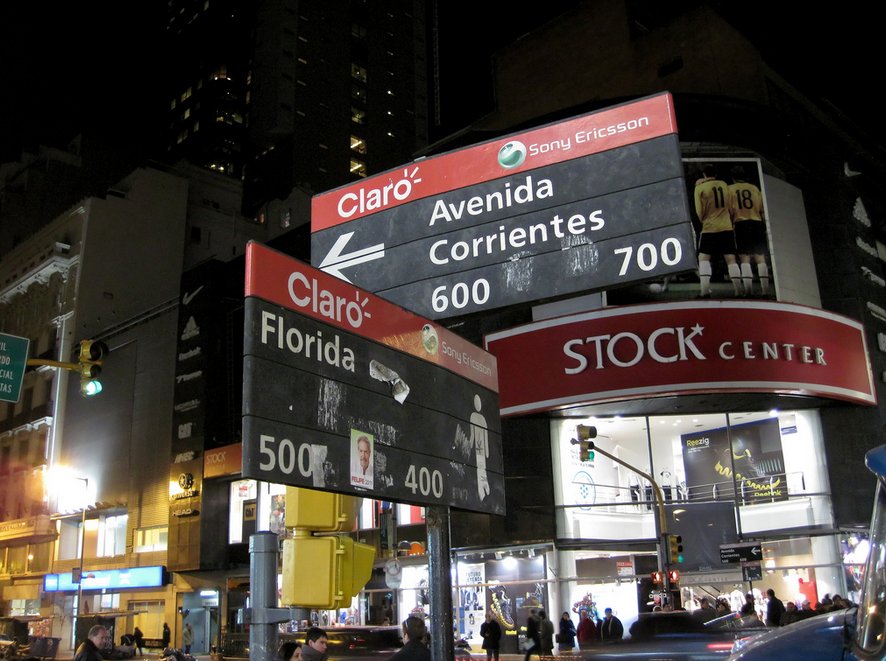
If you go to Argentina, you can pay one dollar to get 9.07 pesos. Alternatively, you can also pay one dollar to get 13 pesos. Now which rate would you prefer? When you go to the bank, you’ll be offered the 9.07 peso rate. But if you go to certain money changers on Calle Florida and wave a few crisp, new Benjamins (that’s $100 notes) at them, you might possibly get the 13 peso rate.

Last week, the Argentinian government went after several “blue dollar” traders and announced hefty fines against firms involved in the exchanges.

And yet, each day, one could find the official and the blue dollar rate published on the Buenos Aires Herald website. If trading at the blue dollar rate is illegal, why does the government condone promulgation of the rates? It’s as if the DEA published today’s rate for opium, crack cocaine, and heroine as a means of assisting drug dealers standardize their rates.

I am following the issue closely, because I am not averse to getting blue dollars at the black market rate, providing I could do so safely. I will ask around at my hotel when I get there.


Ytinerary: Iguazu Falls

Rainbow Over the Falls

Rainbow Over the Falls

My doctor suggested I see it, my niece suggested I see it, my friends suggested I see it; so I decided to add Iguazu Falls to my itinerary. It is considered by some to be the most spectacular waterfalls on earth. It lies at a point where the borders of three countries meet: Argentina, Brazil, and Paraguay. About 20% of the falls are on Brazilian territory, and 80% on Argentinian territory. Nearby Paraguay gets 0%. To see the best long-distance view, I have to pay the $140 visa reciprocity fee to Brazil, even if I just sneak across the border for an hour or two. (I have already paid the Argentinian fee in 2011, which is good for ten years.)

I plan to spend two nights at Puerto Iguazu on the Argentinian side. To get there from Buenos Aires, I plan to take a Via Bariloche bus with their tutto letto service with 180º degree reclining bed/seats. The trip takes upwards of eighteen hours, though I get the chance to see a lot of countryside. On the way back, I will take a plane—carefully avoiding Aerolineas Argentinas to the maximum extent possible. (We had horrendous luck with them back in 2011.)

Whether I will spend $140 to see the Brazilian side of the falls for a few hours is still a moot point. My doctor said it’s worth it, but a lot of tourists have written that once you get close up to the Garganta del Diablo (the Devil’s Throat), everything else is secondary.

As I have written earlier, I have avoided the falls on earlier trips because of my hatred of mosquitoes. I will take a 100% DEET insect repellent with me and avoid spending too much time in the jungle areas around dusk. Instead, I will read a book in air conditioned comfort.


Cartoneros and the Tren Blanco

The Recyclers Come Out at Night ...

The Recyclers Come Out at Night …

There are always two sides to the coin. The other day, I wrote a post about Buenos Aires that perhaps gilded the lily overmuch. I have to keep reminding myself that one can easily love someone, something, or someplace that is far from perfect. Take Los Angeles, for example, from which my cousin Peggy from Cleveland fled because, as she said, she couldn’t find anyone who spoke English. (I don’t think she tried very hard.)  Many of my friends from other parts of the country do not hold Southern California in high regard, especially if they haven’t given the place a chance to work its way into their bones, the way it has with me.

So back to Buenos Aires. As with many huge cities, there is a lot of poverty lurking behind the picturesque façades. In Argentina, these usually take the form of what are sardonically called villas miserias (“misery villas”) due to the habit of calling the areas surrounding the urban core with names beginning with Villa, such as Villa Lugano, Villa Lynch, Villa Crespo, and the spectacularly awful Villa 31 (see below) adjoining the posh neighborhood of Retiro. This used to be the docks area for the Port of Buenos Aires, before they moved east.

Villa 31 with the Microcentro in the Background

Villa 31 with the Microcentro in the Background

After dark, the streets of Buenos Aires fill up with cartoneros, whole families with large carts who go through the garbage for cardboard and other recyclable items for which they can earn a few pesos. After the economic crisis of 2001, the government wisely has begun to recognize them and even facilitated their scavenging by creating the tren blanco, or “white train,” to bring them from the villas miserias, where they live, to the center of the city. These trains consist of old rolling stock with the seats removed (to allow for carts to loaded) and sometimes even without lighting.

Aboard the Tren Blanco

Aboard the Tren Blanco

I have seen the cartoneros at work the few times I wondered the streets of the city at night. For the most part, they are diligent and friendly as they go about their work; but there were stories at the Posada del Sol youth hostel about backpacks and wallets that were stolen. Fortunately, I escaped being mugged.

Again, there are parts of Los Angeles about which I would say the same thing. Except here, there is a higher chance of violence and rape accompanying the mugging.