The Ytinerary: Buenos Aires

Starting at the Beginning ...

Starting at the Beginning …

This is the start of a new series of posts, all connected with my vacation plans and daydreams. The Ytinerary—combining the words “Why” and “Itinerary”—takes each step of my November trip and answers the question, “Why are you going there?”

Let’s start with Buenos Aires. My plane lands at Ezeiza, officially known as Ministro Pistarini International Airport, one of the largest in South America. Fortunately, there are a lot better reasons than mere convenience to spend time on the shores of the Plate. B.A. is a target-rich environment, full of museums, parks, and historical buildings. It has been described as very like a European city, partly because the majority of its inhabitants are of European descent, mostly Italian and Spanish. (The original natives of the Pampas were wiped out by General Julio Argentino Roca’s “Conquest of the Desert” in the 1870s.)

I have been to B.A. twice before, in 2006 and 2011. The first time, I stayed at the Posada del Sol (above) on Hipólito Yrigoyen, not far from the Plaza de Mayo and the Casa Rosada, the nation’s capitol. The second time was at the Chez Lulu in Palermo. This time, I plan to stay in Recoleta, between the two.

This time, I hope to see the city from the eyes of its greatest writer, Jorge Luis Borges. His widow runs a Borges Cultural Centre at Viamonte and San Martín. I also plan to see the Museo Xul Solar, dedicated to a surrealist painter whose work Borges loved (and about whom I will write later this week). Also, I will walk the streets of Palermo, where the poet was born long before the area became gentrified and when it was full of knife-fighters and trucho players.

I will visit some of the old cafés for which the city is famous, such as the Café Tortoni, Il Preferido, El Sanjuanino, and Los Violetas, which are well into their second century, and where Borges and his friends used to hang out. The food is great and the service exquisite.

Also, I will renew my acquaintance with TEGOBA, the English Speaking Group of Buenos Aires, which meets on Fridays for dinner at the FAME Fast Food Restaurant on Cabildo near the Congreso de Tucumán Subte stop (below).

My Friends at TEGOBA: Marta Viajero and Gonzalo Luchinetti

My Friends at TEGOBA: Marta Viajero and Gonzalo Luchinetti

As you can see, I could easily spend all three weeks of my vacation in Buenos Aires. It’s one of those cities which is endlessly fascinating.


Down to Yellow Alert

Yes! It Looks Like Calbuco Won’t Interfere with My Trip

Yes! It Looks Like Calbuco Won’t Interfere with My Trip

I have been watching Sernageomin’s Reporta de Actividad Volcánica (RAV) on a daily basis. I have seen the warnings go from a Red Alert and a 20 km danger zone to an Orange Alert and finally a Yellow Alert. Even if Calbuco doesn’t emit so much as a puff of smoke in the next six months, the Servicio Nacional de Geología y Minería will likely not lower the alert to Green if only because the three eruptions of April 22, 24, and 30 were so spectacular as to keep the agency on its toes.

On May 9, I printed a vastly different chart showing the danger zone, the lava paths to the surrounding lakes, and the direction of wind-borne volcanic ash. My planned bus journey from Lago de Todos los Santos to Puerto Varas would have been blocked at several points by flowing lava; and both Ensenada and Petrohué had been evacuated.

As you can see from the most recent RAV chart for Calbuco (above), only parts of the Rio Frio and Rio Caliente are in any danger of pyroclastic flows; and ash is no longer coming from the caldera.

Chile is a somewhat tricky country to visit: It is not only one of the most active countries in the world due to its volcanic activity, but also due to devastating earthquakes. On May 22, 1960, Valdivia had a quake that tipped the Richter scale at 9.5. What with its associated tsunami, is is considered one of the strongest tremors in history.

So why do I want to go there? Certainly not to walk innocently into a disaster. Mountainous country is beautiful, but the taller the mountains, especially near the edge of a tectonic plate, the more Biblical are the disasters. You pay for beauty.


In the Jungles of This Earth

Orchid in L.A. Arboretum Greenhouse

Orchid in L.A. Arboretum Greenhouse

In various posts I have made to this blog, I have expressed some distaste about visiting the tropics. In November, I will make a two-day exception by visiting Iguazu Falls at the junction of Argentina, Brazil, and Paraguay. Since I share with Martine an abhorrence of mosquitoes and the diseases they pass on to humans, I will wear insect repellent and avoid going out at dusk, when they are most active. I shall also ask my physician—who herself has visited the falls—whether I should also take chloroquine, which I could buy over the counter in Buenos Aires.

My curiosity has been piqued by all the great waterfalls I saw In iceland, especially at Dynjandi and Gullfoss, in 2013. For someone living in an extreme drought zone like California, the thought of all that water is intriguing.

I shall take an overnight bus from Retiro bus station in B.A. to Puerto Iguazu and fly back to B.A. after two days.

Despite my reluctance to pick up some tropical disease, I will probably take one or two of the jungle trails around the falls (just not at dusk) to see all the rich plant and animal life. Tourists at the falls are assailed by troops of coatimundi (see below). They are cute little buggers, but extremely voracious and aggressive.

Cute But Dangerous

Cute But Dangerous


After my broken shoulder, all I need are some nasty coatimundi bites, possibly rabid.


The Blue House on Galos

I’m Starting to Book My Vacation...

I’m Starting to Book My Vacation…

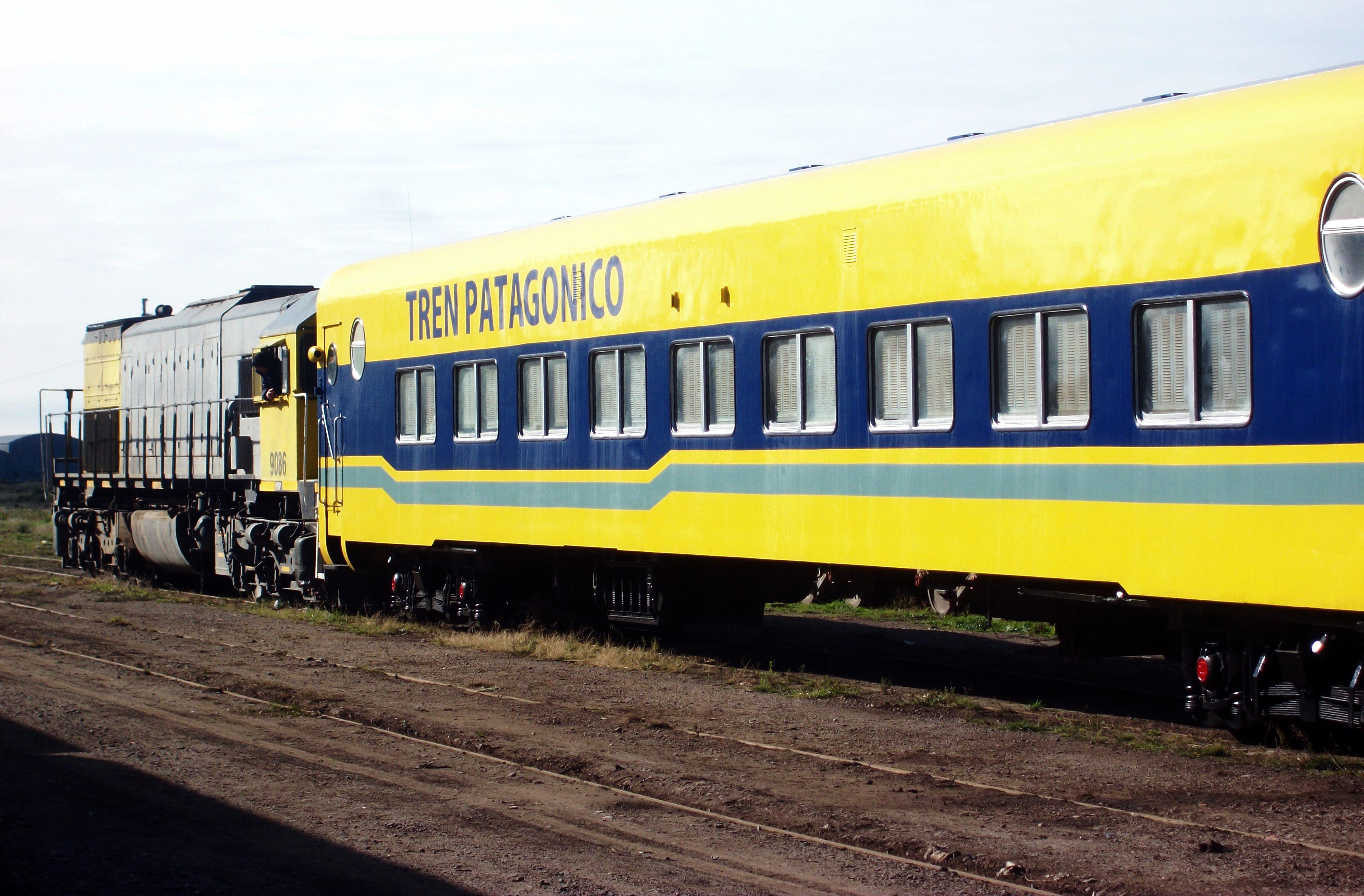
I’ve already begun booking my vacation, even though it is still months in the future. There are still a few question marks. Now that Calbuco has gone to orange alert, I suspect I won’t have any major volcano troubles.The biggest question right now is how I will get a reservation on the November 13 Tren Patagonico between Viedma and San Carlos Bariloche. I suspect what I’ll do is contact an English-speaking tour agency in Buenos Aires, one like Say Hueque, which is geared to more independent travelers like me.

According to the international rail travel website The Man in Seat 61:

Viedma is across the river by small ferry from Carmen de Patagones, but no same day connection is possible so you need a night in a hotel. The Trén Patagonico from Viedma to C. de Bariloche is tremendous fun and thoroughly recommended!  Comfy secure sleeping cars (solo travellers are given a compartment to themselves and a key to lock it), excellent dining car serves steaks and wine, good company and wonderful Patagonian scenery in the morning. Excellent value, and you can buy the tickets in advance in Buenos Aires at Gallerias Rio Negro on Reconquista.

I’m afraid that by the time I get to Gallerias Rio Negro on November 4, the train will be all sold out.

In the meantime, I booked a ideally situated hotel overlooking the Recoleta Cemetery on Azcuénaga in Buenos Aires, and a nice boutique hotel near the river in Puerto Iguazu. For Valparaíso, I’ll be at the La Nona B&B on Galos (Wales) Street atop Cerro Alegre. It’s in the blue building on the left in the above photo.

Yes, it’s beginning to take shape!

Bad Day at La Bombonera

Fans Climbing Over High Security Barriers

Fans Climbing Over High Security Barriers

Among the lowest of the low among the male animal is the rabid sports fan. I keep thinking of one San Francisco Giants fan, Bryan Stow, who was beaten within an inch of his life by Dodgers fans while attending a game here in Los Angeles.

No one beats soccer fans, however, for grotesque violence, of which the Brits are among the worst—to the extent of being banned from some international events. There was even a war caused by dissatisfied fans when the results of a Honduras-El Salvador match did not go according to their desires. (Polish journalist Ryszard Kapuscinski wrote an excellent book on the subject called The Soccer War.)

As much as I like Argentina, I find the recent violence between Boca Juniors fans and Rio Plate players to be truly despicable. After a timeout in a 0-0 tie, Rio Plate players were shot in the eyes with a homemade pepper spray that disabled them. The Argentinean sports federation called the game and endangered Boca’s chances in league play. According to an article in the Toronto Sun:

The rivalry between the two Buenos Aires sides is one of the most heated in the world. It pits Boca, a traditionally working class side from the port area of the city against their more up-town rivals known as the “Millionaires.”

Boca’s Bombonera stadium was a cauldron of drums and the chants of the club’s passionate supporters, who sat just inches from the touchline separated by high wire fences. Few players relish the visit with away supporters barred from attending Argentine matches in a bid to curb violence.

I have been by La Bombonera, “The Chocolate Box,” as Estadio Alberto J. Armando is known, on my last visit to Argentina. Martine and I could have toured the museum, but we knew in advance that La Bombonera is in a tough neighborhood. There is one main tourist street than runs diagonally to the Riachuelo called El Caminito. Every step away from the Caminito raises your chances of being mugged; and the street itself has a huge police presence.

Perhaps rabid attention to sports is something to live for when you have nothing else to live for. But that doesn’t mean I would ever like to attend a major soccer football match anywhere in the world.

Hua Hum? Ho Hum!

One of the Border Crossings from Argentina into Chile That I Was Researching

One of the Border Crossings from Argentina into Chile That I Was Researching

As of yesterday, the 20 km danger zone around the Chilean volcano Calbuco has been lifted, restoring normal traffic between San Carlos Bariloche and Puerto Varas. Although the volcano is still listed as red for a potential eruption, in terms of actual danger, it has been downgraded to orange.

In a way, I am disappointed. I had been researching the other crossings over the Andes and discovered a little-known one at Paso Hua Hum near San Martin de los Andes. By way of a lake crossing, it takes me to Puerto Fuy, from which I can go to Valparaíso by way of Temuco or Valdivia. From pictures I’ve seen, it is every bit as scenic as the famous Lakes Crossing from Bariloche; and it is well off the normal tourist circuit.

This kind of research is part of the fun connected with my vacations. There is always a “problem” to be solved. For Eastern Canada, it was how to find a place to sleep close to Québec City while avoiding the traffic problems. For Iceland, it was how to see the bird cliffs at Latrabjárg in the Westfjords. For Peru, it was how to avoid coming down with acute mountain sickness. All these problems were successfully solved, which made for no small part of the satisfaction I felt from the vacation as a whole.

“Barely Freed from the Nettles”

Pablo Neruda’s Home, “La Sebastiana,” in Valparaíso

Pablo Neruda’s Home, “La Sebastiana,” in Valparaíso

Since I intend to visit Chile this November after crossing the Andes by way of San Carlos Bariloche, I plan to read as much of Chilean poet Pablo Neruda’s work as I can. I thought I would start by selecting the following from his collection, Canto General:

The Poet

I used to wander through life amid
an ill-starred love: I used to keep
a little page of quartz
to rivet my eyes to life.
I bought kindness, I was in the market
of greed, I inhaled envy’s
most sordid waters, the inhuman
hostility of masks and beings,
I lived a sea-swamp world
in which the flower, the lily, suddenly
consumed me in their foamy tremor,
and wherever I stepped my soul slid
toward the teeth ofthe abyss.
That’s how my poetry was born, barely
freed from the nettles, clutched
above solitude like a punishment,
or its most secret flower sequestered
in the garden of immodesty until it was buried.
And so isolated like the dark water
that inhabits its deep corridors,
I fled from hand to hand, to each
being’s alienation, to daily hatred.
I knew that was how they lived, hiding
half of their beings, like fish
from the strangest sea, and in the murky
immensities, I encountered death.
Death opening doors and roads.
Death gliding along the walls.

Neruda died suspiciously soon after Salvador Allende, the socialist President of Chile, was found dead by “suicide.”

I hope to visit Neruda’s two houses in the Valparaíso area, La Sebastiana (shown above) and Isla Negra.

Stopovers

If I Can’t Fly Nonstop, I Can at Least Look Around

If I Can’t Fly Nonstop, I Can at Least Look Around

Above is a view of São Paolo’s new air terminal. There is no way I can fly nonstop from Los Angeles to Buenos Aires, so I picked a bargain flight with TAM Airlines, which recently merge with my favorite South American carrier: LAN. My flight lets me wander around the new International Terminal for three and a half hours before boarding another flight to Buenos Aires’s Ministro Pistarini airport, better known by its neighborhood: Ezeiza.

From Santiago, I have an even more interesting route back. I will take Colombia’s national carrier Avianca to Bogota, where I will spend three hours. Then I hop on a TACA flight (owned by Avianca) to San Salvador in El Salvador, where I quickly change planes to a LACSA (owned by Avianca) flight to Los Angeles.

Why don’t I fly on a U.S. carrier, you might ask? The answer is simple: I don’t like being treated like garbage, eating swill, and paying richly for the privilege.

Look at that airport above. Then compare it to the aging slum that is Los Angeles International. It’s almost as if we just didn’t care any more.

Volcano? What Volcano?

I’m Tired of Being Pushed Around by Natural Disasters

I’m Tired of Being Pushed Around by Natural Disasters

In 2011, it was Puyehue-Cordon Caulle that forced me to change my itinerary. This time, it’s Calbuco (see above). I guess I could just pussyfoot around until it’s time to go and switch my plans once again. This time around, I decided to bet that, by mid-November, Calbuco will be all played out. (Of course, Sernageomin still rates it as red for imminent eruption or eruption in progress.)

Consequently, today I decided to fly into Buenos Aires and, in true “open jaws” style, return via Santiago, Chile. That means I will take the lakes crossing trip from San Carlos Bariloche to Puerto Varas. If Calbuco still insists on spewing crap along my path, I will just go around it. There are other border crossings that are perhaps less convenient, but I’ll cross that bridge when I come to it.

Why am I going home by way of Chile? First of all, I’ve always wanted to visit Valparaíso. My reason for it goes back more than half a century. While a student at Dartmouth College, I saw an almost impossibly poetic documentary by Joris Ivens called … à Valparaíso (1963). If you have a half hour to spare, and don’t mind the French narration, you can see it here on YouTube.

I plan on spending several days in Valparaíso, visiting the homes of poet Pablo Neruda, climbing the endless stairs, taking the funiculars that ascend the forty-two hills of the city. Some people prefer the beach. I’ll take poetry and beauty any time!

Cabulco, Calbuco—Let’s Call the Whole Thing Off!

Okay, So I Misspelled It!

Okay, So I Misspelled It!

It appears that I have been applying alternate spellings to the name of the Chilean volcano which is threatening the itinerary for my next vacation. No sooner did I decide to cross over the Andes between Bariloche, Argentina, and Puerto Varas, Chile, than the volcano Calbuco, which hadn’t erupted for decades, decided to erupt three times.

Above is a map from Chile’s Servicio Nacional de Geología y Minería (Sernageomin) showing the zone affected by Calbuco as of yesterday. The diagonally striped red lines show the dispersion of ash. The solid black area right around the rim of the volcano shows evidence of being changed by the eruptions, and the solid red areas are considered danger zones for any future eruptions.

I plan to go by bus from Petrohué to Puerto Varas (at the left edge of the map).

My hope is that the volcanic activity abates, allowing me to sneak by without getting caught up in the mess. Keep your fingers crossed!