I am always delighted to hear from an old friend with whom I have been out of touch for a while. Today, I received an e-mail from Mona Mistriel, with whom I had worked at Lewis, Joffe & Company for a few years back in the mid 2000s. She had been in Tucson and Sedona in Arizona and is now in Ventura, about an hour north of me.
Her two sons are now fully grown and reflect well on the care she had taken as a single mother with them, through good times and bad.
Mona is a natural healer and has been an influence (along with Martine) on nutritional supplements I am taking, with some success, to improve my health.
I look forward to meeting with her in a couple of weeks. Martine and I look forward to taking her out to dinner here in LA.
Steve Martin and Dan Aykroyd as the Two Crazy Guys
The following repost is from April 25, 2013. It refers to the Tsarnaev brothers who used pressure-cooker bombs at the Boston Marathon that year.
You may recall those two Wild & Crazy guys from Czechoslovakia, the brothers Yortuk and Georg Festrunk, on Saturday Night Live. As they shimmied across the stage in search of “foxes, ” they displayed an exquisite misunderstanding what the United States was all about. In the case of Steve Martin and Dan Aykroyd, the result was comedy. In the case of Tamerlan and Dzhokhar Tsarnaev, two Chechen brothers from Dagestan, the result was death and disorder.
In the years to come, one of the greatest dangers to America will be the failure of immigrants from cultures vastly different from our own to adapt to the prevailing culture of the U.S. Even the mother returned to Russia, leaving several arrest warrants for shoplifting in her wake. The streets of America are not paved with gold. They are fraught with dangers not understood by people who have been influenced by our popular culture without understanding the particular demons that we in the States have to contend with in our daily lives.
After the Hungarian Revolution of 1956, my parents took in two sets of refugees. The first was a mother and son who thought that, now they were in America, everything would be golden. That ended badly when Feddike, the son, was sent to a juvenile correctional facility. Next was Lászlo, a young man in his twenties, who also quickly fell afoul of the law—whereupon my mother and father resolved not to take in any more refugees from the Mother Country.
I do not mean to imply that immigration is bad, but that American culture sends misleading vibes to the rest of the world. People who are not thoughtful and who think that just being on American soil is the solution to all their problems are more likely to go astray. No, they must be ready to roll up their sleeves and start working long and hard toward their goals.
The Tsarnaev brothers should be an object lesson to American officials that they have to probe more deeply than mere external circumstances when opening the doors of the henhouse to potential predators.
Above is an aerial view of Highland View Hospital in Warrensville Township, Ohio circa 1965. For a number of years, my mother worked there as an occupational therapy assistant; and I spent several summers in high school as a volunteer in the occupational and physical therapy departments.
At the time I volunteered there, I thought of Highland View as a hospital for the terminally ill, because most of the patients were seriously ill. The average length of stay per patient was 67 days. I don’t have any statistics about what percent of patients died there vs. were released.
As a volunteer for occupational therapy, I helped bring bed- and wheelchair-ridden patients from their rooms to an auditorium where a visiting volunteer named Harry Zasz screened movies from a 16mm projector onto a screen. After the show, I helped take the patients back to their rooms. The movies were standard Hollywood fare: I remember Pocketful of Miracles (1961) and Seventh Cavalry (1956) as two films that were shown several times over the years.
I remember one ambulatory patient who had a very visible dent one or two inches deep in his forehead.
Probably what impressed me was something that happened toward the end of my volunteer gig. I played chess with an elderly Puerto Rican patient named Manuel. I was proud to have defeated him, but chagrined to find he had passed away that night. So much for triumph!
Later, my mother moved on to Saint Vincent Charity Hospital near downtown Cleveland. I had a very short stint there as a volunteer in surgery. First they had been clean up a very bloody operating room after a surgery. Then they had me shave around the genitals of a man scheduled to have a hernia operation. I just didn’t have the stomach for surgery and didn’t go back.
Incidentally, Saint Vincent Charity was the hospital that appeared in Billy Wilder’s film The Fortune Cookie (1966) with Jack Lemmon and Walter Matthau. My Mom appeared in one shot, but the scene didn’t make it into the final cut.
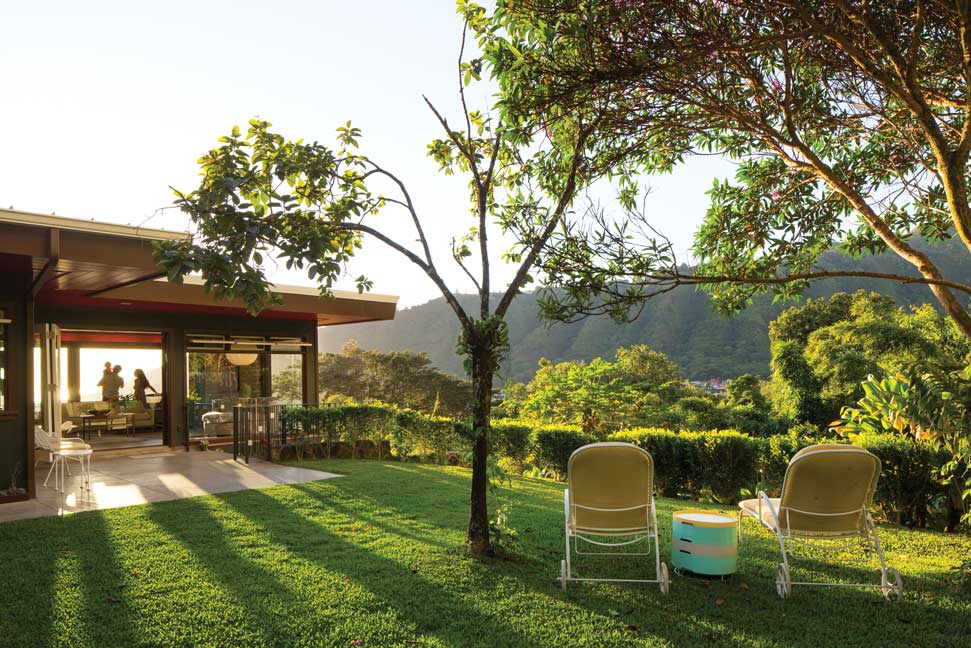
I cannot help but think that life is grimmer than ever, based on all the happy dances on TikTok and TV commercials. Together with all the pharmaceutical commercials, with their family-happiness-in-the-outdoors tropes, the happy dances are a promise that is almost never fulfilled. How does that delirious couple in the photo above look when medical bills and their mortgage are more than they could bear. Even if they got that great house for the cheap price of a zillion dollars.
The one happy dance which doesn’t bother me is Matt Harding’s “Where the Hell Is Matt? 2008.” That son of a bitch had something to dance about—the sheer joy of life—and it would be my pleasure to join him:
The Tomb of the Kamehameha Dynasty of Hawaiian Kings
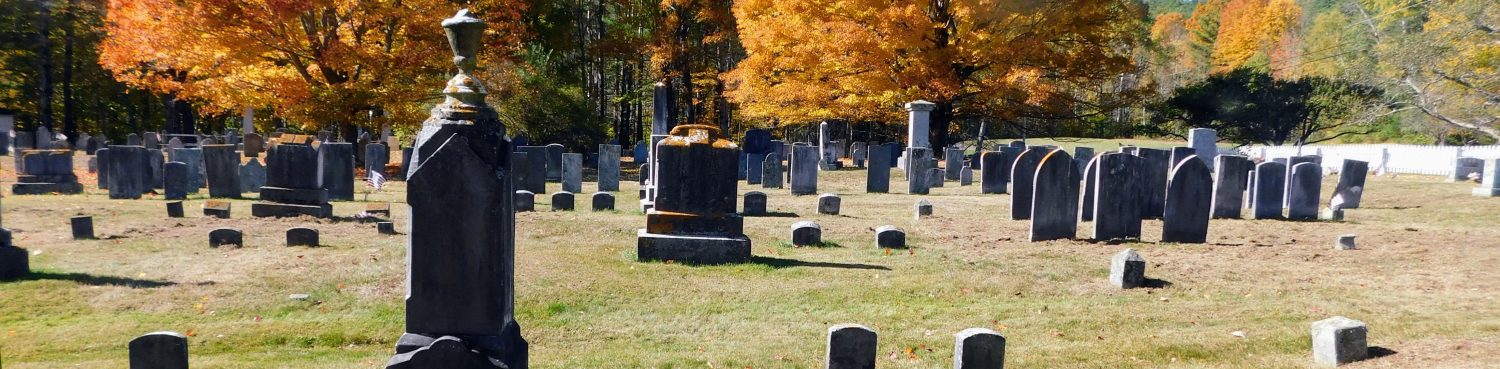
Honolulu’s Royal Mausoleum (or Mauna ‘Ala, “Fragrant Hills”) is the home of most of the two Hawaiian Royal Families of the Kamehameha and Kalakaua dynasties—with the sole exception of Kamehameha I “The Great,” who is buried in Maui.
As you can see from the fresh flower leis on the tomb, today’s Hawaiians revere the memory of their kings and regard the mausoleum as holy ground. Martine and I hope to visit it when we go to Hawaii in three months, perhaps visiting nearby Queen Emma’s Summer Palace the same day.
The Tomb of the Kalakaua Dynasty
It was King Kamehameha IV and his consort Queen Emma who had the mausoleum built in 1862. Unfortunately, the first occupant was their four-year-old son Prince Albert.
In addition to all the Hawaiian kings after Kamehameha I, many of the retainers and chiefs are also interred nearby. For a list of the occupants, click here.
Queen Lili‘uokalani on Hawaiian Postage Stamp
I include the above postage stamp image just to demonstrate that the Kingdom of Hawaii was a self-governing entity before being annexed by the United States in 1898. Queen Lili‘uokalani was the last monarch of the Hawaiian Islands.
Who is the great novelist of Hawaii? (If you say James Michener, deduct a thousand points and surf off a cliff.)
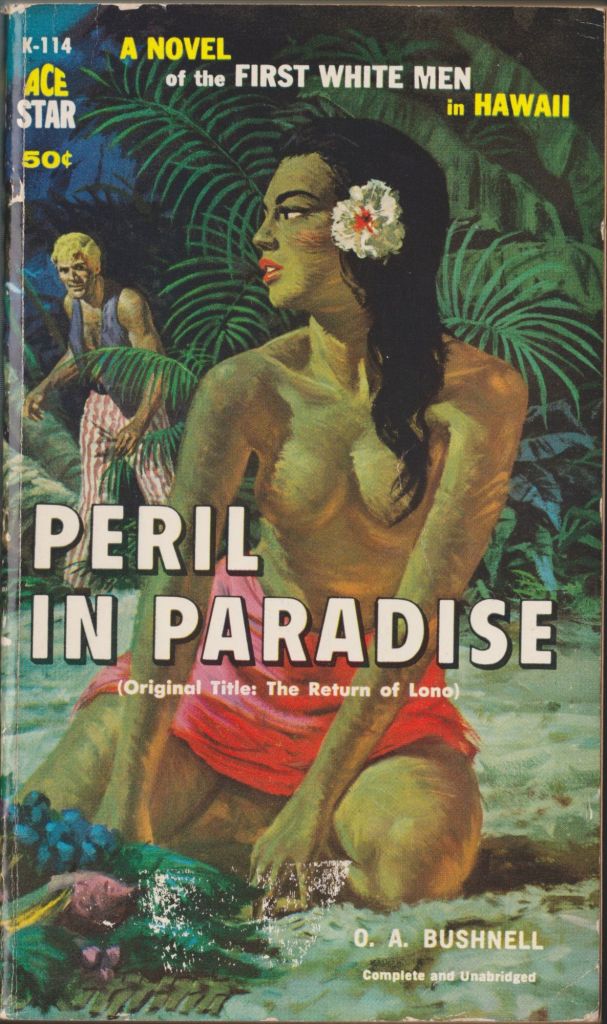
When Martine and I went to Hawaii in 1996, I did some research on the subject and came up with the name O. A. (short for Oswald Andrew) Bushnell. I promptly bought all five of his novels:
The Return of Lono (1956), about the death of Captain Cook on the Big Island of Hawai’i
Ka’a’awa: A Novel About Hawaii in the 1850s (1972)
Moloka’i (1975) about Father Damien and the leper colony at Kalaupapa
The Stone of Kannon (1979) and its sequel The Water of Kane (1980) about Japanese immigration to Hawaii
O. A. Bushnell (1913-2002)
I am ashamed to say that, to date, I have read only the first two books. Between now and our trip to Hawaii this fall, I will also add Moloka’i to my to-be-read pile.
What I find interesting about Bushnell is that he was a professor of microbiology at the University of Hawai’i at Manoa. In fact, he also wrote a book on the subject: Gifts of Civilization: Germs and Genocide in Hawaii (1993). Yet he was also a natural at writing fiction. Come to think of it, much of his novel Ka’a’awa dealt with the devastating smallpox and influenza epidemics of the 1850s
How to Make Serious Literature Look Cheap
I remember visiting the Los Angeles Times Book Fair around 2000 and coming upon a booth staffed by the University of Hawai’i Press. At the time, I had not yet read any of my Bushnell titles, but I asked about how the author was doing. “Ah, poor Ozzie!” came the answer. “He’s pretty ill, and we can only hope he pulls through.” Alas, he was to die shortly after.
But his work lives on, and it is definitely worth reading.
NEW YORK, NEW YORK – JULY 19: Former U.S. President Donald Trump leaves Trump Tower in Manhattan on July 19, 2021 in New York City. (Photo by James Devaney/GC Images)
Today, for the first time, I watched the January 6 Congressional investigation of the January 6 insurrection. While I have never confessed to liking Donald J. Trump, I now view him with utter disdain. This is an individual who clawed his way to the top using chicanery, corruption, outrageous lies, and a total lack of moral compass—with the help of a particularly sleazy set of attorneys, beginning with the notorious Roy Cohn and continuing to Rudy Giuliani.
Trump’s unrelenting plot to steal the 2020 election by forcing his Vice President, Mike Pence, to commit illegal acts, and then raising a mob to threaten his life shows the polluted sludge in his veins, shows him to be successful only as a criminal. Certainly not as a leader of the American people.
Unfortunately, there are still millions of American voters who are 100% behind Trump and his political party. We have not seen the end of the MAGA mobs, nor will we until Oxycontin and Heroin have thinned the herd and their mothers have turned them out of their basement digs.
Long before Trump is re-elected to any office, I am sure that a regiment of demons from the uttermost pit of Hell will have reclaimed their golden boy.
I don’t know if the black cat had anything to do with it, but today was not a lucky day. At least, it wasn’t a terrible day, but it certainly was a wasted one.
Martine had a doctor appointment in East Los Angeles, so I drove her there. On the way, we had lunch at one of her favorite restaurants, Philippe’s The Original on Alameda and Ord Street, just on the east edge of Chinatown. After we were finished, I propose that we walk to the bakery at Homeboy Industries, where gang girls bake and sell tasty pastries. On our way up Alameda to Bruno Street, a black kitten suddenly crossed our path. There was a forced intake of air on both our parts.
Of course, for some inexplicable reason, the bakery was closed today. That was numero uno.
Numero duo was a bit more annoying. We go to the Adventist Health White Memorial medical center on Cesar Chavez and wait for an hour, only to find out that Martine was not expected there, but at some location in Montebello with which we were unfamiliar. Her ophthalmologist had suddenly decided to no longer see patients there.
As I am unfamiliar with Montebello street network, all we could do is reschedule and head home—in rush hour traffic. That black cat sure didn’t help us much.
This afternoon I finally took the plunge. I had been delaying reserving my flight and hotel in Hawaii until Martine got her passport (without which she couldn’t take a flight, as she doesn’t have a REAL ID drivers license). She finally got her passport in the mail on Saturday; and, today I went to the Culver City office of the Auto Club and made our reservation.
Now I have some direction and can do some more detailed planning on destinations and public transportation.
Speaking of direction, the whole north/south/east/west system of directions is generally not used in Hawaii. Think of it for a second: Hawaii is a collection of volcanic mountains upraised from the floor of the ocean. With few exceptions, most people live within hailing distance of the Pacific; and relatively few live in the interior. Therefore, the words Hawaiians most frequently used for directions are maukaand makai—namely, inland and shore.
In Honolulu, the same words are used; but since it is a big city, there are two additional directions: Toward Ewa (west of Pearl Harbor) or toward Diamond Head.
It’ll take some getting used to, but I can understand its usefulness.
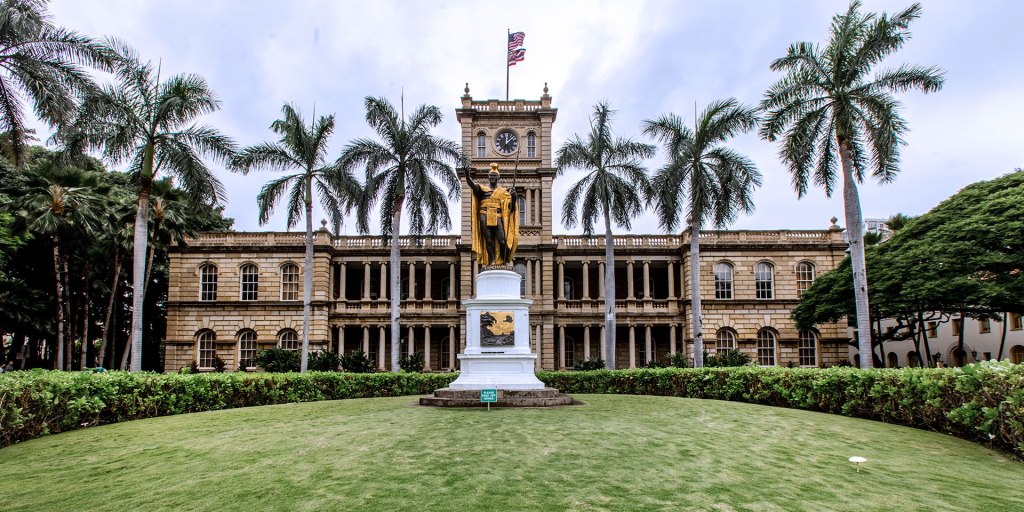
Most Americans are not aware that there are at least three royal palaces in the Hawaiian Islands. Two of them are in the Honolulu area: the Iolani Palace downtown and Queen Emma’s Summer Palace on the Pali Highway. Martine and I have been to the Iolani Palace in 1996 and intend to revisit it on our upcoming trip to O’ahu along with Queen Emma’s Summer Palace.
Hawai’i was a perfectly viable kingdom when the United States annexed the islands in 1898. In the wake of the Spanish-American War, Americans were eager for new colonies; and there was already in place a willing cadre of American settlers willing to raise Old Glory. The reigning monarch, Queen Lili’uokalani was kept a prisoner in the Iolani Palace under suspicion of “treason,” namely for being loyal to her country.
Interior Queen Emma’s Summer Palace
The other palace is connected with a happier time, when Queen Emma (1836-1885), wife to King Kamehameha IV preferred the cooler temperatures of her hillside retreat, which today is a museum operated by the Daughters of Hawai’i. The same group operates a third royal palace on the Big Island of Hawai’i, the Hulihe’e Palace in Kailua-Kona.
In my reading in preparation for our trip, I am concentrating on the period between Captain Cook’s landing on the islands in 1778 and the American annexation in 1898. The memory of the royal families of Kamehameha and Kalakaua is still alive in the islands. There is even a Royal Mausoleum in Honolulu where most of the royal family is interred.







You must be logged in to post a comment.