Rendezvous with Cinecon

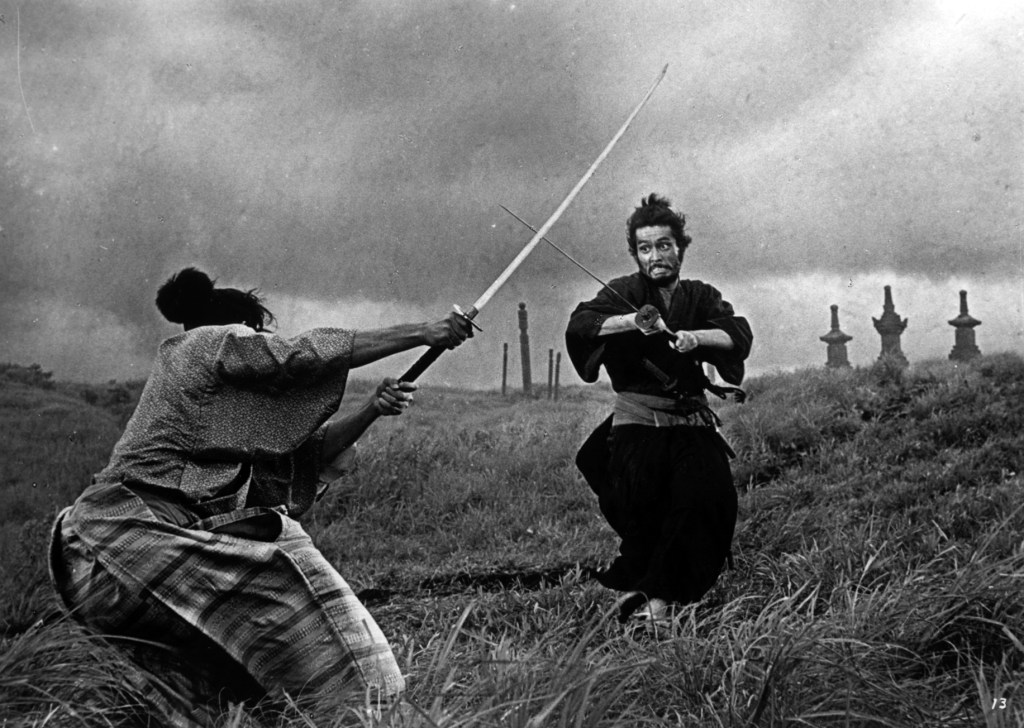
Lynch Mob Scene from The Conquest of Canaan (1921)

Labor Day Weekend. It was Cinecon time once again, where I view old and rare films looking for diamonds in the rough, Like last year, however, this year’s Cinecon meet was changed into an online event because of the Covid-19 resurgence.

I have seen the first two days’ programs and am looking forward to the next two days. So far, I have seen four features:

  • Dynamite Dan (1924), directed by H. Bruce Mitchell, a typical Horatio Alger type story involving boxing
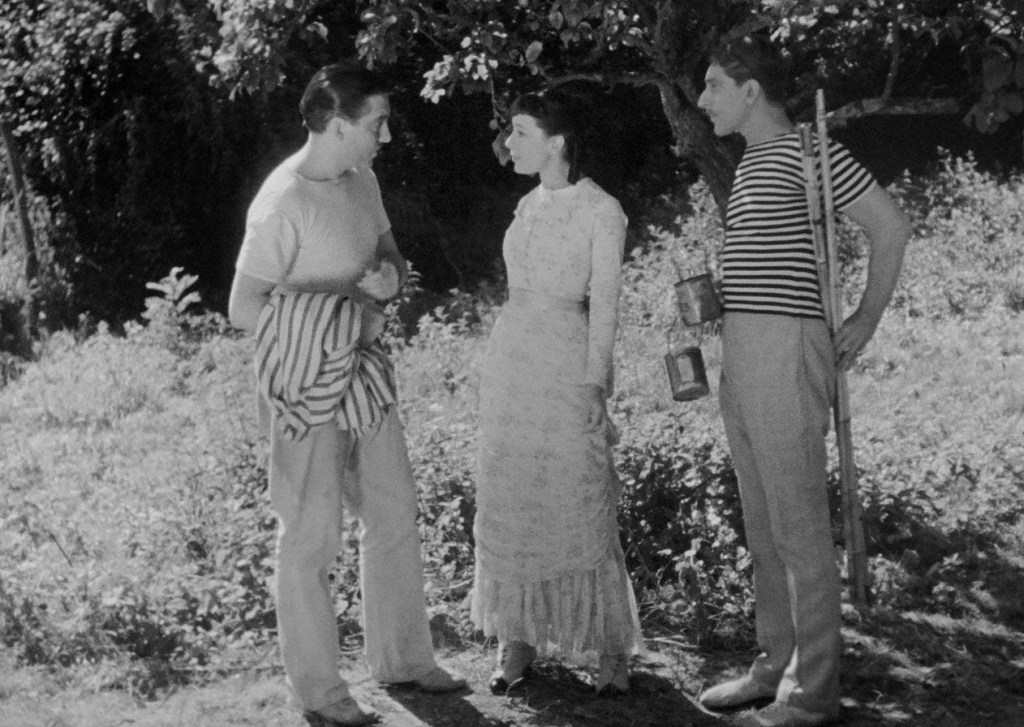
  • Rendezvous with Annie (1946), directed by Allan Dwan, one of the cinema’s most underrated directors, here treating a Preston Sturges-like script
  • Blue Blazes Rawden (1918), directed by and starring William S. Hart, which I had seen before, set in the Pacific Northwest in a lumberjack camp
  • The Conquest of Canaan (1921), directed by Roy William Neill—who gave us the Basil Rathbone Sherlock Holmes films

A Brilliant Comedy by an Underrated Filmmaker

By far the best of the four films were The Conquest of Canaan and Rendezvous with Annie. The older film was shot on location in Asheville, NC, and dealt with a community run by a hypocritical judge and newspaper publisher that persecutes a young man and even sends a mob against him—though the young man triumphs in the end. The other film is about a corporal in WW2 London who goes AWOL for a weekend to visit his wife and impregnate her, only to be shocked when he has difficulty proving the child is his.

Allan Dwan had a long, distinguished career directing films from all the way back in 1911 and ending fifty years later in 1961. Perhaps my favorites among his films are Brewster’s Millions (1945), Silver Lode (1954), and his greatest, Slightly Scarlet (1956). To date I have seen only a small sliver of his output: 32 films from the silent and sound eras.

I won’t pretend that the films shown by Cinecon are among the greatest ever made, but they are almost all rarely seen and worthy productions. Each year, there are some great surprises in the pictures screened. For more info, click here. Be sure to check out the schedule page.

A Plague of Fruit Flies

I Kill Dozens Every Day, But They Keep Coming

Even as I sit here writing this, I am being buzz-bombed by tiny fruit flies that land on my head, my arm, my computer screen, and pieces of paper atop my desk. keep throwing out food that has been infested with them, but they keep finding other comestibles that suit their fancy. I suspect that I have to set traps in my kitchen, while still continuing to inspect my food storage area and ruthlessly toss everything I don’t need.

Excuse me while I get up and kill the flies perched on the light fixture above my head ….

Aah, that was satisfying. But I know there will be several more on the light fixture within the next ten minutes. I feel like the Heinrich Himmler of the insect world.

After Apple-Picking

The Mailbox at Robert Frost’s Franconia, NH House

I attended a Robert Frost poetry reading at Dartmouth College shortly before he died in 1963. Although he was just short of ninety years old, the impression I got was of a wily octogenarian who knew what he was doing. The auditorium in Hopkins Center was filled to overflowing with an appreciative audience. After all, Frost had studied at Dartmouth for a while before he listened to the call of his muse and dropped out.

Although he was almost the quintessential New Englander, Frost was actually born in San Francisco. I think that was all part of his wiliness. I had the feeling he could fit in almost anywhere.

Here is one of my favorite poems of his:

After Apple-Picking

My long two-pointed ladder's sticking through a tree
Toward heaven still,
And there's a barrel that I didn’t fill
Beside it, and there may be two or three
Apples I didn’t pick upon some bough.
But I am done with apple-picking now.
Essence of winter sleep is on the night,
The scent of apples: I am drowsing off.
I cannot rub the strangeness from my sight
I got from looking through a pane of glass
I skimmed this morning from the drinking trough
And held against the world of hoary grass.
It melted, and I let it fall and break.
But I was well
Upon my way to sleep before it fell,
And I could tell
What form my dreaming was about to take.
Magnified apples appear and disappear,
Stem end and blossom end,
And every fleck of russet showing clear.
My instep arch not only keeps the ache,
It keeps the pressure of a ladder-round.
I feel the ladder sway as the boughs bend.
And I keep hearing from the cellar bin
The rumbling sound
Of load on load of apples coming in.
For I have had too much
Of apple-picking: I am overtired
Of the great harvest I myself desired.
There were ten thousand thousand fruit to touch,
Cherish in hand, lift down, and not let fall.
For all
That struck the earth,
No matter if not bruised or spiked with stubble,
Went surely to the cider-apple heap
As of no worth.
One can see what will trouble
This sleep of mine, whatever sleep it is.
Were he not gone,
The woodchuck could say whether it's like his
Long sleep, as I describe its coming on,
Or just some human sleep. 

Space Aliens

Space Aliens at the Roswell, NM, UFO Museum

Let’s face it: Real space aliens—if they exist and they probably do—are probably nothing like this. We have gotten used to these skinny attenuated bipedal creatures who look vaguely humanoid. Life can take many possible forms, especially on planets that are significantly different from Earth.

I have just finished reading a book by Stanisław Lem called The Invincible. I have long thought that the best sci-fi comes from Eastern Europe, particularly Poland and Russia. In the West, we tend to think too much along the same lines; but novels from writers like Lem and the Strugatsky brothers give us a whiff of the alien that is not necessarily tied down to traditional forms.

My Edition of Lem’s The Invincible

For another look at what might be out there, I strongly recommend you read Boris and Arkady Strugatsky’s Roadside Picnic, and see the great film that was based on it: Andrei Tarkovsky’s Stalker (1982).

Sci-fi that tries to imagine the really alien can be a little frightening, but it can be great!

Chullpas

Funerary Tower (Chullpa) on the Shores of Peru’s Lake Umayo

In the lands around Lake Titicaca in Peru and Bolivia, the native cultures believed in building funerary towers called chullpas to house their dead. Even under Incan rule, the Aymara-speaking Colla people continued this practice.

In 2015, I visited Sillustani, which contained the most impressive collections of chullpas situated on a nearby hill. Unfortunately, one cannot always guarantee good weather on a vacation outing, and the weather at Sillustani was vile that day. Consequently, I not only took no pictures but decided not to climb the hill in the rain (and at 12,000 feet or 3,700 meters altitude). So I took none of the pictures shown on this page.

Funerary Towers at Sillustani

I paid dearly for my trip to Sillustani, which included sampling some quinoa soup at a local resident’s kitchen. The next day, I was struck with a horrible need to go to the bathroom while on a lancha plying Lake Titicaca. I must have looked green in the face as I soldiered on in search of some toilet somewhere. Finally, on Isla Taquile, I found one; though I can’t say I got much from that day’s journey other than incredible discomfort.

Some days just are like that.

The Palm Springs Air Museum

“Mitch the Witch II” with Two Confirmed Japanese Warship Victims

The Coachella Valley means a lot more to me than giant rock concerts. There’s Mount San Jacinto brooding over the valley, the Living Desert Zoo and gardens in Palm Desert, delicious Deglet Noor dates, and, of course, the Palm Springs Air Museum.

Apparently, a lot of WW2 pilots found their way to the Coachella Valley and contributed their efforts to making the Palm Springs Air Museum one of the best in the United States. While they are still walking the earth, these are the best and most learned docents on the subject that you can find anywhere.

“Bunny”—Is She African-American?

The Museum is located on Gene Autry Trail on the east side of the Palm Springs Airport. As you see the exhibits parked outside, you can watch passenger jets take off and land just a few hundred feet away.

You can even climb up on one of the WW2 bombers and walk through it, marveling at how lightweight and flimsy it appears to be.

“King of the Cats”

I find I can spend hours wandering among the hundred or so aircraft, stores inside and out, and dreaming what it must have been like to fight two enemies on opposite sides of the globe.

The Other Borges

A Painting by the Younger Sister of Jorge Luis Borges

I was reading a radio interview by Osvaldo Ferrari with the late Jorge Luis Borges, when the subject came up of the writer’s sister, Leonor Fanny “Norah” Borges Acevedp (1901-1998):

FERRARI: As for your relationship with painting, Borges, we mustn’t forget that you’re the brother of a painter.

BORGES: Of a great painter, I think, eh? Although I don’t know if the word ‘great’ adds anything to the word ‘painter.’ Brother of a painter, let’s say. Now, as she explores subjects like angels, gardens, angels who are musicians in gardens …

FERRARI: Like the painting of the Annunciation, for example, which has the city of Adrogué in the background, which is in your house.

BORGES: Yes, which she wanted to destroy.

FERRARI: How dreadful.

BORGES: No, it’s because she thinks that she was still very clumsy, that she couldn’t paint when she made it. Well, what I know is that she sketches the plan of each painting and then she paints it. That is, the people who’ve described it as a naive painting are completely wrong. But art critics, of course, their profession is to get things wrong, I’d say … or all critics.

Woman Playing a Guitar, Painted by Norah Borges

Before one raising the issue of the blind writer as an art critic, let me say that Borges lost his vision in the mid 1950s, so he is talking of painters from his memories of thirty or more years ago. There is also a book I have of Borges’s film criticism, which also dates from before the onset of his blindness.

Because Borges and his writings have been so influential in my life, I am deeply interested in works produced by his family. For instance, Borges’s mother, Leonor Acevedo, collaborated with her son on a number of translations from the English.

Norah Borges

The work of Norah Borges is known and exhibited in South America.

Roswell

The UFO Museum in Roswell, New Mexico

Wherever your beliefs may lie on the subject, I recommend you visit the UFO Museum in Roswell, New Mexico. First of all, it is entertaining in its depiction of widespread beliefs of space alien visits. Secondly, it’s not so earnest that it doesn’t have a bit of fun with its visitors. It’s all here, both the deadpan reportage of sightings and references to sci-fi classic films.

Oh, and thirdly, the souvenir shop is not to be missed. As I write this post, I am wearing my Roswell UFO Museum T-Shirt.

Klatu Berada Nikto

Roswell is not really on the way to anywhere, unless you count Carlsbad Canyons National Park. And from there to Interstate 40 is a long and relatively featureless drive. The only other nearby tourist attractions are the town of Lincoln (of Billy the Kid fame), Fort Stanton, and Fort Sumner (where Billy the Kid is buried).

If you’re looking for a road trip to the Southwest this fall (but please, wait for the heat of summer to die down), Roswell is a fun stop and clearly worth two or three hours of your time.

Air Rage

Flying Isn’t What It Used To Be

I remember my first passenger flight in 1959, from Cleveland to West Palm Beach via Jacksonville. It was like a special privilege. Other kids in the neighborhood expressed jealousy. It was only a prop plane, but we were to be served a special meal enroute with china and silverware.

Half a century later, I hesitate to fly any American carriers, mainly because the majority of passengers are American citizens; and I have lost my faith in my fellow Americans. I would rather take a European, Canadian, or Latin American carrier because the people on board are more likely to be better behaved.

Most of the fights that break out are related to the wearing of masks by rabid Trumpites who in their minds (such as they are) think that Covid-19 is fake news. People have to risk sickening and dying because of such asininity?

I like the idea of severe penalties for bad behavior on a flight. If I didn’t have to go through a thorough inspection at the airport, I would travel with a set of brass knuckles to help subdue violent passengers. Fortunately, the chances of needing them are minimal on Linea Aerea Nacional (LAN), Volaris, Air Canada, or Icelandair.

Unless American carriers take decisive action against passengers committing air rage, they will not get my business.

Vikings

Vikings: They Did a Lot More Than Loot and Pillage

They were the bad boys of early Medieval Europe. From the pulpits of all of Europe and even farther came the prayer “A furore Normannorum libera nos, Domine”—“From the fury of the Norsemen, O Lord deliver us.” Sailing out of Scandinavia, they occupied large parts of Britain, Ireland, France (surely you’ve heard of Normandy), Ukraine, Russia, and Italy. They formed an elite regiment in Constantinople, where they were called the Varangian Guard.

They just happened to be the first Europeans to set foot in the Americas some half a millennium before Columbus sailed the ocean blue. They had a settlement at L’Anse aux Meadows in Newfoundland, which they abandoned only after constant warfare with the Skrælings (Indians).

We call them Vikings, but for them the word was a verb, not a noun. Most of the dread Norsemen raiders were farmers who would “go viking” when their short growing season was over. They were, in effect, part time terrorists.

Also, they just happened to create a great literature in the sagas, particularly those created in Iceland in the 13th century. They included such works as:

  • Njúls Saga,, the greatest of them all, about revenge that gets out of hand
  • Egils Saga, about the bard Egil Skallagrímsson
  • Laxdæla Saga, with its female heroine Guðrun
  • Eyrbiggja Saga, with its berserkers (yes, they actually existed)
  • Grettirs Saga, about a famous outlaw warrior

These were probably the best works of literature to come out of Europe in the period in which they were written. They are all available in excellent translations from Penguin Books.

Incidentally, as a French woman of Norman heritage, my Martine is herself a Viking.