“It’s Just Catastrophe”

Canadian-Born Poet Anne Carson

Canadian-Born Poet Anne Carson

Some day, if you feel like reading some great ancient Greek tragedies, I recommend you try to find a copy of Anne Carson’s Grief Lessons. She takes four relatively little-known plays by Euripides and turns them into wonderful poems in English, such as the following:

Come here, let me share a bit of wisdom with you.
Have you given much thought to our mortal condition?
Probably not. Why would you? Well, listen.
All mortals owe a debt to death.
There’s no one alive
who can say if he will be tomorrow.
Our fate moves invisibly! A mystery.
No one can teach it, no one can grasp it.
Accept this! Cheer up! Have a drink!
But don’t forget Aphrodite–that’s one sweet goddess.
You can let the rest go. Am I making sense?
I think so. How about a drink.
Put on a garland. I’m sure
the happy splash of wine will cure your mood.
We’re all mortal you know. Think mortal.
Because my theory is, there’s no such thing as life,
it’s just catastrophe.

And here is a kind of prose poem from the February 25, 2016 issue of The New York Review of Books entitled “What To Say of the Entirety”:

What to say of the entirety. The entirety should be smaller. Small enough to say something about. Humans. What if the guy you’re hanging up by this thumbs already has a razorplague of painapples roaming his chest inside. Do you regard that as his own fault? Do you really need to make it worse? Do you think of yourself as a well-loved person? Of course these are separate questions. Like dead salmon and coppermine tailings, separate. So these separations, this anesthesia, we should ponder a bit. Humans. What can you control? Wrong question. Can you treat everything as an emergency without losing the reality of time, which continues to drip, laughtear by laughtear? Where to start? Start in the middle (and why?) so as not to end up there, where for example the torture report ended up after all those years of work. You have to know what you want, know what you think, know where to go. New York City actually. Here we are. Trucks crash by. Or was that another row of doors slammed by gods? They’re soaked, the gods, they’ve tucked their toes up on their thrones as if they don’t know why this is happening. Poor old coxcombs.

I’m still trying to get my head around Anne Carson’s poetry … but then, that’s how I know it’s really good!
Winnie and the Vocative Table

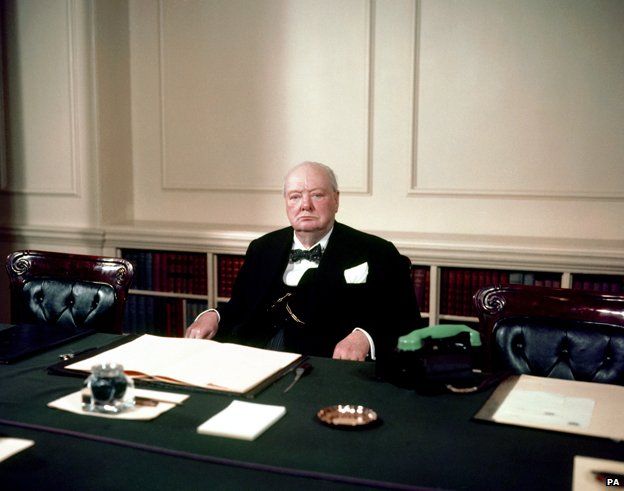
Sir Winston Brings Up a Good Point!

Sir Winston Brings Up a Good Point!

Because at this point in tax season, I am approaching brain death, I will be posting quoted material of interest from other websites. The following anecdote is from The Futility Closet:

A schoolmaster gave a Latin grammar to the 10-year-old Winston Churchill and directed him to learn a series of words.

Churchill found it an “absolute rigmarole” but memorized the list and reeled it off when asked.

‘But,’ I repeated, ‘what does it mean?’

Mensa means a table,’ he answered.

‘Then why does mensa also mean O table,’ I enquired, ‘and what does O table mean?’

Mensa, O table, is the vocative case,’ he replied.

‘But why O table?’ I persisted in genuine curiosity.

‘O table,–you would use that in addressing a table, in invoking a table.’ And then seeing he was not carrying me with him, ‘You would use it in speaking to a table.’

‘But I never do!’ I blurted out in honest amazement.

“Such was my introduction,” he later wrote, “to the classics from which, I have been told, many of our cleverest men have derived so much solace and profit.”

Idarat al-Tawahhush

The Republican Party’s Own Contribution to Beastliness

The Republican Party’s Own Contribution to Beastliness

Last week, I read an excellent article by Juan Cole of Truthdig.Com on the subject of our entering a new era of beastliness as exemplified by Daesh/ISIL/ISIS abroad and Donald J. Trump at home. In fact, the Arabs have a word for it: idarat al-tawahhush, or out and out viciousness.

As Cole writes about the so-called Islamic State:

Most Muslims are on the fence or perfectly happy in secular societies.  They are in a “gray zone.”  Drive them into the arms of extremism either by attracting them with spectacles of power or by scaring them or by scaring non-Muslims into attacking them.

The urgency of this strategy has increased as Daesh’s fortunes on the battlefield in the dusty hinterlands of Syria and Iraq have spiraled down.  Syrian troops are at the gates of Palmyra and on the cusp of driving Daesh out of it.  Russian aircraft are bombing Daesh convoys and positions in Palmyra and near Aleppo, cutting supply lines.  Syrian Kurdish troops allied with Arab fighters have taken vast territory from Daesh in al-Raqqa and left its capital exposed.  In Iraq, Tikrit and Ramadi have fallen.  Kurdish Peshmerga have retaken Sinjar and begun cutting supply lines between al-Raqqa and Mosul.  Local Arab tribes are revolting in Fallujah, and the Iraqi military has announced the beginning of a long campaign to take Mosul.

In America, beastliness is one of the main attributes of currently leading Republican contender Donald Trump. His minions attack women journalists; he broadly attacks wide spectra of our multicultural society; and he threatens to “punish” women who have had abortions. (Is he personally going to spank them?)

Cole’s article continues on the subject of the GOP candidate:

If you take out mass violence, moreover, it is fairly easy to see that Trump himself uses the tactic of “beastliness” just as Daesh does. Where there is already chaos or conflict, he hypes it, as with his promise to kill innocent children related to terrorists or to torture people.  Or he played on existing Islamophobia by proposing a Muslim exclusion act, which is both beastly and an attack on the gray zone.

He also throws verbal firebombs to stir up chaos where there was calm.  He boasts that immigration was not even an issue in the presidential race until he made it one.  But that is because immigration is not an issue.  More Mexicans have been returning to Mexico from the US in recent years than coming here. Most immigrants are unusually law-abiding.  Illegal immigration was a much bigger problem in the 1980s and 1990s and is now a relatively small one.  Most immigrants don’t take jobs away from Americans already here: they do jobs other people don’t want to do.  (Many small midwestern hamlets depending on ranching and small farming have become depopulated as the young people went off to Chicago, and some have only been kept going or revived by Mexican farm and ranch hands).  But Trump tried to tag Mexican-Americans as rapists and drug dealers.

But then, many American voters would be all too willing to fight beastliness with beastliness of their own. And so civilization becomes ever more tattered and frayed as time goes on.


Japan Has Fujiyama and …

... and Ecuador Has Its Cotopaxi

… and Ecuador Has Its Cotopaxi

Heigh ho! It’s off to Volcano Land again. In Peru, I saw Sabancaya in eruption; while in Chile, I almost had to change my itinerary because of Calbuco, which whose eruption graciously fizzled out before I arrived in South America.

Last year, Cotopaxi erupted, as shown in the above picture. But it was not a major event.

This fall, I hope to stay a night or two in the shadow of Cotopaxi. It’s only a couple hours south of Quito along the Panamerican Highway, so it shouldn’t be too difficult.

The Eight Rules of Writing

Kurt Vonnegut (1922-2007)

Kurt Vonnegut (1922-2007)

I admire the simplicity of Kurt Vonnegut’s eight rules of writing, as set down below:

  1. Use the time of a total stranger in such a way that he or she will not feel the time was wasted. [Maybe this is the best rule of them all.]
  2. Give the reader at least one character he or she can root for.
  3. Every character should want something, even if it is only a glass of water.
  4. Every sentence must do one of two things—reveal character or advance the action.
  5. Start as close to the end as possible.
  6. Be a Sadist. No matter how sweet and innocent your leading characters, make awful things happen to them—in order that the reader may see what they are made of.
  7. Write to please just one person. If you open a window and make love to the world, so to speak, your story will get pneumonia.
  8. Give your readers as much information as possible as soon as possible. To hell with suspense. Readers should have such complete understanding of what is going on, where and why, that they could finish the story themselves, should cockroaches eat the last few pages.

Now these rules pertain almost exclusively to writing fiction. I wonder if I could adapt them to writing blogs. I’ll have to get back to you on that.


War Games and Random Play

Norman Mailer

Norman Mailer

As I read the words, I felt the hairs on the back of my neck rising. The book was Norman Mailer’s The Armies of the Night (1968), about a demonstration against the Pentagon against the Viet Nam war. At the time, I was also under the political influence of another Norman, my late friend Norman Witty, who was very active with the Los Angeles draft resistance movement.

This is a good look at the sort of thing that influenced me some half a century ago:

On a day somewhat early in September, the year of the first March on the Pentagon, 1967, the phone rang one morning and Norman Mailer, operating on his own principle of war games and random play, picked it up. That was not characteristic of Mailer. Like most people whose nerves are sufficiently sensitive to keep them well-covered with flesh, he detested the telephone. Taken in excess, it drove some psychic element of static ino the privacies of the brain; so he kept himself amply defended. He had an answer service, a secretary, and occasional members of his family to pick up the receiver for him—he discouraged his own participation on the phone—sometimes he would not even speak to old friends. He had the idea—it was undeniably oversimple—that if you spent too much time on the phone in the evening, you destroyed some kind of creativity for the dawn. (It was taken for granted that nothing respectable would come out of the day if the morning began on the phone, and indeed for periods when he was writing he looked on transactions vis telephone as Arabs look upon pig.)

To this day, I still feel that way about receiving telephone calls. Was it Mailer’s influence? Or is it some ornery impulse that makes it all right for me to make a call, but a damned imposition to receive one?

I was so impressed by Mailer writing about himself in the third person, with his occasional wry asides, that for many years I thought of him as America’s best essayist. Curiously, to this day I have not read any of his fiction, even his famous WW2 novel, The Naked and the Dead. Well, maybe later.


“They Stomped the Floor”

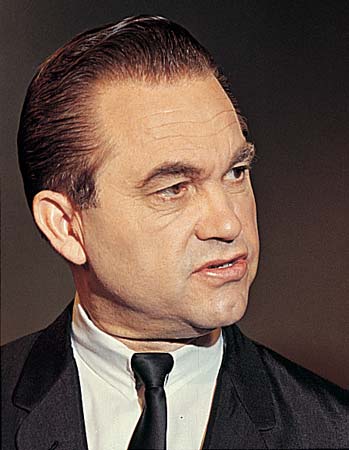
Alabama Governor and Presidential Candidate George C. Wallace (1919-1998)

Alabama Governor and Presidential Candidate George C. Wallace (1919-1998)

Politically speaking, I come from a very divided family. My brother and I were Liberal Democrats, my mother was an independent (she loved John B. Anderson in 1980), and my father was a staunch follower of segregationist Alabama Governor George C. Wallace.

Actually Wallace was not always a segregationist. He started out as a circuit judge of the Third Judicial Circuit in Alabama, where he was known for his fairness, irrespective of race. He even called Black attorneys “Mister” rather than patronizingly referring to them by their first names.

When he ran for governor of Alabama in 1958, he was defeated by John Malcolm Patterson, who ran with the support of the Ku Klux Klan, against which Wallace had spoken on occasion. (in fact, the NAACP had supported Wallace.) This loss wrought a change in the candidate: “You know why I lost that governor’s race? … I was outniggered by John Patterson. And I’ll tell you here and now, I will never be outniggered again.” And he wasn’t.

From this point on, Wallace adopted an wavering segregationist policy. “You know, I tried to talk about good roads and good schools and all these things that have been part of my career, and nobody listened. And then I began talking about niggers, and they stomped the floor.”

Alas, my poor father was also anti-integration. As an uneducated factory worker, he was afraid that Southern Blacks were coming to take away his job. So he thought Wallace was the man to stem that tide. Today, he would probably vote for Trump.