Serendipity: A Glimpse of Rasputin


Gregory Rasputin in Color

Gregory Rasputin in Color

The following beguiling sketch comes from Nadezhda Lokhvitskaya—perhaps better known as Teffi—whose essay on the Siberian “holy man” is reprinted in her Tolstoy, Rasputin, Others and Me: The Best of Teffi, published by New York Review:

I had glimpsed Rasputin once before. In a train. He must have been on his way east, to visit his home village in Siberia. He was in a first-class compartment. With his entourage: a little man ho was something like a secretary to him, a woman of a certain age with her daughter, and Madame V—, a lady-in-waiting to the Tsaritsa.

It was very hot and the compartment doors were wide open. Rasputin was presiding over tea—with a tin teapot, dried bread rings and lumps of sugar on the side. He was wearing a pink calico smock over his trousers, wiping his forehead and neck with an embroidered towel and talking rather peevishly, with a broad Siberian accent.

“Dearie! Go and fetch us some more hot water! Hot water, I said, go and get us some. The tea’s right stewed, but they didn’t even give us any hot water. And where is the strainer? Annushka! The strainer—where is it? Oh, what a muddler you are!”

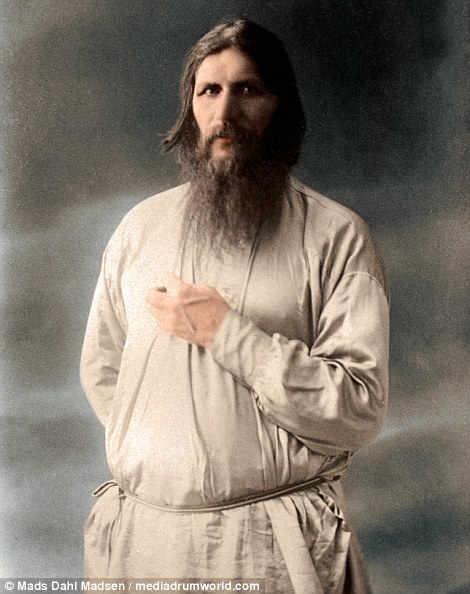
I love the picture of the demonic starets wearing a pink smock.

The photograph above was published by The Daily Mail, along with other interesting color pictures of Rasputin and the Tsar.

Teffi’s essay on Rasputin made me think, and you shall find out later this week exactly what it made me think about.

The Street Food That Hijacked a Cuisine

A Typical Yanqui Mexican Dinner

A Typical Yanqui Mexican Dinner

The food pictured above is an almost archetypal Mexican meal. Except that you might have some difficulty ordering the same dishes in Mexico. First of all, tacos are almost never served in a crispy shell. You may get the beans as shown, but you are probably just as likely to get potatoes .

Mexican restaurant menus consist primarily of foods which, south of the border, are usually referred to as antojitos, or street food as sold by street vendors or market stalls. Typically included are such items as tacos, enchiladas, burritos (but only near the border with the U.S., else what you are ordering is a small burro), gorditas, quesadillas, tortas, chalupas, and tostadas. Common elements include corn (and very occasionally flour) tortillas, corn meal, chiles, a tomato-based sauce, meat fillings, and cheese.

But if you eat at an actual restaurant in Mexico, you are unlikely to find any concentration on antojitos, unless a large portion of their diners are Gringos. At lunchtime, you can almost order a comida corrida, or set menu, which includes soup and/or salad, a piece of meat, potatoes, and a postre, or dessert. You will almost never get tortilla chips.

Mind you, I love antojitos. For dinner tonight, a had a combo of string beef tamal and chile relleno with rice and beans, and chips and salsa. The only real Mexican touch was the pickled carrot salad. If I were in Ensenada and points south, I would prefer to find filete de pescado al mojo de ajo (filet of fish sautéed with garlic) with potatoes, perhaps with flan or queso napoletano for dessert.

So if what is keeping you from going to Mexico is a dislike for tacos or other tortilla-based foods, you need not worry. There will, of course, be differences, such as beef that is tougher and not aged as much as our way. But the general impression of the meal as a whole is nowhere like the one pictured above.

Not Really a Beatnik

Poet and Publisher Lawrence Ferlinghetti

Poet and Publisher Lawrence Ferlinghetti in the Late 1950s

I met Lawrence Ferlinghetti in person over fifty years ago when he came to Dartmouth College for reading of poems from his book A Coney Island of the Mind. The picture above was taken in the late 1950s, and I saw him somewhere between 1962 and 1966 when he still looked that way.

My fellow students asked the usual bozo questions—based primarily on his association with the beat generation writers—and he fielded them so effectively that I kept my mouth shut. After all, I had never heard of the man before he showed up, though I bought a copy of A Coney Island of the Mind the next day.

Ferlinghetti still lives in San Francisco, though he no longer actively runs the City Lights Bookstore. It is his misfortune to be conflated with the Beatnik poets, though his primary interaction with them was as publisher of many of their works. According to an interview with Robert Scheer of Truthdig.Com:

I was a straight man keeping the store back home,” he says cheerfully. “I was leading a respectful married life on Portrero Hill. These guys were much too far out for me. I didn’t go out on the road with them. And I came from a former generation. When I arrived in San Francisco I was still wearing my beret from Paris, and we were known as bohemians … people who led an unconventional creative life before the Beats came along.

We must not forget that Ferlinghetti is also a major U.S. poet in his own right, as is evident in his poem “The World Is a Beautiful Place”:

The world is a beautiful place
to be born into
if you don’t mind happiness
not always being
so very much fun
if you don’t mind a touch of hell
now and then
just when everything is fine
because even in heaven
they don’t sing
all the time

The world is a beautiful place
to be born into
if you don’t mind some people dying
all the time
or maybe only starving
some of the time
which isn’t half bad
if it isn’t you

Oh the world is a beautiful place
to be born into
if you don’t much mind
a few dead minds
in the higher places
or a bomb or two
now and then
in your upturned faces
or such other improprieties
as our Name Brand society
is prey to
with its men of distinction
and its men of extinction
and its priests
and other patrolmen

and its various segregations
and congressional investigations
and other constipations
that our fool flesh
is heir to

Yes the world is the best place of all
for a lot of such things as
making the fun scene
and making the love scene
and making the sad scene
and singing low songs and having inspirations
and walking around
looking at everything
and smelling flowers
and goosing statues
and even thinking
and kissing people and
making babies and wearing pants
and waving hats and
dancing
and going swimming in rivers
on picnics
in the middle of the summer
and just generally
‘living it up’
Yes
but then right in the middle of it
comes the smiling

mortician

A Baker’s Dozen of Great Japanese Filmmakers

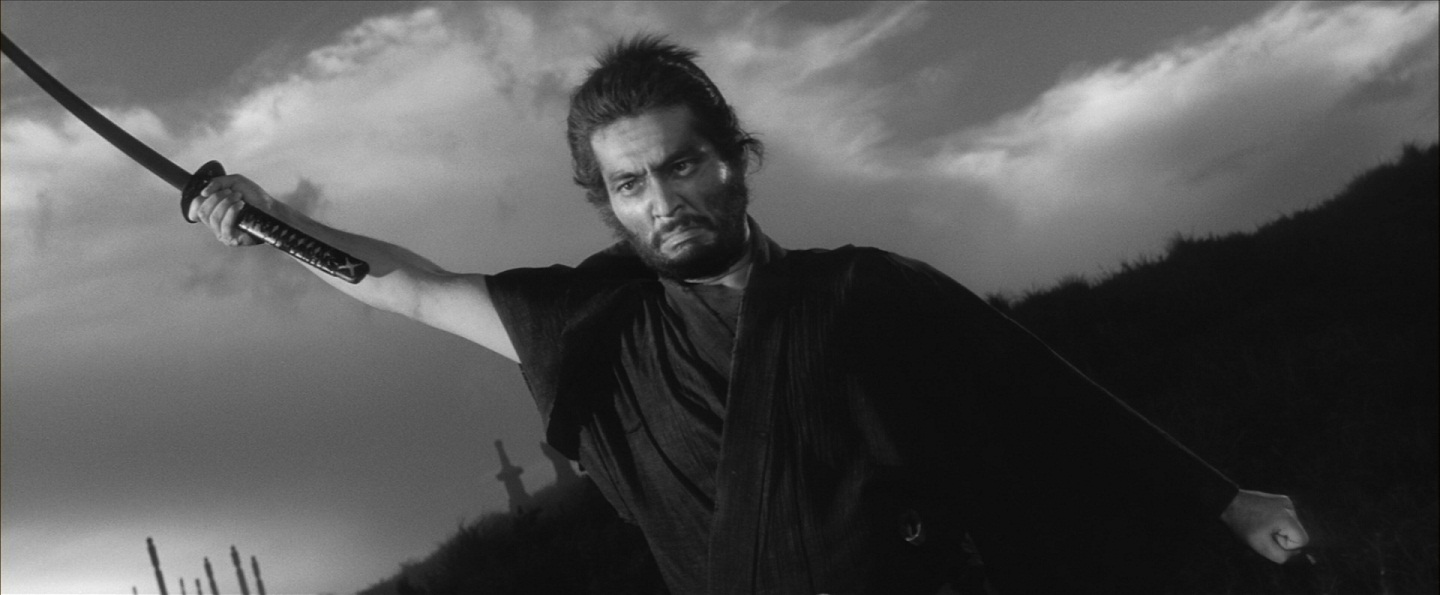
Tatsuya Nakadai in Masaki Kobayashi’s Harakii (1962)

Tatsuya Nakadai in Masaki Kobayashi’s Harakii (1962)

I have written on a number of occasions of my admiration of Japanese films, particularly those of the 1950s and 1960s, when it seems their film industry could do no wrong. Following is a list of my favorite directors followed by my favorites of their films.

If it seems most of the films deal with samurai, it is because I dearly love the genre.

  • Hideo Gosha: Goyokin (1969)
  • Kon Ichikawa: The Burmese Harp (1956), Tokyo Olympiad (1965)
  • Kazuo Ikehiro: Trail of Traps (1965), Castle Menagerie (1969)
  • Hiroshi Inagaki: The Samurai Trilogy (1954-1956)
  • Keisuke Kinoshita: The Ballad of Narayama (1958)
  • Masaki Kobayashi: The Human Condition Trilogy (1959-1961), Harakiri (1962), and Kwaidan (1964)
  • AKIRA KUROSAWA: Just about anything he did, most notably Rashomon (1950), The Seven Samurai (1954), and The Hidden Fortress (1958)
  • Kenji Misumi: Zatoichi Goes to the Fire Festival (1970)
  • KENJI MIZOGUCHI: Just about anything he did, especially Ugetsu Monogatari (1953), Sansho the Bailiff (1954), and Tales of the Taira Clan (1955)
  • Kihachi Okamato: Samurai Assassin (1965), The Sword of Doom (1966)
  • YASUJIRO OZU: Just about anything he did, including Late Spring (1949) and Tokyo Story (1953)
  • Kaneto Shindo: Onibaba (1964)
  • Hiroshi Teshigahara: The Woman in the Dunes (1964)

The directors whose names are in red (Kurosawa, Mizoguchi, and Ozu) are by far the greatest, with Kobayashi not far behind.


Leaving Tabasco

Flooding in the Streets of Villahermosa

Flooding in the Streets of Villahermosa

To begin with, you can forget the vinegary hot sauce from McIlhenny Company. I’m talking about the State of Tabasco in Southeastern Mexico. I have had four encounters with this state, two by visiting its inappropriately named capital of Villahermosa in 1979 and sometime in the 1980s, and two from literature.

Tabasco first entered my thoughts when reading Graham Greene’s The Power and the Glory back in High School, and subsequently reading the same author’s book about his travels there in The Lawless Roads. From around 1920 to 1935, Tomás Garrido Canabal was virtual dictator of the State of Tabasco. A devout anti-Catholic, he persecuted the church and executed many priests and religious. So Greene went there and investigated for himself, writing his two books. (The Power and the Glory was later made into a film called The Fugitive, directed by John Ford and starring Henry Fonda.)

My first visit to Tabasco was in 1979 with my brother. We planned to overnight in Villahermosa before visiting the Mayan reuins at Palenque in nearby Chiapas. We were stunned to find that Pemex, the Mexican petroleum monopoly, was block-booking all the hotels for its employees and suppliers, leaving us nothing but the down-at-heels Casa de Hospedaje Mary (which my brother christened the “Casa de Hopes-You-Die Mary”), where we were awakened every 15 minutes from our damp and fitful sleep by roosters crowing on the roof and church bells tolling the quarter hour. That was after a dreadful meal of shrimp coated with tar and two hours spent looking for a bus terminal that wasn’t where the guidebook said it was.

Olmec Head at Parque La Venta

Olmec Head at Parque La Venta

The second visit was by myself several years later. I visited the giant Olmec heads at the Parque-Museo de la Venta, taking advantage of a long plane delay flying between Mérida, Yucatán, and Tuxtla Gutiérrez, Chiapas. I was smart enough not to try to spend the night in Villahermosa, which struck me as a jungle shit-pit which was at the confluence of Mexico’s two largest (and oft-flooded rivers), the Grijalva and the Usumacinta.

Finally, I just finished reading a novel called Leaving Tabasco by the talented Carmen Boullosa. Here was an authentic voice from rural Tabasco who uses magical realism to signal her disillusionment with her character Delmira Ulloa’s childhood in the village of Agustini.

Carmen Boullosa

Carmen Boullosa

Safely ensconced in Europe, Delmira muses about her origins:

For three decades I didn’t sleep in a hammock, I saw no strange objects floating in water. No albino crocodile popped into my room, no army of Indians came by sucking voluptuously on juicy insects, no legion of toads exploded against my balcony, there were no imposing witches hawking fake merchandise, no rainstorms purchased for cash. I’ve spent six times five years here without hearing once the nightly tale of my grandmother. I came here in search of a world that obeyed the laws of physics; it is now all around me, but I can’t say I’ve come to terms with it.

Leaving Tabasco ends with a lot of questions, but no answers. That’s all right with me, because I don’t believe too much in answers—and I have a lot of questions of my own. One thing for sure: After reading Boullosa, I want to read more by her … and maybe … just maybe … I’d like to give Tabasco another chance.

Soup Wisdom: The Secret Ingredient

Swiss Chard

Swiss Chard

Over the New Years Weekend, two things happened. First, the weather dipped down into the 40s and 50s; then, Martine came down with a nasty cold. What that signaled to me was that it was time to cook a big tureen of soup. We settled on my mushroom and barley soup with added celery, carrots, and red potatoes.

What I’ ve been doing for a couple of years with good results is taking a big bunch of Swiss Chard and putting it through the blender either with water or stock—or both. For this, I prefer the green chard with white ribs, only because the brightly colored chards look a bit odd in the soups I cook.

The mixture of blended chard with, say, a good chicken stock such as the one I buy at Trader Joe’s, results in a really tasty broth. (Both of us went for seconds on the soup today.) Plus, you could hardly do better when it comes to nutrition: check this out. We tend not to eat enough vegetables anyhow.


Ethereal Innocence

Jon Stewart, Formerly of The Daily Show

Jon Stewart, Formerly of The Daily Show

Intellectuals have this little problem: They just cannot understand those who aren’t intellectuals. Irony and sarcasm will not do the trick. When we think that Jon Stewart or Stephen Colbert have produced some withering putdown of someone on the other side of the culture wars, the only response from the other side is, “Consider the source. Who cares what a libtard has to say?” After all, they have their own information sources which Liberals have disdained to meet head on.

It’s roughly equivalent to “Sticks and stones may break my bones, but words will never harm me.”

Looking back at the Presidential Election of 2016, it strikes me that humorous sallies are not a replacement for engaging with Red States. One has to confront, listen, and respond. Barack Obama did this in 2008 and 2012; Hillary in 2016 did not.

I am currently reading a book of essays on G. K. Chesterton by the Rev. James V. Schall, S.J. In a piece entitled “On Becoming Inhuman out of Sheer Humanitarianism,” Schall writes:

In the summer of 1926 (July 3 and 10), Chesterton wrote two essays in The Illustrated London News on literature and novels. He began with some advice that I recall my old professor Rudolf Allers had also given some years ago, namely, “read even bad novels.” Allers’s point was that you will likely find in lousy novels some rather accurate insight into how people are thinking or acting that you will not find in good literature or in your own experience. It is not easy to imagine all of the silly and wrong things that we might perpetrate on one another, yet we need to know this if only to save us from a certain naïveté or ethereal innocence. [Italics mine]

Maybe someone has to listen to what Sean Hannity and Rush Limbaugh are saying if we are serious about countering it. Even if what they have to say is unadulterated horseshit.

The “Saturday Night Live” sketches about the last election were brilliant: Alec Baldwin and Kate McKinnon couldn’t have been better. Yet millions of voters weren’t listening. They were tuning in to Fox News or Jesus or Breitbart.

Because the Democrats have failed to engage all the voters, we are resigned to waiting for a new Reichstag fire to be set.

Freezing for the Roses

Camping Out Overnight for the Rose Parade

Camping Out Overnight for the Rose Parade

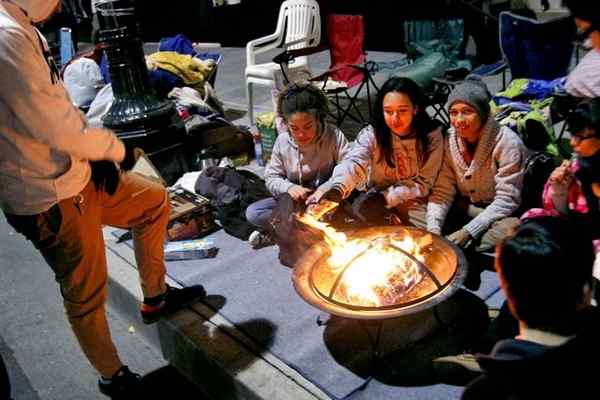
The temperature overnight in Pasadena is expected to dip down to 46° Fahrenheit (that’s 8° Celsius). When Martine and I were there about an hour ago, it was already near that level. Additionally, there is now a 50% chance of rain before morning.

And what is tomorrow morning? Why, it’s the Tournament of Roses parade, which is how Southern California proselytizes Easterners that we don’t have to shovel ice and snow off our sidewalks, and that it (almost) never rains in L.A.

Colorado Boulevard was so crowded with people camping in the streets in order to get a front seat for the parade that Bill, Kathy, Martine and I had to find a different restaurant: The local Persian restaurant, Heidar Baba, was a total mob scene—both from the point of view of parking and prone bodies to step over. Fortunately we found a place a scant two blocks from the parade route that was almost empty.

I never understood why so many people were interested in the Tournament of Roses Parade. And as for camping in the streets along with all the gang members and drug deals, that was never an option for me and never will be. If I wanted to see the parade (which I don’t), TV is good enough, even with the corny announcers oohing and aahing over the 30 million Himalayan Stinkflowers lining the North Korean Friendship Float.

My guess is that many of the campers are Penn State fans in town for the Rose Bowl confrontation with USC. Many will return to their frozen hells convinced that Southern California is the place to be—not to mention the millions viewing it on television from the Keystone State and adjacent polar regions. We don’t really need or want another influx of people escaping the snows of winter only to find that neither housing nor jobs are easy to find here. Oh, well, so it goes.