Fêtes Galantes

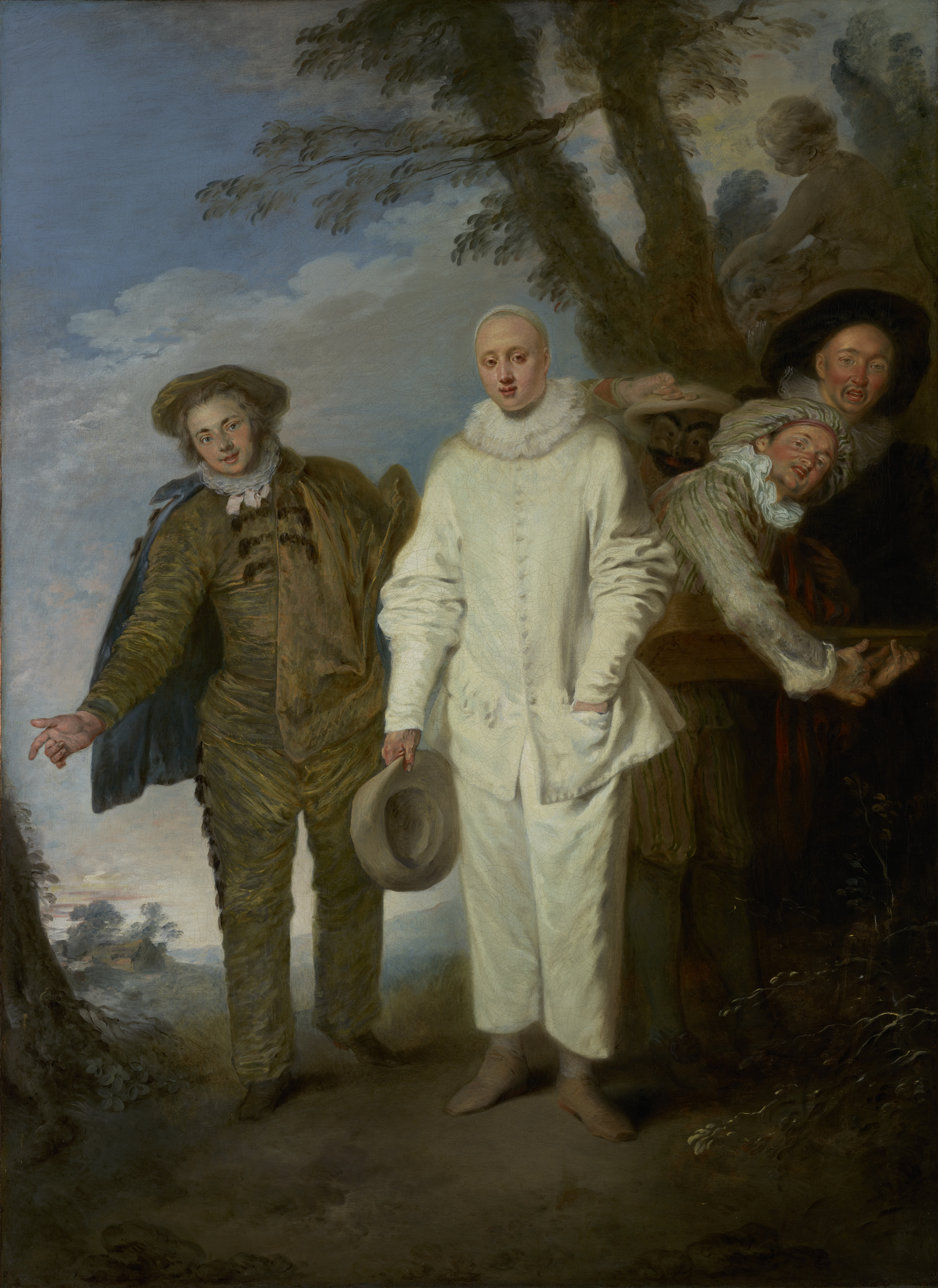
“The Italian Comedians”

Today, Martine and I took the bus to the Getty Center (to avoid paying the $20.00 parking fee). Each time I visit, I make surprising discoveries. Today’s surprise was two paintings by the French Painter Antoine Watteau (1684-1721). In the 36 years of his life, Watteau combined two themes again and again in his fêtes galantes, both of which figured in paintings on display at the Getty Center.

On one hand, there are theatrical characters from the Italian commedia dell’arte. To serve as contrast, they are usually outdoors in natural settings. According to he museum’s description:

Five comedians have just finished their performance in a verdant park on the outskirts of Paris and look expectantly at their audience. Pierrot, the clown in a baggy white suit, is already holding his hat in his hand, hoping that a few coins might be thrown into it.

Flanking Pierrot are four other performers dressed as characters from the Italian commedia dell’arte, which enjoyed great popularity in 18th-century Paris. Brighella wears a splendid greenish-gold suit and shoulder cape trimmed with black stripes. Mezzetin strums a few chords on his guitar, while Harlequin in a black mask with its horsehair eyebrows and moustache peers over his shoulder. A mock Spanish costume of black velvet with a white ruff identifies the figure on the far right as Scaramouche.

The actors penetrate our world with an intense humanity and vivid reality, far removed from the theatrical artifice and caprice of the stage they have just left.

“The Surprise”

A smaller painting is the same artist’s “The Surprise”:

In a verdant park at sunset, a young woman abandons herself to her tousle-haired companion’s ardent embrace. Coiled up in a pose of centrifugal energy, the impulsive lovers are oblivious to the third figure: Mezzetin, sitting on the same rocky outcrop. Drawn from the theatrical tradition of the commedia dell’arte, this character represents a poignant foil to the couple’s unbridled passion. Introverted and with a melancholy air, he tunes his guitar, knowing that his serenading will mean nothing to the lovers and serve only to heighten his own sense of lonely longing as he gazes upon them. His costume, a rose-coloured jacket and knee-britches slashed with yellow and adorned with blue ribbons as well as a lace ruff and cuffs, is reminiscent of the paintings of Anthony van Dyck. The small dog at lower right, a quotation from Rubens, watches the couple with considerably more appreciation than Mezzetin can muster.

Curiously, both paintings share a sense of sadness. Common to both paintings is the character of Mezzetin, both times strumming on a guitar. In the commedia productions, he plays the part of a schemer and trouble-maker, one who tries to flirt, but frequently comes across as a little creepy in his efforts. He is a frequent subject in Watteau’s paintings, perhaps personifying a kind of talented loneliness.
A Little Bit of Wales

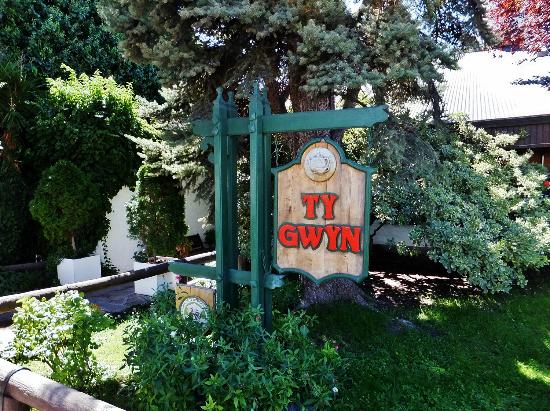
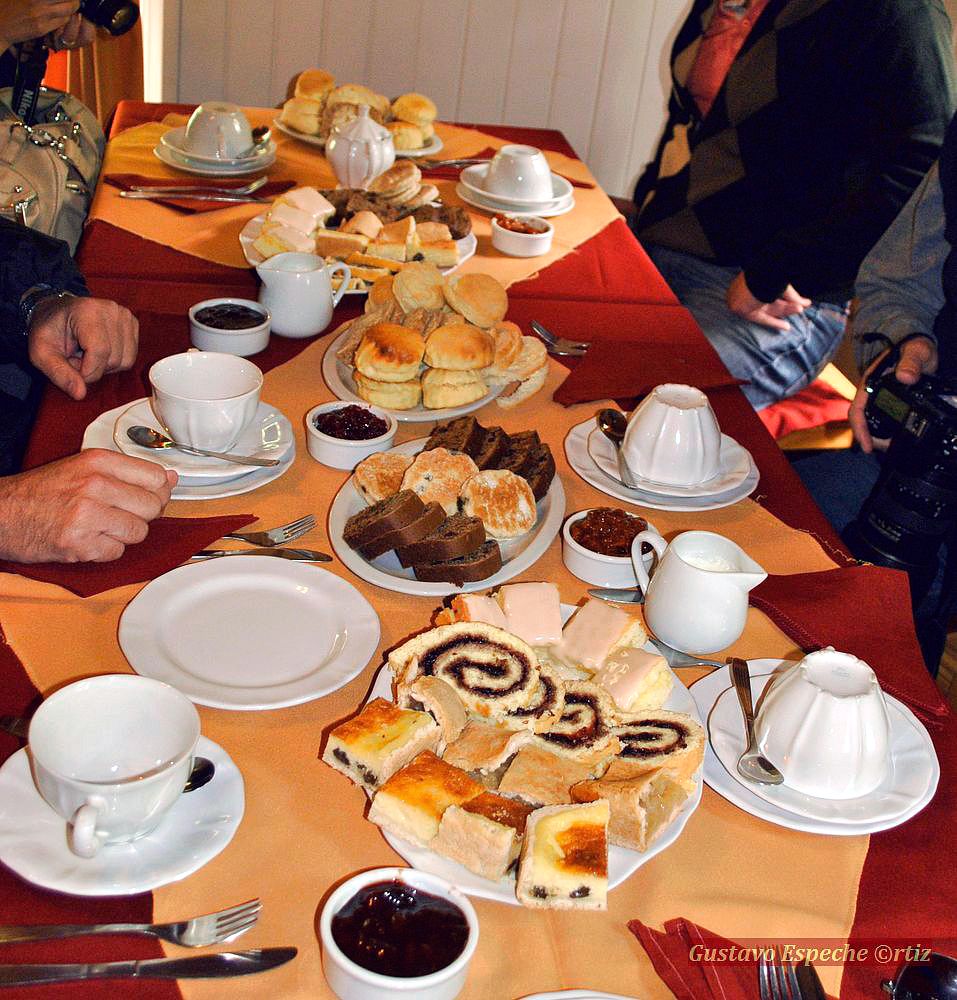
A Welsh Tea House in the State of Chubut, Argentina

Today’s post is the result of finding a business card in Spanish for one of our 2011 Argentina destinations. It was part of the best day on that particular trip. In the morning, Martine and I went to the giant Magellanic penguin rookery at Punta Tombo where we saw baby penguin eggs hatching under the watchful eyes of hungry shore birds. Then we drove to the Welsh settlement at Gaiman where we had high tea at the Ty Gwyn.

Although we were many thousands of miles from Wales, it was as if we were in the Old Country. The tea, sandwiches, and cakes were absolutely delicious. In fact, we had such a good time that we took a bus from Puerto Madryn back to Gaiman and had another high tea.

High Tea at Ty Gwyn

The State of Chubut was originally settled by the Welsh who settled in a number of communities, including Gaiman, Puerto Madryn, Trelew, and Dolavon. At the souvenir shops at the Trelew airport, a conspicuous presence were the packages of Torta Negra Galesa, the dark Welsh Cake that is the highlight of a Welsh tea.

The only other places where Martine and I had high tea were at Blenheim Palace in England—the birthplace of Winston Churchill—and Butchart Gardens near Victoria, British Columbia, Canada. It is interesting that the Welsh in Argentina were easily on a par with the other two.


Uxmal

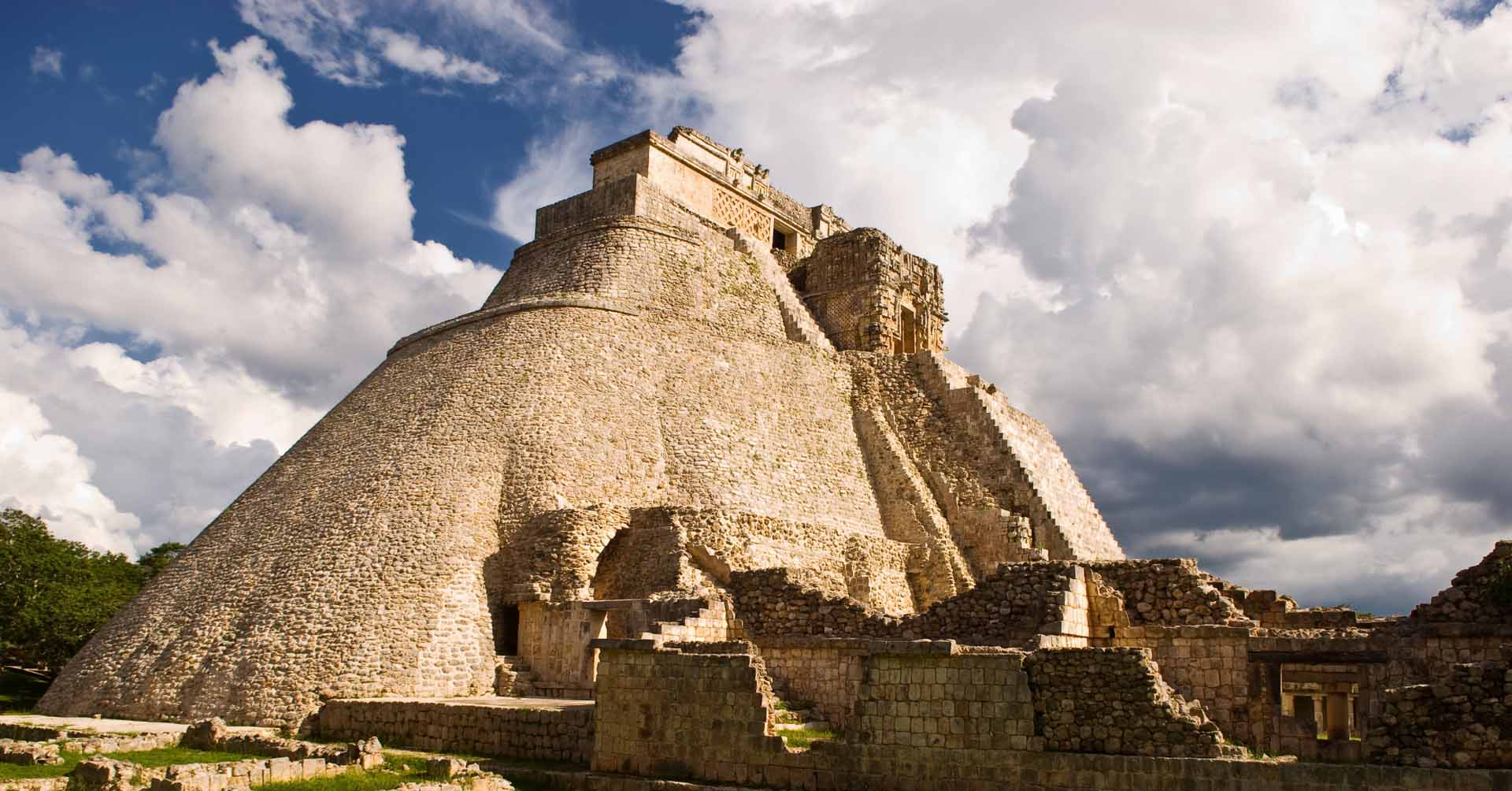
The Pyramid of the Magician at Uxmal in Yucatán

I may have to delay my trip to Mexico until I know what’s happening with the pain in my knee. To refresh your memory, there is some sort of muscular pain in the crook of my left knee, initially diagnosed to be a Baker’s Cyst or some sort of tendonitis. With luck, I will be able to go at some point in January, unless the condition requires surgery.

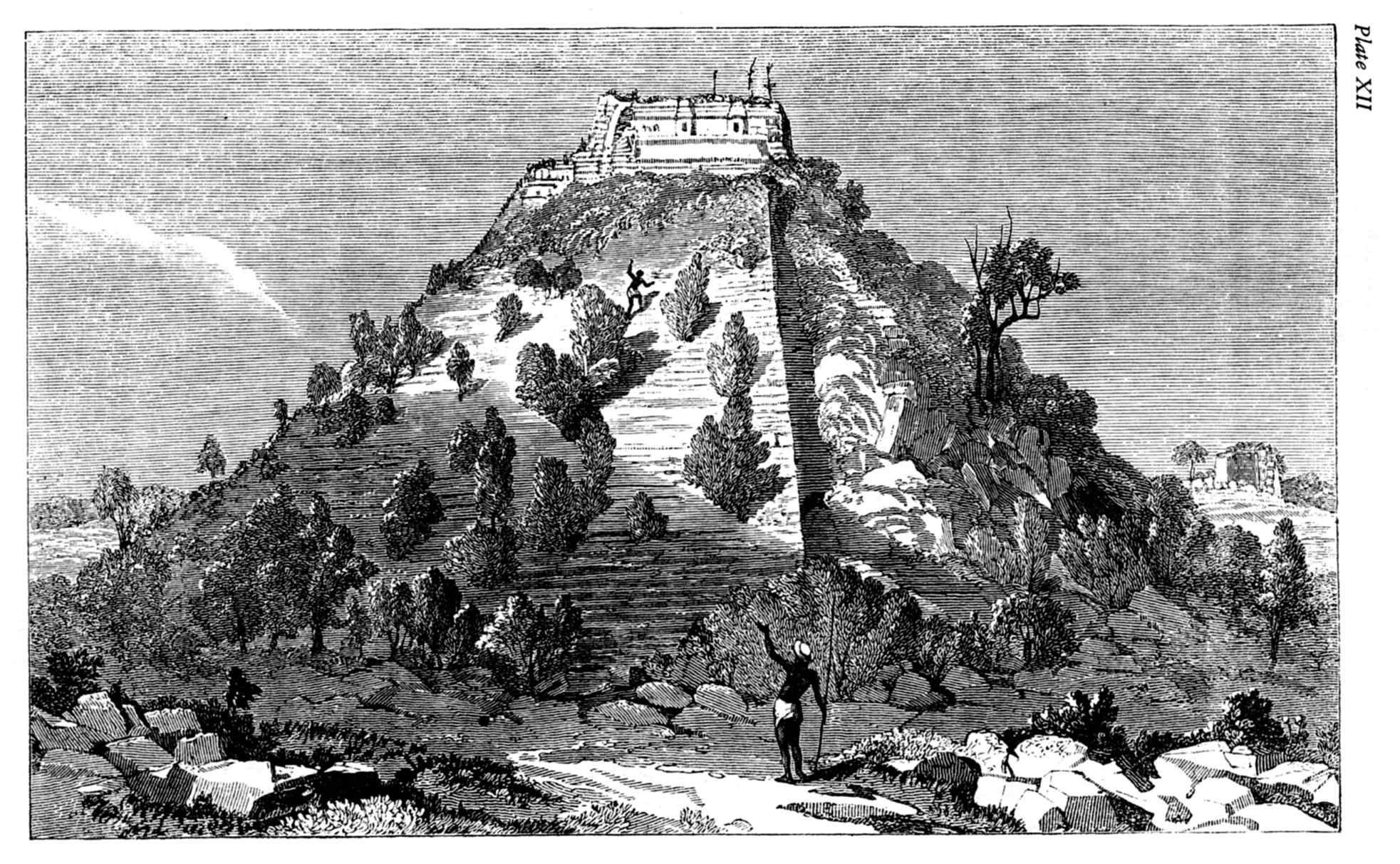
In all, I have been to Uxmal twice, in 1975 and 1992. Both times, I have been impressed that it is the most beautiful of Maya ruins. It is built in the classical Puuc (named after the range of hills where it is located), with smooth rectangular limestone blocks interspersed with images of various Maya deities. It looks even better today, after archeologists have cleared away much of the foliage. Below is an image of the same structure around 1840 when Frederick Catherwood drew it:

Frederick Catherwood’s Illustration of the Pyramid

The city of Uxmal was occupied only up to some point in the 9th century AD, when it is speculated that drought made the ruins in the Puuc Hills uninhabitable. There are no above ground rivers in the limestone peninsula that is Yucatán, and the underground rivers would have required digging through hundreds of feet of rock. Instead, rain water was collected in chultunes, underground storage chambers that circled the ruins.

I was sold on Uxmal from the very start. The van that took me there stopped close by the Pyramid of the Magician. The driver bowed his head and did the sign of the cross upon setting eyes on the pyramid. It is still considered a sacred site by the Maya, even though they have not inhabited it for over a thousand years.


A Proof of Immortality?

Anglo-Saxon Facial Armor

Once again I turn to the Argentinian poet Jorge Luis Borges who in so many ways replicates my thoughts. Perhaps, it is because he has influenced me so much over so many years?

Poem Written in a
Copy of Beowulf

At various times I have asked myself what reasons
Moved me to study while my night came down,
Without particular hope of satisfaction,
The language of the blunt-tongued Anglo-Saxons.
Used up by the years my memory
Loses its grip on words that I have vainly
Repeated and repeated. My life in the same way
Weaves and unweaves its weary history.
Then I tell myself: it must be that the soul
Has some secret sufficient way of knowing
That it is immortal, that its vast encompassing
Circle can take in all, can accomplish all.
Beyond my anxiety and beyond this writing
The universe waits, inexhaustible, inviting.

This translation is by Alastair Reid from Jorge Luis Borges: Selected Poems 1923-1967, edited by Norman Thomas di Giovanni.


Serendipity: “Nonparticipation in Humanity”

An Incident at a Coffee Shop

San Francisco writer/publisher/bookstore owner Lawrence Ferlinghetti puts the whole Millennial/Generation Z digital revolution in its place:

AND a young stud at the next table typing on his laptop, both ears stopped with earphones…. I’m just five feet from the guy. Finally I say in a friendly voice, “You from around here? Haven’t seen you before in the neighborhood.” No answer. He continues typing, staring at the laptop. He heard nothing? Is this body alive? I’m alarmed. I call 911. After some time a cop car arrives and he’s arrested for “nonparticipation in humanity.’ They haul the corpse away.


Old Town Music Hall

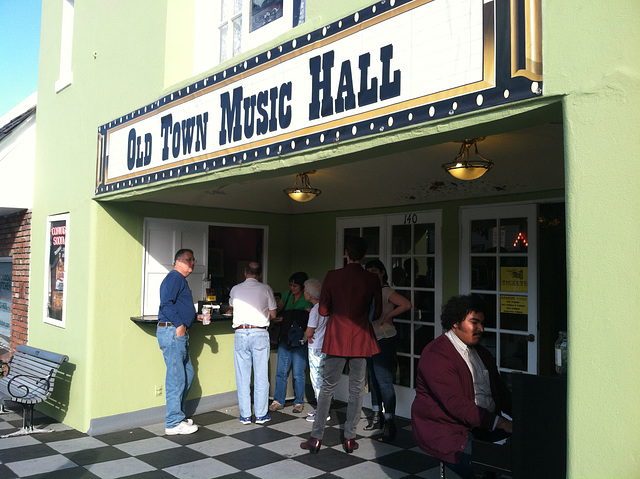
The Facade of the Old Town Music Hall in El Segundo

On hot summer weekends, Martine and I frequently found ourselves in the coastal enclave of El Segundo. Its southern boundary is the huge Standard Oil refinery, the second (“El Segundo”) to be located in California, the first being in Richmond. North is Los Angeles International Airport, and east lies the Pacific Coast Highway and a commercial/industrial area. The western boundary is the Pacific Ocean.

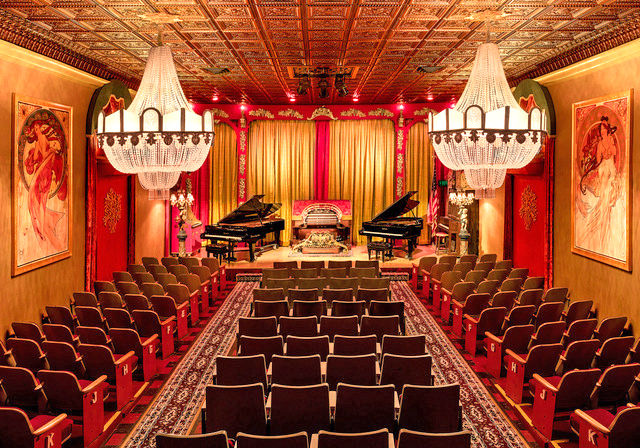
Situated on Richmond Street half a block from the refinery is the Old Town Music Hall, a former silent movie theater built in 1921. In 1968, it was re-opened as a repertory film theater and concert venue featuring a Mighty Wurlitzer organ.

A typical film screening features old classical films, opening with a Wurlitzer organ concert, followed by sing-along slides of old musical favorites and occasionally a short film. In October, we saw three films of a Halloween horror film series, including the original Frankenstein and Dracula as well as The Black Cat, which starred both Boris Karloff and Bela Lugosi. There are also programs featuring classical musicals and short comedies and cartoons.

In addition, there are occasional live music concerts, which we have not attended.

Interior of the Old Town Music Hall

The theater is run as a nonprofit organization under Section 501(c)(3). There is seating for only a couple hundred people, so profits are pretty much out of the question. The whole operation is clearly a labor of love.

We’re looking forward to a program of Laurel and Hardy shorts to be shown next weekend.


Black Beans and Rice

(Mostly) Vegetarian and Muy Picante

As time goes by, I become more vegetarian. Although I do all the cooking in our household, I can’t altogether dispense with meat. This is mostly because Martine seems to think that meat is the only good source of protein. So I alternate meat dishes with vegetarian dishes. At times, I can cook something that Martine is not interested in sampling, such as my black beans and rice.

Now black beans and rice is not normally a spicy dish—but the way I make it, it is. Here is a list of ingredients:

1 cup Basmati rice
1 chopped onion
2 minced Serrano chiles
Several dried chile pods
Several cloves of garlic, minced or crushed
1 15 oz can of black beans with liquid
2½ cups chicken or vegetable stock
Salt and pepper to taste
Garnish with parsley or cilantro

As a certified chile-head, I occasionally have to indulge my love of capsicum. (Don’t worry, I got something else for Martine, who hates chiles so much that she can’t be in the apartment when I cook with them.)

Years ago, I read a book by Frances Moore Lappé entitled Diet for a Small Planet. Her belief was that one could get all the protein one needs by using ingredients whose amino acids, when cooked together, form a complete protein. Beans and rice are two such complementary foods.

Although I tend to use chicken stock to cook the rice, I do not add pieces of meat. So, in fact, my way of preparing it with chicken stock is not technically vegetarian. If you want, you can use vegetable stock or even water.


Holy Sidewalks

Is This Hole an Illusion? Or an Allusion?

Today being Thursday, I rode the Metro downtown, went to the Central Library, and attended the weekly half-hour mindful meditation session held there. Group leader John Kneedler quoted the following poem by Portia Nelson:

Autobiography in Five Short Chapters

I

I walk down the street.
There is a deep hole in the sidewalk
I fall in.
I am lost … I am helpless.
It isn’t my fault.
It takes me forever to find a way out.

II

I walk down the same street.
There is a deep hole in the sidewalk.
I pretend I don’t see it.
I fall in again.
I can’t believe I am in the same place
but, it isn’t my fault.
It still takes a long time to get out.

III

I walk down the same street.
There is a deep hole in the sidewalk.
I see it is there.
I still fall in … it’s a habit.
my eyes are open
I know where I am.
It is my fault.
I get out immediately.

IV

I walk down the same street.
There is a deep hole in the sidewalk.
I walk around it.

V

I walk down another street.

I know this poem is all over the Internet, but it’s the first time I encountered it; and I love the way it summarizes so many people. Including myself.

Back of the Knee

Two Possible Culprits

About three weeks ago, on the same day that the night temperatures in L.A. went down into the fifties, I quite suddenly discovered that I had excruciating pain emanating from the crook of my left knee. It was particularly painful when I was going down a flight of stairs or raising myself from a seated position. I was concerned that, if things got any worse, my trip to Yucatán was at risk.

So today I explained the situation to my endocrinologist, who serves as my primary care physician. She recommended that I see an orthopedic specialist. When I returned home, I made an appointment to see the surgeon who replaced my left hip in 2002 with a titanium implant.

As of now, I have made no reservations for my trip: I expect I might have to delay it for a month or two. The good news was that my endocrinologist said the condition was probably not the beginning of a steady deterioration in my ability to walk or use stairs. My fingers are crossed that, either the condition will heal by itself, or some procedure could effect healing of the knee.


La Merced

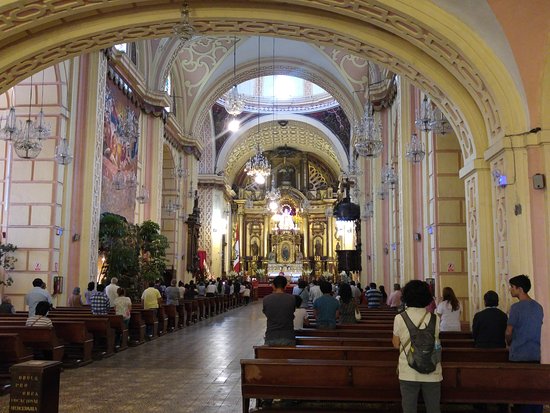
Basilica and Convent of Nuestra Señora de la Merced in Lima, Peru

In the historic center of Lima, Peru, on the Jirón de la Union, sits one of the oldest churches in South America. When I visited Peru five years ago, I would have the taxi driver let me off at the south end of the Jirón so that I could pass by the elaborate Churrigueresque façade of La Merced and wander in. When I dropped in at these old churches I frequently found myself attending Holy Mass as I was gaping at the gorgeous decorations. I always stayed to the end, out of respect for the religious orders which built such splendid edifices to worship God.

I do believe that the Spanish kings only got a fraction of the gold that was mined in the New World, and that the lion’s share went to the Church and is visibly on display.

Interior of La Merced

As I have said on other occasions, I visited Peru because of the Incas, but what really caught my eye were the old Catholic churches, some dating back almost 500 years. La Merced was built around 1535 by the Mercedarians, short for the Royal, Celestial, and Military Order of Our Lady of Mercy and the Redemption of Captives. In fact, if I were to visit Peru again—as I hope to—I would skip Machu Picchu and spend more time viewing the Catholic churches and their related ecclesiastical art.