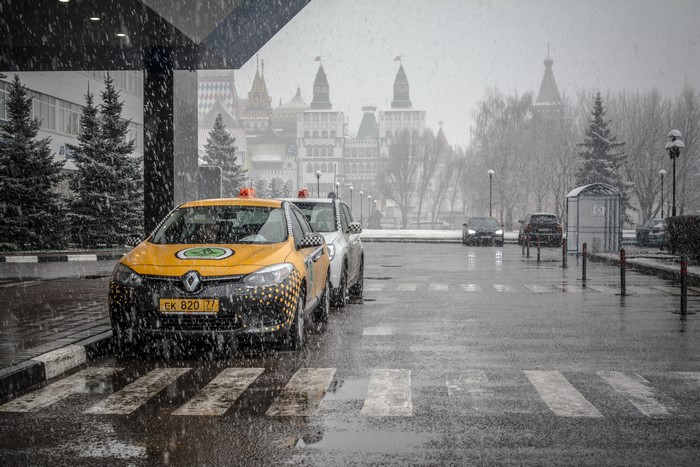
I am currently reading Yuri Andrukhovych’s The Moscoviad, about a Ukrainian writer living in a Moscow where it’s almost always raining during the late days of the Soviet Union. In his book, Andrukhovych has some very pointed things to say about the city:
This is the city of losses. It would be nice to level it. To plant again thick Finnish forests, introduce bears, elk, deer: let them graze around the moss-covered Kremlin ruins, let perches swim in its rivers and lakes returned to life, let wild bees focus on storing honey in the deepest fragrant tree cavities. This land needs a rest from its criminal capital. Perhaps then it will be capable of something good. Since it cannot go on forever poisoning the world with the bacilli of evil, suppression, and aggressive dumb destruction!
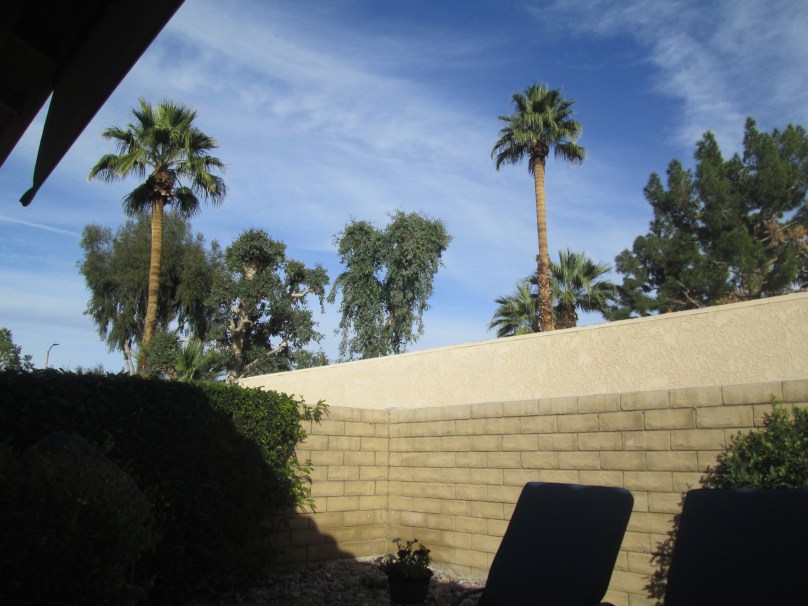
There is always a big game on TV, so I usually make my escape from the drone of the sports announcers by heading to my brother’s back yard with a book. Fortunately, the book I was reading was a humdinger: Edward John Trelawny’s Records of Shelley, Byron, and the Author.
Unlike me, Dan likes to relax by watching football, basketball, and baseball games on the weekend. Unlike our late father, he is not a dyed-in-the-wool fan of any particular team: He enjoys the game even when the local boys lose, as the Los Angeles Rams did on Sunday against the Seattle Seahawks.
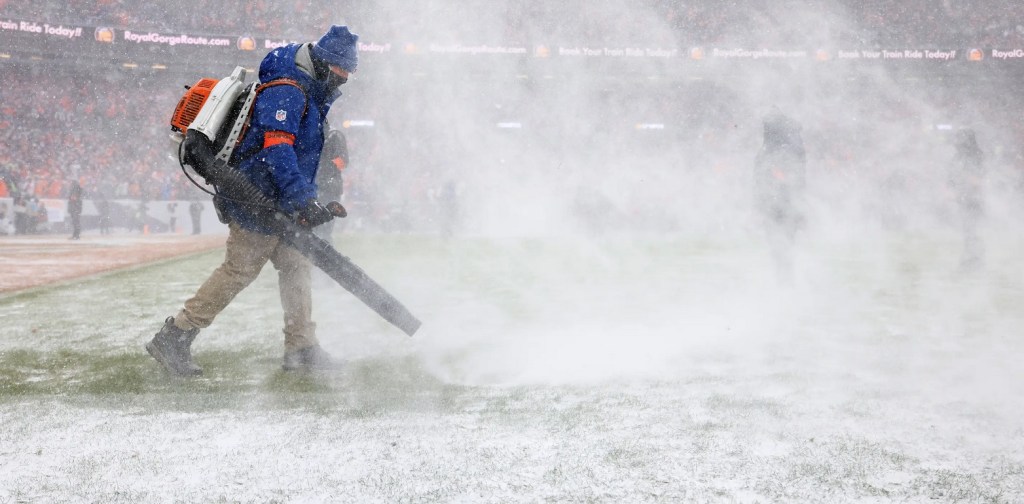
And, as I was with him all weekend, I had to entertain myself part of the day. This last weekend, the mercury in the early afternoons was in the low 70s Fahrenheit (low 20s Celsius). By the late afternoon, however, it started to cool down; so I was exposed to a broad spectrum of televised sports. My favorite was the game between the Denver Broncos and the New England Patriots in a white-out blizzard. All the yard indicators and hatch marks were covered with snow, forcing the stadium maintenance personnel to melt the snow at key points.
Football in the Snow
As always, it was fun to get together with my brother and sister-in-law. We watched several movies on TV, including Bubba Ho-Tep (2003). This was a film all three of us liked twenty years ago. In the intervening years, however, we seem to have changed and now regard the film with some disfavor. The other film we saw was Takeshi Kitano’s Broken Rage (2024), which started great but descended into randomness.
To make up for the sports and bad movies, the food was great, There are some wonderful Mexican restaurants in the Coachella Valley, and my brother’s cooking is superb or better.
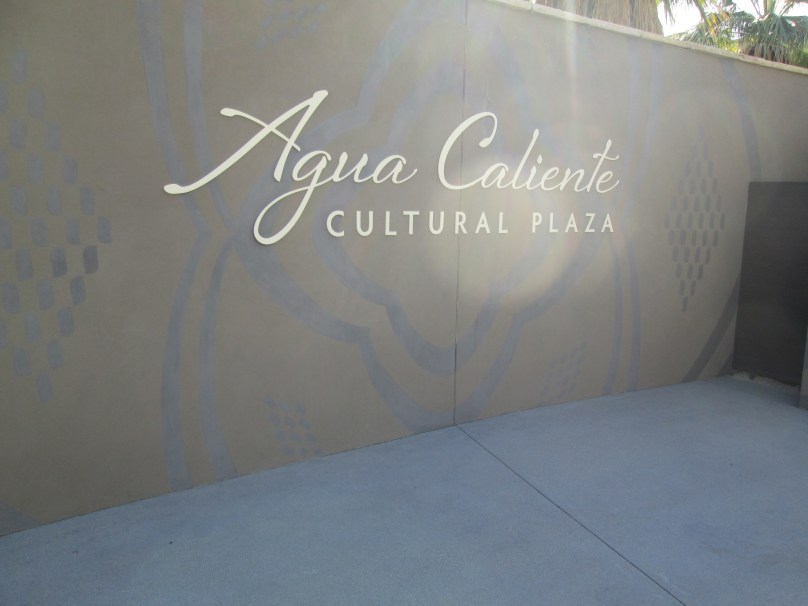
I had a good time visiting my brother and sister-in-law in Palm Desert this last weekend. On Saturday, Dam took me to the Agua Caliente Cultural Plaza, which is, in effect, a museum of the beliefs and history of the Agua Caliente Band of Cahuilla Indians.
What impressed me most about the museum was a display of a ceremonial hut that played a video about how the Agua Caliente Cahuillas substantially gave up on their culture, language, and religion around 1950 after years of being pressured by white society to be more like them.
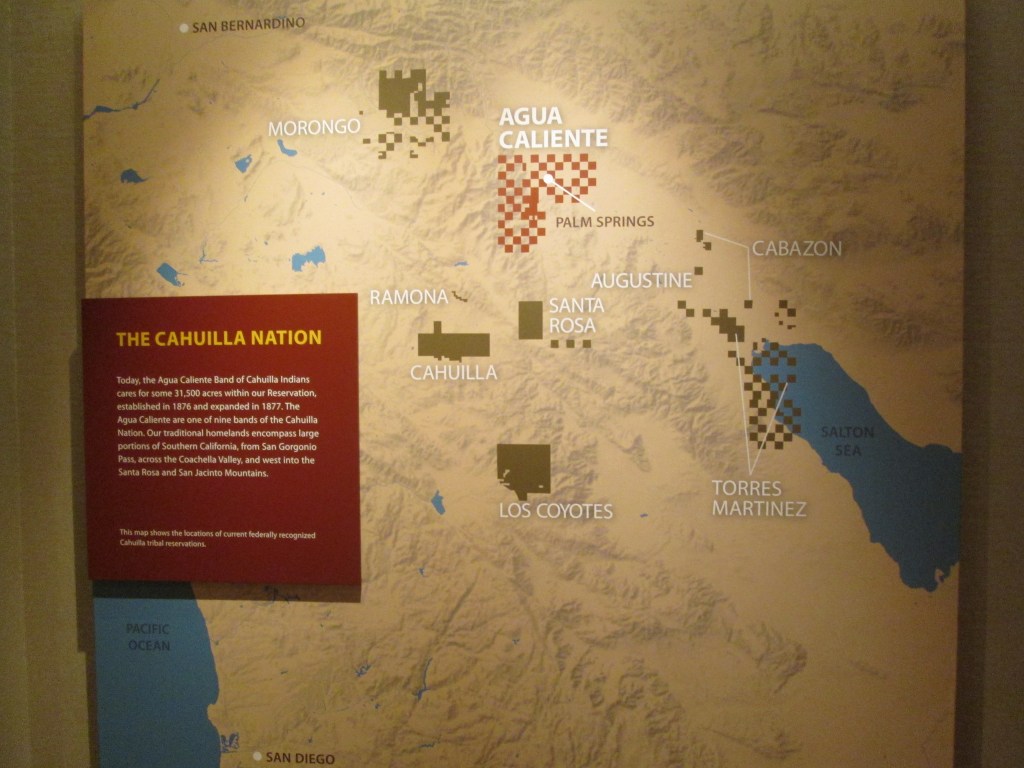
The tribe owns large chunks of Palm Springs in a checkerboard pattern as shown in the following map:
The Nine Tribes of the Cahuilla Nation
Also shown are the lands belonging to the eight other Cahuilla peoples and where they are located::
Augustine Band of Cahuilla Indians (Coachella)
Cabazon Band of Mission Indians (Indio)
Cahuilla Band of Mission Indians of the Cahuilla Reservation (Anza)
Los Coyotes Band of Cahuilla and Cupeño Indians of the Los Coyotes Reservation (Warner Springs)
Morongo Band of Cahuilla Mission Indians of the Morongo Reservation (Banning)
Ramona Band of Cahuilla (Anza)
Santa Rosa Band of Cahuilla Indians (Between Palm Springs and Anza)
Torres-Martinez Desert Cahuilla Indians (Thermal)
Dan and I were impressed by the tribe’s presentation of their history and beliefs. Because they own a substantial chunk of Palm Springs, the Agua Caliente Cahuillas (ACC) are considerably better off than the eight other tribes. They all live in the desert, but the ACC have Mount San Jacinto and the hot springs of Palm Springs.This gives them wealth in the sense that our culture values wealth, but at the cost of losing much of what made them who they are.
It is always fascinating to me when I am confronted with another culture. And there are so many cultures in North America. Some are strong like the Hopi and Navaho. Others, like the ACC are but a shadow of what they once were.
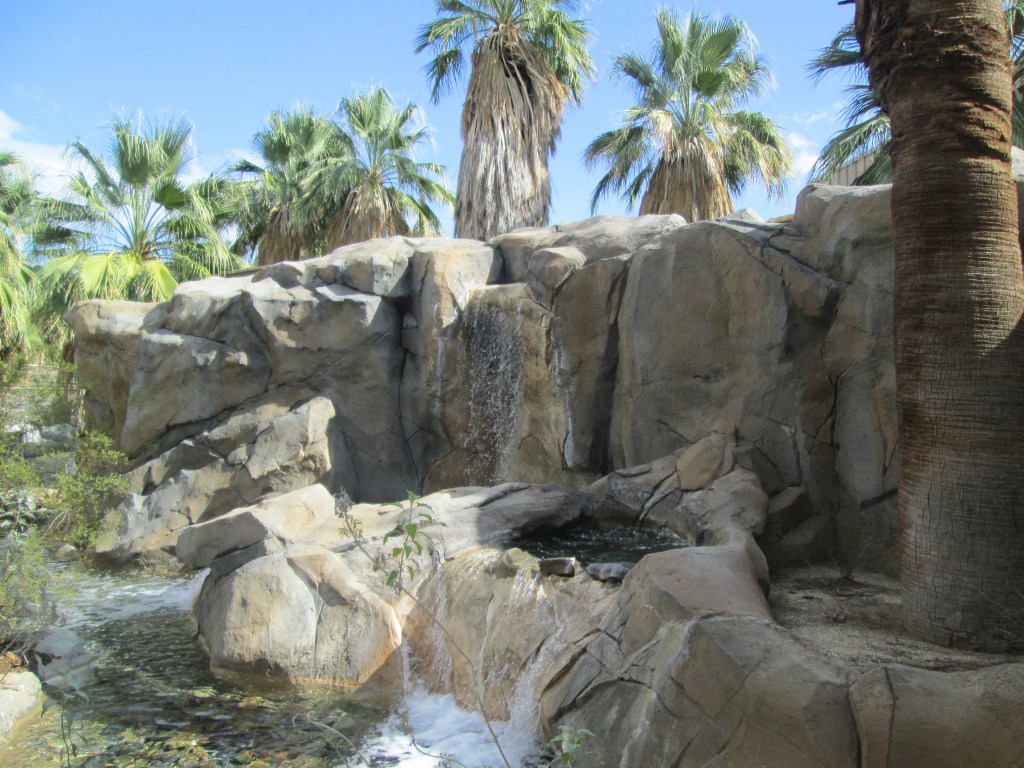
The Agua Caliente Cultural Plaza is well worth visiting. Afterwards, walk around in the ACC recreation of a desert landscape just outside the museum building.
This weekend, I will be visiting my brother Dan in the Coachella Valley. As Martine is still smarting from her two sweltering years at Twentynine Palms in the nearby Yucca Valley, she will not be coming with me. It is also probably the last time I will be visiting him at his Palm Desert home: He and his wife Lori are planning on moving to Santa Rosa in Northern California later this year. And I am unlikely to visit the desert in summer.
Consequently, the next time I will be posting to this blog will probably be on Monday or Tuesday. Hopefully, Dan will introduce me to some of the local sights.
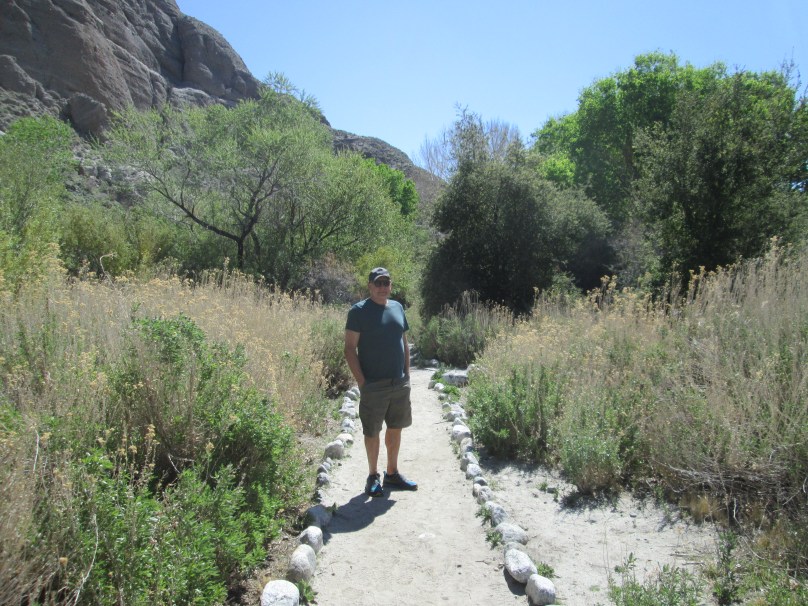
The above picture is the last one I took with my old Canon PowerShot A1400. Not two minutes after I took this picture, I tripped on one of the rocks bordering the path (shown above) and crushed the lens of my camera. Fortunately, the memory card containing my pictures was still intact; and I was able to upload them to my system without any problems.
At some point this weekend, I hope to talk Dan into going to one of the Valley’s tamale restaurant. I was disconsolate when I learned that my last scheduled visit to the desert in mid-December (canceled due to illness) occurred during the annual Indio Tamale Festival.
In any case, Dan and I are both foodies. I expect we will have some great meals, both at restaurants and in his dining room. (Dan is a wizard of a chef.)
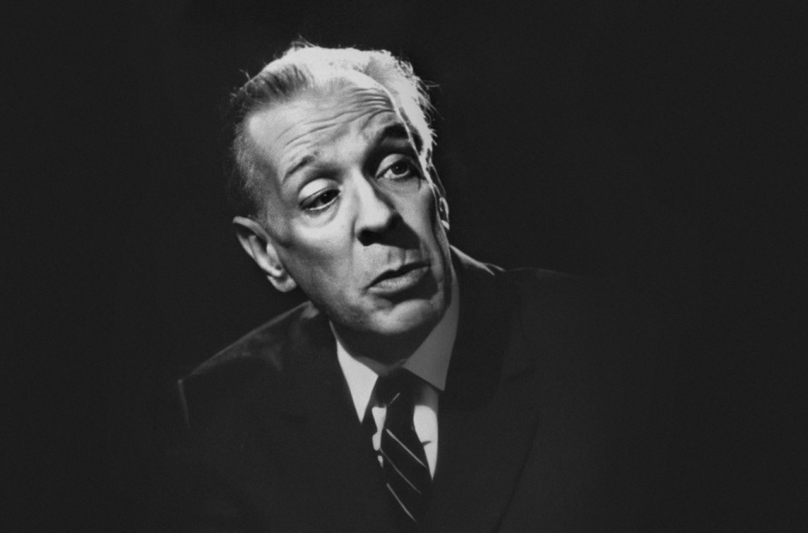
Here is another great poem by Jorge Luis Borges, a poet who has had perhaps a greater influence on my life than any other. Among other things, my thirst for knowledge about him has led me to Buenos Aires three times in the last twenty years.
Limits
Of these streets that deepen the sunset, There must be one (but which) that I’ve walked Already one last time, indifferently And without knowing it, submitting
To One who sets up omnipotent laws And a secret and a rigid measure For the shadows, the dreams, and forms That work the warp and weft of this life.
If all things have a limit and a value A last time nothing more and oblivion Who can say to whom in this house Unknowingly, we have said goodbye?
Already through the grey glass night ebbs And among the stack of books that throws A broken shadow on the unlit table, There must be one I will never read.
In the South there’s more than one worn gate With its masonry urns and prickly pear Where my entrance is forbidden As it were within a lithograph.
Forever there’s a door you have closed, And a mirror that waits for you in vain; The crossroad seems wide open to you And there a four-faced Janus watches.
There is, amongst your memories, one That has now been lost irreparably; You’ll not be seen to visit that well Under white sun or yellow moon.
Your voice cannot recapture what the Persian Sang in his tongue of birds and roses, When at sunset, as the light disperses, You long to speak imperishable things.
And the incessant Rhone and the lake, All that yesterday on which today I lean? They will be as lost as that Carthage The Romans erased with fire and salt.
At dawn I seem to hear a turbulent Murmur of multitudes who slip away; All who have loved me and forgotten; Space, time and Borges now leaving me.
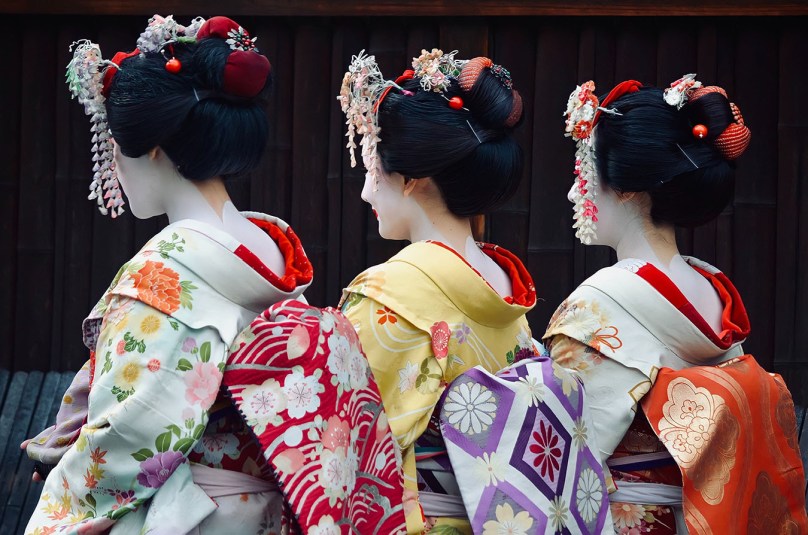
Today, Martine and I rode Metro Rail downtown to attend an event at the Central Library celebrating Japanese New Year, or Oshogatsu. In Japan, New Years is celebrated at the beginning of January, unlike Chinese New Year, which is based on a lunar calendar. So actually it was a little late to celebrate Japanese New Year, but I guess it was difficult to schedule the Mark Taper Auditorium at the library.
There were three main exhibits, each presented by a different locally-based Japanese-American organization.
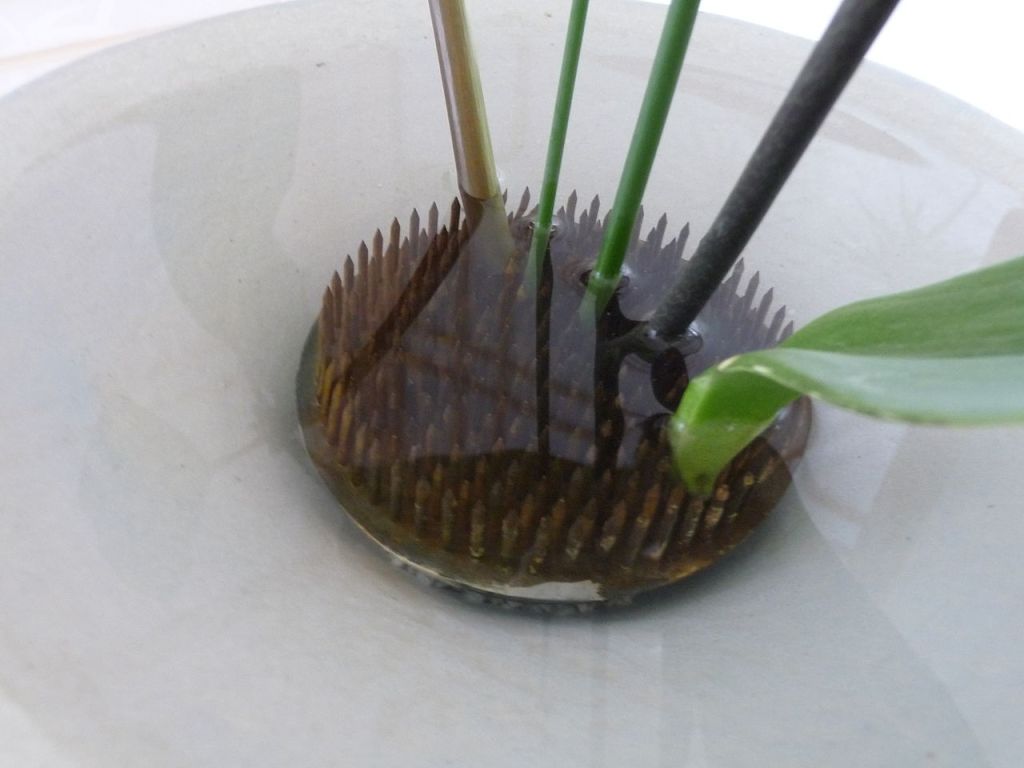
The first was ikebana, or flower arranging. In twenty minutes, a young woman created a floral masterpiece consisting of two types of lilies, mums, pine and willow branches, and other plants. I wondered how the different components stayed in place. I learned that a kenzan, variously knoen in English as a “spiky frog” or “pin frog.” was used to hold the components in place. (See the photo below.)
Kenzan
The rest of the program consisted of a fashion show of different types of kimonos for women (and men as well as children), accompanied by music on the koto, a zither with thirteen or more strings. On stage were three kotos played in unison.
I was first introduced to the koto at Dartmouth College, where I heard a concert given by an accomplished Japanese soloist. That, and my love of Japanese films, have introduced me to the joys of Japanese koto music.
The kimonos for women were truly lovely. I was amazed however how intricate the obis (sashes) were and how long it took to tie them. A skilled kimono-wearer could tie an obi in four or five minutes. It would probably take a klutz like me the better part of the morning, only to end up with an unholy mess.
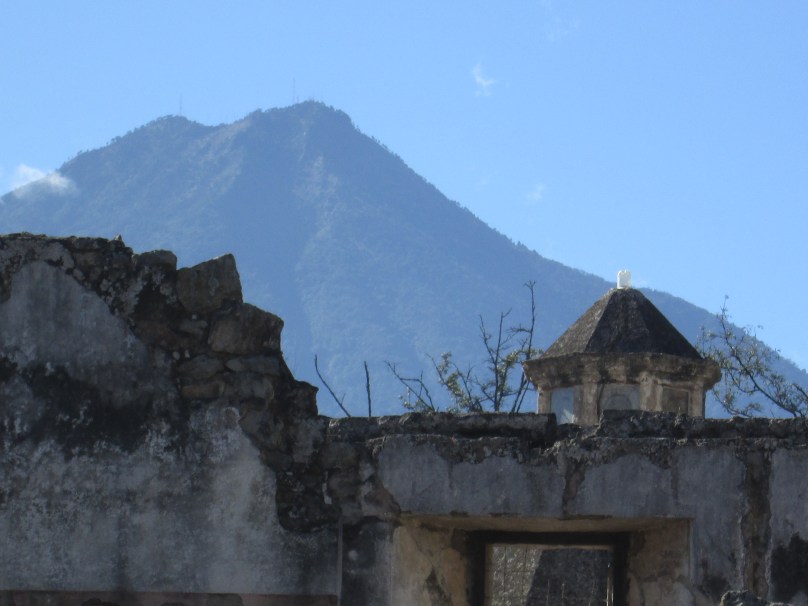
Antigua, Guatemala was the fourth capital of Guatemala, the other three being destroyed by earthquakes, landslides, and volcanic eruptions. Then, in the eighteenth century, it was Antigua’s turn to succumb. Today, the capital is Guatemala City.
Although it is full of picturesque ruins, Antigua is a more popular destination than the capital. (Also, it is a lot safer.) In fact, there are several shuttle services that will whisk you to Antigua from the Guatemala City airport.
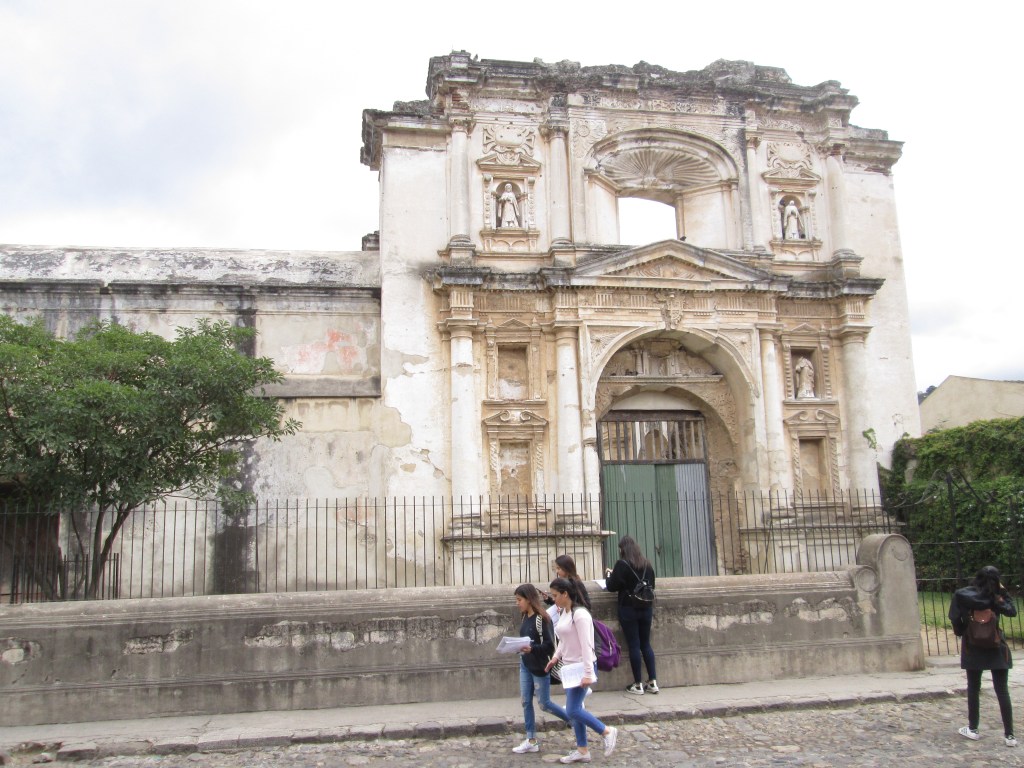
One of the Ruined Churches of Antigua
Antigua was once a city of many churches. Today, most of them are in ruins. Surprisingly, they have become tourist attractions. An attempt was made to clear some of the most dangerous debris. What was left was frequently picturesque and even photogenic.
I was in Antigua for almost a week in 2019. That gave me time to visit most of the ruined churches and take pictures.
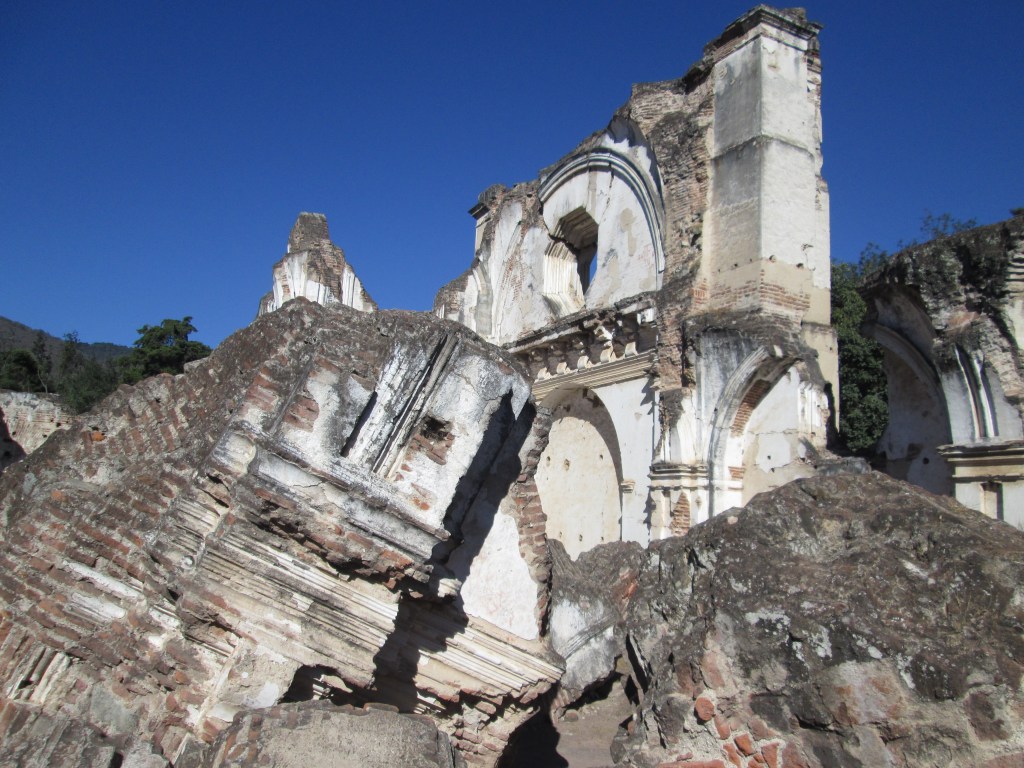
One of the Most Damaged Churches in Antigua
I frequently wondered why the churches built by the Spanish were so damaged. My guess is that Spain has not seen that many serious earthquakes; and I suspect there are no active volcanoes on the Iberian Peninsula. The resident Maya, on the other hand, were used to earthquakes and volcanoes; so they built their ceremonial centers to last. The step pyramids of the Maya were built to last. In this respect, the Spanish conquerors had a lot to learn from their “primitive” Maya tenants.
My vacation in Guatemala lasted almost a month, so I was able to see most of the sights that interested me, including the Maya ruins at Tikal and Quiriguá. I even stepped across the border into Honduras to see the ruins at Copán.
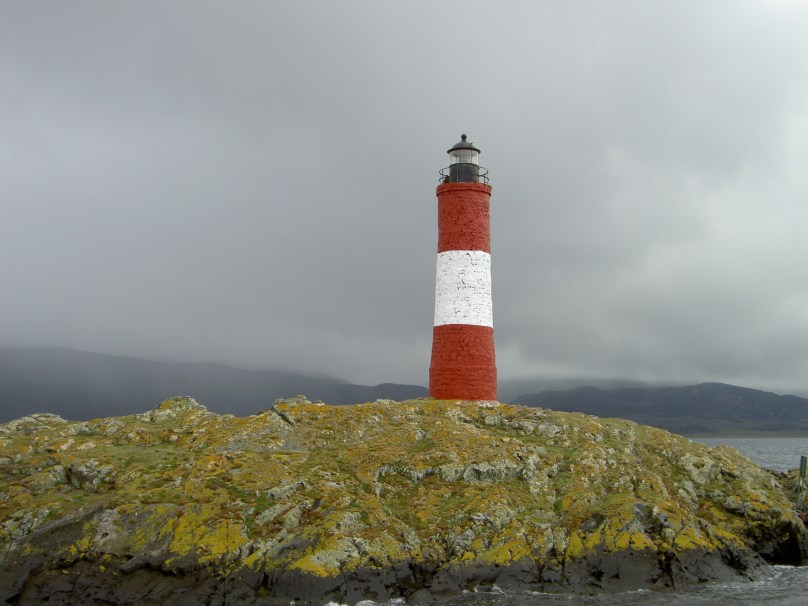
Les Éclaireurs Lighthouse: “The Lighthouse at the End of the World”
There are three ways to get from the Atlantic to the Pacific at the southern tip of South America. You can take the Straits of Magellan; you can take the Beagle Channel (named after the ship that Charles Darwin took in 1831-36); and all the way around Cape Horn.
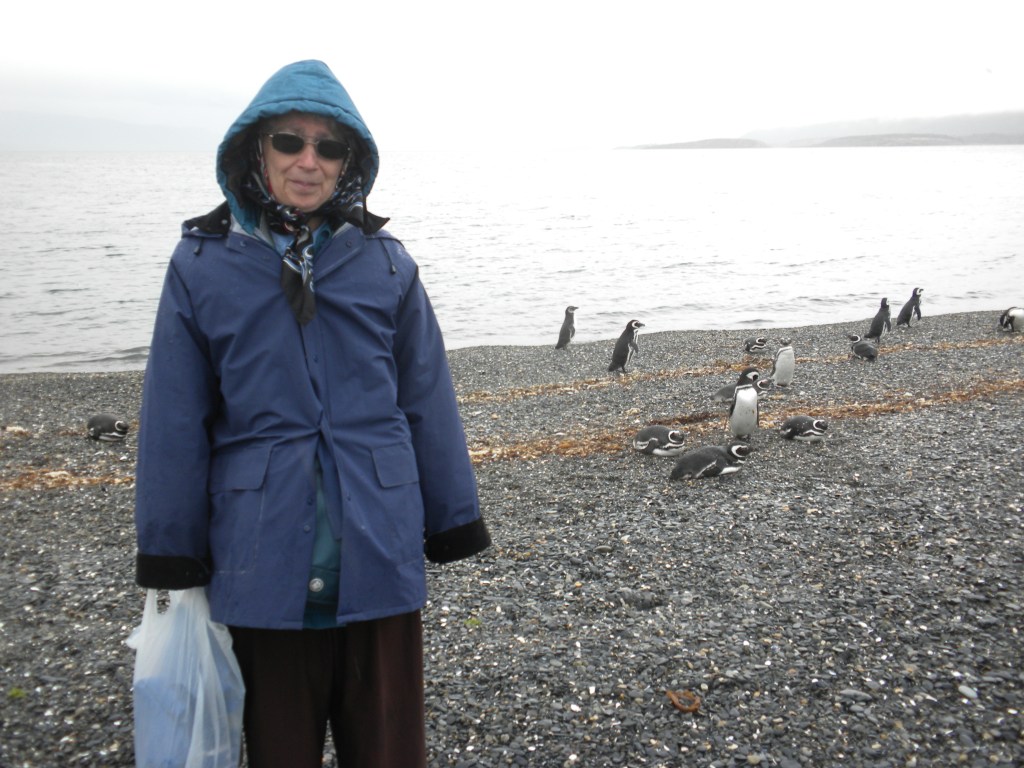
When I was in Ushuaia in 2006 and 2011, I took cruises on the Beagle Channel to Estancia Harberton to see the Magellanic penguins on Isla Pájaros. On the first trip, the weather changed abruptly so that we had to return to Ushuaia by bus rather than on shipboard. The second time, the weather was perfect; and Martine and I were actually able to land on the island and walk among the penguins.
Martine on Isla Pájaros with Penguins
Now Magellanic penguins are much smaller than Emperor or King Penguins, but they are penguins nonetheless. I suppose we could have dished out $10,000+ plus each to take a Russian icebreaker across the stormy Drake Passage to Antarctica to see the Emperor penguins, but we were (and still are) short of cash.
Seeing the penguins was nice, but Estancia Harberton was interesting in its own right. It was founded by the English missionary family that settled that part of Tierra del Fuego. The son, Lucas Bridges, is the author of perhaps the greatest book on the are: The Uttermost Part of the Earth.
I highly recommend the book to anyone interested in Argentina and Tierra del Fuego.
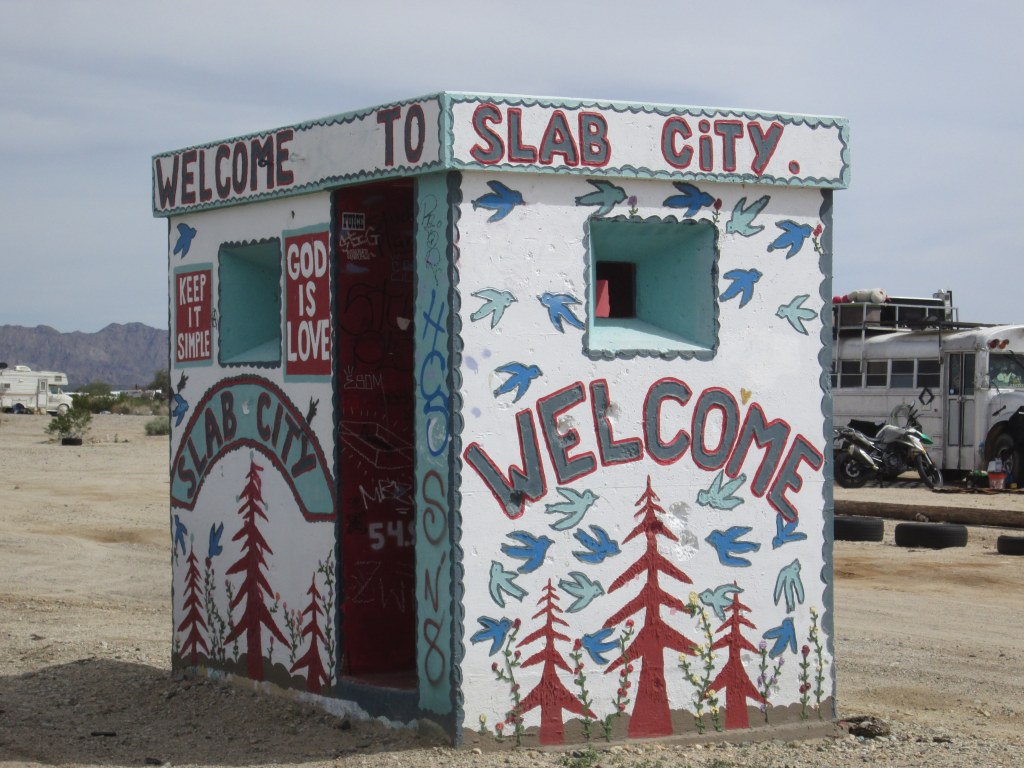
Well, now, it’s pushing it a bit to call it a civilization. The people who live on the eastern shore of the polluted Salton Sea live under difficult conditions. The temperature during the summer drives most of them away to cooler climes. Drinking water, especially for the communities of Slab City, Salvation Mountain, and East Jesus is problematic. To put it simply, there isn’t any.
The modern lake was formed from an inflow of water from the Colorado River in 1905. Beginning in 1900, an irrigation canal was dug from the Colorado River to provide water to the Imperial Valley for farming. Water from spring floods broke through a canal head-gate, diverting a portion of the river flow into the Salton Basin for two years before repairs were completed. The water in the formerly dry lake bed created the modern lake.
Currently, the Salton Sea is approximately 15 by 35 miles (24 by 56 km) in dimension, containing some 318 square miles (823.6 square km). For a short time, it was a popular tourist destination, until the combination of runoff of pesticides from Imperial Valley farmland to the south and blowing contaminated dust from the evaporating lake is turning it into California’s equivalent of the Dead Sea.
The Receding Salton Sea from Its Eastern Shore
The Salton Sea’s eastern shore has attracted an interesting breed of snowbird during the cooler months (if there are any there). Bombay Beach has been taken over by artsy types, along with Salvation Mountain. In Slab City and East Jesus, one is likely to run across people who are just trying to escape the pressures of modern life, even if thy have to sacrifice easy access to drinking water and the power grid.
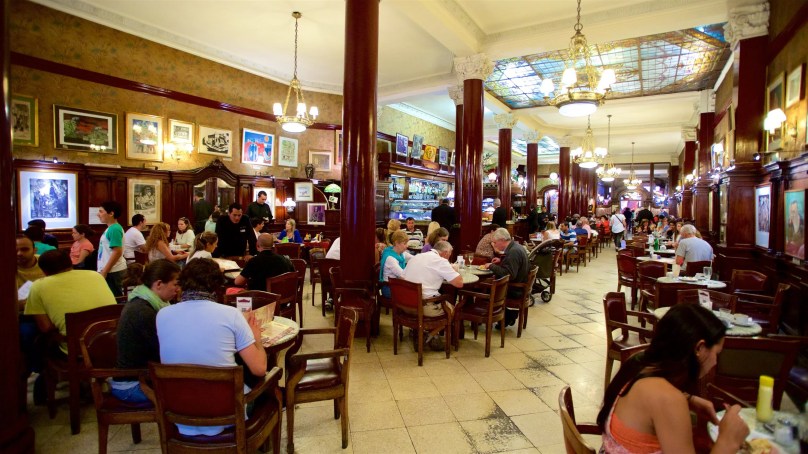
Inside on Cafe Tortoni on Avenida de Mayo in Buenos Aires
In my library, I have an entire bookcase dedicated to works relating mostly to Mexico and South America. Today I picked up one of my favorite titles—Gabriela Kogan’s The Authentic Bars, Cafés and Restaurants of Buenos Aires—and felt waves of nostalgia breaking over me as I turned the pages.
I have been to Buenos Aires three times. The first time, even though I broke my right shoulder later in the trip, I fell in love with the country and its capital. One of the things that impressed me most was the café culture—and I don’t mean coffee, which I never drink.
There are dozens of neighborhood eating spots, many of which was been around since the late 19th century. In my visits to the city, I patronized the following traditional cafés:
La Puerto Rico in the Montserrat neighborhood
El Tortoni, also in Montserrat
El Preferido de Palermo in Palermo
El Rincon in Recoleta, right across from the famous cemetery
I cannot look at the book’s glossary without licking my lips:
Berenjenas en Escabeche: eggplant marinated in a sauce of vinegar, onions, carrots, and peppercorns
Conejito a la Cazadora: traditional preparation of rabbit, with garlic, vegetables, white wine, tomatoes and mushrooms
Fugazetta Rellena: “folded” pizza with onion, filled with cheese
Matambre: meat roulade filled with vegetables and hard-boiled eggs (another favorite)
Pejerrey Gran Paraná: a white meat river fish from the Rio Paraná served with boiled potatoes
Suprema Maryland: a dish made with breaded chicken, fried banana, french fries, and corn custard
In 2011, I went to Argentina with Martine. She is an incredibly picky eater who eschews the slightest hint of spiciness. Yet she loved the food she ate at the Buenois Aires cafés.




You must be logged in to post a comment.