Trumpie Wants a 21-Gun Salute, Which Gives Me an Idea
Because he was naturally the greatest president we’ve ever had, Donald Trump wants a 21-gun salute upon leaving the White House. I concur, with the following condition: Aim low and right on target. That way, we could kill two birds with one stone.
If you actually want to look like an American tourist, stay the hell away from me. When you look at me as if I were a fellow gringo, I will answer you in my rather coarse Hungarian. I don’t want to be anywhere near you with your flip flops, fanny packs, baseball caps, and selfie sticks. You will be the target for anyone who can rip you off in broken English, and I don’t want to be a witness to that.
I remember my friend Janice. Her ex-boyfriend took her to Europe, but they didn’t really see anything. He was what I call an “experiential traveler”: “Hey, look at me. I’m walking on the Champs-Elysées” or “Hey, we’re in Amsterdam. Isn’t this cool?” They took pictures of each other in front of various famous locations which they didn’t take the time to visit. If I were her, I would have dumped his inert corpse into the canal.
Early Morning on Laugarvegur in Reykjavík, Iceland
The best way to enjoy strange places is to explore them—and not in large groups. I keep thinking of Rudyard Kipling, no mean traveler himself, who wrote in “The Winner”:
Down to Gehenna or up to the Throne,
He travels the fastest who travels alone.
I have on occasion been tempted to replace the word “fastest” with “farthest.” I have done most of my traveling alone, especially as Martine thinks I am too adventurous for her comfort. On the other hand, I have enjoyed traveling with her and on two separate occasions with my brother. But as soon as I find myself in a large group of Americans, I quickly search for the nearest exit.
When I was in Mexico last year, I frequently hired guides by myself at the various Maya ruins I visited. Rather than joining a group that sauntered around absentmindedly, I enjoyed asking questions of the guides, who invariably knew their stuff. As opposed to the tour guide the parents of one of my friends had in Yucatán: He told his boat people tourists that the Maya ruins were built by Egyptians.
I know I must come across like a horrible grump sometimes, but I have had numerous bad encounters in foreign countries with my fellow Americans. And yet, in 2013, when I went to Iceland for a second time, I helped a couple of French tourists find a hotel in Höfn in the Hornstrandir, where no one spoke their language.
Constantinople, Trebizond, Tbilisi, Baku, Samarkand, Bukhara, Tashkent, Lhasa—these are cities I would dearly love to know more about. So when I read Kate Harris’s Lands of Lost Borders: A Journey on the Silk Road, I looked forward to learning more about these magical places. Alas, I was disappointed: The book was more about a bicycle trip with little attention paid to destinations, and most of the attention paid to the roads connecting the destinations.
I had to remind myself that there are two types of travel books. First, there was my preferred kind, which combines personal experiences with history, literature, art, cuisine, and culture—the whole ball of wax! But there is another kind of travel book as well. Call it adventure travel or experiential travel. All mountain-climbing books fall into this category. They can be excellent reads, such as Jon Kracauer’s Into Thin Air, Alfred Alvarez’s Feeding the Rat, or any of Eric Shipton’s great books on mountains he has climbed.
Tibetan Monastery
Kate Harris and her companion Melissa Yule concentrated all their efforts in surviving a multiple-thousand-mile journey involving multiple mountain ranges and passes. It was quite an accomplishment, but it just left me hungry to learn more about Constantinople, Trebizond, Tbilisi, Baku, Samarkand, Bukhara, Tashkent, Lhasa, and points between.
Oh, well, as long as the quarantine and my health last, I’ll have the time to make up that deficit.
The Three Brontë Sisters from Left to Right: Anne, Emily, and Charlotte
No family anywhere had three such eminent novelists, though they wrote at a time when women novelists were looked down upon. Consequently, they published under the names of Acton Bell (Anne), Ellis Bell (Emily), and Currer Bell (Charlotte).
I have read and enjoyed the work of the two elder sisters, but until this week I had never read anything by Anne Brontë. I was delighted to find that she was as competent a writer as her sisters and perhaps a bit more modern in her outlook. Her novel Agnes Grey tells the story of a young governess dealing with the spoiled children of the well-to-do.
When one of her former charges (Rosalie) denigrates her eminent husband in front of a footman, she shows Agnes exactly what she thinks of servants:
Oh, no matter! I never care about the footmen; they’re mere automatons: it’s nothing to them what their superiors say or do; they won’t dare to repeat it; and as to what they think—if they presume to think at all—of course, nobody cares for that. It would be a pretty thing indeed, it we were to be tongue-tied by our servants!
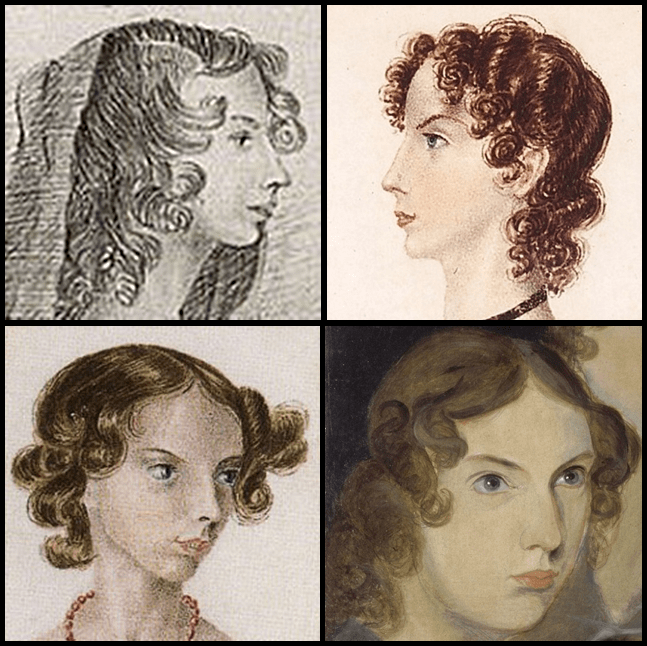
Four Images of Anne Brontë Drawn by Her Brother Branwell
Rosalie is nothing, however, compared to the little monsters of her first experience as a governess:
My task of instruction and surveillance, instead of becoming easier as my charges and I got better accustomed to each other, became more arduous as their characters unfolded. The name of governess, I soon found, was a mere mockery as applied to me: my pupils had no more notion of obedience than a wild, unbroken colt. The habitual fear of their father’s peevish temper, and the dread of the punishments he was wont to inflict when irritated, kept them generally within bounds in his immediate presence. The girls, too, had some fear of their mother’s anger; and the boy might occasionally be bribed to do as she bid him by the hope of reward; but I had no rewards to offer; and as for punishments, I was given to understand, the parents reserved that privilege to themselves; and yet they expected me to keep my pupils in order. Other children might be guided by the fear of anger and the desire of approbation; but neither the one nor the other had any effect upon these.
This is quite different from the angelic Victorian children depicted in most novels, especially in those of Charles Dickens. So I was quite pleased to see that the youngest Brontë has some sand in her, and she was an excellent writer to boot—as good as her older siblings.
I am not only thinking about Covid-19, but also four years of egregiously bad government and a badly divided populace that has replaced reason with gonzo conspiracy theories.
There will be a lot of fast growth once the plague tocsin has stopped ringing, but the economy is not the only thing that needs to be rebuilt. For one thing, the younger generation (whatever we choose to call it) must have more to look forward to than ill-paid temporary gigs while a college loan Sword of Damocles hangs over its head. This is just one of several things that have to change.
I strongly suspect that one change will be a continuing diminution of the influence of Christianity on our lives. And very soon, we have to come to our senses about the fact that the weather is changing. Maybe not permanently, but remember we have come out of a mini ice age that began in the 18th century. And the earth will, for the time being, continue to warm up.
Look for It To Re-Open Soon
Will we continue to be a beef and potatoes nation? I don’t think so. I think we are headed toward plant-based substances that are a substitute for red meat.
The one thing we can depend on is change. Edmund Spenser had it right when he wrote:
Mutability

 When I bethink me on that speech whilere,
 Of Mutability, and well it weigh:
 Me seems,that though she all unworthy were
 Of the Heav’ns Rule; yet very sooth to say,
 In all things else she bears the greatest sway.
 Which makes me loathe this state of life so tickle,
 And love of things so vain to cast away;
 Whose flow’ring pride, so fading and so fickle,
 Short Time shall soon cut down with his consuming sickle.

Then gin I think on that which Nature said.
 Of that same time when no more Change shall be,
 But steadfast rest of all things firmly stayed
 Upon the pillars of Eternity,
 That is contrare to Mutability:
 For, all that moveth, doth in Change delight:
 But thence-forth all shall rest eternally
 With Him that is the God of Sabbaoth hight:
 O that great Sabbaoth God, grant me that Sabbaoth’s sight.
As we suddenly find ourselves in the position of fending off sedition and insurrection by a mob of moronic yokels, I find myself in the position of wanting to make a modest proposal. I am irked that these clowns who stormed the Capitol on January 6 were waving the American flag and wearing red, white, and blue even as if they tried to overthrow the government in favor of a criminal president who is about to leave Washington under a cloud.
My proposal is this: There is an 1863 story by Edward Everett Hale called “The Man Without a Country.” It is about a stubborn criminal convicted of treason who is forced to spend the rest of his life aboard American ships on which no officer or crewman is allowed to mention anything about the United States. Perhaps Trump could be joined on such a ship with the would-be insurgents who have been convicted.
What with the global coronavirus epidemic, I am sure there are a lot of substandard passenger ships that could be used for ferrying such prisoners around the world without setting foot back on American soil. It would probably be cheaper than sending them to a Federal prison, and no effort need be made to have fancy food and cocktails or entertainment of any sort.
Hale’s story made an impression on me when I was young. I even remember having a Classic Comic Book based on it.
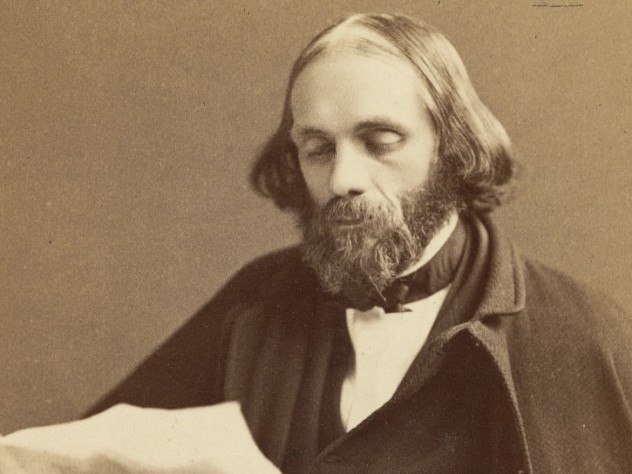
Edward Everett Hale (1822-1909)
This would a a fitting fate for adherents of QAnon, the “Proud Boys,” and other troublemakers who have forgotten what a good deal they had in living in a democracy—one which they intended to wantonly destroy.
The Flower Street Entrance to the Los Angeles Central Library
The Central Library still looks like this, though most of the buildings around it have changed. What is more, after a devastating 1986 fire, the building was expanded on the Grand Avenue side and remodeled. Fortunately, the murals on the second floor rotunda were saved, leaving some of the old library highlights still intact.
Because of the coronavirus lockdown, patrons of the library may not enter the building. If I want access to the library’s holdings, however, I can access the Library-To-Go service. It involves four steps:
Select the books I want to read using the library’s website
Place a hold on those books and check the status every few days
When the books are marked as being available, use the library website to make an appointment for pickup
Show up at the approximate appointment time at the 5th street entrance, phone the librarians inside, and wait until they deliver the books to you in a brown paper bag
I am currently set to go downtown on Thursday morning to pick up four books: Jamyang Khyentse’s What Makes You NOT a Buddhist; Ma Jian’s Red Dust: A Path Through China; Rachel Kushner’s The Flamethrowers: A Novel; and Olga Grushin’s The Dream Life of Sukhanov. As I am still working on my Januarius Project. this month I am reading only books by authors I have not previously read.
Thanks to the library’s vast holdings, I can easily reserve books that are out of print and difficult to find.
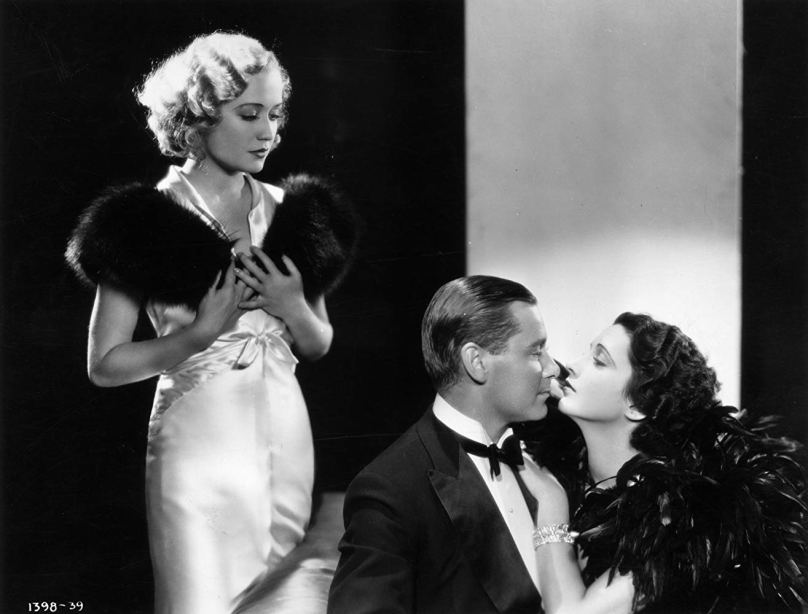
Miriam Hopkins, Herbert Marshall, and Kay Francis in Trouble in Paradise (1932)
In the last few days, I have been watching three pre-Code films that Ernst Lubitsch directed for Paramount in three successive years. They all starred Miriam Hopkins and were a delight to watch. In his book The American Cinema: Directors and Directions 1929-1968, film critic Andrew Sarris writes about the director’s attention to manners:
What are manners, after all, but the limits to man’s presumption, a recognition that we all eventually lose the game of life but that we should still play the game according to the rules. A poignant sadness infiltrates the director’s gayest moments, and it is this counterpoint between sadness and gaiety that represents the Lubitsch touch, and not the leering humor of closed doors.
My favorite of the three films is Trouble in Paradise, about two con artists/thieves/pickpockets played by Miriam Hopkins and Herbert Marshall. They prey upon the wealthy Kay Francis—except that Marshall begins to fall for her to Hopkins’s disgust. How Marshall leaves both women happy is utterly delightful.
Poster for Design for Living (1933)
The subject of Design for Living is a ménage à quatre between Miriam Hopkins, Fredric March, Gary Cooper, and Edward Everett Horton. This being a pre-Code picture made before July 1934, Design for Living gets away with salacious sexual suggestiveness that wasn’t seen again in Hollywood until the 1970s. What gets me is how a film with so much envy and yearning was made with such a light touch.
Lobby Card for The Smiling Lieutenant (1931)
Finally, I saw (for the first time) The Smiling Lieutenant, in which Maurice Chevalier gets away with several capital crimes, including stepping out on his wife who is a royal princess. The princess, played by Hopkins, finally gets a talking-to by Claudette Colbert, who plays the leader of a beer garden all-girl band. Again, the result is a satisfying but highly unusual happy ending of a story which more frequently leads to depression and even suicide.
The three films all played on Turner Classic Movies (TCM) this month. It turns out that Miriam Hopkins is TCM’s Star of the Month. As far as I am concerned, Ernst Lubitsch is the director of the month.
Other Lubitsch films worth seeing include:
The Marriage Circle (1924)
Lady Windermere’s Fan (1925)
The Love Parade (1929)
Ninotchka (1939) with Greta Garbo
The Shop Around the Corner (1940)
To Be or Not To Be (1942)
The last film on the list is an unlikely comedy about the Nazi invasion of Poland starring Jack Benny, Robert Stack, and Carole Lombard. It is one of the funniest films ever made. (“So, they call me Concentration Camp Erhard!”) Only Lubitsch could carry that off.
The following consists of the opening paragraphs of novelist Trygve Gulbranssen’s Beyond Sing the Woods (1933), set in 18th century Norway. The novel reads almost like an old Icelandic saga. It is a pity that it is not better known.
The crags above the depths of Maiden Valley were deepening to blue and their lines softening in the raw air of the autumn evening. Behind them the sky flamed, with a streak of blood where the sun was setting. Upon the outermost crag a bear stood, dark as the rock itself, and sniffed towards the Broad Leas where mist lay over tarn and water-way.
His head was lean and sharp, his neck long and scraggy and sparsely covered with fur. These last few autumns he had been late in hibernating; for all his plundering and devouring the comfortable, lazy, autumnal heaviness of his younger days was slower every year in coming, and this year there was something gravely wrong. Somewhere in his body pain snarled at him, and meat had lost its savor. The greater part of every carcass he left lying, and when he gulped a little warm blood, half-living hearts, and other such light fare, he could eat no more.
No longer could he stalk elk in the forest, for his body soon stiffened and wearied, and the pain had gnawed ever since that dread reëchoing bang came at him from the man away to the north in the Björndal woods. The bang had torn its way into his flank so that the blood gushed, and the wound ached and gnawed at him long afterwards. But though he could no longer go after elk, he had felled cattle and stolen many sheep.
This autumn people had housed their animals too early. On one or two evenings he had had to venture as far as their dwellings under cover of dusk, and break in the cattle-shed doors to find blood and meat. Men had come after him with yells and shouts, but he had dashed his paw at one of them so that he fell and lay still. After that they had followed him no further.
Both men and dogs down here in the Broad Leas were different from those northward in Björndal, where he had raided in his young days. There they had hounds that hurtled upon one, and yapped and barked and drove one out of one’s wits, while the men came quietly without yells or shouts, and one was not aware of them until they were close—then would come a bang shivering through guts and bones, leaving a pain that stayed. Down here in the Leas dogs slunk scared behind the men, and there was only noise and uproar, and no bangs. He would stay here, and in the evening when the lights were out make his way down to the byres.
He remained standing for a long time, pitch-black against the sky now darkening to blood and night. His head stood out sharply, his ragged neck stretched at a slant from his powerfully built body, shrunken now, with pointed shoulder-blades sticking up under his coat.
The Start of the French Revolution in 1789: The Oath on the Tennis Court
Sorry for continuing in a political vein, but the events of the last week have infuriated and energized me. The bozos who invaded the Capitol last Wednesday were not on any mission to represent the voters of the United States. In fact, they were attempting to disenfranchise the majority of American voters who had decided they had enough of Donald Trump and his cheapjack presidential administration.
Trump made much of the fact that 74 million voters were behind him. He totally ignored the fact that 81 million voters were against him. During his entire presidency, Trump only cared for the people that supported him; all the others were nasty haters. He never tried to increase the number of his supporters. Instead, he kept going back to the states that supported him to hold massive rallies.
Has he ever held a rally in Los Angeles? No. He has few supporters here, and lots of enemies (including me).
I fear that Monday, January 20, will see a rather tense inauguration for the presidency of Joe Biden. I certainly hope that he is backed up by armed military units that will be prepared to fire on violent demonstrators, and not the Capitol Police. Trump’s supporters will do nothing for me; they will do nothing for California; they will do nothing for the majority of Americans who voted him out of office.
After 1789, the French Revolution became bloody; but it did get rid of a privileged aristocracy that was bleeding the nation and a clueless king that was as dumb as a post.
Did I say “clueless king”? Hmm, reminds me of Trump. Bring on the guillotine!














You must be logged in to post a comment.