Another Getaway

Martine at the Automobile Driving Museum

Today Martine left me for the fifth time. It wasn’t really a break-up. We wished each other well, and Martine managed to get a space in a women’s shelter in South Central Los Angeles where she could wallow in her depression. She will lie on her back all day and stare at the wall. This evening, at least, she called me and told me where she was staying and how I could get in contact with her. I can’t see how she would be able to tolerate such a minimalist life, though I’ve seen her go through stretches like that here in the apartment. I still love her and hope she herself will come out of her dudgeon long enough to see that the life she has chosen for herself is too unspeakably grim even in the short term.

In her previous getaways, Martine made it to Sacramento, Truckee, Salt Lake City, and some unspecified point in the California desert. She doesn’t want me to interfere with these getaways, yet she always wants to keep at least a minimal line of communication open. That at least is a good thing.

I have gone through these episodes before and have become slightly inured to them. Still, my thoughts are always with her; and I regard my life alone as being incomplete, as if several vital organs were missing. The two things that keep me on an even keel are my old friends and my books. I hope she comes back and decides that maybe the old man is no longer a sexy beast, but he does love her after his own fashion.


How Dare You Interfere With My Manly Pleasures?

That’s a Heavy-Duty Snarl, Brett!

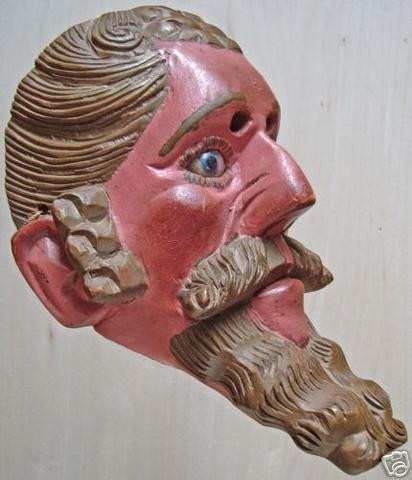
I think both sides have covered all the substantive issues, according to their various points of view. One thing I have not seen is how Brett Kavanaugh seems to have screwed the pooch as far as his nomination to the Supremes is concerned. (That won’t matter to Mitch McConnell, who at this point would gladly accept in nomination Jack the Ripper, Benedict Arnold, or even Judge John Hathorne of the Salem witch trials.)

Admittedly, the Democrats are enraged that are being requested to swallow the bolus of Kavaugh’s sexual and other moral misdeeds and his lies under oath. Somehow, I think he would still have gotten by if only he were nicer. That snarl, though, is such a clear sign of villainy that he is rapidly losing adherents. I mean, who wants to be associated with a guy whose main legal qualifications are his love of beer and pussy.


Optimates and Populares

The Roman Senate with Cicero Accusing Catiline (Seated by Himself at Right)

Over the last couple of days, I have been reading Mary Beard’s SPQR: A History of Ancient Rome. We think of the Roman Republic in very decorous terms, with all those dignified men in togas. We don’t see many representations of Roman plebeians, who were not permitted to wear the toga—let alone the thousands of slaves living in the city.

It was actually a far from decorous time, with over a hundred years of violent conflict between the optimates (wealthy upper classes) and the populares (common people). This century included the Brothers Gracchi, who were murdered; the brutal dictator Sulla; the victorious general Marius; and ended with the war between Julius Caesar and Pompey the Great. In many ways, it was reminiscent of our own times—a time when we are envisioning the end of our own Republic from the repeated assaults of the Dictator Trump.

Among the optimates, there were the senate, the consuls, the priesthood, all the Republican offices (Quaestor, Praetor, Aedile, etc.), as well as the class of equites, or knights. For most of its existence, these are the people who ruled the Republic. The populares, or plebeians, were everyone else (always excepting the slaves, who had no one to speak for them). The optimates did everything in their power to aggrandize their power at the expense of the populares. In fact, one of the reasons Julius Caesar was assassinated in the Senate in 44 BC was his policy of sharing power with the populares. The men who stabbed him were all Senators.

I am tempted to equate the optimates with Republicans, and the populares with Democrats. In fact, the situation was complicated by the inhabitants of the various provinces of the Republic—and these provinces began right outside the Rome city limits.


The Death of Boris Vian

CD Cover of Boris Vian Song Collection

There is a myth that the French are contemptuous of everything that the United States stands for. They might be now, seeing how how our country has sunk to Stygian depths since November 2016. But there have been many exceptions, consisting of key figures in the arts who have paid homage to American art forms. In the case of Boris Vian (1920-1959), the contributions have been in the form of music (he was a jazz trumpeter who knew Duke Ellington, Hoagie Carmichael, and and Miles Davis), literature (detective and Oulipo), and translation (Raymond Chandler and A. E. Van Vogt).

I have just finished reading Vian’s Mood Indigo, the English title of L’Écume des jours. It is an inventive work of the Oulipo school of literature. It starts out as a manic love story and becomes ever more somber and even tragic as the characters come to sad ends. It is reminiscent of works by Raymond Queneau and Georges Perec.

Vian died at the age of thirty-nine of a heart attack while watching the credits of a French film adaptation of his novel I Spit On Your Graves. You can see the credit sequence by clicking here. Reportedly, Vian cried out “These guys are supposed to be American? My ass!” and collapsed in his seat. He died en route to the hospital.

He had a point, it looks a lot more French than American. It’s a pity we lost him, because he was a real friend to American literature and jazz.


American Car Culture

1934 Ford Model 40 Deluxe Roadster

One of the reasons I enjoy visiting automobile museums—of which there are five that I know of in Southern California—is that classic American cars represent a culture that is so uniquely different from that of our European cousins. That 1934 Ford Roadster from the Nethercutt Collection in Sylmar is brash, yet built along classical lines. Compare it with a Rolls Royce, Voisin, Maybach, Talbot Lago, or Bugatti and you will see it different from American cars in pretty much the same way that American literature is different from European literature.

There are some classic American car designs that are characterized by some restraint, but for the most part Detroit says, “Here! This is what you want! It’s you!” One feels one has to grow into a Bentley or a Hispano-Suiza: It is something to which to attain. The American model is much closer to the Id, whereas the European model is closer to the Superego.

The Pep Boys: Manny, Moe, and Jack

I was enthralled yesterday by this Pep Boys plastic logo at Oxnard’s Murphy Automotive Museum. I compare Manny, Moe, and Jack to the automobile repairman in Patrick Modiano’s novel Villa Triste: cool, detached, intellectual.

It is possible, perhaps, to carry this McLuhanesque comparison too far, but it does seem to make sense. Look, for example at the logos.

Plymouth Barracuda Logo

Can you imagine Rolls Royce calling one of its Silver Phantoms a Phan’? Or Talbot Lago, a ’Bot? Even though Rolls Royces are affectionately referred to as Rolls, the company would never abbreviate the name on one of their automobiles. Yet, Plymouth gladly adopted an abbreviated name to put on the rear bumpers of their later model Barracudas.

Now then, is the American approach any worse? It appears to sit well with the American automobile-buying public. Of course, it would be far better if the American automobiles themselves have not declined so precipitately. I have owned nothing but Japanese cars since I began to drive. Yet, looking back at Detroit products of the Golden Age, I would have had no trouble with Packard or Pierce Arrow or Duesenberg. They were beautiful cars that compared favorably with the best that Europe could manufacture.


Historic Schoenbrunn Village

My First Trip

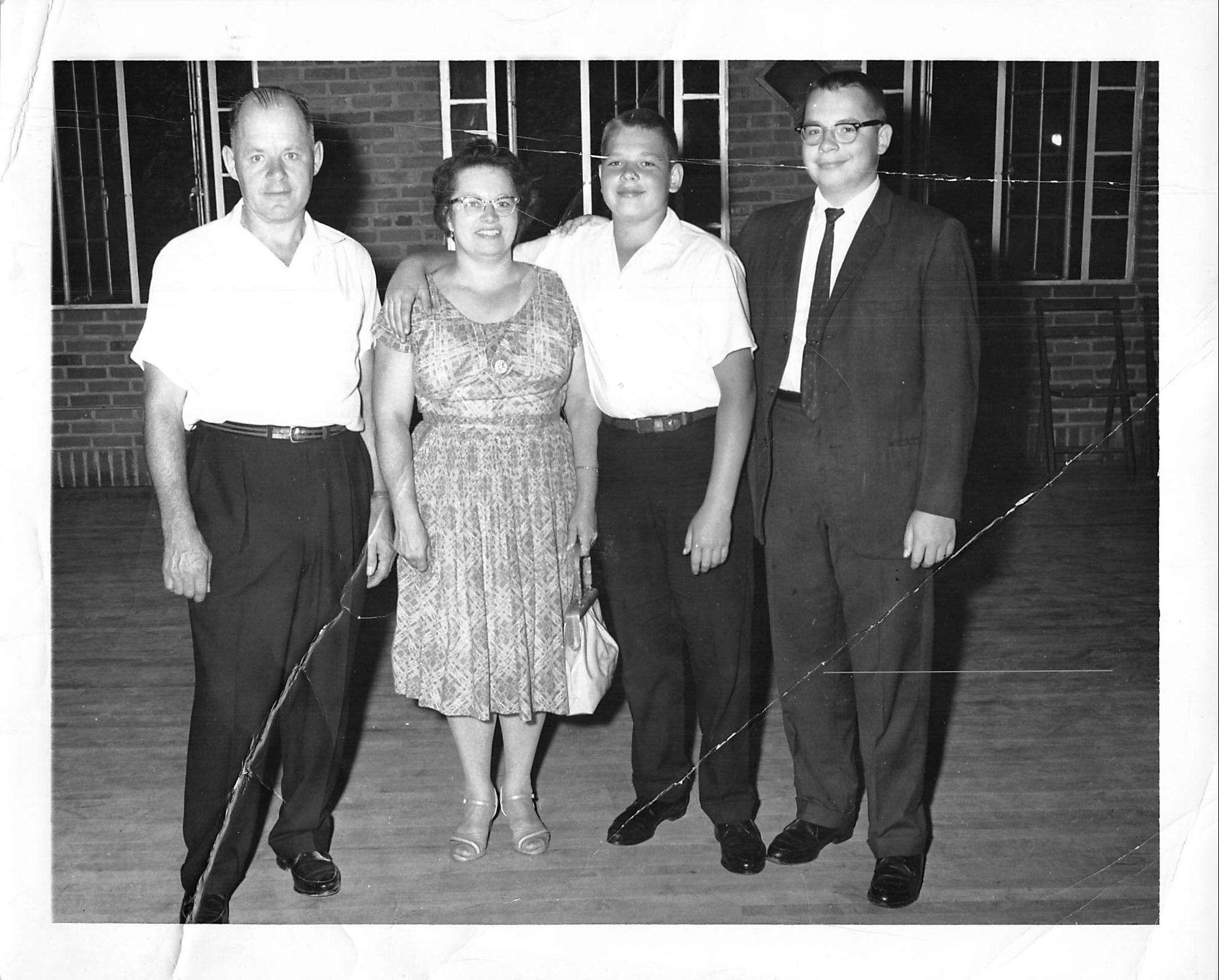
Heck, I was just a kid at the time; so I didn’t know any better. All the other family trips were decided on by my parents—and we didn’t travel much even then. Up until the mid 1960s, the farthest I ever went with them was Detroit and Pontiac, Michigan, to the west and Niagara Falls to the east. Then, one day they listened to me. I suggested that we visit Schoenbrunn Village near New Philadelphia, Ohio. We had just learned in school that it was the first white settlement in Ohio, founded in 1772 by Moravian missionaries intending to convert the Delaware Indians.

What we found was a Disneyfied patch of log cabins that looked so badly chinked that they probably had to plug the leaks every year. There was the obligatory souvenir stand on the premises and (although I do not specifically remember it) a snack bar. Of the souvenir stand I am sure, because my folks bought a rubber-tipped spear for my little brother. The return trip was hard on him so he detonated by the time we neared Akron.

It was not particularly a fun trip. Once the fact settled in that it was the first settlement in Ohio, the rest was primarily just visiting all the cabins and nodding sagely. Interestingly, Los Angeles was first settled nine years later than Schoenbrunn Village, and some of the original buildings are still around, such as the Avila Adobe on Olvera Street and scattered Spanish missions and adobes scattered around town. I guess log cabins of that design don’t last long.

Fortunately, all my subsequent trips were much better than that ill-fated day trip some 60 plus years ago.


Two Ships: The Lady Rose and the Modesta Victoria

Aboard the MV Lady Rose in 2004

I have always liked Canada. While we were losing our minds and preparing for a second Civil War, Canada remained itself—calm, reasonable, sane. One of the highlights of my 20014 trip to British Columbia was an all-day cruise from Port Alberni to Bamfield and back. The Alberni Inlet and Barkley Sound extends for many miles of isolated houses and logging camps, many of which were supplied by the packet freighter MV Lady Rose. I understand the ship is no longer being used for that purpose. On the plus side, she is at Tofino awaiting restoration at Jamie’s Whaling Station.

There is something about small ships that intrigues me. In Argentina, I took the Modesta Victoria on Lago Nahuel Huapi to Los Arrayanes National Park. The Modesta Victoria was built around the same time as the MV Lady Rose, though in the Netherlands rather than Glasgow. The Modesta victoria has recently celebrated 75 years of navigation on Lago Nahuel Huapi, which sits in the foothills of the Andes in Argentinian Patagonia.

The Modesta Victoria at Anchor

My day cruises aboard both ships were among the highlights of both vacations. The Alberni Inlet was lovely, abounding in bears and other wildlife. And the Modesta Victoria’s cruise to Los Arrayanes was spectacular. It is said (though probably this is a myth) that the orange trunks of the Arrayanes trees were the inspiration for the forest in Walt Disney’s Bambi.

Crimes Against Women

I, Too, Have Been Affected by All the News of Crimes Against Women

I am just now beginning to realize that, being born male, I have lived a privileged lifestyle—without fear of being physically and emotionally violated. The closest I ever came was in the late 1960s, when I was on crutches and hitchhiking on Santa Monica Boulevard. One guy who gave me a ride attempted to fondle me, until I jammed one of my crutches hard against his throat and demanded to be let out immediately.

Otherwise, I have never been molested; nor have I ever attempted to molest any woman against her will.

Yet as the #MeToo news continues to unfold, I wonder what percent of women have had to fend off the advances of men who have felt they were in a position to have their way with a woman who was drunk or stoned or somehow in their power. If that percent is as high as I think it is, I feel abashed for my previous lack of understanding.

And that does not even include the women who were abused as minors.

I hope that, somehow, some good will come from all of this. Unfortunately, I am a pessimist. My view of the human condition tends toward darkness. This thing has been going on since man first came down from the trees, and perhaps even before.


“I Would Prefer Not To”

Mystery Writer Patricia Highsmith (1921-1995)

The words are those of Herman Melville’s Bartleby the Scrivener in his story of the same name. In that story, a clerical worker refuses outright to continue to do his work and pays the price for his obstinacy. In Patricia Highsmith’s A Suspension of Mercy, Bartleby is the last name of writer Sydney Bartleby, a man who is every bit as obtuse as Melville’s scrivener. He is married—not entirely happily—to Alicia Sneezum. They live in the English countryside, with Sydney trying to publish a novel and television scripts, and Alicia trying to paint abstracts. At one point they decide to split up for a while and maybe come together only when they had gotten the ya-yas out of their system.

So Alicia is put on a train at Ipswich, telling her husband to tell people she had gone to stay with her parents. Except, she doesn’t in fact tell her parents anything. In the meantime, Sydney plays with the idea of having his friends and neighbors suspect that he had murdered Alicia. He even rolls up an old carpet, imagining that he had hurled Alicia down a flight of stairs to her death and rolled the body into the carpet. He buries the carpet early one morning in a forest some distance from his cottage.

In the meantime, people keep calling Sydney asking to speak to Alicia. He tells them she is staying with her parents. When they call the parents, and find her not there, the suspicion arises that Sydney has murdered her. A neighbor had seen him struggle to load a heavy rolled carpet into his car.

Enter the police. Sydney leads them to the buried carpet, which they find minus the body of Alicia. That only makes the police more suspicious. They start digging other holes in the area to search for the body. Interestingly, Sydney finds Alicia, with her new inamorata whom she had met at a party, but he doesn’t alert her or, in fact, anybody. So the suspicions continue to mount.

Nasty. Nasty. Nasty. This is clearly a story by Patricia Highsmith, author of Strangers on a Train (1950) and The Talented Mr Ripley (1955). It is delightful how the mutual obstinacy of Sydney and Alicia lead to the police, the press, and the general public to assume the worst. At several points, Bartleby (or Alicia) could have short-circuited all this needless mountain of false news, but, like the original Bartleby, preferred NOT to.

This is without a doubt the most obstinate mystery ever written, and great fun withal.

Skin, Left Anterior Proximal, Upper Arm

Squamous Cell Carcinoma

About a week and a half ago, I went to see a new dermatologist, the one I had been seeing having retired. The reason for my visit was an annoying skin tag that was dangling from my left upper eyelid. While I was there, the doctor checked my body for suspicious signs of skin cancer—this being Sunny Southern California. I was surprised to learn a few days later that one of the three suspicious signs did indeed prove upon biopsy to be a “Squamous cell carcinoma in situ (Bowen’s disease), lesional cells extend to a peripheral edge of the biopsy.” It looked very much like the one in the above photograph.

Within two hours, I was in the doctor’s office having a lozenge-shaped piece of tissue from my left arm removed and replaced with several stitches. I was rather surprised by the outcome, because that portion of my upper left arm was never directly exposed to sunshine: I never work tank tops or other “young men’s folly” types of T-shirts. The skin cancer cells ignored my cotton/polyester blend shirts and started their nefarious work where I did not expect it.

Fortunately, the particular bump that was removed had just appeared one or two weeks previously; so we likely stopped it at an early stage.

I remember one of my friends lost his father because he was used to hanging his left arm outside the open window of his automobile. He got some form of skin cancer, did not seek treatment, and eventually the cancer metastasized and killed him. He did most of his driving in the San Fernando Valley, an inordinately hot part of L.A. I never hang my arm out the window: I use it to aid me in steering my car. Besides, my window is usually closed in summer because I have the air conditioner on.

Life is a bunch of close calls. I think I ducked this particular bullet.