The Thirty Plus Years’ Quest

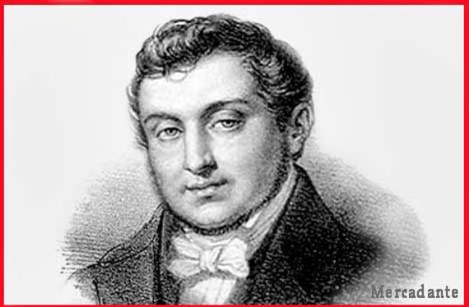
Saverio Mercadante (1795-1870)

Saverio Mercadante (1795-1870)

It was over a third of a century ago. I was preparing to go to work at Urban Decision Systems and listening to a classical music station on the radio, probably KUSC-FM. Suddenly, a piece of music came on called “Variations on a Theme on Stabat Mater by Rossini” by the Neapolitan composer Saverio Mercadante.

I have been looking for that piece of music at record stores (when there used to be such things), eBay, even iTunes—without a shred of luck. Then today I just happened to Google “Mercadante Rossini Stabat Mater” and got two hits on YouTube. Needless to say, I played both clips. One was an Italian recording entitled Sinfonia Sopri i Motivi dello Stabat Mater de Rossini, and the other was a recording conducted by Claudio Scimone with the L’Orchèstre National de l’Opéra de Monte Carlo and entitled Sinfonia sur des thèmes du Stabat Mater du célèbre Rossini (1843).

The musical phrase I loved came in at around the 7:50-minute mark on both recordings and lasted for a little over a minute.

It was nice, but it didn’t impress me as much as it did back in the 1970s or 1980s. Perhaps what I heard on the radio was a better recording. I just don’t know. Or perhaps my taste in music has changed. I am no longer like Swann and Odette de Crécy at the Verdurins oohing and aahing over that little phrase of Vinteuil’s.

What amazed me is that so many things that were impossible to find just twenty years ago can now be Googled and brought up in mere seconds. Technology is wonderful. Sometimes.


The ObliterAd

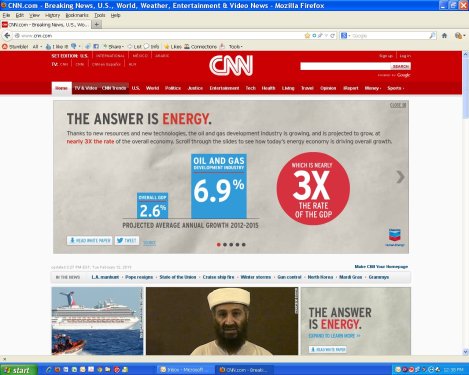
Corporations Obliterate Your Favorite Websites to Get Their Message Across

Corporations Obliterate Your Favorite Websites to Get Their Message Across

Within the last year or so, there has been a proliferation of what I call ObliterAds, advertisements that shove your website contact down or just cover it with some otiose message which you have to close in order to see your website. I first saw this phenomenon at Salon.Com, and now it’s part of CNN’s news website as well (see above screen capture).

Don’t people in the advertising industry realize that tactics like this irritate Internet users and result in some antagonism. I for one would not buy anything advertised in this way. In fact, I close the ObliterAd as fast as I can so I don’t even get to see the message being promulgated.

Websites, unfortunately, are hungry for ad revenue and don’t seem to mind irritating their loyal visitors. (Please note that this website, tarnmoor.com, has no intention of selling ad space to corporations: They can tattoo their messages on their butts for all I care.)

I may decide to give up on CNN.Com, especially since it seems at any given time that most of the news stories are several days old or send me to videos. (I’d rather just read the story thank you!)


A Downside to Superfast Computers

Chip for a Dwave Quantum Computer

There is one possible downside to having a superfast quantum computer such as the one envisioned by Nobel Prizewinners Serge Haroche and David J. Wineland. Right now, your secure websites are protected by passwords that, for the present level of technology, are good enough to avoid cracking by other PCs.

But what if a strong password such as recommended by Microsoft isn’t good enough for a supercomputer that is thousands of times faster than the fastest PCs? In that case, if the hacker has access to one of these quantum computers, even a strong password may not be enough. Perhaps the next step is what Bank of America is doing right now: namely, asking you a question whose answer has been predetermined by you and requiring a strong password as well. Perhaps some websites may ask you a whole string of questions.

Eventually, keeping tabs on a whole plethora of passwords will become a far more tricky task than it is now. There may be whole strings of passwords which are too complicated to be remembered directly by any human. What to do? You can perhaps put them in an Excel file on your computer which is itself passworded,

In any case, as usual, the more things advance, the more complicated they become.