Twelve Silents

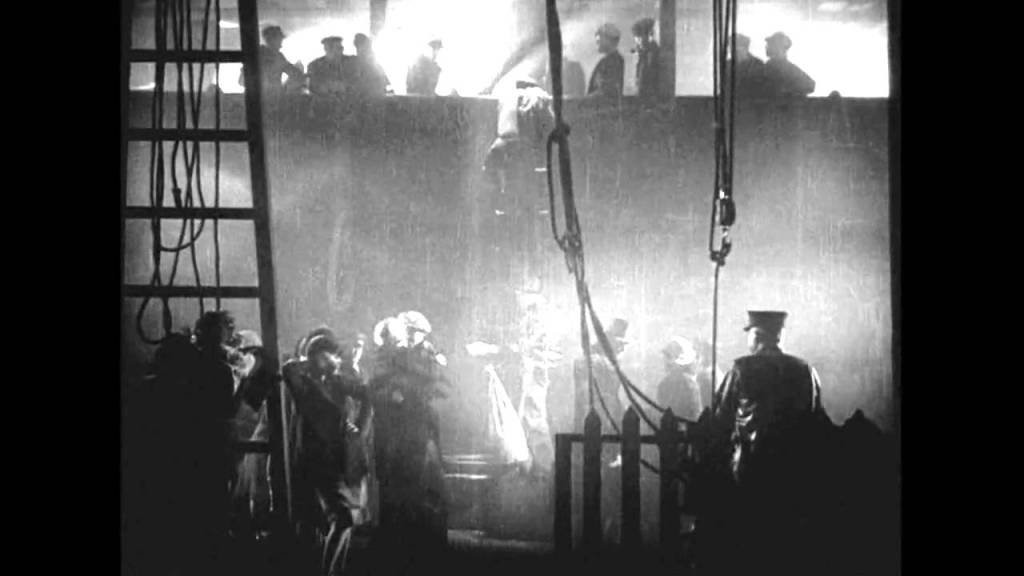
Scene from Josef Von Sternberg’s The Salvation Hunters

As promised, here are an even dozen great American silent films. Left out are the great comedians—Chaplin, Keaton, and Lloyd—mostly because people are pretty familiar with them. Below are films that are mostly dramatic, including one drama that Chaplin directed, but did not star in. The films are arranged by year of release:

  • D. W. Griffith’s Broken Blossoms (1919), probably my favorite among his films
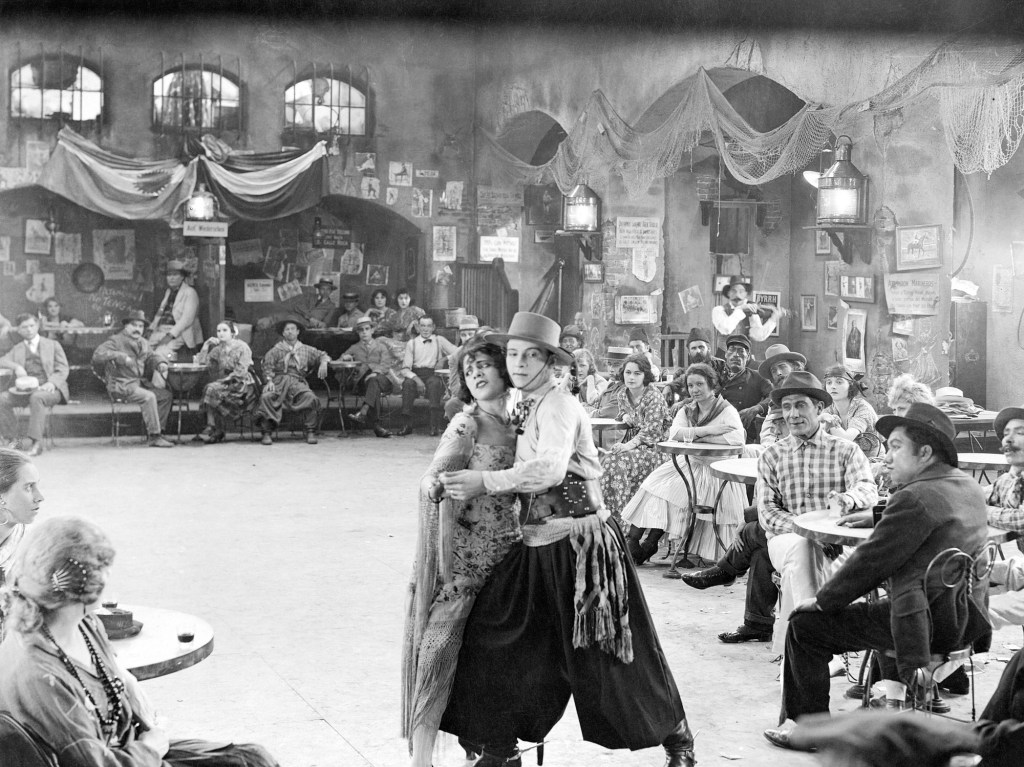
  • Rex Ingram’s The Four Horsemen of the Apocalypse (1921), starring Rudolph Valentino
  • Maurice Tourneur’s Lorna Doone (1922), a real diamond in the rough
  • Charlie Chaplin’s A Woman of Paris (1923), his tribute to the lovely Edna Purviance
  • Victor Sjöström’s He Who Gets Slapped (1924), starring Lon Chaney Senior, based on a Leonid Andreyev play
  • Josef Von Sternberg’s The Salvation Hunters (1925), the director’s first American film
  • Ernst Lubitsch’s Lady Windermere’s Fan (1925), based on the Oscar Wilde play
  • Raoul Walsh’s What Price Glory? (1926), with profanity for proficient lip-readers
  • F. W. Murnau’s Sunrise (1927), a real masterpiece
  • Paul Leni’s The Man Who Laughs (1928), based on a Victor Hugo novel
  • Victor Sjöström’s The Wind (1928), with Lillian Gish going mad on the prairies of 19th century America
  • Erich Von Stroheim’s Queen Kelly (1928), produced by Joseph P. Kennedy and starring Gloria Swanson

Rudolph Valentino Dancing the Tango in Four Horsemen of the Apocalypse

I think it is worth the effort to see these films if you’re interested in silent films of the period. If you’re not, they very well might make you interested.

NOTE: The 1920s were pretty racist, so I would advise you to remember that our great-grandparents did not hold the same political views that we do.

We Had Faces

Lillian Gish in Victor Sjöström’s The Wind (1928)

The title comes from a quote by Gloria Swanson in Billy Wilder’s Sunset Boulevard (1950), after viewing a silent film that starred her:

Still wonderful, isn’t it? And no dialogue. We didn’t need dialogue. We had faces. There just aren’t any faces like that anymore. Maybe one—Garbo. Oh, those idiot producers. Those imbeciles. Haven’t they got any eyes? Have they forgotten what a star looks like? I’ll show them! I’ll be up there again, so help me!

Over the last four days, I have been watching a whole slew of silent films, including both shorts and features, aired by Cinecon from their website at Cinecon.Org.

Originally, I didn’t much care for silent films. They didn’t look sharp on the screen; they were too sentimental; they were too slow; and there were all kinds of problems with the nitrate stock on which they were printed. But I changed my mind, owing primarily to two reasons. First was my friendship with the late John Dorr, who convinced me to give them a second chance. Second was a phenomenal book that came out while I was at UCLA Graduate School, Kevin Brownlow’s The Parades Gone By.

Also, I had the opportunity to see many silent films that were simply phenomenal, and not just fractured flickers. One of them, I just saw a couple of hours ago from Cinecon’s website, Penrod and Sam (1923), directed by William Beaudine for First National Pictures (which morphed into Warner Brothers). It was a gorgeous print, filmed by a director whom I regarded as a nonentity, with no recognizable stars, but so funny withal that my guffaws disturbed Martine, who was napping in the bedroom.

Poster Announcing a Screening of Penrod and Sam

I cannot help but think this film was a major influence on the Our Gang Comedies of the 1930s, which were a major influence on my youth.

Looking back, I think my original feelings about silent films had mostly to do with the hundred or so years that separated me from them. The 1910s and 1920s were a far different time. The population of the country was overwhelmingly white and Protestant. It was, for all intents and purposes, a different America. Now, it no longer bothers me so much viewing these films of a bygone era, one with which I was not altogether in sympathy.

Within a few days, I intend to present a list of the greatest silent films made in the United States, and perhaps follow it up with a similar European list.

Rendezvous with Cinecon

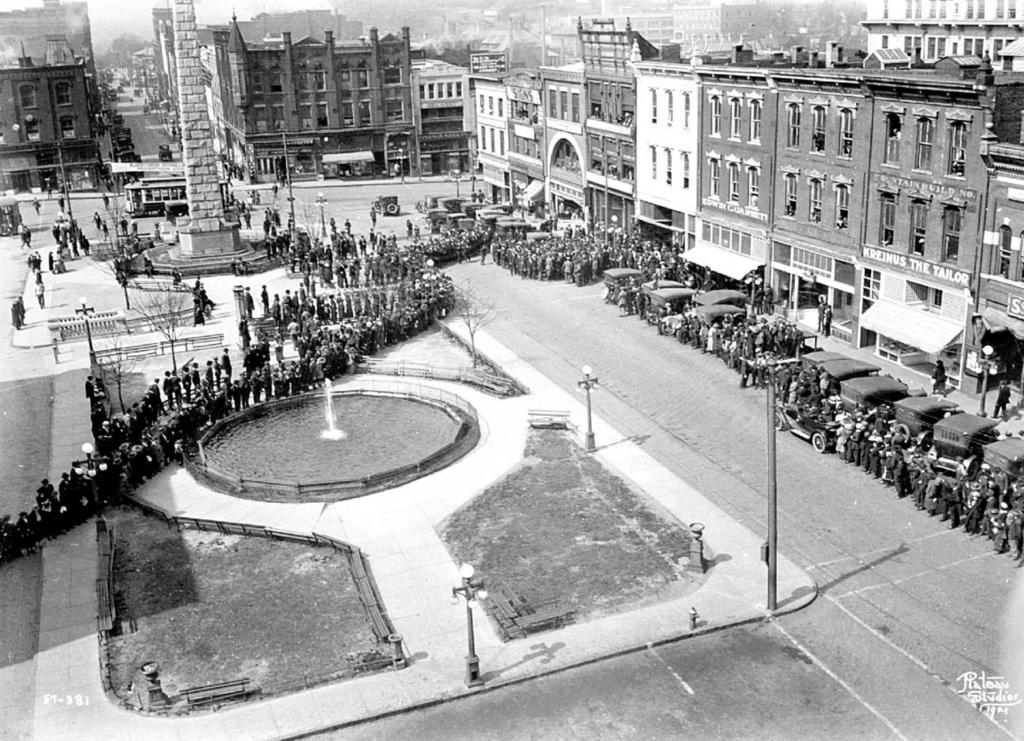
Lynch Mob Scene from The Conquest of Canaan (1921)

Labor Day Weekend. It was Cinecon time once again, where I view old and rare films looking for diamonds in the rough, Like last year, however, this year’s Cinecon meet was changed into an online event because of the Covid-19 resurgence.

I have seen the first two days’ programs and am looking forward to the next two days. So far, I have seen four features:

  • Dynamite Dan (1924), directed by H. Bruce Mitchell, a typical Horatio Alger type story involving boxing
  • Rendezvous with Annie (1946), directed by Allan Dwan, one of the cinema’s most underrated directors, here treating a Preston Sturges-like script
  • Blue Blazes Rawden (1918), directed by and starring William S. Hart, which I had seen before, set in the Pacific Northwest in a lumberjack camp
  • The Conquest of Canaan (1921), directed by Roy William Neill—who gave us the Basil Rathbone Sherlock Holmes films

A Brilliant Comedy by an Underrated Filmmaker

By far the best of the four films were The Conquest of Canaan and Rendezvous with Annie. The older film was shot on location in Asheville, NC, and dealt with a community run by a hypocritical judge and newspaper publisher that persecutes a young man and even sends a mob against him—though the young man triumphs in the end. The other film is about a corporal in WW2 London who goes AWOL for a weekend to visit his wife and impregnate her, only to be shocked when he has difficulty proving the child is his.

Allan Dwan had a long, distinguished career directing films from all the way back in 1911 and ending fifty years later in 1961. Perhaps my favorites among his films are Brewster’s Millions (1945), Silver Lode (1954), and his greatest, Slightly Scarlet (1956). To date I have seen only a small sliver of his output: 32 films from the silent and sound eras.

I won’t pretend that the films shown by Cinecon are among the greatest ever made, but they are almost all rarely seen and worthy productions. Each year, there are some great surprises in the pictures screened. For more info, click here. Be sure to check out the schedule page.

Back to the Movies

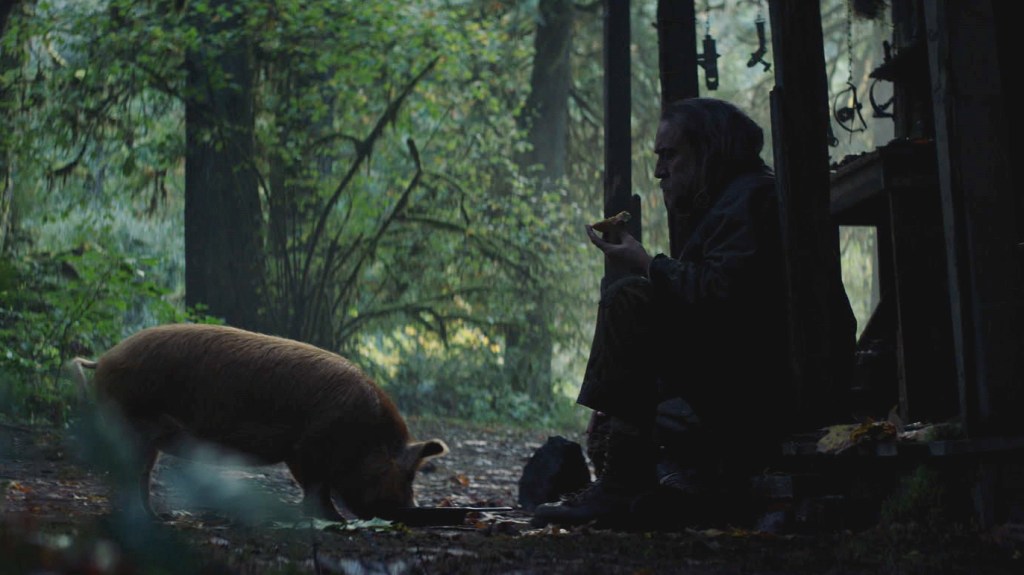
Nicolas Cage and His Truffle-Hunting Pig

Today, for the first time in over a year, I went to the movies. My brother Dan had recommended I see Michael Sarnovski’s film Pig (2021) starring Nicolas Cage. So I took the bus to Pico and Westwood to see the film at the Landmark Theatres there—seeing as how I hate to spend a lot of money on parking.

The film was a winner. Cage is made to look like a grizzled old homeless person, which is all part of Sarnovski’s attempt to make us underestimate the character. When Cage’s truffle-hunting pig is stolen, he heads to the city (Portland, Oregon) to find it and bring it back. There we learn that he is the formerly famous chef Robin Feld who was once a legend in the city’s restaurant world.

This is a film for people who are into food, as my brother certainly is. The film reminds me of Marie NDiaye’s novel The Cheffe, which has a similar foodie emphasis. And because of Robin Feld’s prodigious memory of every meal he ever prepared, I will add that you should check out Jorge Luis Borges’s story “Funes the Memorious.”

Great movies and stories always lead you to interesting places. And I think Pig fits into this category.

Favorite Films: Get Carter (1971)

Production Still of Michael Caine Killing the Man Responsible for His Brother’s Death

I am rather new to Get Carter, which I saw for the first time last year. It is a tale of revenge by a London mobster on the Newcastle hoods who killed his brother and cast his teenage niece in a pornographic film. Once Caine has seen the film, he goes on a killing spree of unabated fury and brutality against the Newcastle mob. There was a remake shot in 2000, but the Michael Caine film directed by Mike Hodges is the version to see.

Interestingly, the role of Newcastle mob boss, Cyril Kinnear, is acted by playwright John Osborne of Angry Young Men fame (Look Back in Anger, The Entertainer, the screenplay for Tom Jones).

Particularly gruesome were the murders of two women who worked with Kinnear. Caine sleeps with one of them, locks her in the trunk of a sports car, and essentially shrugs his shoulders when his adversaries push the car into the harbor. Another one, who recruited the niece for the porno film, was told to strip, injected with drugs, and pushed into a pond. Caine left a trail of her clothes for police to follow to point to the location of her body.

This is a fairly violent picture, but it is well made and definitely worth seeing.

Favorite Films: Chinatown (1974)

Jack Nicholson and Faye Dunaway in Roman Polanski’s Chinatown

Eddie Muller of the Turner Classic Movies (TCM) series Noir Alley thinks that Chinatown is the greatest film ever made about Los Angeles. I am inclined to agree with him. Last night, I saw it for the nth time and newly appreciated it for its dark beauty.

How is it that the ultimate film about L.A. was directed by a Pole? You might remember that five years earlier, Charlie Manson and his gang brutally murdered Polanski’s wife, Sharon Tate, who at the time was 8½ months pregnant. She was stabbed 16 times, killing herself and her unborn child. Polanski was away in Europe at the time working on a film project.

Roman Polanski Playing a Bit Part in His Film

So, yes, I think Polanski had an understanding of the dark side of Los Angeles, which came out in his film. In fact, it was Polanski who insisted that Faye Dunaway gets shot in the head at the end of the movie while attempting to escape her father and incestuous lover played by John Huston. Both the producer and scriptwriter wanted to have Dunaway shoot Huston at the end. Polanski disagreed, saying that his film was not an adventure for children.

Film is a collaborative art form. In consequence, there are so many ways a film can go wrong. This film didn’t. Even after decades, it comes across as fresh, interesting, and somber as it did 48 years ago when it premiered.

I even like the sequel, The Two Jakes (1990) directed by and starring Jack Nicholson.

An interesting side note: I knew the next-door neighbor to the Tate murder house on Cielo Drive. It was inhabited by Richard Anderson, a Hollywood actor who had a long and illustrious career and was also a delightful person.

A Ray of Hope

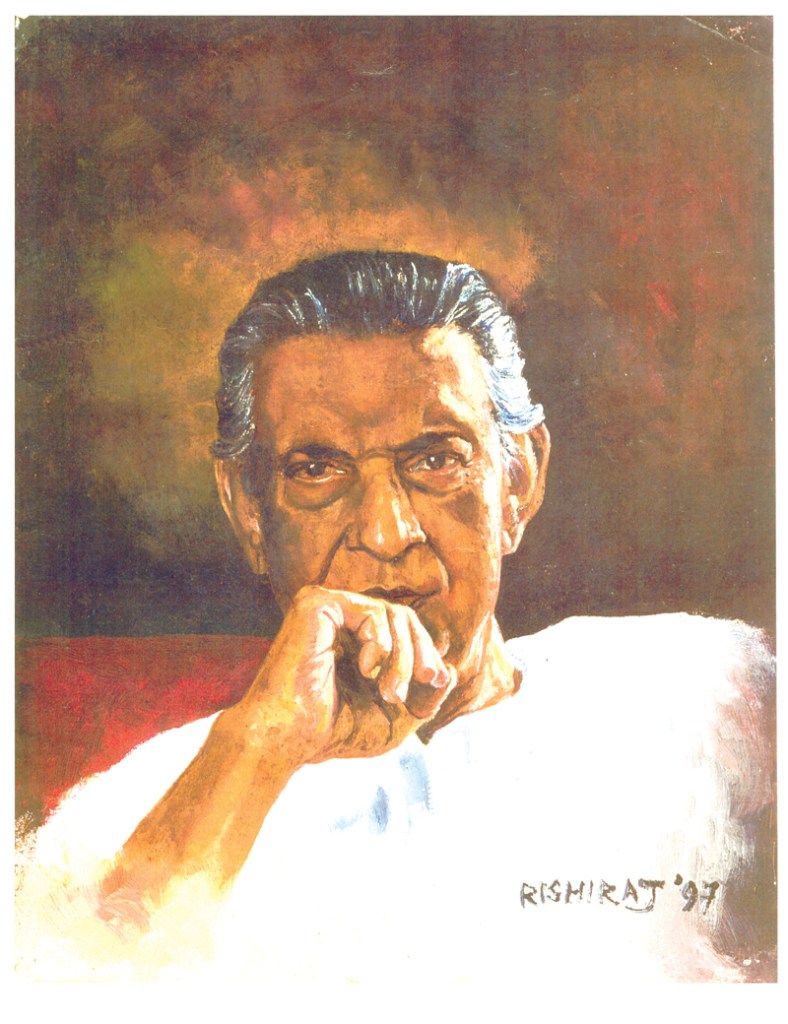
Portrait of Bengali Filmmaker Satyajit Ray (1921-1992)

I always thought that I was pretty good about seeing a goodly number of great films from around the world. Thanks to Turner Classic Movies (TCM), I found that I had somehow missed out on the films of Satyajit Ray of Kolkata (formerly Calcutta). I had seen a number of Merchant-Ivory productions, but not a single film by India’s greatest filmmaker.

TCM decided to celebrate the Centennial of Ray’s birth by presenting a number of his films. I plan to see a number more of them in the weeks to come, but over the last week, I have seen the following:

  • Pather Panchali (1955), the first film in the Apu trilogy and my favorite
  • Aparajito (1957), the second film of the Apu trilogy
  • The World of Apu (1959), the final film of the Apu trilogy
  • The Big City (1969)

Poster for Ray’s The Apu Trilogy

What I love about the Ray films I have seen is not only the poetic realism, but perhaps the most sophisticated and understanding portrait of human relationships I had ever seen on the big screen. In the three Apu films, we see the growth of the boy Apu after having successively lost his sister, father, and mother to early deaths. In The World of Apu and The Big City, Ray has shown us two marriages that seem to thrive even in the face of hardship. When the wife dies in childbirth in The World of Apu, I actually felt bereft, even as Apu himself did.

In fact, I have never seen marriage portrayed more positively, yet realistically, than in Ray’s films. There is nothing in these films of a standard American heartthrob product. His films do not shy away from death, disease, and dire poverty; yet they are almost religiously positive.

When I finish seeing the ten Ray films that TCM showed, I will post more about him and his work.

All the Babes Are Leaving

Tawny Kitaen (1961-2021)

One way to tell you’re getting old is to see what happened to all the babes of the 1960s and 1970s. I was surprised to hear that Tawny Kitaen had passed away. Not that I was a big an of hers, but never was there such a moniker that screamed B-A-B-E in Neon All-Caps. She was one of a troupe that included actresses like Joey Heatherton and Ann-Margret and “celebrities” such as Prince Andrew’s main squeeze Koo Stark and Profumo Affair bad girls Christine Keeler and Mandy Rice-Davies.

I suppose it is inevitable if you live long enough. I still think of Sônia Braga, Jenny Agutter, Françoise Dorléac, Dominique Sanda, and Maria Schneider. They were beautiful, and they populated my dreams as a young man. Now that I am no longer a young man, I can see that all of us are on the same journey through life.

Boardwalk

Pacific & Windward, the Center of Venice, California

If you squint hard when you look at the above picture, you can see the set of the Mexican border town in Orson Welles’s Touch of Evil (1958) in which Charlton Heston plays a Mexican drug enforcement officer—one of his weirder roles.

Now it’s just ground zero for one of Los Angeles’s main tourist attractions: The Venice Boardwalk. The boardwalk runs roughly between the Santa Monica Pier and the Venice Pier. It’s only when you cross the border from Santa Monica into Venice that the fun begins. There are scores of tattoo parlors, cafés, tourist junk shops, fortunetellers, psychics, and handcrafts. including a lot of dubious art. The Midwestern tourists who come by the busload see what they think is the “real” Los Angeles, whereas what they see has been created largely for their benefit.

I sort of enjoy the tatty atmosphere of the Boardwalk, but I mainly go because it contains one of Los Angeles’s last surviving bookshops, Small World Books. Today I picked up a copy of James M. Cain’s last novel, The Cocktail Waitress, and a book by Alan Watts about Buddhism. Then I had a slice of pepperoni pizza from Rey’s and trundled back to my car, which was parked at a confusing intersection of streets a few blocks away near Electric and Abbot Kinney.

If you go a few blocks south on Pacific, you will find the bridge over the Venice canal that was the scene of where Joseph Calleia plugs Orson Welles’s corrupt Captain Hank Quinlan.

The Lubitsch Touch

Miriam Hopkins, Herbert Marshall, and Kay Francis in Trouble in Paradise (1932)

In the last few days, I have been watching three pre-Code films that Ernst Lubitsch directed for Paramount in three successive years. They all starred Miriam Hopkins and were a delight to watch. In his book The American Cinema: Directors and Directions 1929-1968, film critic Andrew Sarris writes about the director’s attention to manners:

What are manners, after all, but the limits to man’s presumption, a recognition that we all eventually lose the game of life but that we should still play the game according to the rules. A poignant sadness infiltrates the director’s gayest moments, and it is this counterpoint between sadness and gaiety that represents the Lubitsch touch, and not the leering humor of closed doors.

My favorite of the three films is Trouble in Paradise, about two con artists/thieves/pickpockets played by Miriam Hopkins and Herbert Marshall. They prey upon the wealthy Kay Francis—except that Marshall begins to fall for her to Hopkins’s disgust. How Marshall leaves both women happy is utterly delightful.

Poster for Design for Living (1933)

The subject of Design for Living is a ménage à quatre between Miriam Hopkins, Fredric March, Gary Cooper, and Edward Everett Horton. This being a pre-Code picture made before July 1934, Design for Living gets away with salacious sexual suggestiveness that wasn’t seen again in Hollywood until the 1970s. What gets me is how a film with so much envy and yearning was made with such a light touch.

Lobby Card for The Smiling Lieutenant (1931)

Finally, I saw (for the first time) The Smiling Lieutenant, in which Maurice Chevalier gets away with several capital crimes, including stepping out on his wife who is a royal princess. The princess, played by Hopkins, finally gets a talking-to by Claudette Colbert, who plays the leader of a beer garden all-girl band. Again, the result is a satisfying but highly unusual happy ending of a story which more frequently leads to depression and even suicide.

The three films all played on Turner Classic Movies (TCM) this month. It turns out that Miriam Hopkins is TCM’s Star of the Month. As far as I am concerned, Ernst Lubitsch is the director of the month.

Other Lubitsch films worth seeing include:

  • The Marriage Circle (1924)
  • Lady Windermere’s Fan (1925)
  • The Love Parade (1929)
  • Ninotchka (1939) with Greta Garbo
  • The Shop Around the Corner (1940)
  • To Be or Not To Be (1942)

The last film on the list is an unlikely comedy about the Nazi invasion of Poland starring Jack Benny, Robert Stack, and Carole Lombard. It is one of the funniest films ever made. (“So, they call me Concentration Camp Erhard!”) Only Lubitsch could carry that off.