In Search of the Twonky

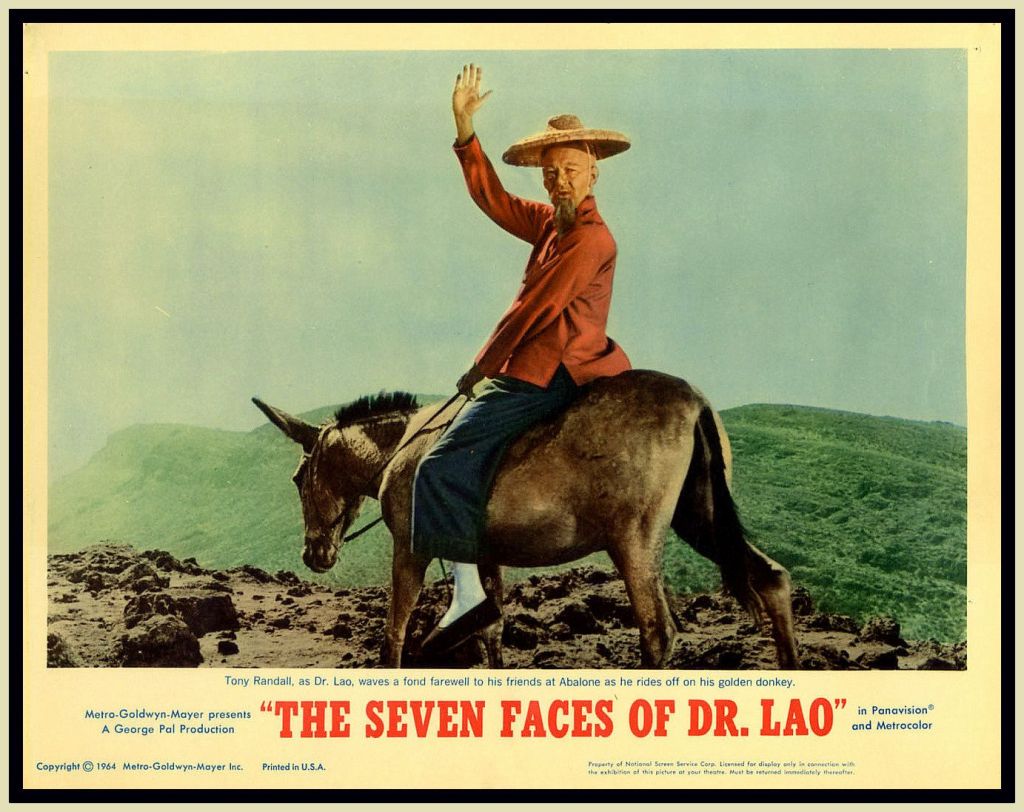
Tony Randall as Merlin in 7 Faces of Dr. Lao (1964)

There is a category of things which one loves even if one knows they are not objectively good. This is particularly true of films, food, people, articles of clothing, and any number of things. For some reason, there is no single word in the English language that conveys the unreasoning attraction for certain things that one loves unreasoningly. (“Campy” is in the ballpark, but not close enough.)

I had been using the word twonky, though I find that my use of the term is common to no one but me. What the hell, I’ll use it anyhow.

One of my favorite twonky films is 7 Faces of Dr. Lao, directed by George Pal, better known for his sci-fi films like Destination Moon (1950) and When Worlds Collide (1951).

It is the tale of a small town in Arizona called Abalone (an odd name for a desert burg.) A little old Chinese fakir called Dr. Lao (pronounced LOW) comes to town advertising a circus. All the characters in the circus are played by Tony Randall (except for the Abominable Snowman, a nonspeaking part played by George Pal’s son Peter). The circus takes place in the desert in a small tent which, on the inside, is miraculously roomy.

Tony Randall as Dr. Lao

The odd thing about Dr. Lao’s circus is that the townspeople learn about themselves, especially Barbara Eden (Angela Benedict) and Arthur O’Connell (Clint Stark, who is trying to buy up the town for profit). Merlin, the Medusa, Pan, Apollonius of Tyana, and the serpent—all act in strange offbeat ways to bring self-knowledge to the people of Abalone. And, in the process, the circus leaves Abalone a happier town.

The Tent Where the Circus Takes Place

I will not go to my grave insisting that 7 Faces of Dr. Lao is a great film, but I will see it again if I can. It always leaves me with a warm feeling. Other films that are among my twonky favorites are:

  • Most classical old sci-fi films
  • James Bond films
  • Earth Girls Are Easy (1984)
  • Danny Elfman’s The Forbidden Zone (1980)
  • Robin Williams’s Popeye (1980) directed by Robert Altman
  • David Lynch’s Dune (1984)

Creeping Marienbadism

Famous Shot from Last Year at Marienbad (1961)

I met Pauline Kael during my last year at Dartmouth. At the time, I was Assistant Director of the Dartmouth Film Society and involved in meeting and greeting visiting film dignitaries. We had dinner across the river in Norwich, Vermont, followed by an interesting conversation.

Pauline had just published her first book, entitled I Lost It at the Movies (1965), which I read and loved.

Although she went on to be film reviewer for the New Yorker between 1968 and 1991, Pauline had a strong streak of the old fashioned, with a strong preference for straight narrative and a disdain for art house films and Hollywood blockbusters. (She called The Sound of Music with the moniker The Sound of Money, which made her no new friends in Hollywood)

Film Critic Pauline Kael (1919-2001)

I am slowly re-reading I Lost It at the Movies, where I found some interesting ideas. She hated the Alain Resnais film Last Year at Marienbad and complained that “we can’t even leave Marienbad behind because, although it memorable (it isn’t even particularly offensive), a kind of creeping Marienbadism is is the new aesthetics of ‘poetic cinema.’”

She recalls:

In Los Angeles, among the independent filmmakers at their midnight screenings I was told that I belonged to the older generation, that Agee-alcohol generation they called it, who could not respond to the new films because I didn’t take pot or LSD and so couldn’t learn to accept everything. This narcotic approach of torpid acceptance, which is much like the lethargy of the undead in those failure-of-communication movies, may explain why these films have seemed so “true” to some people….

At the time, I was at the cusp of the whole postmodern movement myself. I remember being agonized by Ingmar Bergman’s Persona (1966) because it so challenged my own way of thinking … at the time. (No longer: I now love the film.)

Liv Ullmanm and Bibi Andersson in Persona

I guess I have become thoroughly postmodern. A strong narrative line is no longer necessary for me to enjoy a film. I could just be drawn by a series of beautiful images, startling epiphanies, powerful acting, or something as wonky as my love of Geena Davis in Earth Girls Are Easy (1988).

The Death of Boris Vian

Writer and Jazz Musician Boris Vian (1920-1959)

This is a reprint of a blog I posted on October 1, 2018—with some minor changes. Vian was not only a member of the Oulipo literary movement, but he was a renowned jazz musician.

There is a myth that the French are contemptuous of everything that the United States stands for. They might be now, seeing how how our country has sunk to Stygian depths since November 2016. But there have been many exceptions, consisting of key figures in the arts who have paid homage to American art forms. In the case of Boris Vian (1920-1959), the contributions have been in the form of music (he was a jazz trumpeter who knew Duke Ellington, Hoagie Carmichael, and Miles Davis), literature (detective and Oulipo), and translation (Raymond Chandler and sci-fi writer A. E. Van Vogt). In addition, he was a friend to the existentialist writers of the 1950s.

I have just finished [in 2018] reading Vian’s Mood Indigo, the English title of L’écume des jours. It is an inventive work of the Oulipo school of literature. It starts out as a manic love story and becomes ever more somber and even tragic as the characters come to sad ends. It is reminiscent of works by Raymond Queneau and Georges Perec.

Boris Vian at the Trumpet

Vian died at the age of thirty-nine of a heart attack while watching the credits of a French film adaptation of his novel I Spit On Your Graves [not to be confused with the various rape revenge films released under the name of I Spit on Your Grave without the “s”]. You can see the credit sequence by clicking here. Reportedly, Vian cried out “These guys are supposed to be American? My ass!” and collapsed in his seat. He died en route to the hospital.

He had a point, it looks a lot more French than American. It’s a pity we lost him, because he was a real friend to American literature and music.

Discoveries: Nikkatsu

Nikkatsu Studios Logo

During this hyperextended quarantine, I continue to make interesting discoveries. Late one night, Turner Classic Movies (TCM) put on a double bill of noir films from Nikkatsu Studios.

Nikkatsu? I had heard of Toho, Shochiku, Diaei, and Tohei … but never Nikkatsu. After a quick look at Google, I found that Nikkatsu was actually the oldest studio in Japan, founded all the way back in 1912, three years before D.W. Griffith filmed Birth of a Nation.

I began to look at I Am Waiting (1957), but as the hour was late and I was tired, I reluctantly prepared for sleep.

But then, I discovered that the TCM website has a Watch Now option. When you select Watch Movies, you have available to you virtually all the recently shown films on the channel, including cartoons and shorts. The only requirement is that you subscribe to a service on your TV that carries the TCM channel: There is a login required.

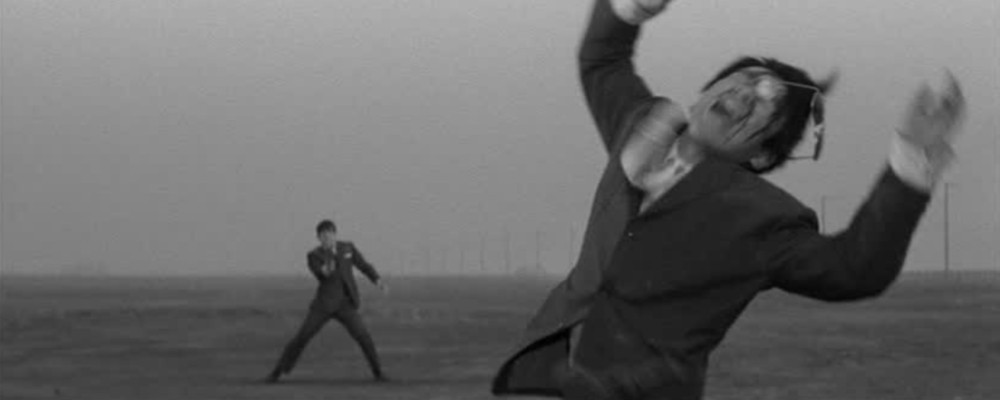
A Scene from A Colt Is My Passport (1967)

I was delighted to find that both I Am Waiting and A Colt Is My Passport were available through the website. Thereupon I watched both films and was delighted that I persevered in searching them out. Not only that, but I bought the Criterion Collection’s Nikkatsu Noir series of five films, which included the above titles but three others that I plan to watch in the weeks to come.

Film noir has traveled from the United States to France (the films of Jean-Pierre Melville), England (the original Get Carter with Michael Caine), and Japan.

The Halloween 2020 Book List

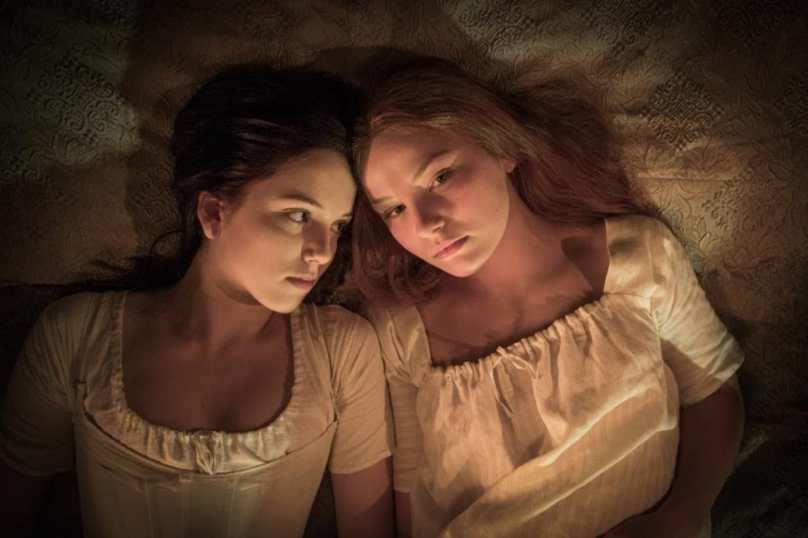
A Canadian Adaptation of LeFanu’s Carmilla (2017)

Every October, I usually read several novels and short stories in the horror genre. I do not care that much for the current stuff, like Stephen King or Dean Koontz. My preference is for the classics, and those tend to be concentrated in the late 19th century.

The books I read this month were:

  • Shirley Jackson’s Dark Tales
  • Joseph Sheridan LeFanu’s In a Glass Darkly, which included the short novels Carmilla and The Room in the Dragon Volant
  • Arthur Machen’s The Great God Pan and Other Horror Stories, a new collection edited by Aaron Worthy

Shirley Jackson is most famous for her short story “The Lottery,” but she also wrote such novels as We Have Always Lived in the Castle and The Haunting of Hill House.

Sheridan LeFanu (1814-1873) was an Irish author who wrote some classic tales of horror, especially Carmilla, a tale of a lesbian vampire who predated Bram Stoker’s Dracula by some twenty years. In 1960, it was made into a film by Roger Vadim entitled Blood and Roses (in France: Et mourir de plaisir). At the time I attended college, it was the most popular film showed by the Dartmouth Film Society.

Welsh Horror Tale Author Arthur Machen

Finally, there was a delightful collection of novellas and tales by Arthur Machen (1863-1947). Most of Machen’s best work was composed up to the late 1920s and included the classic The Great God Pan (1894), which tells of what happened when a young woman who, upon being exposed to the Greek god Pan, created a trail of destruction that spanned several continents.

A Movie for 2020

Vincent Price as Prince Prospero and Patrick Magee as Alfredo

As we approach Halloween, I propose a 1964 film by Roger Corman as the perfect paradigm for our year of coronavirus and Trump—namely, The Masque of the Red Death.

The story concerns a gathering of wealthy friends (let’s call them billionaires) of Prince Prospero at his castle while the Red Death plague rages through the land. It is my favorite Roger Corman film, with elegant color photography by Nicholas Roeg.

Unfortunately, the character of Vincent Price’s Prospero, nasty as he may be, is played by too interesting an actor to be a stand-in for Donald J. Trump—though he wealthy guests are perfect. One can imagine the My Pillow Guy and the founder of Goya Foods at this party.

You might also want to read the Edgar Allan Poe story from which the film is drawn. You can find it here.

Death Is Stalking the Land in Masque of the Red Death

In the end, Prince Prospero and all his guests come down with the Red Death, which they had so studiously tried to avoid. And curiously, the character is plays the personification of the deathly plague is, once again, Vincent Price.

Radar Men from the Moon

Not a Moon Monster: It’s the Hero, Commando Cody

Thanks to the ’rona quarantine, I have been seeing a lot of movies on television and on my computer. Today, I tipped the scales toward schmaltz by viewing all twelve episodes of a 1952 Republic Studios serial entitled Radar Men from the Moon. It starred George Wallace as the hero, Commando Cody. (It appears that Commando is his first name, not his title, as he is addressed by characters several times as “Commando.”) For me, however, the most interesting character is Clayton Moore, who both before, during, and after the serial played the Lone Ranger on TV with Jay Silverheels as Tonto.

Like the last film I recommended here (Carnival of Souls), Radar Men from the Moon is now in the public domain, so you can find it cheap or free.

Re-Release Poster for Radar Men from the Moon

The funny thing about the serial is that just about everything the would-be moon invaders try is nipped in the bud by Commando Cody. The two failed villains are Clayton Moore as Graber and Bob Stevenson as Daly. None of the Luna-tics seem to be directly involved in anything but giving Graber and Daly new orders, which they invariably fail at.

The moon forces have some spiffy ray guns made with a better-than-uranium element called lunarium (of course) which they use to blow up trains and cause general havoc, mostly in the first episode.

If you watch this serial, you might not want to watch all twelve episodes at once, unless you are very high on something. Better to break it up into multiple sessions as it was originally intended to be seen.

Favorite Films: Carnival of Souls

A Strange Film That Appears To Be in the Public Domain

Let’s face it: There are precious few independent feature films shot in Lawrence, Kansas (oh, yes, with some scenes shot in Utah), that are worth seeing. I think I can venture to say that Carnival of Souls (1962) is an exception. The director, Herk Harvey, did not make any other feature films; and the radiant star, Candace Hilligoss, was only in a few other unmemorable productions.

If you have ever read Ambrose Bierce’s dreamlike short story “An Occurrence at Owl Creek Bridge,” you will find that Carnival of Souls is oddly familiar in its own way. It begins and ends with a fatal auto accident with the implication that the whole story is a kind of fantastic dream.

Mary Henry (Candace Hilligoss) is the sole survivor of an auto accident in which a car goes off a bridge into the river, killing two of the three riders within. Having no memory of what happened, she checks in at a Salt Lake City Hotel where she runs into a number of strange individuals who are attracted to her. One of them is played by the director (Herk Harvey) as a kind of zombie figure. She is drawn to an old abandoned pavilion, shown in the photo below.

The Saltair Pavilion in Utah

The film ends as she runs away from the pavilion, pursued by shadowy figures. Her footprints suddenly disappear. Cut to the auto accident, in which there are now three fatalities, including Mary Henry.

It’s fairly cheap and easy to obtain a DVD of Carnival of Souls, as it appears to be in the public domain. Also, it is available free at present to members of Amazon Prime. I think it’s worth seeing if only to see the beautiful Candace Hilligoss, with her high cheekbones. the sole contribution of Huron, South Dakota to the art of film.

Candace Hilligoss


Cineconline

A Precursor of King Kong?

Over the last ten years, I have spent much of the Labor Day Weekend in Hollywood watching movies at Grauman’s Egyptian Theater as part of the annual Cinecon festival. This year, because of the coronavirus quarantine, the management of Cinecon decided to make the show available online at no charge—except for several please to donate (which I did).

A Well-Crafted Silent Film

The films typically screened for Cinecon are rarities. One doesn’t encounter the classics with which everyone if familiar. In fact, most of the titles are fairly obscure. The four features that were screened online this year are:

  • The Fourth Commandment (Universal 1926), directed by Emory Johnson
  • Without Pity (Italy 1948), directed by Alberto Lattuada and co-written by Federico Fellini
  • Sherlock Holmes’ Fatal Hour (England 1931), directed by Leslie S. Hiscock
  • Lorraine of the Lions (Universal 1925), directed by Edward Sedgwick

A Decade before Basil Rathbone’s Sleuth

I particularly liked Without Pity, an Italian Neo-Realist film with a very advanced subject: The love between a black G.I. and a blonde Italian woman who has lost everything in the war. It was made in 1948 at a time when no American film would be so daring on the subject of interracial love.

Also shown was a two-hour program of rare kinescopes (“Kinecon on Cinecon”) from the earliest days of television including Jan Murray, Bob Hope, George Burns and Gracie Allen, Dean Martin and Jerry Lewis, and Milton Berle.

A 1948 Italian Film About Interracial Love

In addition, there were the usual silent and early sound shorts with such capable but relatively unknown stars as Billy Bevan, Al Jennings (a train robber become Western star), Edward Everett Horton, Lige Connelly, and Andy Clyde.

I did not see all the short films. After all, life must go on. But what I saw only whetted my appetite to see what they have scheduled for next year.


A Villa on Capri

Italian Writer Curzio Malaparte’s Villa on Capri

This is the story of a coincidence that I didn’t realize at the time (in the 1960s), but that I learned about much later as I became more well read. I will start with the film, Jean-Luc Godard’s Contempt (in French Le Mépris) filmed in 1963. Based on a 1954 novel by Alberto Moravia, known in the English world as either Contempt or A Ghost at Noon, the Godard film tells the tale of a marriage between a writer named Paul Javal (played by Michel Piccoli) whose marriage to his wife Camille (Brigitte Bardot) falls apart as Camille is used as bait an American film producer named Jeremy Prokosch (Jack Palance). The second half of the film was shot at a beautiful villa in Capri (shown above).

In the late 1960s, I thought the film one of the greatest ever made, largely because I was so impressed by the nude body of Brigitte Bardot. Now, I no longer think of it even as Godard’s best film. For that, I would now select either Alphaville or Pierrot le Fou, both made in 1965.

Brigitte Bardot Sunbathing on the Roof of Malaparte’s Villa in Contempt

Only much later did I learn that the villa featured in Contempt was actually the villa of a great—albeit twisted—Italian writer who called himself Curzio Malaparte (1898-1957). Born Curt Erich Suckert of a German father and an Italian mother, he chose the pen name Malaparte because it was the opposite of Napoleon’s family name: Malaparte means “bad side,” whereas Buonaparte means “good side.” And he tried in his works to live up to his pen name. If you are interested in acquainting yourself with his works, I suggest you read Kaputt (1944) about the German Eastern Front and The Skin (1949) about the American invaders of Italy in Naples.

Curzio Malaparte

Oh, and I still think you should see Godard’s Contempt. Even after all these years, Bardot’s derrière is still capable of inspiring lofty thoughts.