Modest Divinities

Shinto Shrine

Shinto Shrine

Jorge Luis Borges spent the last thirty to forty of his years in blindness, but like Tiresias and Milton, he saw more than most of us. The following poem is called “Shinto.”

Shinto

When misfortune confronts us
in an instant we are saved
by the humblest actions
of memory or attention:
the taste of fruit, the taste of water,
that face returned to us in dream,
the first jasmine flowers of November,
the infinite yearning of the compass,
a book we thought forever lost,
the pulsing of a hexameter,
the little key that opens a house,
the smell of sandalwood or library,
the ancient name of a street,
the colourations of a map,
an unforeseen etymology,
the smoothness of a filed fingernail,
the date that we were searching for,
counting the twelve dark bell-strokes,
a sudden physical pain.

Eight million the deities of Shinto
who travel the earth, secretly.
Those modest divinities touch us,
touch us, and pass on by.


Ilex paraguariensis

Traditional Yerba Mate Tea Popular in South America

Traditional Yerba Mate Tea Popular in South America

When cooler weather returns to Southern California, in about twenty years or so, I will resume my habit of drinking yerba mate tea. In the meantime, I will enjoy Robert Southey’s poem “Introductory to South America Yerba Mate.” I was pleasantly surprised to see a 19th century British poet conversant with the Ilex paraguariensis, or yerba mate.

Introductory to South America
Yerba Mate
Robert Southey (1774–1843)

(From A Tale of Paraguay)

AMID those marshy woodlands far and wide
Which spread beyond the soaring vulture’s eye,
There grew on Empalado’s southern side
Groves of that tree whose leaves adust supply     [scorched
The Spaniards with their daily luxury;
A beverage whose salubrious use obtains
Through many a land of mines and slavery,
Even over all La Plata’s sea-like plains,
And Chili’s mountain realm, and proud Peru’s domains.

But better for the injured Indian race
Had woods of manchineel the land o’erspread:
Yea, in that tree so blest by Nature’s grace
A direr curse had they inherited,
Than if the Upas there had reared its head
And sent its baleful scions all around,
Blasting where’er its effluent force was shed,
In air and water, and the infected ground,
All things wherein the breath or sap of life is found.

The poor Guaranies dreamt of no such ill,    [Paraguayan natives
When for themselves in miserable hour,
The virtues of that leaf, with pure good-will,
They taught their unsuspected visitor,
New in the land as yet. They learnt his power
Too soon, which law nor conscience could restrain,
A fearless but inhuman conqueror,
Heart-hardened by the accursed lust of gain,
O fatal thirst of gold! O foul reproach for Spain!

For gold and silver had the Spaniards sought,
Exploring Paraguay with desperate pains,
Their way through forests axe in hand they wrought;
Drenched from above by unremitting rains
They waded over inundated plains,
Forward by hope of plunder still allured;
So they might one day count their golden gains,
They cared not at what cost of sin procured,
All dangers they defied, all sufferings they endured.

Barren alike of glory and of gold
That region proved to them; nor would the soil
Unto their unindustrious hands unfold
Harvests, the fruit of peace,—and wine and oil,
The treasures that repay contented toil
With health and weal; treasures that with them bring
No guilt for priest and penance to assoil,
Nor with their venom arm the awakened sting
Of conscience at that hour when life is vanishing.

But keen of eye in their pursuit of gain
The conquerors looked for lucre in this tree:
An annual harvest there might they attain,
Without the cost of annual industry.
’T was but to gather in what there grew free
And share Potosi’s wealth. Nor thence alone.
But gold in glad exchange they soon should see
From all that once the Incas called their own,
Or where the Zippa’s power or Zaque’s laws were known.

For this, in fact though not in name a slave,
The Indian from his family was torn;
And droves on droves were sent to find a grave
In woods and swamps, by toil severe outworn,
No friend at hand to succor or to mourn,
In death unpitied, as in life unblest.
O miserable race, to slavery born!
Yet when we look beyond this world’s unrest,
More miserable then the oppressors than the opprest.

“Epitaph on a Tyrant”

Robert A. Buhler’s W. H. Auden (1907-1973)

Robert A. Buhler’s W. H. Auden (1907-1973)

The above painting hangs at Oxford’s Christ Church College, where Poet W. H. Auden attended college. The following poem is a short one, but eloquent. It is called “Epitaph on a Tyrant”:

Perfection, of a kind, was what he was after,
And the poetry he invented was easy to understand;
He knew human folly like the back of his hand,
And was greatly interested in armies and fleets;
When he laughed, respectable senators burst with laughter,
And when he cried the little children died in the streets.

“The Fishes of the Dawn”

Pablo Neruda (1904-1973), Chilean Poet

Pablo Neruda (1904-1973), Chilean Poet

For many years, it was thought that Pablo Neruda was poisoned by order of General Augusto Pinochet Ugarte because of his association with Salvador Allende. Inasmuch as he died only twelve days after Allende, foul play was assumed. Until recently that is. when Neruda’s body was exhumed by a team of forensic scientists, who found no evidence of poison.

I thought I would celebrate this finding by giving you Margaret Sayers Peden’s translation of Neruda’s “Ode to Age”:

Ode To Age – Poem by Pablo Neruda

I don’t believe in age.
All old people
carry
in their eyes,
a child,
and children,
at times
observe us with the
eyes of wise ancients.
Shall we measure
life
in meters or kilometers
or months?
How far since you were born?
How long
must you wander
until
like all men
instead of walking on its surface
we rest below the earth?
To the man, to the woman
who utilized their
energies, goodness, strength,
anger, love, tenderness,
to those who truly
alive
flowered,
and in their sensuality matured,
let us not apply
the measure
of a time
that may be
something else, a mineral
mantle, a solar
bird, a flower,
something, maybe,
but not a measure.
Time, metal
or bird, long
petiolate flower,
stretch
through
man’s life,
shower him
with blossoms
and with
bright
water
or with hidden sun.
I proclaim you
road,
not shroud,
a pristine
ladder
with treads
of air,
a suit lovingly
renewed
through springtimes
around the world.
Now,
time, I roll you up,
I deposit you in my
bait box
and I am off to fish
with your long line
the fishes of the dawn!

It is my hope to read more of Neruda’s poetry before I visit his houses near Valparaiso, Chile.

Everything and Nothing

Portuguese Novelist and Poet Fernando Pessoa (1888-1935)

Portuguese Novelist and Poet Fernando Pessoa (1888-1935)

Come on, ’fess up! When was the last time you ever read any Portuguese literature?

Chances are, you probably never dipped into José Saramago, Eça de Queirós, or—greatest of all—Fernando Pessoa. The author of The Book of Disquiet, an amorphous work that is one of the masterpieces of 20th century literature, wrote under some seventy different names. Below is a sample of his poetry, which he wrote under the name of Álvaro de Campos, entitled “The Tobacco Shop.” Like all of his work, it is simultaneously about everything and nothing.

I’m nothing.
I’ll always be nothing.
I can’t want to be something.
But I have in me all the dreams of the world.

Windows of my room,
The room of one of the world’s millions nobody knows
(And if they knew me, what would they know?),
You open onto the mystery of a street continually crossed by people,
A street inaccessible to any and every thought,
Real, impossibly real, certain, unknowingly certain,
With the mystery of things beneath the stones and beings,
With death making the walls damp and the hair of men white,
With Destiny driving the wagon of everything down the road of nothing.

It is only with the fourth line of the second stanza that Pessoa mentions the tobacco shop, a prosaic place opening onto a street fronting onto the world of “stones and beings.”

Pessoa might seem to have had a weak sense of personhood, but he left behind a rich and multifarious literary reality which cries out to be mined.


“A Dream Within a Dream”

Is all that we see or seem But a dream within a dream?

Is all that we see or seem
But a dream within a dream?

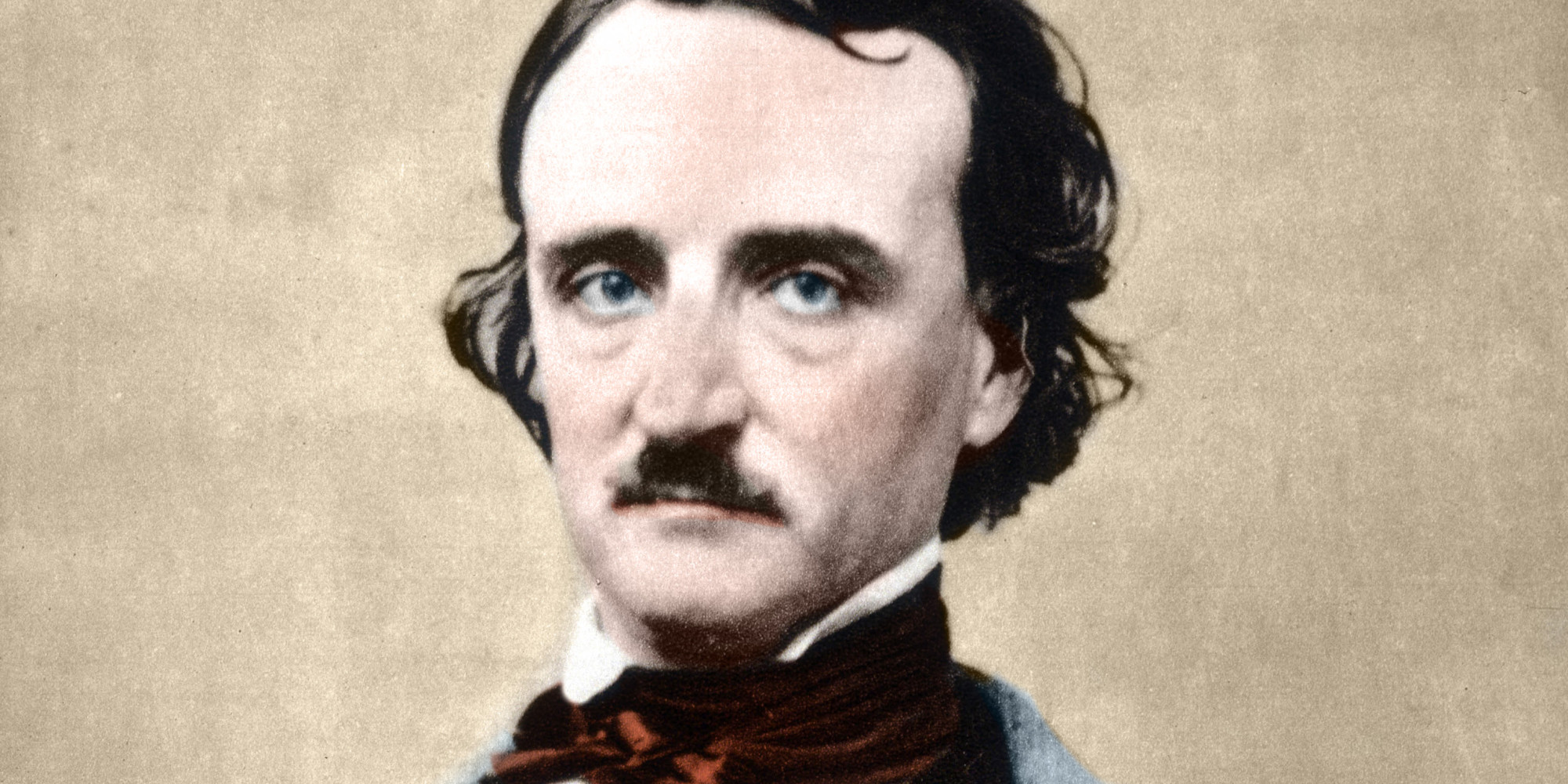
We tend to undervalue the poems, stories, and essays of Edgar Allan Poe. Currently, I am reading a slim volume of his complete poem; and I am amazed at what simple means he uses to achieve such strong and vivid effects. Take this one, for example:

A Dream Within a Dream
By Edgar Allan Poe

Take this kiss upon the brow!
And, in parting from you now,
Thus much let me avow —
You are not wrong, who deem
That my days have been a dream;
Yet if hope has flown away
In a night, or in a day,
In a vision, or in none,
Is it therefore the less gone?
All that we see or seem
Is but a dream within a dream.

I stand amid the roar
Of a surf-tormented shore,
And I hold within my hand
Grains of the golden sand —
How few! yet how they creep
Through my fingers to the deep,
While I weep — while I weep!
O God! Can I not grasp
Them with a tighter clasp?
O God! can I not save
One from the pitiless wave?
Is all that we see or seem
But a dream within a dream?

This is a poem even a child can understand. Yet few adults, however brilliant, could put it so well.

He Couldn’t Breathe

Eric Gardner Died of a Police Chokehold in 2014

Eric Gardner Died of a Police Chokehold in 2014

One could complain forever about brutality of life in America, especially when one doesn’t have white skin. Instead, I wanted to present this little poem by Ross Gay, a teacher and gardener living in Bloomington, Indiana. I would rather celebrate Eric Garner’s life, as this poem does. The title is the same as the first line: “A Small Needful Fact.”

A small needful fact
Is that Eric Garner worked
for some time for the Parks and Rec.
Horticultural Department, which means,
perhaps, that with his very large hands,
perhaps, in all likelihood,
he put gently into the earth
some plants which, most likely,
some of them, in all likelihood,
continue to grow, continue
to do what such plants do, like house
and feed small and necessary creatures,
like being pleasant to touch and smell,
like converting sunlight
into food, like making it easier
for us to breathe.

Garner’s widow, Esaw, pictured above with a beautiful smile, said to the press, “My husband was not a violent man. We don’’t want violence connected to his name.”

This poem was reprinted by Truthdig.Com, for which I thank them.

Attacked by One of Their Own

James Laughlin Visits Burma

James Laughlin Visits Burma

Every once in a million years, someone from the hated 1% not makes a positive contribution to the culture but also attacks his fellow millionaires. James Laughlin (1914-1997) was not only a poet of some repute, but also the founder and publisher of the New Directions paperbacks that are to be found all over my library, including my favorite volume of stories by Jorge Luis Borges:

One of My All-Time Faves

One of My All-Time Faves

Interestingly, James Laughlin was from the Laughlins of Jones & Laughlin Steel Company, founded in 1852 and one of the giants of American manufacturing.

Imagine what his family thought of the following poem attacking corporate executives for their intransigence in a remarkably modern way:

Confidential Report

The president of the
corporation was of the

opinion that the best
thing to do was just

to let the old ship
sink as pleasantly &

easily as possible be-
cause it was plain as

day you couldn’t op-
erate at a profit as

long as that man was
in the white house &

now he was there for
good you might just

as well fold yr hands
and shut yr face and

let the old boat take
water till she sank.

Now it is quite obvious that the president of whom Laughlin was talking was Franklin D. Roosevelt, though I can see the same thing being said about Obama, Carter, or even Clinton.


“Barely Freed from the Nettles”

Pablo Neruda’s Home, “La Sebastiana,” in Valparaíso

Pablo Neruda’s Home, “La Sebastiana,” in Valparaíso

Since I intend to visit Chile this November after crossing the Andes by way of San Carlos Bariloche, I plan to read as much of Chilean poet Pablo Neruda’s work as I can. I thought I would start by selecting the following from his collection, Canto General:

The Poet

I used to wander through life amid
an ill-starred love: I used to keep
a little page of quartz
to rivet my eyes to life.
I bought kindness, I was in the market
of greed, I inhaled envy’s
most sordid waters, the inhuman
hostility of masks and beings,
I lived a sea-swamp world
in which the flower, the lily, suddenly
consumed me in their foamy tremor,
and wherever I stepped my soul slid
toward the teeth ofthe abyss.
That’s how my poetry was born, barely
freed from the nettles, clutched
above solitude like a punishment,
or its most secret flower sequestered
in the garden of immodesty until it was buried.
And so isolated like the dark water
that inhabits its deep corridors,
I fled from hand to hand, to each
being’s alienation, to daily hatred.
I knew that was how they lived, hiding
half of their beings, like fish
from the strangest sea, and in the murky
immensities, I encountered death.
Death opening doors and roads.
Death gliding along the walls.

Neruda died suspiciously soon after Salvador Allende, the socialist President of Chile, was found dead by “suicide.”

I hope to visit Neruda’s two houses in the Valparaíso area, La Sebastiana (shown above) and Isla Negra.

The Seafarer

Viking Craft

Viking Craft

Several days ago, I quoted an Anglo-Saxon poem called “The Wanderer.” Today, I give you a somewhat longer piece, which was translated by Ezra Pound in 1911. According to Wikipedia:

The poem is told from the point of view of an old seafarer, who is reminiscing and evaluating his life as he has lived it. The seafarer describes the desolate hardships of life on the wintry sea. He describes the anxious feelings, cold-wetness, and solitude of the sea voyage in contrast to life on land where men are surrounded by kinsmen, free from dangers, and full on food and wine. The climate on land then begins to resemble that of the wintry sea, and the speaker shifts his tone from the dreariness of the winter voyage and begins to describe his yearning for the sea. Time passes through the seasons from winter — “it snowed from the north” — to spring — “groves assume blossoms” — and to summer — “the cuckoo forebodes, or forewarns.”

Then the speaker again shifts, this time not in tone, but in subject matter. The sea is no longer explicitly mentioned; instead the speaker preaches about steering a steadfast path to heaven. He asserts that “earthly happiness will not endure,” that men must oppose “the devil with brave deeds,” and that earthly wealth cannot travel to the afterlife nor can it benefit the soul after a man’s death.

Generally speaking, I am not a big fan of Ezra Pound, but in this early version, I think he surpasses himself. This is “The Seafarer” by that greatest of Anglo-Saxon poets, Anonymous:

May I for my own self song’s truth reckon,
Journey’s jargon, how I in harsh days
Hardship endured oft.
Bitter breast-cares have I abided,
Known on my keel many a care’s hold,
And dire sea-surge, and there I oft spent
Narrow nightwatch nigh the ship’s head
While she tossed close to cliffs. Coldly afflicted,
My feet were by frost benumbed.
Chill its chains are; chafing sighs
Hew my heart round and hunger begot
Mere-weary mood. Lest man know not
That he on dry land loveliest liveth,
List how I, care-wretched, on ice-cold sea,
Weathered the winter, wretched outcast
Deprived of my kinsmen;
Hung with hard ice-flakes, where hail-scur flew,
There I heard naught save the harsh sea
And ice-cold wave, at whiles the swan cries,
Did for my games the gannet’s clamour,
Sea-fowls, loudness was for me laughter,
The mews’ singing all my mead-drink.
Storms, on the stone-cliffs beaten, fell on the stern
In icy feathers; full oft the eagle screamed
With spray on his pinion.
Not any protector
May make merry man faring needy.
This he little believes, who aye in winsome life
Abides ‘mid burghers some heavy business,
Wealthy and wine-flushed, how I weary oft
Must bide above brine.
Neareth nightshade, snoweth from north,
Frost froze the land, hail fell on earth then
Corn of the coldest. Nathless there knocketh now
The heart’s thought that I on high streams
The salt-wavy tumult traverse alone.
Moaneth alway my mind’s lust
That I fare forth, that I afar hence
Seek out a foreign fastness.
For this there’s no mood-lofty man over earth’s midst,
Not though he be given his good, but will have in his youth greed;
Nor his deed to the daring, nor his king to the faithful
But shall have his sorrow for sea-fare
Whatever his lord will.
He hath not heart for harping, nor in ring-having
Nor winsomeness to wife, nor world’s delight
Nor any whit else save the wave’s slash,
Yet longing comes upon him to fare forth on the water.
Bosque taketh blossom, cometh beauty of berries,
Fields to fairness, land fares brisker,
All this admonisheth man eager of mood,
The heart turns to travel so that he then thinks
On flood-ways to be far departing.
Cuckoo calleth with gloomy crying,
He singeth summerward, bodeth sorrow,
The bitter heart’s blood. Burgher knows not —
He the prosperous man — what some perform
Where wandering them widest draweth.
So that but now my heart burst from my breast-lock,
My mood ‘mid the mere-flood,
Over the whale’s acre, would wander wide.
On earth’s shelter cometh oft to me,
Eager and ready, the crying lone-flyer,
Whets for the whale-path the heart irresistibly,
O’er tracks of ocean; seeing that anyhow
My lord deems to me this dead life
On loan and on land, I believe not
That any earth-weal eternal standeth
Save there be somewhat calamitous
That, ere a man’s tide go, turn it to twain.
Disease or oldness or sword-hate
Beats out the breath from doom-gripped body.
And for this, every earl whatever, for those speaking after —
Laud of the living, boasteth some last word,
That he will work ere he pass onward,
Frame on the fair earth ‘gainst foes his malice,
Daring ado, …
So that all men shall honour him after
And his laud beyond them remain ‘mid the English,
Aye, for ever, a lasting life’s-blast,
Delight mid the doughty.
Days little durable,
And all arrogance of earthen riches,
There come now no kings nor Cæsars
Nor gold-giving lords like those gone.
Howe’er in mirth most magnified,
Whoe’er lived in life most lordliest,
Drear all this excellence, delights undurable!
Waneth the watch, but the world holdeth.
Tomb hideth trouble. The blade is layed low.
Earthly glory ageth and seareth.
No man at all going the earth’s gait,
But age fares against him, his face paleth,
Grey-haired he groaneth, knows gone companions,
Lordly men are to earth o’ergiven,
Nor may he then the flesh-cover, whose life ceaseth,
Nor eat the sweet nor feel the sorry,
Nor stir hand nor think in mid heart,
And though he strew the grave with gold,
His born brothers, their buried bodies
Be an unlikely treasure hoard.