The Conversationalist

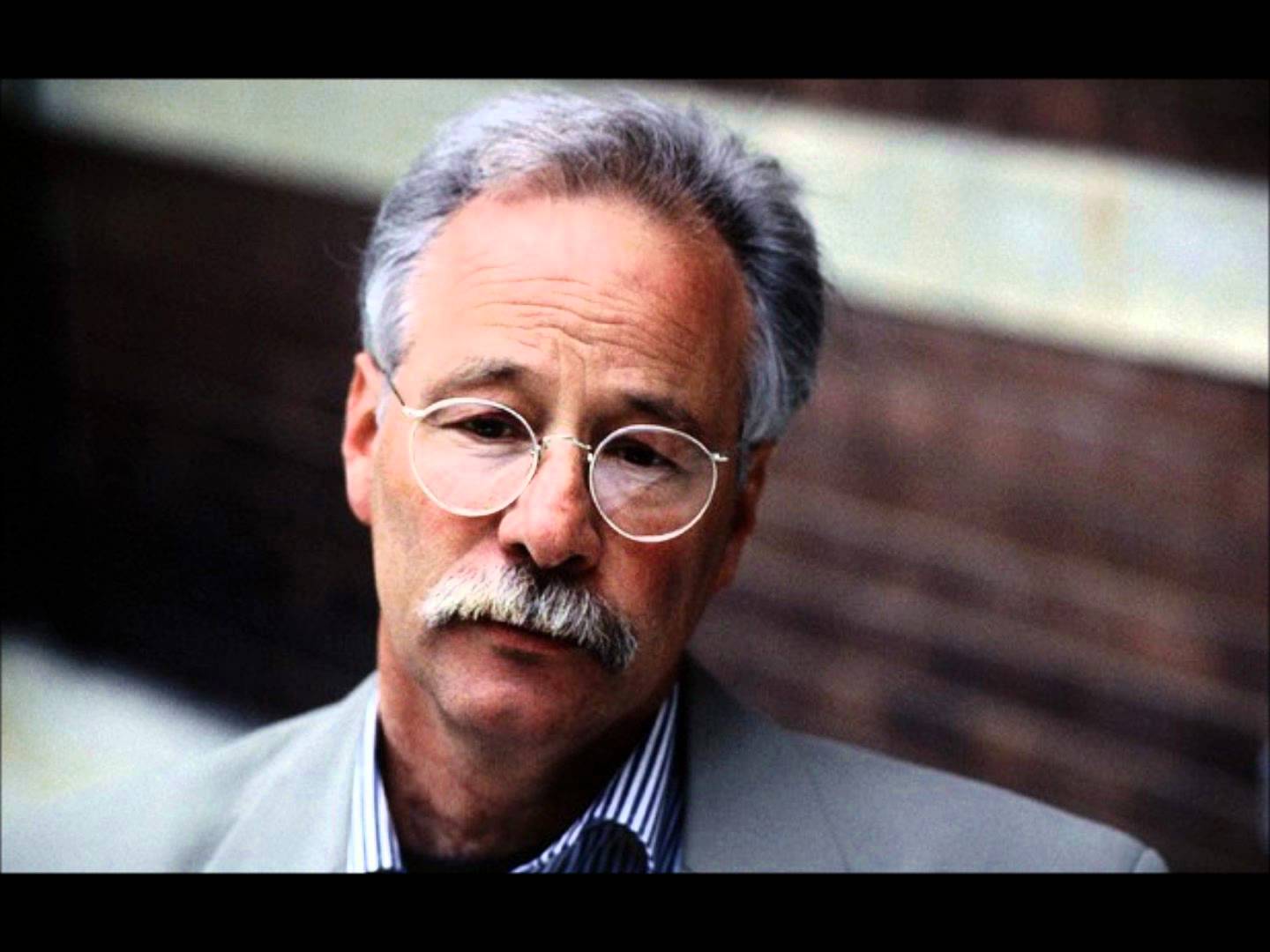
Jorge Luis Borges and His Books

Blindness was a curse in Jorge Luis Borges’s family. Not only his father, but his grandfather and great-grandfather all died blind. Fortunately for us, Borges had lived for more than fifty years before the gathering darkness prevented him from picking a book from his shelf and reading it. Because he lived on for thirty-five years or so longer, the Argentinian writer and poet managed to find a role for himself that would help keep his amazing erudition alive and produce works of interest to a worldwide public that was just beginning to discover him.

Enter Borges the interviewee. I first experienced this in Paul Theroux’s The Old Patagonian Express, when the American author describes a meeting with Borges in Buenos Aires. It began with Borges requesting that Theroux read some passages from Kipling to him and went on from there. From this point on, I continued finding published interviews, and I started collecting them alongside his original poems and stories, whose output diminished as he aged.

In a brief interview with Amelia Barili,  he is asked about the meaning of life:

If life’s meaning were explained to us, we probably wouldn’t understand it. To think that a man can find it is absurd. We can live without understanding what the world is or who we are. The important things are the ethical instinct and the intellectual instinct, are they not? The intellectual instinct is the one that makes us search while knowing that we are never going to find the answer. I think Lessing said that if God were to declare that in His right hand He had the truth and in his left hand He had the investigation of the truth, Lessing would ask God to open His left hand—he would want God to give him the investigation of the truth, not the truth itself. Of course he would want that, because the investigation permits infinite hypotheses, and the truth is only one, and that does not suit the intellect, because the intellect needs curiosity. In the past, I tried to believe in a personal God, but I do not think I try anymore. I remember in that respect an admirable expression of Bernard Shaw: “God is in the making.”

Willis Barnstone’s Borges at 80: Conversations has this little gem. When asked about the wrong women he has loved and the wrong days he has spent, Borges replied:

All those things, the wrong women, the wrong actions, the wrong circumstances, all those are tools to the poet. A poet should think of all things as being given him, even misfortune. Misfortune, defeat, humiliation, failure, those are our tools. You don’t suppose that when you are happy, you can produce anything. Happiness is its own aim.

As one who has personally suffered from dictators—Juan Perón made him a poultry inspector for the markets of Buenos Aires—Borges describes what he thinks of them:

It really seems a childish idea, don’t you think? I believe the idea of giving orders and being obeyed is more to be associated with a child’s mind than that of a man. I don’t think dictators generally are very intelligent people. Fanaticism can lead to it too. Take Cromwell’s case, for example: I think he was a Puritan; he was a Calvinist and believed he had every right. But in the case of more recent dictators, I don’t think they’ve been motivated by fanaticism. I think they were impelled by histrionic zeal, by the desire for applause, for being obeyed, and perhaps by the mere childish craving for publicity, which is a craving I don’t understand. [Sounds a lot like Trumpf, no?]

This last comes from Fernando Sorrentino’s Seven Conversations with Jorge Luis Borges, one of the better collections of interviews with Borges.

Jorge Luis Borges was, fortunately, a great conversationalist. I still like to pick up one or other of his interviews and re-read it just for the pleasure of the man’s company.


Massaraksh!

Arkady and Boris Strugatsky with the Soviet Union in the Background

The expression means “World Inside Out!” It is the most frequently used expression in Arkady and Boris Strugatsky’s great novel of the Noonday Universe, Prisoners of Power (Обитаемый остров, 1969). Over the years, I have read twelve of their works, most of which were excellent or better. The best by far, though, is Roadside Picnic (Пикник на обочине, 1972), which was made into an equally great movie by Andrei Tarkovsky called Stalker (1979).

Both are dead now (Arkady in 1991 and Boris in 2012), and only slowly is the world beginning to realize what it has lost. It is not easy to find their works in print (except for Roadside Picnic); it is only on the top floor of the Los Angeles Central Library that I am finding a treasure trove of their work. And I will read them all, making my way through their collection like a Beetle in the Anthill (Жук в муравейнике, 1980) —itself the title of another Strugatsky work.

In the first paragraph, I referred to the Noonday Universe, which is a theme of about half the Strugatsky novels I have read. According to Wikipedia:

The victory of communism and the advance of technological progress on the Earth of the Noon Universe resulted in an over-abundance of resources and eliminated the need for most types of manual labor.

Mankind is capable of near-instantaneous interstellar travel. Earth social organization is presumably communist, and can be described as a highly technologically advanced anarchistic meritocracy. There is no state structure, no institutionalized coercion (no police etc.), yet functioning of the society is safeguarded by raising everyone as responsible individuals, with guidance of a set of High Councils accepted by everyone in each particular field of activity.

One of the controversial occupations is progressor. They are agents embedded in less advanced humanoid civilizations in order to accelerate their development or resolve their problems. Progressors’ methods range from rescuing local scientists and artists to overthrowing local governments.

The main governing body is the World Council, composed of the brightest scientists, historians, doctors and teachers. The local matters are handled by the regional versions of the council. Planetary councils are present on each Earth colony (e.g. [Far] Rainbow), as well, although “colony” in this context refers to a planet that wasn’t home to any sentient life before the arrival of Terran settlers. In the Noon Universe, Earth has never attempted to seize permanent control over any other civilization.

The universe is populated by a number of sentient races. Some of them are humanoid, while others are so alien that humanity didn’t realize that they were sentient for decades. Several sentient races maintain diplomatic relations with Earth’s society. Many planets in Noon Universe are inhabited by races identical to humans in all but minor genetic differences. It has been speculated that they were humans who wound up on other worlds due to the Wanderers’ manipulations (as Beetle in the Anthill shows, that is hardly unprecedented).

The Wanderers are the most mysterious race in the Noon Universe. Technologically advanced and highly secretive, the Wanderers are suspected to manipulate sentient beings throughout Noon Universe for their own purposes. While those purposes were never clarified, it was hinted that they try to “progress” various sentient beings.

The Noonday Universe is a kind of allegorical device used by the Strugatsky Brothers to subtly disguise a critique of the Soviet system in a fashion that has been described as Aesopic. For instance, the world in Prisoners of Power is crippled by a stupid bureaucracy. The Earthman Maxim Kammerer, whose spaceship is stranded on the nameless planet, is immune to many of the methods used by the “Creators” to keep their people under their control, and even survives several bullets which he simply “passes.” Eventually, he allies himself to the society’s underground and dedicates himself to toppling the control mechanisms that keep the people prisoners of power.

I have read the following Strugatsky titles over the years:

  • Space Apprentice (Стажеры, 1962)
  • Escape Attempt (Попытка к бегству, 1962) *
  • Far Rainbow (Далёкая Радуга, 1963), the first one I read and still one of my favorites *
  • Hard to Be a God (Трудно быть богом, 1964) *
  • The Final Circle of Paradise (Хищные вещи века, 1965)
  • The Second Invasion from Mars (Второе нашествие марсиан, 1967)
  • Prisoners of Power (Обитаемый остров, 1969) *
  • The Dead Mountaineer’s Hotel (Отель «У Погибшего Альпиниста», 1970)
  • Roadside Picnic (Пикник на обочине, 1972), definitely the best of the bunch
  • Definitely Maybe (За миллиард лет до конца света, 1977)
  • Beetle in the Anthill (Жук в муравейнике, 1980) *
  • The Time Wanderers (Волны гасят ветер, 1986) *

The titles above appearing with asterisks are considered to be part of the Noon Universe series. Of the Strugatsky Brothers’ twenty-seven novels, only some four have not appeared in English translations.

Nouvelle Vague

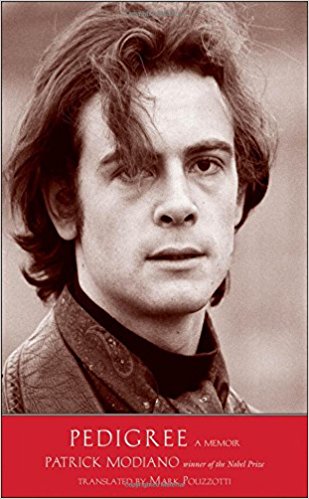
Patrick Modiano, Winner of the 2014 Nobel Prize for Literature

To date, I have read five of Patrick Modiano’s novels and loved all of them. In order of publication, they are:

  • Missing Person (1980)
  • Young Once (1981)
  • After the Circus (1992)
  • Out of the Dark (1998)
  • In the Café of Lost Youth (2007)

With each of them, I felt I was back in the 1960s, in the world of the French New Wave (Nouvelle Vague), the Paris of Jean-Paul Belmondo in Breathless and Giani Esposito in Paris Nous Appartient. Relationships are quickly entered into, but turn into quicksand. In After the Circus, we are not altogether sure of the main characters’ names. Describing his roommate, “Lucien” writes:

He had something in common with my father: they both wore suits, ties, and shoes like everyone else. They spoke unaccented French, smoked cigarettes, drank espresso, and ate oysters. But when in their company, you were seized by doubt and you felt like touching them, the way you rub cloth between your fingers, to make sure they really existed.

Earlier, he writes, “But topographical details have a strange effect on me: instead of clarifying and sharpening images from the past, they give me a harrowing sensation of emptiness and severed relationships.” That’s a good summary of the feeling of the novel: emptiness and severed relationships. “Lucien” is never sure when he parts from his girlfriend “Gisèle” that she will not just disappear forever into the warren of streets without a word of warning.

Fortunately, Modiano is a prolific writer, and many if not most of his works have been translated into English. Of the five novels I have read, I prefer the three most recent ones.

The Great American Novel

Maybe the Great American Novel Will Be a Mystery …

Up until fifty or sixty years ago, the great American Novel would have been by someone like Ernest Hemingway, F. Scott Fitzgerald, or William Faulkner. Then something happened. Specifically what happened were writers like Raymond Chandler and Dashiell Hammett, followed by scores of other excellent mystery writers such as Ross Macdonald, James Ellroy, David Goodis, Jim Thompson, Cornell Woolrich, and Elmore Leonard.

I just finished reading Leonard’s Get Shorty, primarily because I loved the 1995 movie directed by Barry Sonnenfeld and starring John Travolta as Chili Palmer, the loan shark from Miami suddenly turned movie producer.

Renee Russo and John Travolta in Get Shorty

Recently, I just finished re-reading most of Raymond Chandler’s novels (except for Playback, which I’ll get to shortly). And I’ve been reading other mysteries and noir novels and enjoying them immensely. I am beginning to think that, years into the future, this will be looked at as a golden age of genre novels.

America’s contribution is mostly in the mystery genre, but there have been great science fiction classics, especially from Philip K. Dick (Do Androids Dream of Electric Sheep?) and Ray Bradbury, Ursula K. LeGuin, and Kurt Vonnegut, to name just a few. I will have to beg off on romance classics because, jeez, I’m a guy and the genre makes me alternatively giggle and puke.

If we eliminated genre novels from consideration, I would probably say that Herman Melville’s Moby Dick was the Great American Novel. But I don’t think we really should cut off the 20th Century American genre novel from a shot at the title.


Spy Vs. Spy

Could It Be That I Miss the Cold War?

Last year, during tax season, I started falling in love with spy novels. To be more specific, I started reading the spy novels of Len Deighton, starting with the “Harry Palmer” titles, of which I read the first four. (There are three more in the series.) Then I moved on to the Bernard Samson titles, where I am now, wending my way through London Match. Of course, I am also very fond of Eric Ambler, Paul Furst, and the inimitable John Le Carré.

Perhaps I subconsciously think that the Soviets were a more admirable enemy than, say, Sunni Arab Jihadists. There was a certain rationalism to the Russians, which seems to be lacking in the Arab world. I have always loved Russian literature, even more than American literature. Don’t worry: I have no intention of toeing the Marxist-Leninist line any time soon. The fact that, as a Hungarian, I lost a number of relatives in 1956 when the Russian tanks invaded, makes it difficult for me to be Pro-Communist.

I love spy fiction. It is so devious. Sometimes I wonder why the British are so good at it. There are American CIA novels of the Tom Clancy variety, but I never quite fit that groove. The British operatives of MI-5 and MI-6, have won some battles; and they suffered some serious defections, especially the Cambridge Five. The British seemed to have more at stake. I remember a British friend at Dartmouth College who told me that he felt uncomfortably close, geographically, to the Iron Curtain.

At some point, I will print a list of my favorite spy novels. But for now, I am going under cover.


So Much for Glory

Republican Prisoners of War

I have just finished reading Hugh Thomas’s monumental The Spanish Civil War. As its author became more rigidly conservative as he grew older, I read the original 1961 edition at the beginning of the historian’s writing career. It was an emotional experience for me: For years I had put off reading about the war, and I was devastated by its applicability to American politics in the 21st century.

It was George Orwell in Homage to Catalonia, written while the conflict was still in doubt in 1938, who influenced my thinking the most:

The human louse somewhat resembles a tiny lobster, and he lives chiefly in your trousers. Short of burning all your clothes there is no known way of getting rid of him. Down the seams of your trousers he lays his glittering white eggs, like tiny grains of rice, which hatch out and breed families of their own at horrible speed. I think pacifists might find it helpful to illustrate their pamphlets with enlarged photographs of lice. Glory of war indeed! In war all solderies are lousy, at the least when it is warm enough. The men that fought at Verdun, at Waterloo, at Flodden, at Senlac, at Thermopylae—every one of them had lice crawling over his testicles.

So much for glory! Orwell took a bullet in his neck near Huesca in 1937 and was invalided out through Barcelona. Yet, for all the horrors of war, he was able to say in the end, “I have the most evil memories of Spain, but I have very few bad memories of Spaniards.”

Members of an All-Female Anarchist Party Group

Today we see the conflict merely as a dress rehearsal for the Second World War. Both Hitler and Mussolini send troops and weapons to the Fascists; and Stalin, the same for the Republican side. Curiously, neither Hitler nor Stalin wanted either side to win outright: Their interest was for the war to continue. In the end, Franco won because he was better supplied, and his side was not as badly divided as the Republican side. Look at the following list of acronyms on the Republican side. Each one represented a center of ideological purity which struggled against any sort of compromise:

  • CNT (Confederación Nacional del Trabajo), the anarcho-syndicalist trades union
  • FAI (Federación Anarquista Ibérica), the anarchist secret society
  • POUM (Partido Obrero de Unificación Marxista), the Trotskyist group for which Orwell fought
  • PSUC (Partido Socialista Unificado de Cataluña), the United Catalan Socialist-Communist Party
  • UGT (Unión General de Trabajadores), the Socialist Trade Union
  • UMR (Unión Militar Republicana), Republican officers group

Several of the above believed in militias, but not in a professional army. On the other side, the core of Franco’s army was the Army of Africa, headquartered in Spanish Morocco, together with Hitler’s highly professional Condor Legion. Although the Republican army grew more professional as the war continued, it was badly split between the Communists and the non-Communists. As Thomas wrote:

Undoubtedly, the Republic was terribly hampered by the disputes between the parties who supported it.  One excuse might be that all the parties felt so strongly about their own policies that defeat itself seemed preferable to a surrender of the purity of their individual views.

As I read those words, the political divide that separates the American people came to mind. Ideological purity is a very dangerous thing. I do believe I would sacrifice the purity of most of my views before ever damaging the country I love.


No Longer a Gallophobe

Nobel Prize-Winning Author Patrick Modiano

It was not always that I was in love with French culture. Perhaps, when I was young, I was tired of being thought to be French just because my last name is Paris. (Actually, it’s pronounced PAH-rrhish with a slightly trilled “r”.) It reached a crescendo in 1976, when my Laker Airlines flight to London stopped for some cockamamie reason at Le Bourget in Paris when we were all subject to security checks. When a French border guard wanted me to open up the back of my Olympus OM-1 camera and expose half a roll of film, I refused and called the man a cochon. Fortunately, I got away with it, though I probably shouldn’t have.

Now I am a devoted Francophile. What happened? First of all, Martine is French; and I went to France with her twice, where I found the French to be not at all as I thought them to be. Even the Parisians were all right. I suspect they seemed better because I speak fairly decent French and I could communicate with them.

I am now co-moderator of the Yahoo! French Literature reading group. Although the group concentrates on French literature of the 19th century, I discovered many 20th century classics reading books with the group. I thought I would share the ten I liked best over the last few years, presented here in alphabetical order by author:

  1. Georges Bernanos: Diary of a Country Priest. Made into a wonderful film by Robert Bresson.
  2. Louis-Ferdinand Céline: Journey to the End of the Night. I had read this before, but liked it even more on re-reading it.
  3. J M G Le Clézio: The Prospector. Looking for pirate treasure in Mauritius.
  4. Albert Cohen: Belle du Seigneur. A great novel about obsessive love set in the period between the two world wars.
  5. Jean Giono: The Horseman on the Roof. A wonderful historical novel about plague in Southern France.
  6. Julien Gracq: The Opposing Shore. I had never heard of Gracq before, but this is a wonderful story about contacts between two civilizations that have drifted apart. Like the West and Islam.
  7. François Mauriac: Thérèse Desqueyroux. A profoundly Catholic novel about a murderess.
  8. Patrick Modiano: Out of the Dark. Recalls the world of the New Wave films of the 1950s and 1960s. I have since read several more of Modiano’s books and find he is one of my favorites.
  9. Marcel Pagnol: My Father’s Glory. A sentimental memoir of a childhood in Provence.
  10. Raymond Queneau: The Last Days. I just read this one a couple of weeks ago. A wonderful study of life in Paris circa 1920.

I have left out Marcel Proust, who means more to me than all of the above put together, and also Georges Simenon, who also is well known in the West.

“A Pile of Dead Leaves”

Raymond Queneau (1903-1976)

Raymond Queneau has been known to me for some time: I read We Always Treat Women Too Well (1947) twice. But now that I have finished The Last Days: A Novel (1936), I think I have discovered a major talent.

The Last Days is the story of what one might call a social cohort, a group of people of varying ages who know each other to varying degrees. Interestingly, there are only two women in the cohort, Suze and Fabie, and they enter in only insofar as they have relationships with the males. Some of the males are students who are trying to study for a diploma in philosophy from the École Normale Supérieure; one is an aging teacher of history; another is a con man; and there are other various hangers-on. The one truly superior figure is the waiter Albert, who has everything all figured out, as described by his co-worker, Louis:

He didn’t only know how to see the future. He was also a philosopher. A real one. He used to say to me: “You see, the customers, they’re like a pile of dead leaves.”

I asked him why. He answered. “Leaves, when they’re on the tree, if you didn’t know that autumn existed you might think they’d stay there forever. That’s like our customers. They come back every day as regular as clockwork: you think they’ll go on doing so forever. But then one day the wind blows as carries the leaves off to the gutters and the street sweepers make little piles of them on the edge of the pavements to await the dust-cart. Me too, every year I make my little pile when the autumn arrives, my little pile of dead souls.”

Albert’s one goal in life is to win back the money that his father lost at the races: No more, just enough to live a comfortable life in retirement, and not a sou more. And he actually manages to do this, returning to work at the café the next day.

The others, such as the student from Le Havre, Vincent Turquedenne, manage to lose their virginity, hang out with their friends, and even get their diploma. The history teacher—feeling he spent his whole life teaching geography while he himself never traveled—dies and has a magnificent funeral. The con man figures he would be immortal if he never laid down, because that’s what kills one, but then gets sick and is put to death and, of course, dies.

There is a simple beauty to this story that makes me want to read more of Queneau’s work. Fortunately, a lot of it is available.


Where Are Our Courageous Reporters?

Norman Mailer (1923-2007)

The late 1960s were a bad time for the United States. We were in a fiercely unpopular war in Viet Nam. I had gotten radicalized and joined the Resistance, which not only protested the war but attempted to interfere with the draft induction process. I returned by draft card to the Selective Service System in Cleveland and told them politely what they could do with it. Running for president that year was Richard Nixon for the Republicans, with Democratic candidates to be chosen later in Chicago.

Reporting on that convention was Norman Mailer, who within a short time became like a god to me. (So he went off the rails a bit later: He was human after all.) Mailer had come out with a number of nonfiction books that I read and re-read religiously. They included:

  • Advertisements for Myself (1959)
  • The Presidential Papers (1963)
  • Cannibals and Christians (1966)
  • Armies of the Night (1968)
  • Miami and the Siege of Chicago (1968)

I just finished re-reading Miami and the Siege of Chicago, which made me shake my head sadly that there was no such quality reportage during the ongoing train wreck that is Trumpf. Mailer died ten years ago, and the only other candidate—Hunter S. Thompson—blew out his brains two years earlier. There are thousands of voices raised against Trumpf, but they seem tinny in comparison to what Mailer and Thompson were capable of.

Take this prophetic quote from Mailer’s description of Nixon’s convention win in Miami:

Of course, Republicans might yet prove frightening, and were much, if not three-quarters, to blame for every ill in sight, they did not deserve the Presidency, never, and yet if democracy was the free and fair play of human forces then perhaps the Wasp must now hold the game in his direction for a time. The Left was not ready, the Left was years away from a vision sufficiently complex to give life to the land, the Left had not yet learned to talk across the rugged individualism of the more Rugged in America, the Left was still too full of kicks and pot and the freakings of sodium amytol and orgy, the howl of electronics and LSD. The Left could also find room to grow up. If the Left had to live through a species of political exile for four or eight or twelve good years [try 50!], it might even be right. They might be forced to study what was alive in the conservative dream. For certain the world could not be saved by technology or government or genetics, and much of the Left had that still to learn.

Perhaps the biggest lesson they had to learn was unity. The Left is known today as a circular firing squad, wounding itself repeatedly over minor issues and leaving the major ones to the Right.

Chicago Riot Police 1968

The conservatives of 1968 were nothing compared to the Alt-Right, the Ku Klux Lan, and the other fascist forces brought into prominence by Trumpf’s 2016 victory. I will write what I can, when I can, but I am far from being either a Mailer or a Thompson.

And in this, our time of maximum danger, the media have failed America by bowing instead to the wishes of their corporate overlords.


Serendipity: “A Mighty, Harmonious Beauty”

Isak Dinesen (1885-1962) in Her Youth

The following is from a chapter entitled “On Mottoes in My Life” from her book Daguerrotypes and Other Essays. I decided to find a picture of Danish Baroness Karen Blixen (aka Isak Dinesen) when she was young and beautiful. It is sad that so many great authors are only photographed when they are old, which presents us with an odd and somewhat misleading view of their life. Anyhow, here goes:

An old Chinese mandarin, during the minority of the young Emperor, had been governing the country for him. When the Emperor came of age the old man gave him back the ring which had served as an emblem of his vicariate, and said to his young sovereign:

“In this ring I have had set  an inscription which your dear Majesty may found useful. It is to be read in times of danger, doubt and defeat. It is to be read, as well, in times of conquest, triumph and glory.”

The inscription in the ring read: “This, too, will pass.”

The sentence is not to be taken to mean that, in their passing, tears and laughter, hopes and disappointments disappear into a void. But it tells you that all will be absorbed into a unity. Soon we shall see them as integral parts of the full picture of the man or woman.

Upon the lips of the great poet the passing takes the form of a mighty, harmonious beauty:

Nothing of him that doth fade,
but doth suffer sea-change
into something rich and strange.

We may make use of the words—even when we are speaking about ourselves—without vainglory. Each one among us will feel in his heart the inherent richness and strangeness of this one thing: his life.