Back to the Andes

In 2011, Everything Was Covered with Volcanic Ash

In 2011, Everything Was Covered with Volcanic Ash

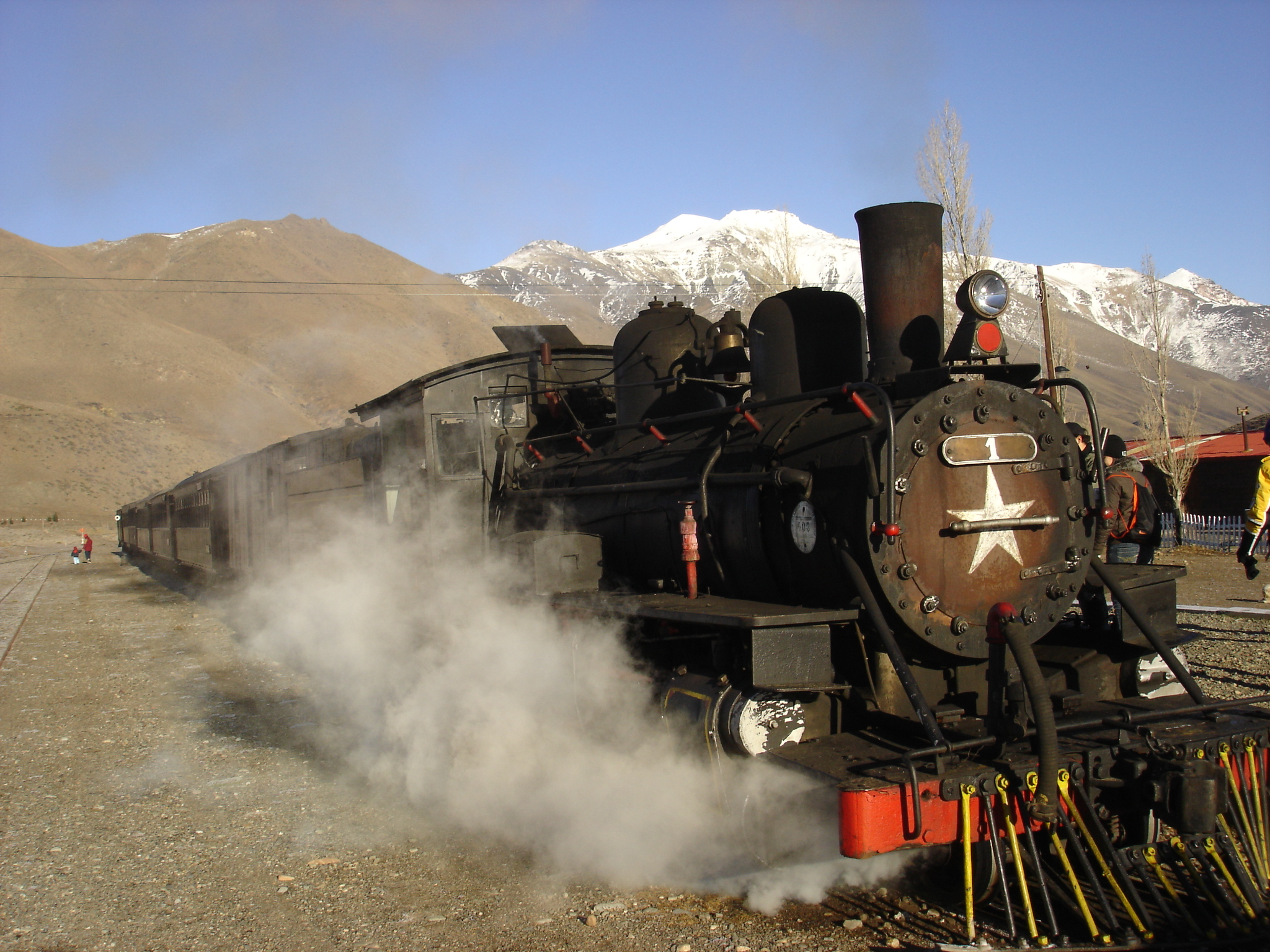
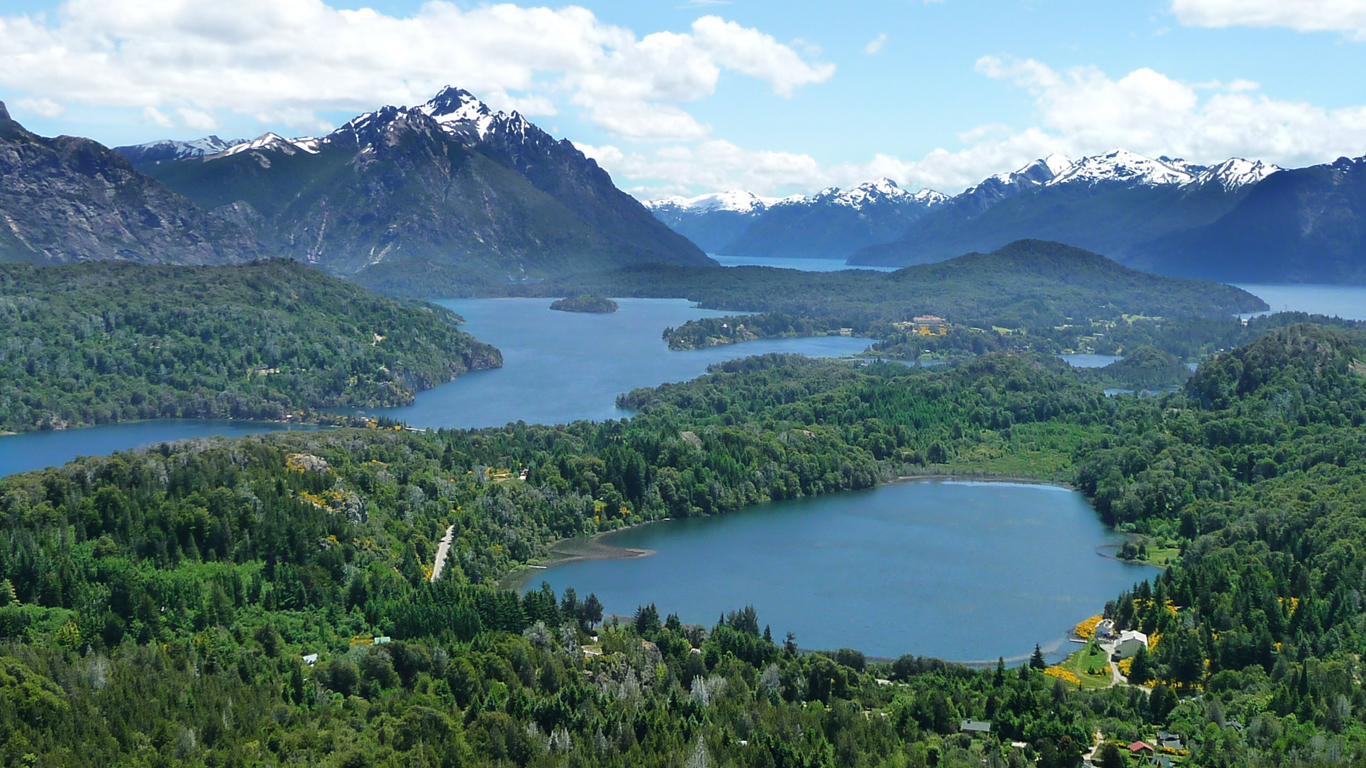
When Martine and I went to Argentina in November 2011, we bypassed San Carlos de Bariloche because it was a disaster zone due to the eruption of Puyehue/Cordón Caulle in neighboring Chile. The Tren Patagonico between Viedma and Bariloche was shut down, and the whole State of Rio Negro was essentially shoveling volcanic ash. Instead, we went to El Calafate to see some spectacular glaciers such as Perito Moreno. It was worth it, but I want to see Bariloche, and not only Bariloche, but take the Lakes Crossing over into Chile and perhaps spend some time on the Chiloé Archipelago off Puerto Montt.

It would involve a crossing of the Andes by a combination of bus and boat (!), The Lake Districts of Argentina and Chile have some beautiful waterways, and the two-day Lakes Crossing looks interesting. I can always take a bus back without spending quite so many pesos.


Tarnmoor’s ABCs: Quebec

Central Quebec City

Central Quebec City: The Haute Ville

I was so very impressed by Czeslaw Milosz’s book Milosz’s ABC’s. There, in the form of a brief and alphabetically-ordered personal encyclopedia, was the story of the life of a Nobel Prize winning poet, of the people, places, and things that meant the most to him. Because his origins were so far away (Lithuania and Poland) and so long ago (1920s and 1930s), there were relatively few entries that resonated personally with me. Except it was sad to see so many fascinating people who, unknown today, died during the war under unknown circumstances.

My own ABCs consist of places I have loved (Iceland), things I feared (Earthquakes), writers I have admired (Chesterton, Balzac, Proust, and Borges); things associated with my past life (Cleveland and Dartmouth College), people who have influenced me (John F. Kennedy), foods I love (Olives), and things I love to do (Automobiles and Books). This blog entry is my own humble attempt to imitate a writer whom I have read on and off for thirty years without having sated my curiosity. Consequently, over the months to come, you will see a number of postings under the heading “Tarnmoor’s ABCs” that will attempt to do for my life what Milosz accomplished for his. To see my other entries under this category, hit the tag below marked “ABCs”. I don’t guarantee that I will use up all 26 letters of the alphabet, but I’ll do my best. Today the letter is “Q” for Quebec.

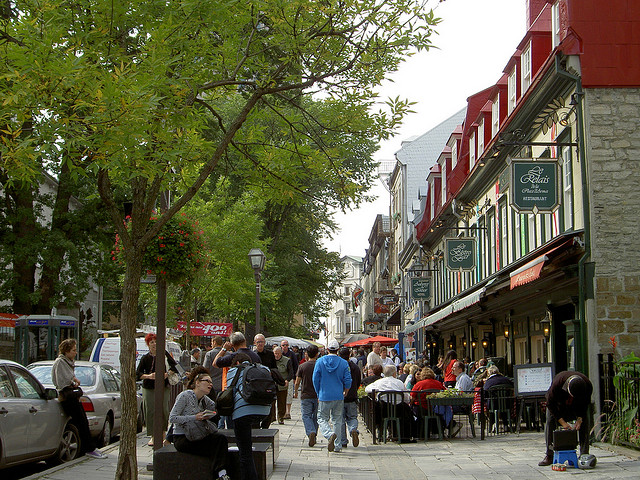
If you want to see France, but can’t quite afford it, you can always go to Quebec City. While it’s not exactly Paris, it is not quite Anglo Canada either. There will be times you have to dredge up your High School French to make yourself understood. As in France, people understand more English than they let on: They just want to see if you’re willing to go halfway.

Just a short stroll along the cliffs over the St. Lawrence, and you arrive at the Plains of Abraham, where the French were decisively defeated, despite the death of both generals, Wolfe and Montcalm. The English may have won, but the Quebecois will tell you, “Je me souviens”—“I remember.” And they do, to the extent that at several times in recent history, they have threatened to declare their independence. (For the historical background, I recommend you read Francis Parkman’s 19th Century classic, Montcalm and Wolfe.)

The cuisine in Quebec is an intriguing mixture of old country French with such local touches as maple syrup. Probably your best bet is to dine at Aux Anciens Canadiens in the old town. It is probably one of the five best restaurants I have ever visited.

Everywhere you turn in Quebec, you will be reminded of France. See the Musée des Ursulines on rue Donnacona for a tribute to the nuns who played such a major role in French Quebec. Walk along Dufferin Terrace past the Hotel Château Frontenac to see the St. Lawrence from atop the cliffs that once protected the city.

I have visited Quebec City twice and hope to go again.

Back to Argentina?

Third Time’s a Charm!

Third Time’s a Charm!

As tax season pressures come to bear on me once again, I look frantically for some escape. As Martine is still unable to travel with any degree of comfort, I will travel alone for the third year in a row. And I’ve decided that I am far from finished with Argentina. When I traveled there in 2006 and 2011, it was the country of Jorge Luis Borges, of his “Funes the Memorious” and “Death and the Compass.” It still is, but new names have been added, particularly César Aira and Juan José Saer, from Coronel Pringles and Santa Fé respectively.

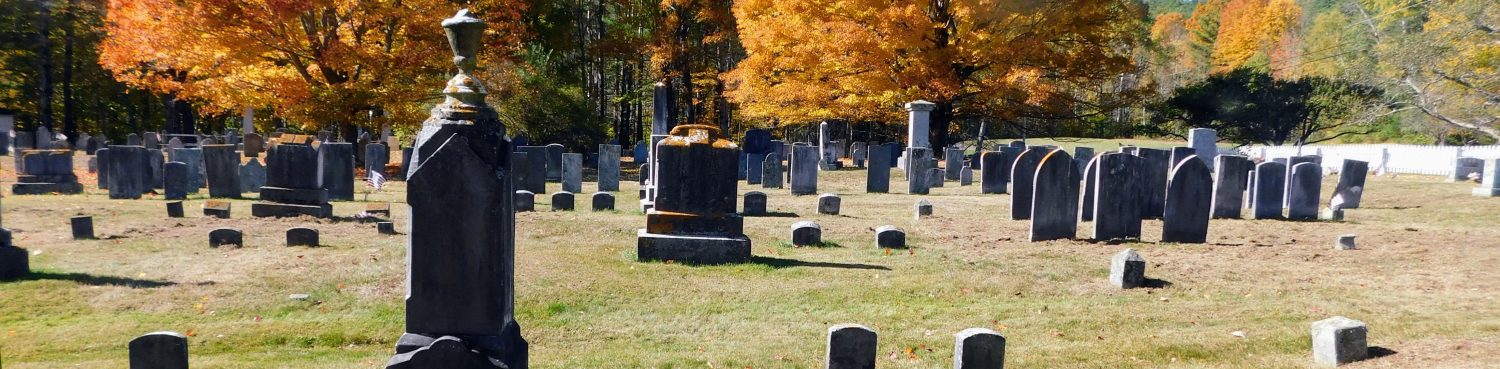
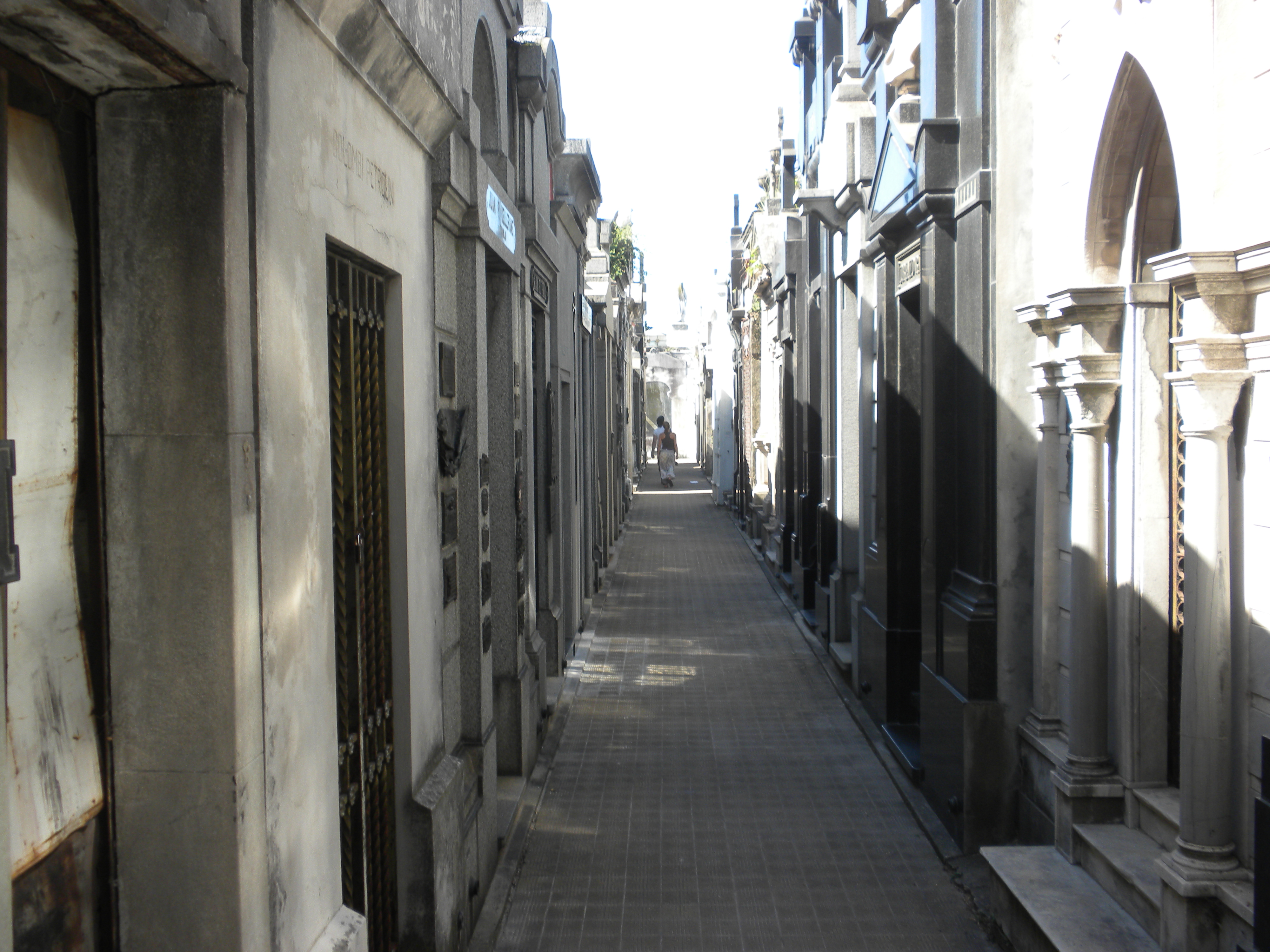
And there are places I have always wanted to see: San Carlos de Bariloche in the Patagonian Andes and Iguazu Falls where Argentina, Brazil, and Paraguay meet. Also I want to spend more time in Buenos Aires—a city that I love. In 2006, I stayed in the Microcentro; in 2011, Martine and I stayed in Palermo; this time, I think I’ll stay either in Recoleta (not the cemetery, pictured above) or Barrio Norte.

Because I will be traveling alone, I will probably take more long-distance buses, especially as Aerolíneas Argentinas is so dismal. To get to Argentina, by preference I will fly on LAN, probably by way of Lima, perhaps even stopping for a few days in Lima.

I wish Martine could come with me, but with her aches and pains, she would turn into a zombie from lack of sleep—which is in effect what happened during our Cabo San Lucas trip last month, which was a test of sorts.

The Coldest and Windiest Place in the Lower 48

Atop Mount Washington in New Hampshire

Atop Mount Washington in New Hampshire in 2005

Mount Washington in the White Mountains of New Hampshire has recorded the coldest temperatures in the contiguous 48 states and the highest surface wind measurement. On January 22, 1885, the lowest official temperature reached -50º Fahrenheit (-46º Centigrade). Only Cyclone Olivia in the South Pacific reached higher recorded surface wind speeds than the 231 mph (372 km/hour), which occurred there on April 12, 1934.

As extreme as the temperature gets, you can easily travel up to the top using the historic cog railway (built in 1869). If you go, be sure to bundle up, else you will turn into an icicle.

The reason why Mount Washington has such extreme temperatures is explained as follows by Wikipedia:

The weather of Mount Washington is notoriously erratic. This is partly due to the convergence of several storm tracks, mainly from the Atlantic to the south, the Gulf region and Pacific Northwest. The vertical rise of the Presidential Range, combined with its north-south orientation, makes it a significant barrier to westerly winds. Low-pressure systems are more favorable to develop along the coastline in the winter months due to the relative temperature differences between the Northeast and the Atlantic Ocean. With these factors combined, hurricane force wind gusts are observed from the summit of the mountain on average of 110 days per year.

Suffice it to say, the cog railway does not run when the climactic conditions are unfavorable. The folks there don’t want their tourists blown to Oz and beyond.

The Most Scenic Highway in America

Bryce National Park

Bryce National Park

Of all the road trips I have ever taken in the Western United States, the most spectacular is Utah Route 12, which runs from a point along U.S. 89 between Hatch and Panguitch to the town of Torrey. Along the way, you will find Red Canyon, Bryce Canyon National Park, Kodachrome Basin State Park, Grand Staircase-Escalante National Monument, a scenic stretch known as “The Hogback,” Anasazi State Park, and Capitol Reef National Park. Nowhere else in the U.S. will you find 122 miles of concentrated scenic beauty equivalent to what you will find here. And, what is more, you are within hailing distance of the Grand Canyon, Zion National Park, Canyonlands National Park, Arches National Park, the Glen Canyon National Recreational Area, and Hovenweep National Monument.

Below is a map of the route:

Map of Utah Scenic Byway 12

Map of Utah Scenic Byway 12

For the full detail, you can consult a 23-page Adobe Acrobat PDF file by clicking here. In it, you will find that I left out at least half of your destination options.

Martine and I took this highway about six years ago. We considered it probably one of our best trips within the U.S., and certainly the best in the Southwest. Along the way, we visited several other National Parks and Monuments and tourist sites, including a spectacular museum of taxidermy (of all things) just outside of Bryce. We even stopped to see the “original” London Bridge in Lake Havasu City, Arizona.


Tarnmoor’s ABCs: Patagonia and Penguins

Killing Two Birds with One Stone

Killing Two Birds With One Stone, So To Speak

I was so very impressed by Czeslaw Milosz’s book Milosz’s ABC’s. There, in the form of a brief and alphabetically-ordered personal encyclopedia, was the story of the life of a Nobel Prize winning poet, of the people, places, and things that meant the most to him. Because his origins were so far away (Lithuania and Poland) and so long ago (1920s and 1930s), there were relatively few entries that resonated personally with me. Except it was sad to see so many fascinating people who, unknown today, died during the war under unknown circumstances.

My own ABCs consist of places I have loved (Iceland), things I feared (Earthquakes), writers I have admired (Chesterton, Balzac, Proust, and Borges); things associated with my past life (Cleveland and Dartmouth College), people who have influenced me (John F. Kennedy), foods I love (Olives), and things I love to do (Automobiles and Books). This blog entry is my own humble attempt to imitate a writer whom I have read on and off for thirty years without having sated my curiosity. Consequently, over the months to come, you will see a number of postings under the heading “Tarnmoor’s ABCs” that will attempt to do for my life what Milosz accomplished for his. To see my other entries under this category, hit the tag below marked “ABCs”. I don’t guarantee that I will use up all 26 letters of the alphabet, but I’ll do my best. Today the letter is “P” for both Patagonia and Penguins, which kind of go together in my mind.

Above is a photo I snapped on Isla Martillo, which lies on the Beagle Channel in Argentina’s Tierra Del Fuego. I had always wanted to go to Patagonia, ever since I read Paul Theroux’s The Old Patagonian Express and, even more, Bruce Chatwin’s In Patagonia. It was one of those places at the end of the earth. About six hundred miles south of Isla Martillo lies the Antarctic Peninsula. Even farther north lies Buenos Aires and the heavily populated temperate territories of Argentina.

Martine and I have always loved penguins. There was something helpless and cute about them, even though their fishy smell made them somewhat less than huggable. I think I was only able to get Martine to come with me to Patagonia if I could take her to places where she could walk among penguins in the wild. Although past “expeditionary” vacations in search of puffins and moose turned up a blank, I was able to deliver on the penguins—in spades. Isla Martillo was a small penguin rookery that was fascinating, and Punta Tombo in the State of Chubut was even more spectacular. We were there right around the time, to the day, that the Magellanic penguins were hatching. Our trip there was one of the happiest experiences of my life.

Do I want to go back to Patagonia? Absolutely. I’ve been there twice: The first time, on my own, I broke my shoulder by slipping on the ice in Ushuaia … but the second time was a charm.

Life always seems brighter when you could go to far places that you love.


No Tequila Shooters for Me, Por Favor!

If You Can See Me in This Picture, You Need New Glasses!

If You Can See Me in This Picture, You Need New Glasses!

No, I won’t be partying with Sammy Hagar at his Cabo Wabo Nightclub, nor will I be surrounded by lissome bikini beauties unless I drop my wallet. My Cabo San Lucas will be a strange kind of bookworm’s holiday, with a few jaunts to reassure myself that there is indeed an autentico Mexico behind all the alcoholic frippery.

Martine and I will be well away from the Marina bar scene. In fact, I think we will be far enough away from the center of town to require either a bus or taxi. While twenty-somethings are wasting themselves on cheap alcohol, I will be reading books and listening to a program of Jazz and Classical music stored on my Sansa MP3 player. This is how bookworms travel.

Unless I can latch onto a computer in Cabo, I’ll catch up with y’all on Saturday or Sunday. Until then, hasta la vista!


New Year Surprise

Cabo San Lucas from Medano Beach

Cabo San Lucas from Medano Beach

Next week, Martine and I will be flying down to Mexico’s Cabo San Lucas for a few days on sun and relaxation—before tax season begins in grim earnest. Around Thanksgiving, I found a good combined airfare/hotel rate from Tripadvisor that will save us several hundred dollars while giving us four nights in a beachfront suite at the Playa Grande hotel.

Neither of us have been to Mexico since 1992, and that was to Yucatán, where Martine encountered the predacious Caribbean mosquito. This time, we are going to visit the Southern tip of Baja California, which is all mountains and deserts swept clean by Westerly winds.

It appears that Martine’s traveling muscular aches are less of a problem which she is exposed to sun, of which there is plenty at the Capes. I will get a little sunshine myself, as well as reading even more books.

During that time, I may or may not post to this blog depending on the availability of computer resources as well as free time.


Serendipity: A Dog, a Cat, and a Mouse

St. Martin de Porres

St. Martin de Porres

He is usually depicted in the garb of a Dominican lay brother, holding a broom, and with a dog, a cat, and a mouse at his feet. St. Martin de Porres is one of my favorite saints. My memories of him go back to grade school, years before Pope John XXIII canonized him in 1962.

The following is taken from Ricardo Palma’s Peruvian Traditions and tells the story of his three pets:

And from the same dish
ate a dog, a cat and a mouse.

With this couplet we come to the end of an account of the virtues and miracles attributed to Friar Martín de Porres. It was actually a broadside that was circulated in Lima about the year 1840 for the purpose of celebrating in our cultured and very religious capital city the solemn activities related to the beatification of this miracle worker.

This holy man, Friar Martín, was born on December 9, 1579, the natural son of the Spaniard Don Juan de Porres, Knight of Alcántara, and of a Panamanian slave. When he was still very young little Martín was taken to Guayaquil, where in a school in which the teacher made good use of the whip, he learned to read and write. Two or three years later his father and Martín returned to Lima and the boy was placed as an apprentice, learning the trade of barber and bloodletter in a barbershop on Malambo Street.

Martín wasn’t very adept with the razor and the lancet and this kind of work didn’t appeal to him so he opted for another career—that of sainthood, for in those days the career of a saint was just as legitimate a profession as any other. He took the habit of a lay brother at the age of twenty-one in the Monastery of San Domingo and remained there until he died in the odor of sanctity on November 3, 1639.

While he lived, and even after death, our countryman Martín de Porres performed miracles on a wholesale scale. He performed miracles as easily as others compose verses. One of his biographers (I don’t remember if it is Father Manrique or Doctor Valdés) says that the Prior of the Dominicans had to prohibit his continuing to perform miracles or milagrear (forgive me the use of the word). And to prove how deeply rooted in Martín the spirit of obedience was, on one occasion while he was passing a mason working on some scaffolding the worker fell a distance of some twenty-five to thirty feet. But while he was still in mid-air Martín stopped his fall—and there was the man suspended above the ground. The good Friar shouted, “Wait a moment, brother,” and the mason remained in the air until Martín returned with permission from his superior to complete the miracle.

That’s a doozy of a little miracle, don’t you agree? Well, if you think that one is great, wait until you read the next one.

The Prior sent the extraordinary lay brother on an errand to purchase a loaf of sugar for the infirmary. Perhaps he didn’t give Martín sufficient money to buy the white refined type so he returned with a loaf of brown sugar.

“Where are your eyes, Brother Martín,” said the Father Superior. “Can’t you see that it is so dark that it’s more like unrefined sugar?”

“Don’t get upset, Reverend Father,” answered Martín slowly. “All we have to do is wash this loaf of sugar right away and everything will be fine.”

Without allowing the Prior to argue the point the Friar submerged the loaf of sugar in the water in the baptismal font, and when he pulled it out it was white and dry.

Hey! Don’t make me laugh! I have a split lip!

Believe it or make fun of it. But let it be known that I don’t put a dagger at anyone’s breast forcing him to believe. Freedom must be free, as a newspaperman of my country once said. And here I note that because I had intended to speak of mice under Martín’s jurisdiction, I went off on a tangent and forgot what I was doing. That’s enough for the prologue; let’s get right down to business and see what happened to the mice.

* * *

Friar Martín de Porres had a special predilection for mice, unwelcome guests who came for the first time, it appears, with the Conquest, because until the year 1552 no mention of them was made. They arrived from Spain in a boat carrying codfish that had been sent to Peru by a certain Don Gutierre, Bishop of Palencia. Our Indians gave them the name hucuchas, which means creatures that came from the sea.

During the time that Martín was serving as a barber a mouse was still considered a curiosity, for the mouse population had just begun to multiply. Perhaps it was during that period that he began to concern himself with the welfare of the little animals, seeing in them the handiwork of God; that is to say he could see a relationship between himself and these small beings. As a poet put it:

The same time that God took to create me
He also took to create a mouse,
or perhaps two, at the most.

When our lay brother served as a male nurse in the Monastery the mice overran everything and made a nuisance of themselves in the cells, the kitchen and the refectory. Cats, which made their presence known in 1537, were scarce in the city. It is a documented fact that the first cats were brought by Montenegro, a Spanish soldier who sold one in Cuzco for 600 pesos to Don Diego de Almagro, the Elder.

The friars were at their wits’ end with the invasion of the little rodents and invented various kinds of traps to catch them, but with little success. Martín put a mouse trap in the infirmary and one rascal of a mouse who was inexperienced, attracted by the odor of some cheese, found himself trapped. The lay brother freed him from the trap, and then placing him in the palm of his hand said to him, “On your way, little brother, and tell your companions not to bother the friars in their cells. From now on all of you stay in the garden and I promise to take food to you every day.”

The ambassador complied with his mission and from that moment the mob of mice abandoned the cloister and took up residence in the garden. Of course Martín visited them every morning carrying them a basket of leftovers and other food and they would come to meet him as if they had been summoned by a bell.

In the cell Martín kept a cat and a dog. Through his efforts he had succeeded in having them live together in fraternal harmony, to such an extent that they both ate from the same dish.

One afternoon he was watching them eat in holy peace when suddenly the dog growled and the cat arched its back. What had happened was that a mouse had dared to stick its nose outside of its hole, attracted by the smell of the food in the dish. When Martín saw the mouse he said to the dog and cat, “Be calm, creatures of God. Be calm.” He then went over to the hole in the wall and said, “Come on out, brother mouse, have no fear. It appears that you are hungry; join in with the others. They won’t hurt you.” And speaking to the dog and cat he added, “Come on, children, always make room for a guest; God provides enough for the three of you.”

And the mouse, without being invited, accepted the invitation, and from that day on it ate in love in the company of the cat and dog.

And…, and…, and… A little bird without a tail? What nonsense!

Chabuca Granda

Songstress Chabuca Granda (1920-1983)

Peruvian Songstress Chabuca Granda (1920-1983)

When I go to another country, I like to have some idea of their most beloved music. Why? Because it tells me a lot about the culture. For Argentina, I listened to the tango songs of the immortal Carlos Gardel, who died in a plane crash in Colombia some eighty years ago. For Iceland, I love listening to Ólafur Arnalds. For Peru, I picked Chabuca Granda, famous for her song “La flor de la canela,”

Born Maria Isabel Granda Larco on September 3, 1920, Chabuca has a number of her songs available on YouTube:

Granda is known for the nostalgic Afro-Peruvian rhythms in her work. It is not that well known that Peru has a fairly substantial black population, especially in the south, from which Chabuca hailed.

To honor her, the Peruvians have set up a large entertainment space called the Alameda Chabuca Granda along the Rimac River and directly behind the Government Palace. She also has a park dedicated to her in the Barranca neighborhood in which she lived.