Take Your Pet Everywhere

This Is Going Too Far!

This Is Going Too Far!

Before I write another word, I want you to know that I am against this trend. I think there is an implied threat of legal action if one’s beloved oochie-woochie poochie is denied admittance anywhere. It’s a nasty trick to play on someone who is probably earning minimum wage and is afraid of repercussions if he or she is responsible for making a bad decision.

In the October 20, 2014 issue of The New Yorker, there is an article by Patricia Marx entitled “Pets Allowed.” It discusses the trend of people who have applied for an emotional support permit for their animal. We are not talking about legitimate service animals, such as seeing-eye dogs, but of a quasi-legal form of “permitting” pet owners to take their animals wherever they go. Your “permit” comes with a letter attesting to your emotional need to be always close to your pet. The article contains one such letter:

To Whom It May Concern:
RE: Patricia Marx
Ms. Marx has been evaluated for and diagnosed with a mental health disorder as defined in the DSM-5. Her psychological condition affects daily life activities, ability to cope, and maintenance of psychological stability. It can also influence her physical status.

Ms. Marx has a turtle that provides significant emotional support, and ameliorates the severity of symptoms that affect her daily ability to fulfill her responsibilities and goals. Without the companionship, support, and care-taking activities [?!] of her turtle, her mental health and daily living activities are compromised. In my opinion, it is a necessary component of treatment to foster improved psychological adjustment, support functional living activities [?!], her well being, productivity in work and home responsibilities, and amelioration of the severity of psychological issues she experiences in some specific situations to have an Emotional Support Animal (ESA).

She has registered her pet with the Emotional Support Animal Registration of America [sounds real, don’t it?]. This letter further supports her pet as an ESA, which entitles her to the rights and benefits legitimized by the Fair Housing Act and the Rehabilitation Act of 1973. It allows exceptions to housing, and transportation services that otherwise would limit her from being able to be accompanied by her emotional support animal.

You can buy cloth ESA badges from Amazon.Com. Does the buyer have to provide proof? Nope. Are you interested in getting into this scam for yourself? Just click here or here. You might have to fill out a questionnaire, mail a check, but you will not find yourself in front of a real psychiatrist diagnosing your actual mental health condition.

This brings me to one of the more squirrely elements of our culture of fear. We know we must not discriminate against the disabled, whose rights are indeed protected by law, but mental health is a big gap in our healthcare system—one you can drive an eighteen-wheeler through. There exists in general a thriving industry aiding people who want to take advantage of the rights of the disabled without themselves being disabled. You can see the disability stickers on cars driven by perfectly healthy young people who just happen to prefer close-in parking spaces.

What bothers me about the whole ESA thing falls neatly into three categories:

  1. Landlords will rent apartments to tenants with an ESA, regardless how phony, and even if there is a no pets policy. Martine and I are currently being victimized by one such dog who barks and whines for hours on end because her owner has decided to dispense with her “care-giving” services for an evening.
  2. If the trend gets even more out of hand, people will refuse service animals, which are in fact legitimate and certified.
  3. People’s pets can cause inconvenience to others, such as when an airline had to call in a hazmat team to clean up a particularly noisome pile of dog do left in the aisle of a flight.


Who Wants To Be President?

I Can’t Think of Any Advantages, Can You?

I Can’t Think of Any Advantages, Can You?

The above picture of a standee of Mitt Romney after his 2012 electoral debacle pretty much sums up for me the joys and sorrows of being the President of the United States.

I remember while growing up people asking me if I wanted to be President. While I was immensely flattered at the time, now I think the presidency is a booby prize, similar to being one of those carnival sideshow attractions in which people throw pies at your face or a ball that dunks you into a tank. This country is so evenly divided between the two political parties that you are guaranteed of being hated by millions of people, many of whom would like to see you impeached, assassinated, or at the very least publicly humiliated.

The only U.S. President in recent times to have been liked by more than 50.1% of the population was Ronald Reagan, and then even he came in for a forest of brickbats toward the end of his second term when it appeared that his memory was fading. I was actually at the Reagan Presidential Library when Ronnie died. A newsman pushed a microphone into my face and asked me what I thought his legacy would be. I answered: “I didn’t care much for him as President, but he was a good communicator.” Of course, that never made it into any news program.

I can see why Hillary Clinton may decide not to run in 2016: She would be roundly hated by millions. She saw that whole Kenneth Starr impeachment charade over her husband’s peccadilloes, not to mention that whole Whitewater fracas. And there were some who wanted to frame her for the “murder” of Vince Foster in 1993.

Would I run for President? I would—but only if I could have right-wing pundits executed at will and senate and house members arrested for being too obstreperous. And what are the chances of that ever happening?


The Liberator and the Ombú

I Had to Come All the Way to Peru to See This Argentinian Tree

I Had to Come All the Way to Peru to See This Argentinian Tree

It is a tree from the pampas of Argentina, which, although I have been to that country twice, I have not yet seen at ground level. My first acquaintance with the tree is from W. H. Hudson’s little known (but excellent) Tales of the Pampas:

In all this district, though you should go twenty leagues to this way and that, you will not find a tree as big as this ombú, standing solitary, where there is no house; therefore it is known to all as “the ombú,” as if but one existed; and the name of all this estate, which is now ownerless and ruined, is El Ombú. From one of the higher branches, if you can climb, you will see the lake of Chascomus, two thirds of a league away, from shore to shore, and the village on its banks. Even smaller things will you see on a clear day; perhaps a red line moving across the water—a flock of flamingos flying in their usual way. A great tree standing alone, with no house near it; only the old brick foundations of a house, so overgrown with grass and weeds that you have to look closely to find them. When I am out with my flock in the summer time, I often come here to sit in the shade. It is near the main road; travellers, droves of cattle, the diligence, and bullock-carts pass in sight. Sometimes, at noon, I find a traveller resting in the shade, and if he is not sleeping we talk and he tells me the news of that great world my eyes have never seen.

Then, in September, while walking in Lima’s Pueblo Libre between the Museo Larco and the National Museum of Anthropology, I saw my first Ombú, which I photographed.

Sign Identifying the Ombú Tree

Sign Identifying the Ombú Tree

What I find interesting about this sign, and this particular tree, is that the seed was purported to have been sowed by José de San Martín, an Argentinian who is considered by the Peruvians as the great liberator of their country. Curiously, Simon Bolivar did more than San Martín to actually free the country from the Spanish yoke, but it was the Argentinian who first declared Peru’s freedom. In the end, it was Bolivar who finally sealed the deal by his military victories.

They would have done it together, if it were not for the fact that they didn’t get along well together. Bolivar felt that San Martín was horning in on his action, and that he was quite capable of actually liberating Peru by himself. The discouraged San Martín returned to Argentina.

In 2011, Martine and I visited his tomb in the Metropolitan Cathedral of Buenos Aires, where a military honor guard protects his remains.

So it was not only my first Ombú, but it was a historically important one at that.


The Chinese Garden

Craggy Limestone Rock from Lake Tai

Craggy Limestone Rock from Lake Tai in China

Today Martine and I visited the Huntington Library and Gardens in San Marino. As usual, we started in the Chinese Garden, with its strangely impressive rocks such as the free-standing one in the above photograph. With Martine’s persistent tendonitis (or whatever it is), she seems to do better with light exercise, especially on a sunny day. We also put in about two or three miles of walking on the extensive grounds of the gardens.

The most spectacular gardens are the Chinese and adjoining Japanese gardens, together with the cactus garden and the lily ponds. The rose garden was still very much in bloom, though the herb garden—a particular favorite with Martine—is undergoing extensive replanting with the change of the seasons.

We are members of the Huntington, allowing us to go there any time for free.


Serendipity: David Stofsky Talks with God

To Me, This Was the Highlight of John Clellon Holmes’s Go

To Me, This Was the Highlight of John Clellon Holmes’s Go

In the book, David Stofsky is Beat poet Allen Ginsberg. His poet and dope fiend friend Ancke (Herbert Huncke) is staying with him and has just been tucked him for the night. The chapter continues:

But that night he had a dream, without trappings, without symbols; a dream of extraordinary clarity while he dreamt it, but which he could not remember at all clearly when he awoke.

He walked down an inky corridor, which like one of those in [his friend] Waters’ building or in his own, and he was out of breath, as if he had come up many long and tiring flights. The door at the end of that corridor did not surprise him, nor, when he opened it without knocking, did the large and shadowy hall beyond it; a hall such as one can rent for fifteen dollars a night in Harlem brownstones; long, the fancy moldings, and dusty crepe streamers giving it a pathetic and abandoned appearance. Nor was he surprised by the throne at one end of it, a throne that was not surrounded by an ambient light, or even very clean and polished, but still somehow regal and entirely proper to the figure sitting there: an aging man of once powerful physique, now vaguely weary, His untrimmed beard fanned out in white folds upon His chest, His eyes shining with muted brightness as only an old man’s eyes can shine out of the limpid stillness of an old face. God.

Stofsky approached, without fear or excitement, and found himself on his knees, looking up, still conscious of his breathlessness. He paused for an instant, peering at the face, realizing an old, skeptical curiosity concerning it which he somehow knew would be tolerated; noting the wrinkles, the faint pink glow of the cheeks, the expression of weary passivity.

Then he began to tell all that had happened since [he had] the visions, endeavoring to stick close to the facts and keep the report brief and accurate. All the same, it seemed to him to take an inexcusable time to go through it all. Finally, reaching Ancke and mentioning his worry over his future, he came to the end.

“I should have had you here before, I know,” God said with an audible sigh. “But then…” And He looked down at Stofsky with an expression of such sadness and such resignation that Stofsky was actually embarrassed to have been the cause of such a look on God’s face.

“But what am I do do next, Sir?” he managed to say.

At that, he thought that God might lean forward and touch his head with one of those large, veinless hands, so gentle and sorrowful was the light which bathed His Face. But He did not.

“How shall I help them now? You see, I’m so confused and tired—,” forgetting that God must know everything.

“You must go back, and even doubt,” God said after a moment’s pause, ”and remember none of this. There’s an end which you shall discover. It waits there for you. Without you, it cannot happen. And it must.”

“But what shall I do?”, wanting, with childlike earnestness, some sign to guide him, to make acceptance easier.

“Being saved is like being damned,” God said with thoughtful simplicity, as though it was one of the unutterable secrets of the universe given to Stofsky now because he had been patient, because he had come so far.

Then God did lean forward until His beard fell straight down into His lap and Stofsky could see the wet brilliance of His large eyes. “You must go,“ He said, “Go, and love without the help of any Thing on earth.”

For a second, Stofsky seemed to recall the words; then remembered a line like that in [the poems of William] Blake, and thought that perhaps this was not God at all, but Blake himself. But then, looking closer, he knew it was God, and thought it wonderful and just that God should quote Blake, too.

As he was about to rise, however, a question rose in his mind, something almost irreverent and certainly mortal, and even though he suspected that he had no right to ask it, he could not let the opportunity pass somehow.

“Things are so terrible,” he began. “The violence, misery, the hate … war and hopelessness … I wonder,” and he gave one fearful and yet challenging glance into Those Eyes. “Why can’t You help all that? Do You know how human beings suffer? … Can you help them, Sir?” [Ellipses are in the original]

God’s face grew dim and drawn, as though the question gave Him pain He knew there was no sense to feel, but pain He took upon Himself in spite of that. He seemed for that moment a majestic and lonely man in His rented hall, on His dusty throne, who had received too many petitioners, too long, and understood too much to speak anything but the truth, even though it could not help.

“I try,” He replied simply. “I do all I can.”

Then Stofsky woke, and it was still dark.He could remember most of it, as though it had just happened, and felt a kind of heavy peace. But very soon he fell off to sleep again, and dreamt no more, and had forgotten when the morning came.


A Modest Proposal

Does the IRS Want to Make More Money? Try This!

Does the IRS Want to Make More Money? Try This!

We all know that corporations are taxed based on their annual profit. Yet this profit can be endlessly manipulated using depreciation and a whole plethora of loopholes. As one who has been in the accounting profession for a few years, I have a modest proposal that could at one and the same time:

  • Increase corporate taxes and
  • Limit the pay of ravenous CEOs and other management

It’s really quite simple: No company can pay a tax that is lower than the amount of compensation (in cash or stock options) paid to its management. The management positions which trigger this tax policy can (and will) be negotiated endlessly, but the upshot will be higher corporate taxes and less outrageous sums going to overpaid CEOs and their henchmen.

Why should corporate rights be so much more generous than the rights of American workers?


American Muse

Neal Cassady, “American Muse and Holy Fool”

Neal Cassady, “American Muse and Holy Fool”

He was the real hero of the Beat Generation. Variously called Dean Moriarty and Cody Pomeray by Jack Kerouac, Hart Kennedy by John Clellon Holmes, and in Allen Ginsberg’s “Howl” (1955), “N.C, secret hero of these poems.” It is almost as if the whole Beat moment were mainly about Neal Cassady (1926-1968), a petty criminal who served time in prison for car theft, shoplifting, and fencing of stolen goods. Although he never published a word during his lifetime, it was Neal who acted as a catalyst for his friends. As Jack Kerouac wrote in On The Road:

He was simply a youth tremendously excited with life, and though he was a con-man, he was only conning because he wanted so much to live and to get involved with people who would otherwise pay no attention to him…. Somewhere along the line, I knew there’d be girls, visions, everything; somewhere along the line, the pearl would be handed to me.

Kerouac described his friend’s influence on his writing style “as in a rush of mad ecstasy, without self-consciousness or mental hesitation.” You can see some of this in this YouTube interview at the City Lights Bookstore in San Francisco between Cassady and Allen Ginsberg:

In a 1953 letter to his friend Jack, he wrote:

Well it’s about time you wrote, I was fearing you farted out on top that mean mountain or slid under while pissing in Pismo, beach of flowers, food and foolishness, but I knew the fear was ill-founded for balancing it in my thoughts of you, much stronger and valid if you weren’t dead, was a realization of the experiences you would be having down there, rail, home, and the most important, climate, by a remembrance of my own feelings and thoughts (former low, or more exactly, nostalgic and unreal; latter hi) as, for example, I too seemed to spend time looking out upper floor windows at sparse, especially nighttimes, traffic in females—old or young.

It is not so much a well-constructed unit of thought as an onrush, barely keeping on the rails.

And, in the end, it was the rails that did him in. He was in San Miguel Allende in Mexico in 1968 when he drank too much alcohol and took Seconal, then went walking along the rails on his way to the next town. That’s where he was found, unresponsive, dying in the local hospital. He could have died of an overdose or of renal failure or of “exposure.”

Beat

It All Started as Friendship...

It All Started as a Friendship…

The so-called beat generation actually started as a bunch of friends who liked to get together to talk, drink, smoke marijuana, and—perhaps—even have some casual sex along the way. The only difference between Jack Kerouac, Allen Ginsberg, John Clellon Holmes, and millions of other groups of rambunctious youngsters was that some of them had talent.

Last month, I read Kerouac’s Big Sur; and I am now reading John Clellon Holmes’s Go. The original beats would probably think of me as some sort of stick-in-the-mud, but I admire their all-out pursuit of freedom, even when it leads—as it did for many of them—to disorder and early sorrow. In Big Sur, Kerouac turns to drink the way that most people turn to inhaling oxygen. In Go, the action is frenetic and endless, especially once Hart Kennedy [Neal Cassady] joins them:

Ben’s connection had not showed; the sweet cologne fragrance of benzedrine about him and the discoloration of his lips suggested that there may have been no marijuana connection at all, but somehow that did not matter. Continuance was what concerned them, and where to go next. After a number of improbable ideas (places that would not be open, people who would not be up), they settled on a friend of Ben’s, who lived on One Hundred and Twenty-third Street and Amsterdam Avenue, who would “surely have liquor.” Although at another moment this would have seemed unlikely to them all, now they believed it with bland innocence as though all discord in the universe had been resolved by their harmony, which, in any case, did not depend on such details.

Below is a photo of Jack Kerouac with Allen Ginsberg, who was probably the most talented writer of the lot:

Allen Ginsberg and Jack Kerouac

Allen Ginsberg and Jack Kerouac

In the months to come, I plan to read more works by this unique “band of brothers” who had an outsize influence on the middle of the Twentieth Century, even if, as the movies and lurid paperbacks above show, it was mostly misinterpreted.

Is This a Valuable Talent?

This Makes Zero Sense to Me

This Makes Zero Sense to Me

Among the children of my friends, I am famous for being totally uninterested in computer gaming.Today, while driving home from work, I heard a news story on NPR that almost made me rear-end an Acura. Robert Morris University in Chicago is offering a full athletic scholarship in the video game League of Legends. If your child has wasted hundreds of hours exercising his thumbs (but not his brains) on a fantasy computer game, he is entitled to a scholarship that will pay 50% of tuition and 50% of room and board. (Excuse the pronouns: Women also are eligible for the award.)

What the university is doing is making a computer game equivalent to a sport. Not that I have any particular love of college athletics (I was in the band), but I am wondering why an accredited university should be encouraging an activity that will most likely be considered out of date in about three weeks. At least football, track, and maybe even baseball will continue to exist, I do not expect the same of any computer gaming product now on the market. (Well, maybe chess….)

I see this as opening scholarship chances for skateboarding (that’s been around for half a century), in-line skating, Razor-Scootering, pogo sticks, and other forms of “physical” activity indulged in by youthful slackers. We could make awards based on smart phone handling while crossing a busy intersection or texting and vaping while driving in reverse. The possibilities are limitless.

Now that Robert Morris University got its name in the news media by this stunt, I wonder what could be next.


Griifith Park Circa 1955

Former Site of the L.A. Zoo (Until 1965)

Former Site of the L.A. Zoo (Until 1965)

Today Martine and I spent a few hours in Griffith Park just northwest of Downtown L.A. First I showed her the site of the old Los Angeles Zoo before it was abandoned and moved to a larger site a little more than a mile north. The rockwork was done by the WPA during the 1930s and looked fairly artistic—probably more so than the current zoo, which we don’t like visiting because of the endless construction and consequent poor pedestrian traffic management.

The old zoo site is surrounded by pleasant picnic tables unknown to the mass of visitors. Unfortunately, they are known to the legions of yellowjackets that inhabit the canyon.

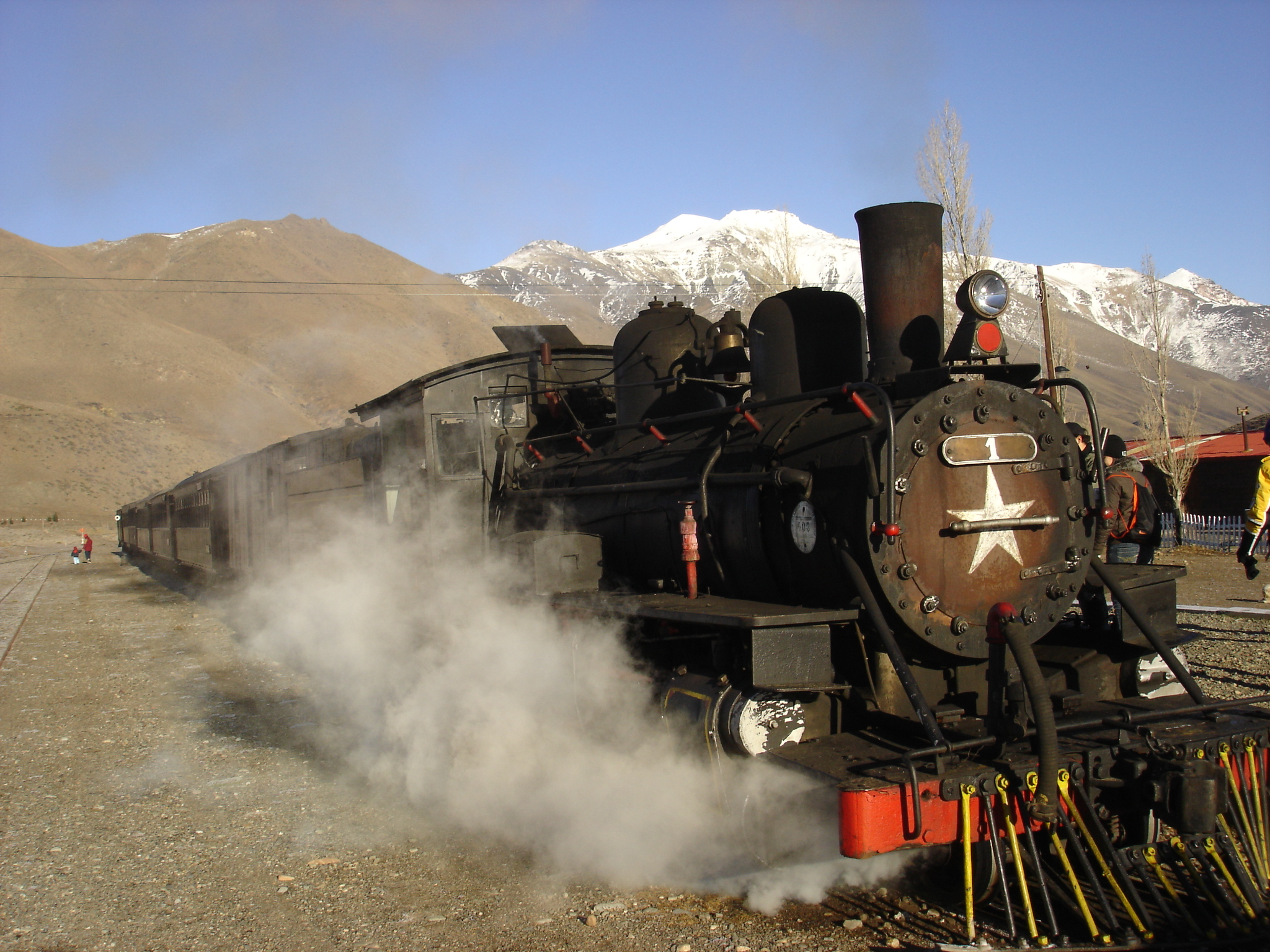
Afterwards, we went to the Travel Town Museum up the road about three miles. An open-air transport museum first opened in 1952, Travel Town features an extensive display of old locomotives, passenger and freight cars, cabooses, and related railroading equipment. There is even a little passenger train that runs around the park.

Steam Locomotive with Peeling Paint

Steam Locomotive with Peeling Paint

Although most of the rolling stock is in sad repair (see the peeling paint on the steam locomotive above), the park is popular with parents who want someplace to take their kids without spending a fortune. Sometimes I wonder how long a place like Travel Town can continue to exist without a massive infusion of cash, which is very unlikely to ever happen. It would be a pity, because the place was full of little reserved areas for children’s birthday parties, both outfoors and in some of the passenger cars.

In any case, Martine and I enjoyed ourselves.