Parable of the Palace

The Forbidden City in Beijing

This short tale by Jorge Luis Borges (1899-1986) is, to my mind, the most incredible tale ever told about the power of poetry. It is told here in its entirety. It and many equally wonderful poems and stories can be found in Dreamtigers (in Spanish, El Hacedor).

That day, the Yellow Emperor showed the poet his palace. They left behind, in long succession, the first terraces on the west which descend, like the steps of an almost measureless amphitheater, to a paradise or garden whose metal mirrors and intricate juniper hedges already prefigured the labyrinth. They lost themselves in it, gaily at first, as if condescending to play a game, but afterwards not without misgiving, for its straight avenues were subject to a curvature, ever so slight, but continuous (and secretly those avenues were circles). Toward midnight observation of the planets and the opportune sacrifice of a turtle permitted them to extricate themselves from that seemingly bewitched region, but not from the sense of being lost, for this accompanied them to the end. Foyers and patios and libraries they traversed then, and a hexagonal room with a clepsydra, and one morning from a tower they descried a stone man, whom they then lost sight of forever. Many shining rivers did they cross in sandalwood canoes, or a single river many times. The imperial retinue would pass and people would prostrate themselves. But one day they put in on an island where someone did not do it, because he had never seen the Son of Heaven, and the executioner had to decapitate him. Black heads of hair and black dances and complicated golden masks did their eyes indifferently behold; the real and the dreamed became one, or rather reality was one of dream’s configurations. It seemed impossible that earth were anything but gardens, pools, architectures, and splendrous forms. Every hundred paces a tower cleft the air; to the eye their color was identical, yet the first of all was yellow, and the last, scarlet, so delicate were the gradations and so long the series.

It was at the foot of the next-to-last tower that the poet—who was as if untouched by the wonders that amazed the rest—recited the brief composition we find today indissolubly linked to his name and which, as the more elegant historians have it, gave him immortality and death. The text has been lost. There are some who contend it consisted of a single line; others say it was a single word. The truth, the incredible truth, is that in the poem stood the enormous palace, entire and minutely detailed, with each illustrious porcelain and every sketch on every porcelain and the shadows and the light of the twilights and each unhappy or joyous moment of the glorious dynasties of mortals, gods, and dragons who had dwelled in it from the interminable past. All fell silent, but the Emperor exclaimed, “You have robbed me of my palace!” And the executioner’s iron sword cut the poet down.

Others tell the story differently. There cannot be any two things alike in the world; the poet, they say, had only to utter the poem to make the palace disappear, as if abolished and blown to bits by the final syllable. Such legends, of course, amount to no more than literary fiction. The poet was a slave of the Emperor and as such he died. His composition sank into oblivion and his descendants still seek, nor will they find, the one word that contains the universe.

A Nice Burn

A Sichuan Seasoning That Will Set You on Fire

My brother and I are well-known fire-eaters. Most of the meals I prepare for myself (but not Martine!) are off the charts when it comes to hotness for most of my friends.

It all started when I went on my first vacation to Mexico in 1975 and discovered El Diablito Chile Habanero. There I was in a hot country with smoke pouring out of my ears—and loving every minute of it! After discovering Marie Sharp’s Chile Habanero from Dangriga, Belize in 2019, I thought I had the perfect picante sauce.

Then my brother introduced me to Fly by Jing Sichuan Chili Crisp (illustrated above), which not only has the perfect burn but actually adds flavor. In the last few weeks, I have experimented with Spanish Rice and Spanish Barley, both seasoned with Fly by Jing. Not only was I sold, but I ordered a couple more bottles from Amazon for when my first bottle goes empty (which should be in about a week).

Interestingly, the chili crisps are made with Chinese ingredients originating in Chengdu by a Chinese-American living in Los Angeles. Her name, BTW, is Jing.

The Moon’s a Balloon

“What is success? It is a toy balloon among children armed with pins”

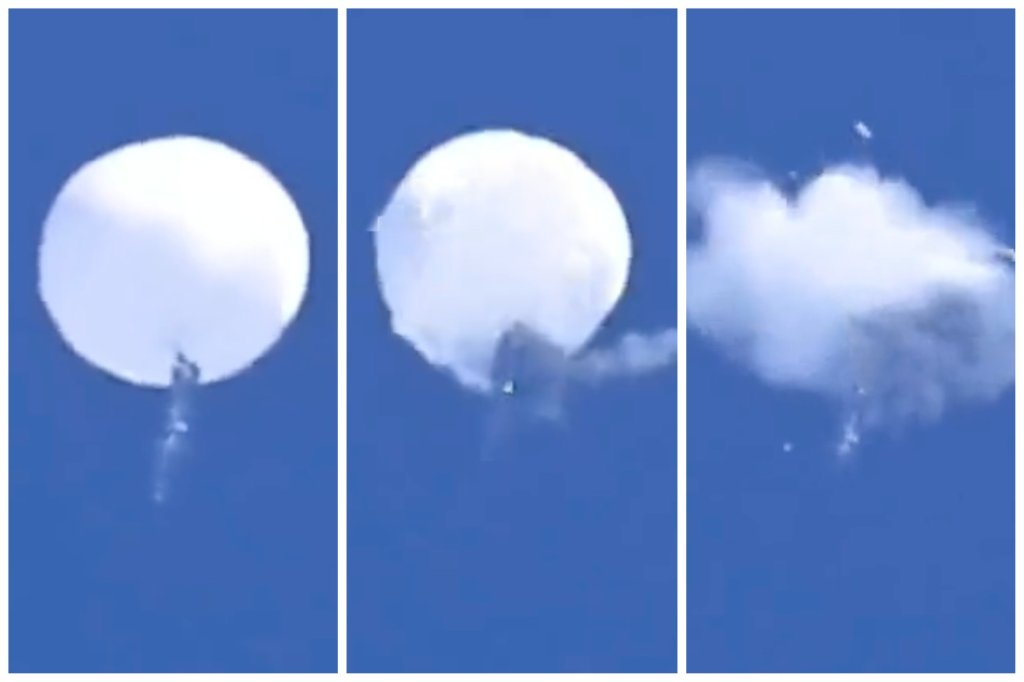
In the last few days, U.S. jet fighters have intercepted four balloons and popped them. Although the military has not officially admitted it, all four appear to be balloons equipped with electronics for spying. It is possible that we will never know, as what they manage to find is probably a military secret.

President Biden’s decision to bring these devices down is in sharp contrast to Trump, who let three or four such devices float over the U.S. during his régime without bringing it to anyone’s attention. Typically, he was full of anti-Chinese bluster—bluster, that did not translate into action.

We know that the Chinese have launched a number of spy satellites. Why, I wonder, did they feel it was necessary to supplement their findings with such a low-tech device as a balloon? Is it possible that their spy satellites did not produce satisfactory information? Were the Chinese balloons self-propelled? Or did they just drift any which where at the mercy of the winds? I doubt we’ll ever know.

Paper Tiger?

Soldiers of People’s Liberation Army (PLA) march in formation during the military parade marking the 70th founding anniversary of People’s Republic of China, on its National Day in Beijing, China October 1, 2019. REUTERS/Thomas Peter

It is fashionable in the United States to overestimate the Chinese as an international aggressor. Since its involvement in Korea some seventy years ago, China’s Peoples’ Liberation Army (PLA) has not acquitted itself particularly well:

  1. In 1962, there was a border dispute with India which did not involve air or naval forces, in which the three PLA regiments occupied an area in the Himalayas known as Aksai Chin.
  2. In 1967, China attempted to invade Sikkim, just east of Nepal, but were driven back by Indian troops.
  3. In 1979, China invaded North Viet Nam (which was allied with Russia) and lost heavily to battle-hardened Viet troops under Võ Nguyên Giáp.
  4. Recently, China has occupied various uninhabited rocks in the South China Sea, which are in danger of being inundated by tsunamis common in the area due to volcanic activity.

It has been much more common for the PLA to be involved in the suppression of minority populations in south and western China.

So although the PLA on paper is powerful, it has no real history of success in battle. Although I am not in favor of pooh-poohing them as a threat, I think we tend to go too far in the opposite direction.

I must admit, however, that the PLA wins hands down on the parade ground.

At the Start of the Covid Outbreak

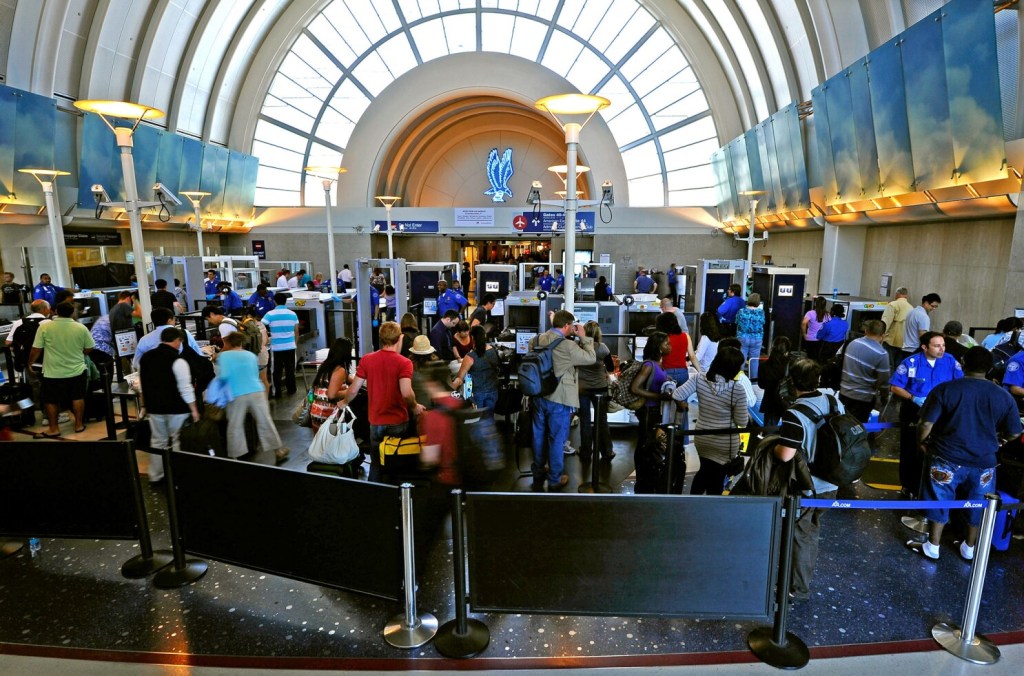
It was the night of January 14, 2020. I was scheduled to take a flight on Volaris to Guadalajara, Mexico, and then on to Mérida in Yucatán. The Tom Bradley International Terminal at LAX was crowded with Chinese returning to their country. Most of the flights were to Beijing, Shanghai, Wuhan, and other major cities on the Chinese mainland. My Mexico flight was one of the few in the wee hours of the morning that was to a Western Hemisphere destination.

A month earlier, on December 1, 2019, a patient was admitted to a hospital in Wuhan in Hubei Province, China, with a strange case of pneumonia. I didn’t know anything about the official Chinese coverup of the disease until around January 24, when I was staying at the Hotel Lopez in Campeche, where I had access to the Al Jazeera news channel in English on my TV. The whole time I stayed there, the news was filled with pictures of Chinese healthcare personnel in hazmat suits. There were just then beginning to be cases of the unknown disease in the United States, Japan, Thailand, South Korea, Viet Nam, Taiwan, and Nepal.

By the time I returned to the United States on February 7, mass quarantines were in effect in various countries around the globe. A month later, in the middle of March, Martine and I attended a Hungarian folk dance performance of Kárpátok before submitting ourselves to the lockdown the next day.

There is an interesting chronology of the first days of the Covid-19 outbreak available by clicking here. Fortunately, we managed to avoid getting the disease; and my fingers are crossed that we never will.

‚

Horror Journeys

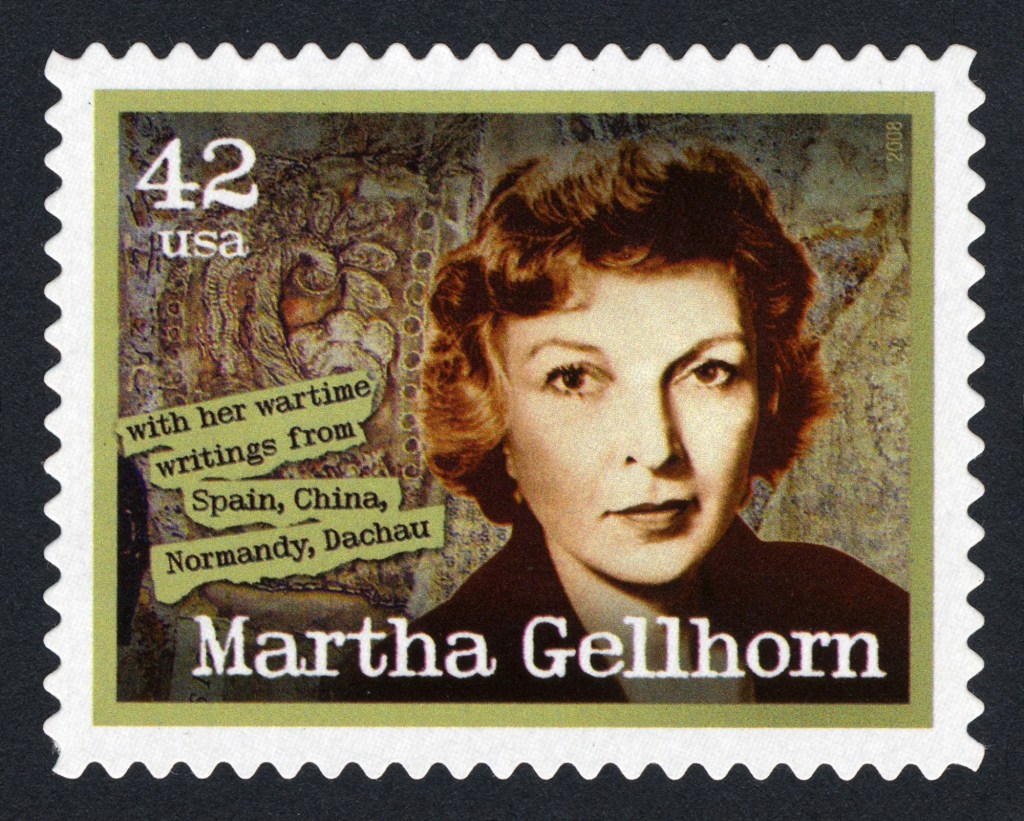
If you read Martha Gellhorn’s Travels with Myself and Another: A Memoir, you should probably start with the penultimate chapter entitled “What Bores Whom?” In it, she muses about a large group of hippies staying at her hotel in Eilath, Israel’s port on the Gulf of Aqaba. The gilded youth were mostly strung out on hash, and their conversation was mostly about how so-and-so was squashed out of his or her gourd. And then, quite suddenly, we get Martha’s thoughts about travel:

Thinking of those kids at Eilath has given me a new slant on horror journeys. They are entirely subjective. Well of course. If I had spent any time analyzing travel, instead of just moving about the world with the vigour of a Mexican jumping bean, I’d have seen that long ago. You define your own horror journey, according to your taste. My definition of what makes a journey wholly or partially horrible is boredom. Add discomfort, fatigue, strain in large amounts to get the purest-quality horror, but the kernel is boredom. I offer that as a universal test of travel, boredom, called by any other name, is why you yearn for the first available transport out.

Travels with Myself and Another gives us four journeys, all of which are quite horrorshow. But they are by no means boring, though I would have given money to have stayed at home. First there was her trip with then-husband Ernest Hemingway to China in the middle of her war with Japan. That was followed up by a boat trip in the Caribbean in 1942, at a time when Nazi U-Boats were sinking hundreds of ships there. The longest chapter is about a solo trip to Africa, starting in Cameroon, stopping in Chad and the Sudan, and finally a jaunt through East Africa in a Land Rover which she drove herself. Finally, there is a short chapter about a visit to Moscow around 1972 to visit Nadezhda Mandelstam, the widow of poet Osip Mandelstam—during which she could not get a single decent meal.

Although all four of her journeys are truly horrible, the author seems to revel in her difficulties. In a way, they make her observe more clearly. And her book is a travel classic despite all the “discomfort, fatigue, strain.”

I think I will read some of her war correspondence next to see how she regards travel when she is being fired upon.

Literature from the Hutongs of Beijing

A Colorful Hutong in the City of Beijing

In Northern Chinese cities, such as Beijing, hutongs are usually narrow alleys formed by adjoining sineyuan, or traditional courtyard residences, squeezed together. Over the last few years, I have enjoyed reading contemporary Chinese literature, which gives me an altogether different view of the Chinese people than I get from contemplating the actions of the Xi Jinping government.

I thought I would list here a few of the best Chinese novels of the latter half of the 20th Century:

  • Geo Xingjian’s Soul Mountain, probably the best Chinese novel I have read, winner of the 2000 Nobel Prize
  • Mo Yan’s Shifu, You’ll Do Anything for a Laugh, a collection of novellas
  • Ma Jian’s Red Dust, a novel that is also a fascinating travel guide as the hero escapes Beijing to discover his country
  • Ge Fei’s The Invisibility Cloak, a delightful comic novella
  • Su Tong’s Rice, the most serious book of the bunch with its villainous main character

After reading these books, I have a strong feeling for the essential humanity of the Chinese people. I would have no trouble interacting with them—except for the simple matter of the language barrier.

Two Types of Travel Books

The Blue City of Samarkand in Uzbekistan

Constantinople, Trebizond, Tbilisi, Baku, Samarkand, Bukhara, Tashkent, Lhasa—these are cities I would dearly love to know more about. So when I read Kate Harris’s Lands of Lost Borders: A Journey on the Silk Road, I looked forward to learning more about these magical places. Alas, I was disappointed: The book was more about a bicycle trip with little attention paid to destinations, and most of the attention paid to the roads connecting the destinations.

I had to remind myself that there are two types of travel books. First, there was my preferred kind, which combines personal experiences with history, literature, art, cuisine, and culture—the whole ball of wax! But there is another kind of travel book as well. Call it adventure travel or experiential travel. All mountain-climbing books fall into this category. They can be excellent reads, such as Jon Kracauer’s Into Thin Air, Alfred Alvarez’s Feeding the Rat, or any of Eric Shipton’s great books on mountains he has climbed.

Tibetan Monastery

Kate Harris and her companion Melissa Yule concentrated all their efforts in surviving a multiple-thousand-mile journey involving multiple mountain ranges and passes. It was quite an accomplishment, but it just left me hungry to learn more about Constantinople, Trebizond, Tbilisi, Baku, Samarkand, Bukhara, Tashkent, Lhasa, and points between.

Oh, well, as long as the quarantine and my health last, I’ll have the time to make up that deficit.

Two Poems

Liu Xiaobo and His Widow Liu Xia

On July 13 of last year, Chinese Nobel Peace Prize laureate Liu Xiaobo died in Shenyang after years of persecution by the monolithic Communist Party he dared to oppose. Here are two poems, first by his widow Liu Xia dedicated to her husband:

Road to Darkness

—For Xiaobo

Sooner or later you will leave
me, one day
and take the road to darkness
alone.

I pray for the moment to reappear
so I can see it better,
as if from memory.
I wish that I, astonished, would glow, my body
in full bloom of light for you.

But I can’t make it except
clenching my fists, not letting
the strength,
not even a little bit of it, slip
through my fingers.

The following is a poem by Liu Xiaobo dedicated to his wife:

Morning

—For Xia

Between the gray walls
and a burst of chopping sounds,
morning comes, bundled and sliced,
and vanishes with the paralyzed souls
of the chopped vegetables.

Light and darkness pass through my pupils.
How do I know the difference?
Sitting in the rust, I can’t tell
if it’s the shine on the shackles in the jail
or the natural light of Nature
from outside the walls.
Daylight betrays everything, the splendid sun
stunned.

Morning stretches and stretches in vain.
You are far away—
but not too far to collect the love
of my night.

Both poems appeared in the September 28, 2017 issue of The New York Review of Books.


Mad About Travel

Crescent Lake Oasis Near Dunhuang, China

Immanuel Kant was a great philosopher, but I have no desire to emulate him. According to an editorial in Philosophy Now:

A curious case, this Kant. They say that travel broadens the mind, but Kant never in his whole life travelled more than ten miles from his home city of Königsberg (now Kaliningrad). He scraped a living for years as a private tutor before eventually becoming a hardworking professor at the university. He lived a life of disciplined regularity, taking the same walk around Königsberg at the same time each day, with such regularity that it was said that the inhabitants set their watches by him.

Living in Cleveland in the 1950s and 1960s, I desired more than anything else to travel. Even when I came out to California and got a job, it was a full seven years before I could afford to go anywhere but Cleveland. And when I did, my parents were appalled. “Why don’t you come to Cleveland?” Mom wheedled. “I’ll cook my favorite dishes for you.” That’s all I needed—to get even fatter.

I started out with baby steps, going to Mexico and traveling all around the country by bus and train (back when there were trains). I went to England and Scotland, too, and even joined my parents in 1977 to visit Hungary and Czechoslovakia.

In 2001, I went to Iceland; and, in 2006, I discovered South America. Now my desire for travel is insatiable. On the left corner of my kitchen table is a collection of travel guides from Lonely Planet and moon. While waiting for my morning paper to be delivered, I can read about the Trans-Siberian Railroad (2 guides), Iceland, Bolivia, Ecuador, and New Mexico while sipping a cup of hot tea.

December 29 is the last day of my working career, so I may not be able to afford some more distant locations; but Mexico and Guatemala continue to beckon. If I should win the lottery (hah!) I will try for the Trans-Siberian Railroad between Moscow and Vladivostok, though maybe diverting through Mongolia to Beijing. I can always dream, can’t I?