“The Long Day Wanes”

Odysseus

Odysseus

You would think after ten years circumnavigating the Mediterranean, losing all of his crew to various disasters, being imprisoned by the witch Circe, and massacring the many suitors of his wife Penelope, that Odysseus would take a rest. According to Alfred Lord Tennyson, he does—for all of three years. In his poem “Ulysses,” Odysseus is eager once again to hit the road:

It little profits that an idle king,
By this still hearth, among these barren crags,
Match’d with an aged wife, I mete and dole
Unequal laws unto a savage race,
That hoard, and sleep, and feed, and know not me.
I cannot rest from travel: I will drink
Life to the lees: All times I have enjoy’d
Greatly, have suffer’d greatly, both with those
That loved me, and alone, on shore, and when
Thro’ scudding drifts the rainy Hyades
Vext the dim sea: I am become a name;
For always roaming with a hungry heart
Much have I seen and known; cities of men
And manners, climates, councils, governments,
Myself not least, but honour’d of them all;
And drunk delight of battle with my peers,
Far on the ringing plains of windy Troy.
I am a part of all that I have met;
Yet all experience is an arch wherethro’
Gleams that untravell’d world whose margin fades
For ever and forever when I move.
How dull it is to pause, to make an end,
To rust unburnish’d, not to shine in use!
As tho’ to breathe were life! Life piled on life
Were all too little, and of one to me
Little remains: but every hour is saved
From that eternal silence, something more,
A bringer of new things; and vile it were
For some three suns to store and hoard myself,
And this gray spirit yearning in desire
To follow knowledge like a sinking star,
Beyond the utmost bound of human thought.

This is my son, mine own Telemachus,
To whom I leave the sceptre and the isle,—
Well-loved of me, discerning to fulfil
This labour, by slow prudence to make mild
A rugged people, and thro’ soft degrees
Subdue them to the useful and the good.
Most blameless is he, centred in the sphere
Of common duties, decent not to fail
In offices of tenderness, and pay
Meet adoration to my household gods,
When I am gone. He works his work, I mine.

There lies the port; the vessel puffs her sail:
There gloom the dark, broad seas. My mariners,
Souls that have toil’d, and wrought, and thought with me—
That ever with a frolic welcome took
The thunder and the sunshine, and opposed
Free hearts, free foreheads—you and I are old;
Old age hath yet his honour and his toil;
Death closes all: but something ere the end,
Some work of noble note, may yet be done,
Not unbecoming men that strove with Gods.
The lights begin to twinkle from the rocks:
The long day wanes: the slow moon climbs: the deep
Moans round with many voices. Come, my friends,
’T is not too late to seek a newer world.
Push off, and sitting well in order smite
The sounding furrows; for my purpose holds
To sail beyond the sunset, and the baths
Of all the western stars, until I die.
It may be that the gulfs will wash us down:
It may be we shall touch the Happy Isles,
And see the great Achilles, whom we knew.
Tho’ much is taken, much abides; and tho’
We are not now that strength which in old days
Moved earth and heaven, that which we are, we are;
One equal temper of heroic hearts,
Made weak by time and fate, but strong in will
To strive, to seek, to find, and not to yield.

I don’t know about the mariners he addresses in the last stanza, considering that all his original crew is no more. Perhaps these are new ones, eager to embark on ticking off their own bucket lists.

Wackadoodle Warriors

Ammon Bundy and His Motley Crüe

Ammon Bundy and His Motley Crüe

For several weeks now, we have been regaled with stories about the Men of Malheur (French for “unhappiness”) holed up with their leader, Ammon Bundy at an Oregon federal wildlife refuge. They are dressed in camouflage, armed to the teeth, and muy macho. The fact that  cynical Americans have been mailing them dildos and sexual lubricants suggests another view of these wackadoodle warriors.

All of them are equipped with copies of the U.S. Constitution. Considering their educational level, however, it might as well be Ludwig Wittgenstein’s Tractatus Logico-Philosophicus. I rather suspect that most are hoping to fall in a hail of bullets defending their beliefs, whatever they may be. Fortunately, the Feds are willing to pick them off one by one as the protest decays, which it gives every sign of doing. Eventually, it will all end up in court, with the defendants angry and confused as to why they are being picked on.

The Second Amendment of the Constitution states: “A well regulated Militia, being necessary to the security of a free State, the right of the people to keep and bear Arms, shall not be infringed.” The resemblance of these bozos to a “well regulated militia” is at best highly speculative.

Beyond the Law?

Enron’s Ken Lay—Convicted But Died Before Sentencing

Enron’s Ken Lay—Convicted But Died Before Sentencing

There is one class of people who are almost untouchable when they commit economic crimes while at the helm of their companies: I am referring to Chief Executive Officers (CEOs), to which I might also add Chief Financial Officers (CFOs) and Chief Operating Officers (COOs). To date, there has been no major prosecutions of the bank and securities firms CEOs who were responsible for the Great Recession of 2008—despite the fact that they, in many cases, knowingly put together subprime mortgage securities backed (essentially) by hope and pixie dust.

There have been cases of CEOs who have served time (or are serving time). These include:

  1. Jeff Skilling, Enron
  2. Martha Stewart, Martha Stewart Living Omnimedia
  3. Sanjay Kumar, Computer Associates
  4. Dennis Kozlowski, Tyco
  5. John Rigas, Adelphia
  6. Martin L. Grass, Rite-Aid
  7. Joseph Nacchio, Qwest
  8. Walter Forbes, Cendant
  9. Richard Scrushy, HealthSouth
  10. Bernie Ebbers, WorldCom

Ken Lay of Enron would have joined that list, but he died of a heart attack before sentencing. For more information about the above, click here.

There are class action suits, but these have a way of punishing the innocent and leaving the guilty scot-free. For one thing, it is the shareholders who suffer, not the executives. In many cases, it is the shareholders who have  initiated the cases and suffer from the resulting devaluation of their securities. And probably the biggest beneficiaries are law firms specializing in class action cases. These boys make out like bandits.

Whether CEOs wind up doing the perp walk is not the main point. I would be happy to see blame ascribed and large fines levied.

Thomas Bewick and His Tail Pieces

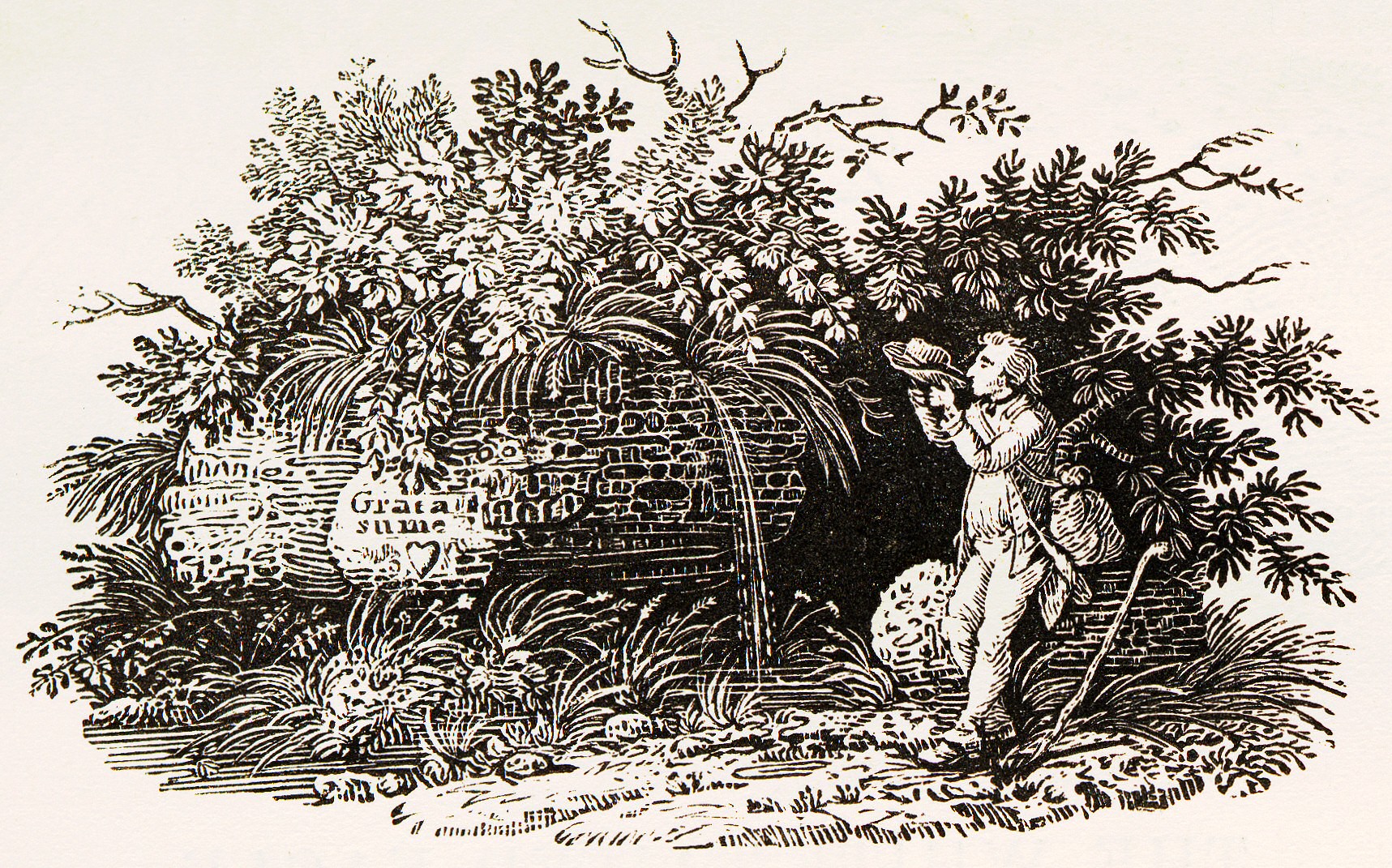
Bewick Depicting Himself as a Traveler Drinking Water from His Hat

Bewick Depicting Himself as a Traveler Drinking Water from His Hat

Thomas Bewick (1753-1828) was one of Britain’s great unsung artists. Known as an engraver and a naturalist (he authored A History of British Birds), he won the admiration of no less than John James Audubon, who visited him in 1827:

As length we reached the dwelling of the Engraver, and I was at once shewn his workshop. There I met the old man, who, coming towards me, welcomed me with a hearty shake of the hand, and for a moment took off a cotton night-cap, somewhat soiled by the smoke of the place. He was a tall stout man, with a large head, and with eyes placed farther apart than those of any man I have evr seen: a perfect old Englishman, full of life, although seventy-four years of age, active and prompt in his labors. Presently, he proposed shewing me the work he was at, and went on with his tools. It was a small vignette, cut on a block of boxwood not more than than three by two inches in surface, and represented a dog frightened at night by what he fancied to be living objects, but were actually roots and branches of trees, rocks, and other objects bearing the semblance of men. This curious piece of art, like all his works, was exquisite.

The illustration described by Audubon is shown below and constitutes one of the artist’s famous tail-pieces, which were dashed off to fill blank space at the end of a chapter.


The Tail Piece Described by Audubon

The Tail Piece Described by Audubon

This is not to detract from Bewick’s carefully observed engravings of birds and mammals of his native Northumberland. It’s merely to admit that I am not as acute an observer of nature as Bewick was and could not appreciate them as much as other naturalists such as Audubon and Sir Joseph Banks.

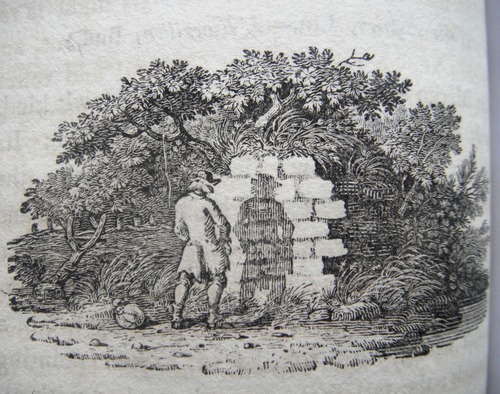
One image that afforded me some amusement was of a traveler urinating on the wall of a Roman ruin:

How Not to Appreciate a Roman Ruin

How Not to Appreciate a Roman Ruin

Note the shadow of the traveler cast on the wall, something one doesn’t usually see on a casual illustration of this sort. But Bewick was always meticulous in his observations.


Downbeat on Tweet

Do I Really Care?

#WTFDoICare

Several months ago, I started signing up for Twitter. When I was asked to name three Twitter accounts I was interested in following, I couldn’t think of a single one. I just wasn’t that interested in following anyone. And what would I tweet? There was that 140-character limitation that encouraged users to murder the English language. And when Twitter and tweets were in the news, they were usually from political or entertainment figures like Donald Trump or Kim Kardashian—on whom I do not care to waste my time.

What is more, that whole hashtag convention struck me as forcing one’s thoughts into other people’s channels. Nope, not for me.

Þorrablót

Now Tell Me You’re Not Hungry

Now Tell Me You’re Not Hungry

Those of you who are vegetarians can stop reading now. Following is a piece from today’s Iceland Review about how Icelanders celebrate the start of Þorri.

Tomorrow marks the beginning of the old month þorri, which generally is celebrated with traditional Icelandic food, enjoyed at large gatherings called þorrablót, held in various places throughout the month.

The food, typically served as buffet, includes the items listed below:

Dark rye bread, slightly sweet and slowly baked, commonly called þrumari or thunderer, because of the thundering it frequently produces at the rear end of those who enjoy it.

Dried fish, or harðfiskur: extremely addictive, despite its distinguished, strong smell. It’s most frequently enjoyed with a bit of butter.

Putrefied shark, served in tiny cubes the size of sugar cubes, but quite different in taste. These cubes are not for the delicate, but a delicacy to others.

Brennivín, also known as Black Death or aquavit, brewed from potatoes. This beverage is ideal for getting the shark down your throat.

Rotten eggs. The best ones are said to come from the West Fjords. They are indeed rotten and smell rotten.

Rams’ testicles which have been boiled and then cured in whey. You will be spared any further description.

Pressed meat from the heads of lambs, or head cheese, often cured in whey. Don’t let the description scare you away. This is considered delicious.

Liver sausage, made from the liver of sheep, is every child’s favorite. Its cousin, the blood sausage, is also popular, but together we call them slátur, meaning slaughter.

If none of the above is to your liking, rest assured you will like the hangikjöt or smoked lamb, which cannot be missed.

Note that the food above is proof how well our forefathers made use of their resources and let nothing go to waste. For preservation, meat was either smoked or stored in whey, and fish was dried.

So, if you’re invited to a þorrablót, don’t let the chance go by to experience it. Dress up and be ready to dance after dinner. [Or something.]

About Those 72 Virgins …

Well, I Guess That’s What the Egyptians Thought

Well, I Guess That’s What the Egyptians Thought

Since I have passed threescore years and ten that is marked as the Old Testament’s standard limit for a length of a life, I am aware that there are many things that I am doing for the last time. Will I ever again see the streets of Buenos Aires? What about the glaciers and waterfalls of Iceland? Can I ever realize my dream of taking the Trans-Siberian Railroad all the way from Moscow to Vladivostok? Or, nearer at hand, what about the hills of San Francisco or the hoodoos of Bryce Canyon? Or even Descanso Gardens and Huntington Gardens?

Let’s take a look at what Psalm 90:10 actually says:

The days of our years are threescore years and ten; and if by reason of strength they be fourscore years, yet is their strength labour and sorrow; for it is soon cut off, and we fly away.

When that day finally comes when I cross over, will I be angrily denied my access to the seventy-two large breasted virgins promised by Islam because I have not died fighting the infidel? Will St. Peter slam the pearly gates in my face because I once cussed out an aggressive panhandler? Will I be reborn in Brazil as a microcephalous infant due to my new mother’s having contracted the Zika virus? Will there, perhaps, be nothing? Or will there be a something I cannot imagine?

Because of the limitations inherent in our condition, I will continue to soldier on. So far I have been doing pretty well, considering. I’ll try to put off the “labour and sorrow” as long as I can, knowing full well that nobody lives forever.

Perhaps I write this because I am bummed out by all the famous people younger than me who recently died, like David Bowie and Glenn Frey and Natalie Cole and even the guy who played Leatherface.

I continue to walk the earth, but with a lighter step.

“Eternal Brood the Shadows on This Ground”

Edgar Allan Poe (1809-1849)

Edgar Allan Poe (1809-1849)

There is no doubt that H. P. Lovecraft owes a debt of gratitude to Edgar Allan Poe. He made an interesting attempt to pay a tribute to his forebear with this sonnet, which was published in Weird Tales in May 1938:

Eternal brood the shadows on this ground,
Dreaming of centuries that have gone before;
Great elms rise solemnly by slab and mound,
Arch’d high above a hidden world of yore.
Round all the scene a light of memory plays,
And dead leaves whisper of departed days,
Longing for sights and sounds that are no more.

Lonely and sad, a spectre glides along
Aisles where of old his living footsteps fell;
No common glance discerns him, tho’ his song
Peals down thro’ time with a mysterious spell:
Only the few who sorcery’s secret know
Espy amidst these tombs the shade of Poe.

If you look closely, the first letters in each line spell out the poet’s name.

295 Days

That’s How Many Days There Are From Now to Election Day

That’s How Many Days There Are From Now to Election Day

The nastiness began early last year as a whole host of candidates declared themselves for the 2016 Presidential Election. We, who pride ourselves as a nation that produces first class entertainment, have fallen down on the job. On the contrary, our elections have caused consternation among our allies and emboldened the growing number of peoples who hate us. Is this really the most powerful nation on earth? Or is this some Three Stooges pie fight?

My mailbox is filling up daily for requests for me to donate money to the Democratic Party so that they could:

  1. Buy advertising space on television, which I do not watch
  2. Pay for more frequent robocalls, which I hang up on within seconds

All of a sudden, I am receiving numerous calls from “surveys.” I stay on the line with them only long enough to say, “We do no participate in surveys.” Apparently, I am not the only one, because a recent New Yorker article indicates that the response rate is down to eight percent or less, down from a majority a couple decades ago.

We have grown to hate our politics, our politicians, and in fact ouwhole political process. And, instead of slinking off into a dark corner somewhere, the whole political process continues to gather steam and explore new ways of getting into our faces.

To make matters worse, I shouldn’t be surprised if the 2020 Presidential Election cranks up before the current race is resolved.

Get ready for an ugly year!

Slim Memed

Yasha Kemal (1923-2015)

Yasha Kemal (1923-2015)

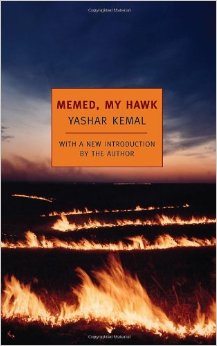
My Turkish friend David urged me to read Yasha Kemal’s Memed, My Hawk (1955). As part of my Januarius program of reading authors I’d never read before, I decided to look into it. It was nothing short of amazing. The following is from my review of the book for Goodreads.Com:

Yashar Kemal is probably the best known author from that most admirable of Middle-Eastern peoples: The Kurds. His Memed, My Hawk is a folk tale of injustice by a cruel landlord turning a young farmer’s son to brigandage. At the same time he is a brigand, he is scrupulously justice, especially when dealing with the poor and the innocent.

“Slim Memed,” as he is called, is a hero created by an author who doesn’t believe in heroes. In his introduction to the New York Review Books edition, Kemal writes:

I have never believed in heroes. Even in those novels in which I focus on revolt I have tried to highlight the fact that those we call heroes are in effect instruments wielded by the people. The people create and protect these instruments and stand or fall together with them.

PICMemedMyHawk

Still and all, Kemal was to write three more books featuring Slim Memed. For the first one, he was shortlisted for the Nobel Prize in Literature in 1973. That award was won by the Australian Patrick White. I think it should have gone to Kemal.

Kemal’s villain is the landlord Abdi Agha, one of the most craven and beastly characters in all of literature. It is not until the end that Memed shoots three bullets into his chest, killing him; but he had been spiritually dead for years after Memed killed his nephew and wounded him.