Life Is Different for Him

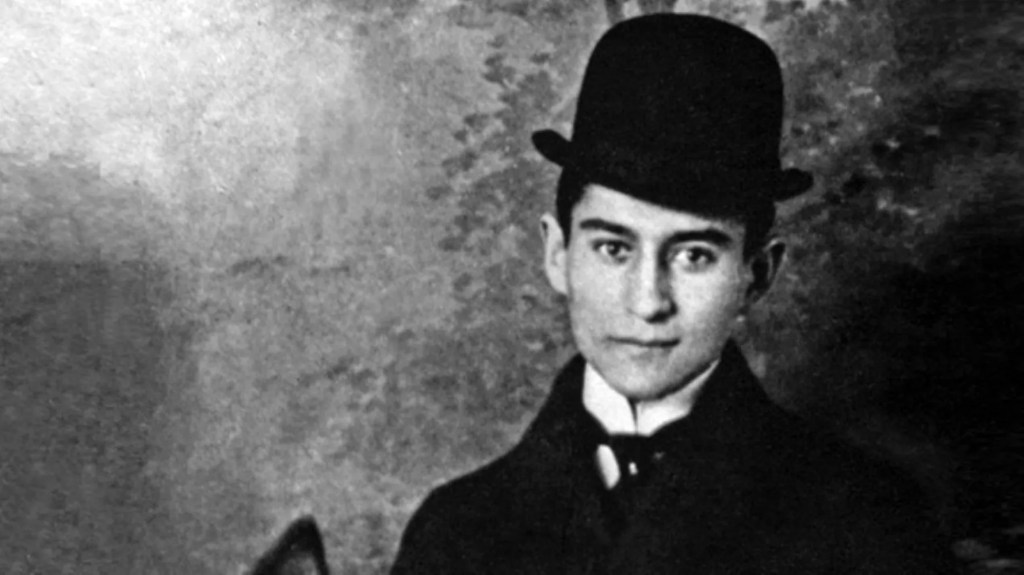
The woman in the above photograph is Milena Jesenská, with whom Franz Kafka carried on a torrid correspondence in 1920. Although she was a married woman (albeit unhappily), Kafka was strongly drawn to her. The relationship, such as it was, petered out when Milena did not want to run away from her marriage. Milena herself was a writer, and in a letter to Max Brod written in August 1920, provides a riveting description of Kafka. She was to live on for another twenty years, dying in 1944 in Ravensbrück Concentration Camp.

Life for him is something entirely different than for all other human beings; in particular, things like money, the stock market, currency exchange, a typewriter are utterly mystical to him (and they really are, too; just not for the rest of us), they are the strangest riddles to him, and his approach to them is completely different than our own. Can his office work be considered the customary performance of a service? Any official position, including his own, is something very puzzling to him, very admirable, like a locomotive is for a small child. He doesn’t understand the simplest things in the world. Were you ever in a post office with him? After he composes a telegram and picks out whatever little counter he likes best, shaking his head, he then drifts from one counter to another, without the slightest idea to what end or why, until he finally stumbles on the right one, and when he pays and receives change, he counts it and discovers one krone too many, and so gives one back to the girl behind the counter. Then he walks away slowly, counts once again, and in the middle of descending the last staircase he realizes that the missing krone belonged to him after all. So there you stand next to him, at a loss, while he shifts his weight from one foot to the other, wondering what to do. Going back is difficult; upstairs there’s a crowd of people pushing and shoving. “So just let it go,” I say. He looks at me completely horrified. How can you let it go? Not that he’s sorry about the krone. But it’s not good. There’s one krone missing. How can you forget about something like that? He spoke about it for a long time, and was very dissatisfied with me.

And this repeated itself with different variations in every shop, in every restaurant, in front of every beggar. Once he gave a beggar a two-krone piece and wanted one back. She said she didn’t have anything. We stood there for a good two minutes, thinking about how to deal with the matter. Then it occurred to him that he could leave the two krone. But no sooner had he taken a few steps when he started getting very cross. Of course this same man would be eager and extremely happy to give me twenty thousand krone with no questions asked. On the other hand, if I were to ask him for twenty thousand and one krone and we had to change money somewhere and didn’t know where, he would seriously consider what to do with the one krone I hadn’t been allotted. His anxiety in the face of money is almost the same as his anxiety in the face of women. Or his fear of things official. Once I telegraphed him, phoned him, wrote him, begged him in God’s name to come see me for a day. I really needed it at the time. I cursed him to high heaven. He didn’t sleep for nights, tormented himself, wrote letters full of self-destruction, but he did not come. Why? He couldn’t ask for leave. He was unable to ask the director, the same director he admires in the depths of his soul (seriously!) for being able to type so quickly—he wasn’t able to tell the director he was going to see me. And as for saying something else—another horrified letter—how could he? Lie? Lie to the director? Impossible…..

No, this world is and remains a riddle to him.

It is a pity that Milena’s letters to Kafka no longer exist. Because she was still uncertain about divorcing her husband, when Franz died in 1924, she had her letters destroyed so that they would not provide incriminating evidence. In her own way, she was a major Czech literary figure.

Hitting Rock Bottom

TLOS ANGELES, CA – JANUARY 24: Lisa Rogers, a homeless woman, carries her tent as she relocates her camp on January 24, 2017 in Los Angeles, California. According to a 2016 report by the U.S. Department of Housing and Urban Development, Los Angeles has the highest number of homeless people in the nation with close to 13,000 living on the streets. The annual Greater Los Angeles Homeless Count begins today and will continue through Thursday. (Photo by Justin Sullivan/Getty Images)

To begin with, there are a hell of a lot more than 13,000 homeless living on the streets of Los Angeles. I would put the number at close to 5-10 times that many. I have just finished reading Sam Quinones’s excellent book The Least of Us: True Tales of America and Hope in the Time of Fentanyl and Meth, from which the following paragraph is taken:

We used to believe people needed to hit rock bottom before seeking treatment. That’s another idea made obsolete by our addiction crisis and the current synthetic drug supply. It belongs to an era when drugs of choice were merciful. Nowadays people are living in tents, screaming at unseen demons, raped, pimped, beaten, unshowered, and unfed. That would seem to be rock bottom. Yet it’s not enough to persuade people to get treatment. In Columbus, Ohio, Giti Mayton remembers a meth addict who was hospitalized with frostbitten, gangrenous hands, yet who left the hospital in midwinter to find more dope. San Francisco and Philadelphia, two cities with years of experience with heroin, are seeing users homeless and dying like never before. The dope is different now. Today, rock bottom is death.

A Warning to Urbanites

William S. Burroughs (1914-1997)

Writing in 1959, the Old Junkie had a vision of Trump’s America. The following passages are from William S. Burroughs’s Naked Lunch:

The Old Court House is located in the town of Pigeon Hole outside the urban zone. The inhabitants of this town and the surrounding area of swamps and heavy timber are people of such great stupidity and such barbarous practices that the Administration has seen fit to quarantine them in a reservation surrounded by a radioactive wall of iron bricks. In retaliation the citizens of Pigeon Hole plaster their town with signs: “Urbanite Don’t Let The Sun Set On You Here,” an unnecessary injunction, since nothing but urgent business would take any urbanite to Pigeon Hole.

Americans have a special horror of giving up control, of letting things happen in their own way without interference. They would like to jump down in their stomachs and digest the food and shovel the shit out.

Serendipity: Cholera vs Coronavirus

Lambeth Cholera Outbreak 1848-49

The more things change, the more they remain the same. The following is from A N Wilson’s The Victorians describing the outbreak of cholera in London in the late 1840s.

It was not until the cholera microbe was isolated and identified by Koch in 1883 that [Dr John] Snow’s brilliant hunch—turning to circumstantial deduction—was proved. Snow tried—and [Edwin] Chadwick too—to spread the gospel of cleanliness as a guard against water-borne disease: the creation of good drains; lodging houses for vagrants; public washhouses; quarantine for local visitors. The coal-miners were the group that suffered more from cholera than any other—Snow urged that their work conditions be divided into four-hour shifts so that they did not need to use the coal pits as privies. In parts of London where the classes washed their hands—Belgravia—the rate of death by cholera was 28 in 10,000, compared with 186 per 10,000 in poorer districts. But, of course, such measures could not be introduced without control, and—as in the case with the Irish [potato] famine—the true laissez-faire liberal would, quite literally, prefer death to state interference. [Italics mine]

Serendipity: On the Tram

An Old-Style Tram in Prague

The following is one of Franz Kafka’s brief stories in his volume entitled Meditation, shown below in its entirety. You will find it in Kafka’s The Metamorphosis and Other Stories (New York: Schocken Books, 1948). What an amazing description of a young woman of his day!

I stand on the end platform of the tram and am completely unsure of my footing in this world, in this town, in my family. Not even casually could I indicate any claims that I might rightly advance in any direction I have not even any defense to offer for standing on this platform, holding on to this strap, letting myself be carried along by this tram, nor for the people who give way to the tram or walk quietly along or stand gazing into shop windows. Nobody asks me to put up a defense, indeed, but that is irrelevant.

The tram approaches a stopping place and a girl takes up her position near the step, ready to alight. She is as distinct to me as if I had run my hands over her. She is dressed in black, the pleats of her skirt hang almost still, her blouse is tight and has a collar of white fine-meshed lace, her left hand is braced flat against the side of the tram, the umbrella in her right hand rests on the second top step. Her face is brown, her nose, slightly pinched at the sides, has a broad round tip. She has a lot of brown hair and stray little tendrils on the right temple. Her small ear is close-set, but since I am near her I can see the whole ridge of the whorl of her right ear and the shadow at the root of it.

At that point I asked myself: How is it that she is not amazed at herself, that she keeps her lips closed and makes no such remark?

Arthur’s Knights

Tapestry Showing Arthur and Guinevere

I am currently reading Chrétien de Troyes’s Arthurian tale Eric and Enide. I fell in love with this picturesque list of the Knights of the Round Table as detailed by this 12th century French author:

Before all the excellent knights, Gawain ought to be named the first, and second Erec the son of Lac, and third Lancelot of the Lake. Gornemant of Gohort was fourth, and the fifth was the Handsome Coward. The sixth was the Ugly Brave, the seventh Meliant of Liz, the eighth Mauduit the Wise, and the ninth Dodinel the Wild. Let Gandelu be named the tenth, for he was a goodly man. The others I shall mention without order, because the numbers bother me. Eslit was there with Briien, and Yvain the son of Uriien. And Yvain of Loenel was there, as well as Yvain the Adulterer. Beside Yvain of Cavaliot was Garravain of Estrangot. After the Knight with the Horn was the Youth with the Golden Ring. And Tristan who never laughed sat beside Bliobleheris, and beside Brun of Piciez was his brother Gru the Sullen. The Armourer sat next, who preferred war to peace. Next sat Karadues the Shortarmed, a knight of good cheer; and Caveron of Robendic, and the son of King Quenedic and the Youth of Quintareus and Yder of the Dolorous Mount. Gaheriet and Kay of Estraus, Amauguin and Gales the Bald, Grain, Gornevain, and Carabes, and Tor the son of King Aras, Girflet the son of Do, and Taulas, who never wearied of arms: and a young man of great merit, Loholt the son of King Arthur, and Sagremor the Impetuous, who should not be forgotten, nor Bedoiier the Master of the Horse, who was skilled at chess and trictrac, nor Bravain, nor King Lot, nor Galegantin of Wales, nor Gronosis, versed in evil, who was son of Kay the Seneschal, nor Labigodes the Courteous, nor Count Cadorcaniois, nor Letron of Prepelesant, whose manners were so excellent, nor Breon the son of Canodan, nor the Count of Honolan who had such a head of fine fair hair; he it was who received the King’s horn in an evil day; he never had any care for truth.

Pointing North

Icebergs Off West Coast of Greenland

Today was a strange day. Around 5 PM, there was a sharp (Richter 3.4) but brief temblor centered in El Segundo. It seems that our part of Southern California is continuing its inexorable millenias-long journey northward. As an odd punctuation to the quake, I noticed two large military helicopters at low altitude heading toward the ocean minutes later.

But my main Northern contribution today was completing Chauncey C. Loomis’s Weird and Tragic Shores: The Story of Charles Francis Hall, Explorer. Chauncey was my favorite English professor at Dartmouth. He, without a doubt, the coolest member of that distinguished faculty. What I did not know at the time was that he was such an adventurous traveler. His bailiwick went far beyond the Eighteenth Century English Novel, to places like Peru and the Arctic.

Chauncey C. Loomis (1930-2009)

Why, despite my admiration for the man, did I wait more than twenty years to seek out and read his book? I knew Chauncey when he was in his thirties (long before the above photo), a young English prof sitting in his office with a hunting dog curcled around his feet. Terminally cool!

I love the conclusion to his book after he discovered that the body of Arctic Explorer Charles Francis Hall was poisoned with arsenic:

Anyway, I didn’t write the book as a murder mystery. In fact, the idea of going to northern Greenland and performing an autopsy occurred to me only late in my research, after I read the transcript of the [Naval] Board of Inquiry’s interrogations. What first had my interest was the Arctic itself (the actual Arctic and the Arctic in the nineteenth-century imagination), the whole saga of nineteenth-century Arctic exploration, and Hall as a characteristic nineteenth-century American of a particular type. The book was intended to be more of a period piece than a murder mystery. Mostly it was meant to be a study of the Arctic conceived as a “challenge” by nineteenth-century western man, a challenge that aroused both the noble and the reprehensible in him: pety and pugnacity, visionary idealism and gross ambition, genuine heroism and macho posturing, self-sacrifice and self-aggrandizement…. I cannot make up my own mind as to whether these nineteenth-century explorers, including Hall, was heroes or fools. My waffling, I suspect, indicates humankind’s general ambivalence about heroism; we yearn for heroes, but we mock them when we have them, and then, having mocked them, we yearn for them again. We know that our world is complex, but heroes often at least seem outwardly simple: they cut through the Gordian knot of complexity with apparent abandon.

“We Died for the Revolution”

Female Russian Honor Guard, 2018 Victory Day Parade

I have been slowly making my way through Svetlana Alexievich’s Secondhand Time: The Last of the Soviets, in which she interviews everyday Russians about how their lives have changed since the fall of Communism. Alexievich did something it is not even possible to do in America today: She interviewed people of all political stripes, including even those who sided with the Nazis during the Great Patriotic War of 1941-1945. Imagine a book in the U.S. that interviewed not only liberal Democrats, but qAnon and Oath Keeper supporters who showed up in Washington on January 6. I don’t think such a book can be written.

The following passage is from an embittered supporter of Communism:

In my day, people didn’t ask those kind of questions. We didn’t have questions like that! We … imagined a just life without rich or poor. We died for the Revolution, and we died idealists. Wholly uninterested in money … My friends are long gone, I’m all alone. None of the people I used to talk to are around anymore. At night, I talk to the dead … And you? You don’t understand our feelings or our words: “grain confiscation campaign,” “food-groups,” “disenfranchisee,” “committee of the poor,” … “repeater,” … “defeatist.” It’s Sanskrit to you! Hieroglyphics! Old age means, first and foremost, loneliness. The last old man I knew—he lived in the adjacent courtyard—died five years ago, or maybe it’s been even longer … seven years ago … I’m surrounded by strangers. People come from the museum, the archive, the encyclopedia ,,, I’m like a reference book, a living library! But I have no one to talk to … Who would I like to talk to? Lazar Kaganovich [one of Stalin’s henchmen] would be good … There aren’t many of us who are still around, and even fewer who aren’t completely senile. He’s even older than me, he’s already ninety. I read in the papers … [He laughs.] In the newspaper, it said that the old men in his courtyard refuse to play dominoes with him. Or cards. They drive him away: “Fiend!” And he weeps from the hurt. Ages ago, he was a steel-hearted People’s Commissar. He’d sign the execution lists, he sent tens of thousands of people to their deaths. Spent thirty years by Stalin’s side. But in his old age, he doesn’t even have anyone to play dominoes with … [After this, he speaks very quietly. I can’t tell what he’s saying. I only catch a few words.] It’s scary … Living too long is scary.

Serendipity: A Night in the Woods

The Maine Woods

Originally published after its author’s death, Henry David Thoreau’s The Maine Woods is a classic. Take, for instance, this description of a night in the woods:

About nine o’clock we reached the river, and ran our boat into a natural haven between some rocks, and drew her out on the sand. This camping-ground McCauslin had been familiar with in his lumbering days, and he now struck it unerringly in the moonlight, and we heard the sound of the rill which would supply us with cool water emptying into the lake. The first business was to make a fire, an operation which was a little delayed by the wetness of the fuel and the ground, owing to the heavy showers of the afternoon. The fire is the main comfort of the camp, whether in summer or winter, and is about as ample at one season as at another. It is as well for cheerfulness as for warmth and dryness. It forms one side of the camp; one bright side at any rate. Some were dispersed to fetch in dead trees and boughs, while Uncle George felled the birches and beeches which stood convenient, and soon we had a fire some ten feet long by three or four high, which rapidly dried the sand before it. This was calculated to burn all night. We next proceeded to pitch our tent; which operation was performed by sticking our two spike-poles into the ground in a slanting direction, about ten feet apart, for rafters, and then drawing our cotton cloth over them, and tying it down at the ends, leaving it open in front, shed-fashion. But this evening the wind carried the sparks on to the tent and burned it. So we hastily drew up the batteau [boat] just within the edge of the woods before the fire, and propping up one side three or four feet high, spread the tent on the ground to lie on; and with the corner of a blanket, or what more or less we could get to put over us, lay down with our heads and bodies under the boat, and our feet and legs on the sand toward the fire. At first we lay awake, talking of our course, and finding ourselves in so convenient a posture for studying the heavens, with the moon and stars shining in our faces, our conversation naturally turned upon astronomy, and we recounted by turns the most interesting discoveries in that science. But at length we composed ourselves seriously to sleep. It was interesting, when awakened at midnight, to watch the grotesque and fiend-like forms and motions of some one of the party, who, not being able to sleep, had got up silently to arouse the fire, and add fresh fuel, for a change; now stealthily lugging a dead tree from out the dark, and heaving it on, now stirring up the embers with his fork, or tiptoeing about to observe the stars, watched, perchance, by half the prostrate party in breathless silence; so much the more intense because they were awake, while each supposed his neighbor sound asleep. Thus aroused, I, too, brought fresh fuel to the fire, and then rambled along the sandy shore in the moonlight, hoping to meet a moose come down to drink, or else a wolf. The little rill tinkled the louder, and peopled all the wilderness for me; and the glassy smoothness of the sleeping lake, laving the shores of a new world, with the dark, fantastic rocks rising here and there from its surface, made a scene not easily described. It has left such an impression of stern, yet gentle, wildness on my memory as will not soon be effaced. Not far from midnight we were one after another awakened by rain falling on our extremities; and as each was made aware of the fact by cold or wet, he drew a long sigh and then drew up his legs, until gradually we had all sidled round from lying at right angles with the boat, till our bodies formed an acute angle with it, and were wholly protected. When next we awoke, the moon and stars were shining again, and there were signs of dawn in the east. I have been thus particular in order to convey some idea of a night in the woods.

Sir Vidia Takes on Politics

Nobel Prize Laureate V.S. Naipaul

I have just finished reading V.S. Naipaul’s sixth novel, The Mimic Men (1967)—a semi-autobiographical work about what it is like to win fame and renown while coming from a place like the island of Trinidad, which he calls Isabella in the book. About fifty pages in, I came across his musings on politics and politicians, which I excerpt here:

Politicians are people who truly make something out of nothing. They have few concrete gifts to offer. They are not engineers or artists or makers. They are manipulators; they offer themselves as manipulators. Having no gifts to offer, they seldom know what they seek. They might say they seek power. But their definition of power is vague and unreliable. Is power the chauffeured limousine with fine white linen on the seats, the men from Special Branch outside the gates, the skilled and deferential servants? But this is only indulgence, which might be purchased by anyone at any time in a first-class hotel. Is it the power to bully or humiliate or take revenge? But this is the briefest sort of power; it goes as quickly as it comes; and the true politician is by his nature a man who wishes to play the game all his life. The politician is more than a man with a cause, even when this cause is no more than self-advancement. He is driven by some little hurt, some little incompleteness. He is seeking to exercise some skill which even to him is never as concrete as the skill of the engineer; of the true nature of this skill he is not aware until he begins to exercise it. How often we find those who after years of struggle and manipulation come close to the position they crave, sometimes indeed achieving it, and then are failures. They do not deserve pity, for among the aspirants to power they are complete men; it will be found that they have sought and achieved fulfilment elsewhere; it takes a world war to rescue a Churchill from political failure. Whereas the true politician finds his skill and his completeness only in success. His gifts suddenly come to him. He who in other days was mean, intemperate and infirm now reveals unsuspected qualities of generosity, moderation and swift brutality. Power alone proves the politician; it is ingenuous to express surprise at an unexpected failure or an unexpected flowering.