At the Last Bookstore

The Mystery and Sci-Fi Section

Since the beginning of quarantine, I had only been Downtown once. It wasn’t pleasant because I couldn’t find anywhere to eat, and unless I went to Union Station, there were no restrooms around. Today I decided to go again, mainly to return three books to the Central Library. Although they were not technically due until next month, I thought that as I had finished reading them, I might as well take them back.

Also, I put a hold on three more books which I could pick up at the front of the library once I had been e-mailed that they were available. That would be a big plus, even though I still miss sitting down in the literature section for a few hours reading.

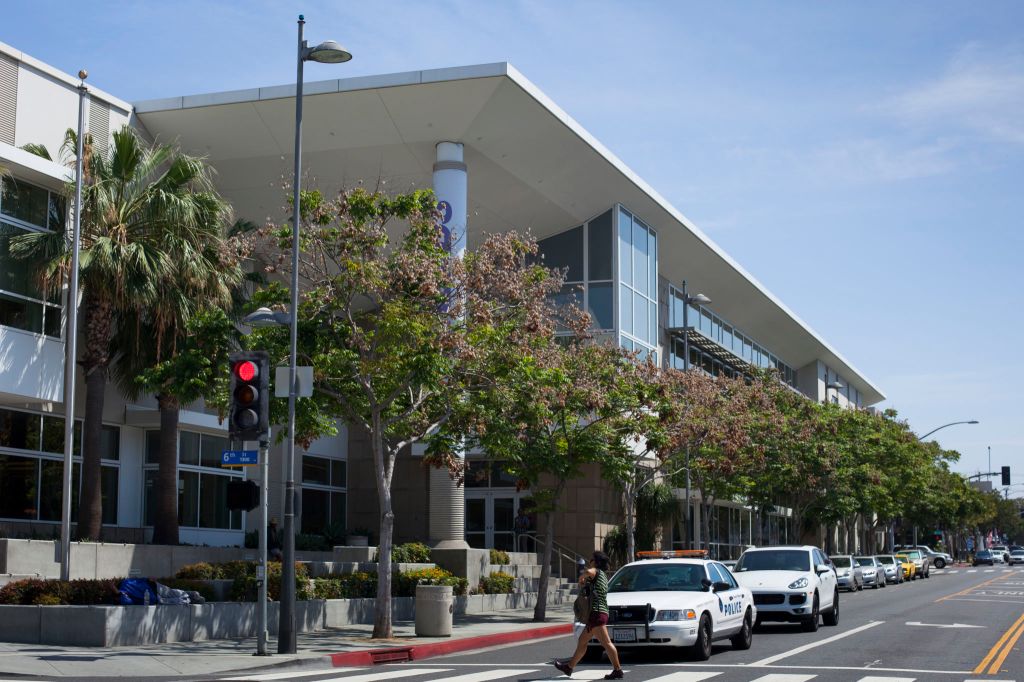
Afterwards, I stopped at the Last Bookstore at 5th and Spring Streets. Last time I went, it had been closed due to the coronavirus. Now it was open, but they did one thing that I liked. Before the virus, the place was crawling with young pseudosophisticates who didn’t care about the books, but took hundreds of pictures with their smart phones to document their spavined lifestyles. Now one has to pay five dollars for admission, which is refunded from the price of books purchased.

I can just imagine it now: What? I have to buy books? Reading is so lame compared to the wonders of my smartphone.

It presented no obstacle to me: I bought five paperbacks. They included three Dave Robicheaux mysteries by James Lee Burke, André Gide’s If It Die, and Isaac Bashevis Singer’s Gimpel the Fool.

As soon as I receive notification that my books are being held for me at the Central Library, I’ll make another trip downtown. And I will likely drop in at the Last Bookstore.


Plague Diary 30: Heroes and … Martyrs?

We’re All in This Together, or Are We?

There is a nauseating saccharine imagine coming down to us from corporate America of everyday heroes in the struggle against coronavirus. The word “hero” is being bandied about … a lot! But when you come to think about it, it doesn’t cost much to employ people in hazardous work without making much of an effort to guarantee their safety. You see, if you call them heroes, you open up the possibility that many of them can make the ultimate sacrifice and become martyrs. And we know that martyrs are heroes that can no longer fight back. Very safe from a corporate standpoint.

I have become very suspicious of this type of unanimity from U.S. corporations. But it’s not just an American trait: During the Chernobyl disaster, dozens of Soviet citizens were fighting toxic radioactivity with nothing more protective than brooms and shovels. Nobel Prize winner Svetlana Alexievich wrote a book of interviews with people involved in the disaster. It was entitled Voices from Chernobyl: The Oral History of a Nuclear Disaster. I am not trying to imply that the coronavirus is like a nuclear accident, but it certainly shared a similar awfulness and magnitude.

SNL Takes on Three Mile Island

While on the subject of nuclear accidents, I am reminded of a Saturday Night Live sketch after the Three Mile Island accident in 1979. The title of the skit was “The Pepsi Syndrome.” The reaction of the bigwigs was to send Garrett Morris dressed as a maid with a broom to clean up the radioactivity.

It is in the nature of power to make the innocent pay the price. The whole hero thing is nothing more than soft soap, and during this epidemic, we certainly have had enough of soft soap, haven’t we?


Construction/Destruction

Why Is There So Much Construction Going On in L.A.?

What with the plague raging in the streets, I continue to be surprised how much commercial and residential construction is going on. It is as if, when the coronavirus finally goes away (if it ever really goes away), there will be people to fill those new offices, apartments, and condominiums for whatever top dollar figure the owners intend to charge. There will be talk of the city insisting on affordable units, but we all know that no one wants to build affordable units. My fearless prediction is that there will be a large number of vacancies and —given that the homeless population is growing by leaps and bounds—there will be a big problem with squatters.

Mayor Gil Garcetti of Los Angeles is being either naive, or is selling out to real-estate interests—a time-honored Southern California practice. In West Los Angeles, I see scores of new buildings going up, side by side with scores of old buildings that have been red-tagged and scheduled for the wrecking ball, and, in the meantime, occupied by bums.

Another interesting point: I do not see any corresponding effort to accommodate the increased traffic flow that will result if the new building space is occupied. My feeling is that the mayor feels that the construction of the Expo Light Rail Line will solve all problems. I don’t mind taking public transportation, but I am very clearly in the minority. Most people I know think that terrible things happen on those trains. Even Martine is hesitant to ride them. Me, I have no problems.

Also, Garcetti thinks that the thousands of homeless will be delighted with the housing the city will supposedly furnish for them (by reconverting old motels, hotels, etc.). But most of the homeless are not interested in following any rules such as not drinking, taking drugs, or smearing shit all over the walls.

Interesting times lie ahead.


Somewhere To Go

Chewy the Bulldog at the Automobile Driving Museum

The coronavirus outbreak has affected me mostly in two ways:

  1. There has been no place to go. We could take walks to nowhere, of course, but that palls quickly.
  2. We haven’t been able to see our friends in person.

In the last two weeks or so, some destinations have become available. This weekend, we availed ourselves of two of them. Yesterday, we went to the Cruise-In show at the Automobile Driving Museum in El Segundo. Martine has become particularly enamored of the museum, so much so that she donated $300.00 to them to help them out of the plaguey times.

There, we met the bulldog Chewy (picture above), who showed himself to be a real cool customer. Also, my favorite caterer, the Taco Taxi, was there with their super-great Mexican street tacos.

Neon Signs from the SFV Yesteryear

Today we showed up at the Valley Relics Museum in Lake Balboa to see their displays of pop culture hearkening back to the glory days of the San Fernando Valley back in the 1960s and 1970s. Most impressive was a large warehouse (above) filled with neon and other signs of businesses that are no longer. Back around 1970, I used to go to Pioneer Take-Out on Westwood Boulevard near Pico for a bucket of their chicken livers. That’s not an item that can be found at most chicken restaurants.

We had visited the museum once before, but didn’t enjoy it as much because it isn’t air conditioned, and in the Valley the heat can be formidable. Fortunately, today was on the cool side; and we were comfortable.

Manny, Moe and Jack from the Pep Boys

We ended by driving to a late lunch at Lancers Restaurant in Burbank. It’s one of Martine’s favorite sources of American coffee shoppe chow.


Fort Tejon

Reconstructed Enlisted Men’s Barracks at Fort Tejon

Near the top of the Grapevine along Interstate 5 is an old fort constructed soon after California joined the Union. Beginning in 1854, the fort was occupied by the U.S. 1st Dragoons to protect Southern California from the North and vice versa. Martine and I had been there a couple times before, but we were starved for some sort of destination. Although the Fort Tejon State Historical Park was open, all the buildings and their exhibits were closed in the interest of social distancing. Semi-open as it was, it was still interesting to wander around the premises looking at the reconstructed buildings.

First we drove to the mountain community of Frazier Park on the route to Mount Piños, at 8,847 feet (2,697 meters) the tallest mountain in nearby Ventura County. There, we ate at a little Mexican restaurant before doubling back to the I-5.

Entrance to Fort Tejon

There were never any real battles fought at Tejon—other than sham affairs involving re-enactors—and, what is more, as soon as Fort Sumter was fired upon, the 1st Dragoons were all shipped east, to be replaced by three companies of the 2nd California Volunteer Cavalry. There was some secessionist feeling in Southern California, but there was the staunchly Union Drum Barracks in Wilmington to keep Los Angeles in line. By September 1864, the Fort was decommissioned.

It was blisteringly hot at the Fort, despite the fact that we were a 4,000 feet (1,219 meters) altitude. The temperature was around 90° Fahrenheit (32° Celsius), but dropped down considerably as we returned to the Coast with its “June Gloom” marine layer.

The Buildings at Fort Tejon Looked to Be Made with Adobe Bricks

Most of the reconstructed buildings at Fort Tejon looked very authentic, being made with adobe bricks.

It was nice once again to have places to go, even with all the coronavirus restrictions in place.

Unexpected Angels

Young Volunteers Removing Graffiti

In general, I am not one to praise the younger generation—probably because they have adopted too many aspects of our culture which I find spurious, including smart phones, e-scooters, and in fact the whole gig economy.

Imagine my surprise when I found many young men and women cleaning up the mess in Santa Monica after the looters and other thugs had their way last Sunday. Okay, I guess I was a little tough on them, but after all they shouldn’t ought to have have stepped on my lawn.

More Graffiti Cleanup

I have always loved the look of Santa Monica. In 1966, when I moved into an apartment on Sunset Boulevard near Barrington Avenue, the first trip I took on my own was by bus to Santa Monica and its beach. After having been raised in grungy Cleveland with its dirty red brick, I saw Santa Monica as a pretty town at the edge of the sea. In Cleveland, we had no beach to speak of along the shores of poor, polluted Lake Erie. For many years, I lived in Santa Monica, until I was squeezed out around 1979 when Proposition 13 was adopted by the voters of California. Still, I live within two and a half miles of the ocean and I like to walk there from time to time.


Plague Diary 6: Good News from My Dentist

Watching the News These Days Is Like the Dance of Death

There’s nothing like a spell of plague to make one doubt one’s sources of information. And mainly, I mean the news.

On Saturday, I bit into some fruit, only to have one of my dental crowns pop out. Inwardly, I cursed. Can the crown be glued on? Will a new super-expensive crown be necessary? Or is the underlying tooth rotten, requiring an implant? Fortunately, my dentist was able to see me today. It looks like I’ll need a new crown.

During our conversation, I learned a few things that seem to go against most of the news stories I’ve been seeing lately about the coronavirus. (And really, it seems that over 75% of the news is about just that.)

My dentist came in just for me, her office being closed for more routine dental procedures. So the atmosphere was more casual than usual. We started talking about the “plague” that is gobbling up all the news services. She expected that she expected that the virus would be old news within a couple of weeks. All viruses have a life of somewhere around four to six days. The two weeks isolation described by the news services was because many people are infected by contact with multiple carriers of the virus.

It turns out that the UCLA Dental School, with which she is affiliated, will be re-opening within a couple of weeks. Why would they do that if there is any substantial danger to the dentists?

She re-iterated the usual advice about washing one’s hands, but added one very useful piece of information: Be sure to dry your hands. Viruses like a moist, warm environment.  Social distancing generally works. The main danger is being in close contact with someone who cynically does not believe in changing his or her lifestyle, which is a danger to the sick and elderly, who are most likely to die of the virus.


Plague Diary 4: The Empanadas Run

Our Local Empanada Take-Out Restaurant

Near the corner of Sawtelle and Venice is our local Argentinian take-out restaurant, called Empanadas Place. I have been to Argentina three times, and I find that Empanadas Place has tastier empanadas than the South American versions. I decided to pick up a bunch of them for Martine, myself, and my elderly Mexican neighbor Luis, who is particularly fond of the place.

So I drove down there and placed my order. The tables for the sit-down part of the restaurant were all in storage, except for one for people waiting for take-out. I had a nice chat with the owner, an Argentinian of Italian ancestry (like about 75% of all Argentinians). Because his business had always been heavily oriented toward take-out, his business did not seem to be suffering from the forced closure of all sit-down restaurants. Unlike most Americans, he did not see his business as a path to riches: He was quite happy to make a small living selling delicious empanadas to the residents of Culver City and West Los Angeles.

For myself, I got four items: an Arabe (lemon-flavored ground beef and onions), spicy beef with cheese, spinach, and potatoes with cheese. I ate two of them for lunch, saving the remainder for tomorrow. Luis was pleased with his empanadas. (I think I will try to do an occasional take-out run at least once a week for the duration of the plague.

A Selection of Goodies from Empanadas Place

In addition to the featured items, Empanadas Place also sells a selection of Argentinian groceries, such as yerba mate tea, dolce de leche, and cookies known as alfajores. You can also get sandwiches and salads, as well as a refreshing glass of iced yerba mate tea.


Plague Diary 1: Kárpátok

I Violate the Plague Laws Prescribing Social Distance

In the new environment of worldwide plague, I must carefully pick and choose what I can and cannot do. I started out with a major violation by attending a folk dance performance given by the Kárpátok Hungarian Folk Dance Ensemble. It was well attended with several hundred audience members, many of whom within the six-foot danger zone of contagion.

Martine particularly loves the performances by Kárpátok, and so do I because I like to revel in my Hungarian background. Of late, I have used the Magyar language primarily to damn to hell cruise ship passengers in Mexico who try to use me as an information resource. At the United Magyar Ház in Los Angeles, where the concert was held, virtually everybody present could cuss me out more correctly and picturesquely than I can do. So I am on my best behavior.

The Kárpátok Hungarian Folk Dance Ensemble is one of the best things about Los Angeles. Martine and I have been attending their events for upwards of ten years.

It is unlikely that there will be other plague law violations in the weeks to come, mostly because just about everything is being closed down. The supermarket shelves are being emptied by hoarders of food, hand sanitizers, and toilet paper. When I go shopping tomorrow, I will have to be careful about confronting hoarders: Particularly in Southern California, people who are the most guilty are also the most aggressively defensive about their deeds.

My postings here in the next few weeks will discuss how my life has changed as a result of living in a plague zone. I anticipate that my life will change in many ways over the next few weeks. I remain hopeful, however, because of the following reasons:

  • I have a personal library of several thousand volumes, including all the classics
  • My cable television configuration includes about a dozen movie channels
  • Plus I have hundreds of DVDs
  • One of my hobbies is cooking—useful when many restaurants are closing or cutting back
  • I make a point of maintaining frequent telephone contact with my old friends

The Crown Jewel

Overview of Uxmal Ruins Today

When John Lloyd Stephens and Frederick Catherwood traveled in Mexico and Central America to visit Maya ruins, the only place where they went twice was Uxmal in Yucatán. Their description of the site appears in both of their books: Incidents of Travel in Central America, Chiapas, and Yucatán and Incidents of Travel in Yucatán.

In fact, there is something about the place which calls one back. I have now visited it a total of four times, usually staying overnight at the Hacienda Uxmal Hotel and spending extra time with what I consider to be the crown jewel of Maya architecture.Over the next few days, I intend to share with you why I feel this way.

Pretty Much the Same View in 1839 as Drawn by Catherwood

On my first visit, I went on a group tour under the auspices of Turistica Yucateca in Mérida. As the tour van pulled up within sight of the Templo del Adivino, also known as the Pyramid of the Magician, I noted that he crossed himself twice. The Templo del Adivino is shown below in greater detail:

The Templo del Adivino, or Pyramid of the Magician

On previous visits, tourists were allowed to climb the pyramids, and a chain stretched from the base to the top of the Templo del Adivino to help with this. As you can see for yourself, the stairs are steep, with higher than usual risers and narrow treads. When some tourists fell to their deaths from the heights of the pyramid, INAH (the national Institute of Anthropology and History, which controls the archeological zones) began to forbid climbing the ruins. Because “boys will be boys,” some lesser and more easily scalable ruins still allow climbers—but only if the ruins are not as important as the Templo del Adivino or the Castillo at Chichen Itza.

Next: The so-called nunnery quadrangle.