Serendipity: Dealing with Misfortune in Greenland

Inuit Greenlander

The following paragraph comes from Lawrence Millman’s Last Places: A Journey in the North. I have always had a hankering to pay a visit to Greenland—and I might, as a side trip from Iceland. I cracked up as I read this:

One thing about Greenlanders: they tend to find misfortune amusing. I once saw a man return from Denmark in a wheelchair, and when his family met him, they slapped their knees and rolled in the snow, pointing and laughing at the old man (he laughed with them) stuck in this odd-looking chair of metal. In The Last Kings of Thule, my favorite book about Greenland, Jean Malaurie describes how the good people of Thule always used to mimic a lame man named Asarpannguaq trying to make love. Cruel, yes, but it’s cruelty that serves, or once served, a useful purpose: you’ve got to be tough in this vale of misfortune or you’ll exchange your breath for a pile of stones. There’s a saying that Danes beat their children but not their dogs, while Greenlanders beat their dogs but not their children. It’s probably true; not once have I seen seen a Greenlander strike a child. But he will ridicule that child unmercifully or perhaps give him a nickname like Usukitat (Little No-Good Penis) that will stay with him all his life. In Igateq, East Greenland, I once met a hunter named Itiktarniq (Liquid Dog Shit), who was as tough as nails.


In Iceland? Don’t Take the Train!

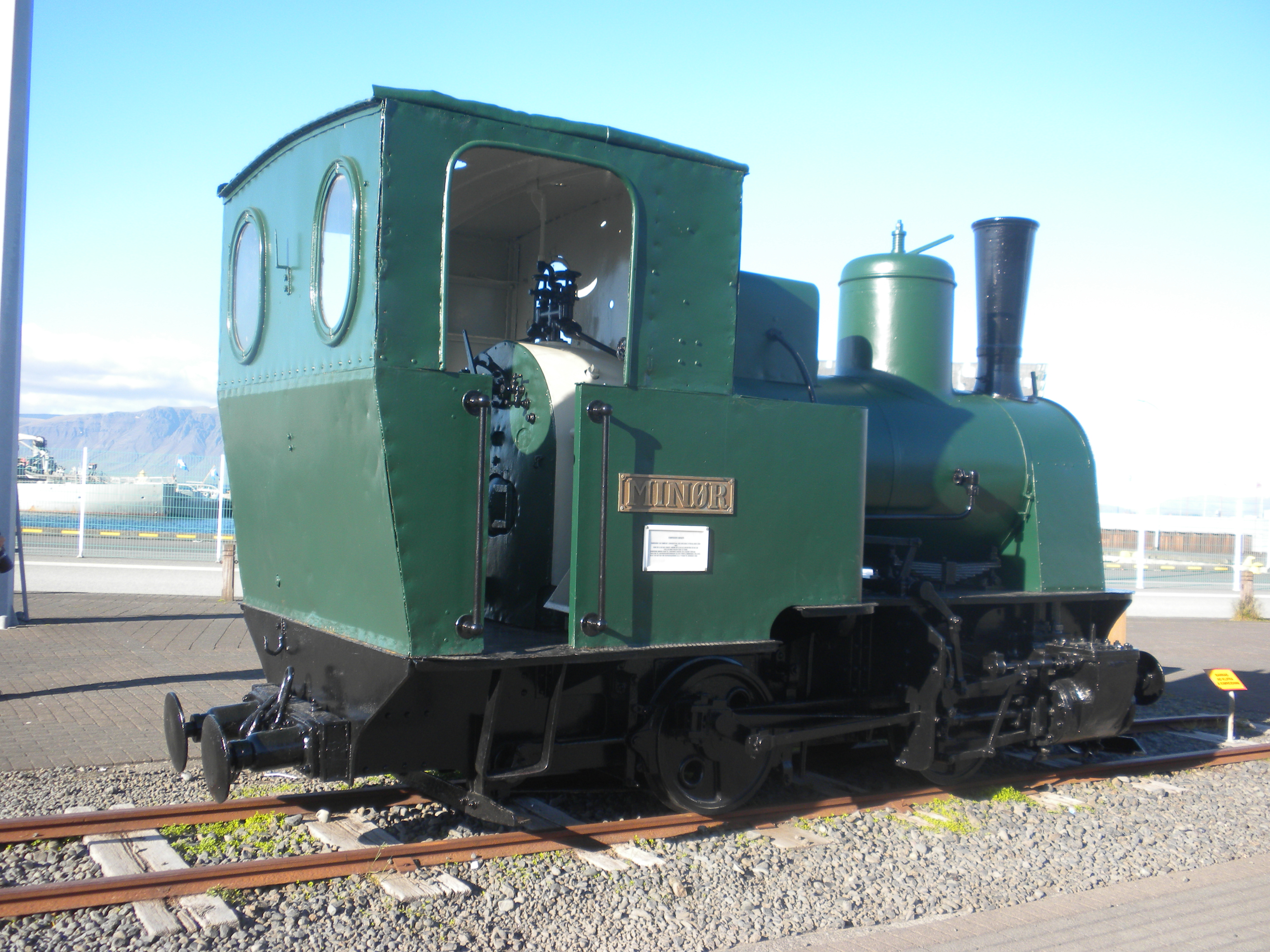
The Only Locomotive in Iceland

Although there has been talk about building a railroad connecting the international airport at Keflavík with the capital at Reykjavík, no one has laid any rails yet. The funny thing is that there have been Icelandic/English phrasebooks with entire sections on how to catch a train in Iceland. Too bad that there has never been a railroad with passenger service in the island nation.

The locomotive in the photo above was used to help load and unload ships in the Old Harbor area of Reykjavík. It rests on some narrow-gauge rails not exceeding some twenty feet in length.

If you want to get around Iceland, you just may have to take the bus.


Looking South

I Am Looking Forward to My Next Trip to Latin America

It has been not five months since my return from Guatemala, and already I am looking forward to Yucatán and Belize—which is still more than six months in the future.

(Incidentally, I would never refer to it as “the” Yucatán unless I were wearing a pith helmet and those stupid zip-off pants/shorts worn by travelers who fear to venture more than twenty yards from their hotel room without an escort.)

I have been to Yucatán four times in all, the last time with Martine in November 1992. During my visits between 1975 and 1992, I have visited about a dozen Maya archeological sights. Since then, scores more have been developed, including one of the largest at Calakmul in the State of Campeche. In addition, I hope to visit Cobá in Quintana Roo, Ek Balam and Kinich Kakmó in Yucatán, Edzna and several Rio Bec sites to be decided later in Campeche, and Yaxchilan and Bonampak in Chiapas. In addition, I plan to revisit some of the sites I have already seen such as Chichen Itza, Uxmal, and Palenque.

There is something calming about seeing what remains of an ancient civilization—one that had the ability to adapt itself to changing circumstances and survive in the 21st Century.

Yucatec Maya Girls Today

The Maya population is scattered across five Latin American countries: Mexico, Guatemala, Belize, Honduras, and El Salvador. A large number of Maya have found their way to the United States from Guatemala and Honduras, because of dire conditions in their countries of origin, though Maya from Mexico tend not to migrate to the United States. That is despite the long Caste War against the Ladino (Spanish speaking) population that ended only in the early 1900s and the Zapatista Revolt in Chiapas during the 1990s.


Owens Valley Escapade

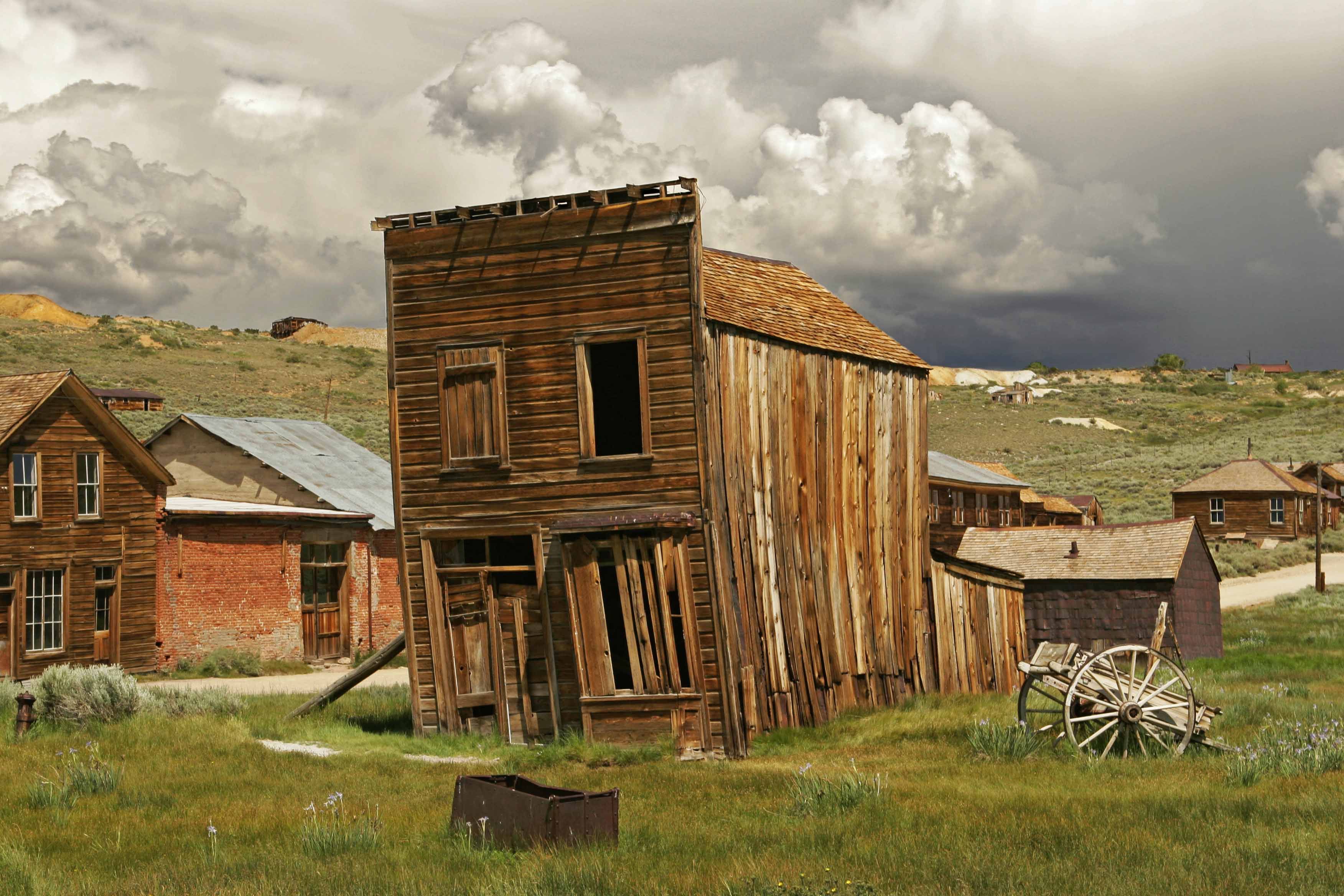
Ghost Town of Bodie, California

Although Martine and I have been to the Owens Valley before, Martine suggested another visit to see some of the sights we have missed. To be specific, there are the following three destinations she’s never seen before:

  • The ghost town of Bodie, a town which was abandoned by its residents, especially after the mine closed in 1942. It is now a State Historical Park which will be allowed to decay naturally—but not before I’ve had another look at it.
  • The Devils Postpile National Monument, a natural feature that resembles the Giants Causeway of Northern Island with its hexagonal columns.
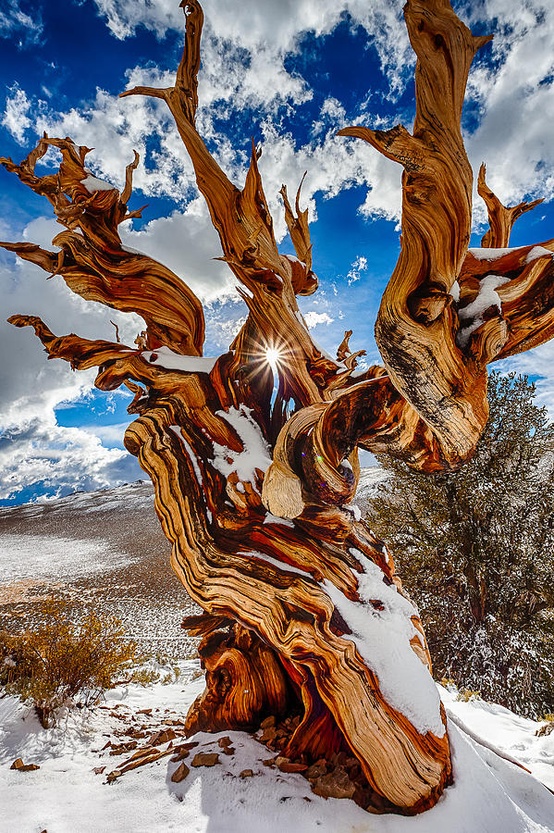
  • The Ancient Bristlecone Pine Forest in the White Mountains, containing the oldest living things on earth: trees that are thousands of years old.

The Devils Postpile National Monument

In addition, there are a number of other sights with which we are familiar and which we may revisit:

  • The Manazanar camp for the resettlement of Americans of Japanese ancestry during the Second World War.
  • The Eastern California Museum of Inyo County
  • The Lone Pine Film History Museum and the nearby Alabama Hills where hundreds of Westerns were shot.
  • Mono Lake and its natural tufa structures
  • The Laws Railroad Museum near Bishop, California

Bristlecone Pine Tree

There is a very informative website called Highway 395 Roadtrip Stops complete with photographs, of the many features along the route.

We will probably be gone for five days sometimes in the next month or so.

Where There Are No Rivers

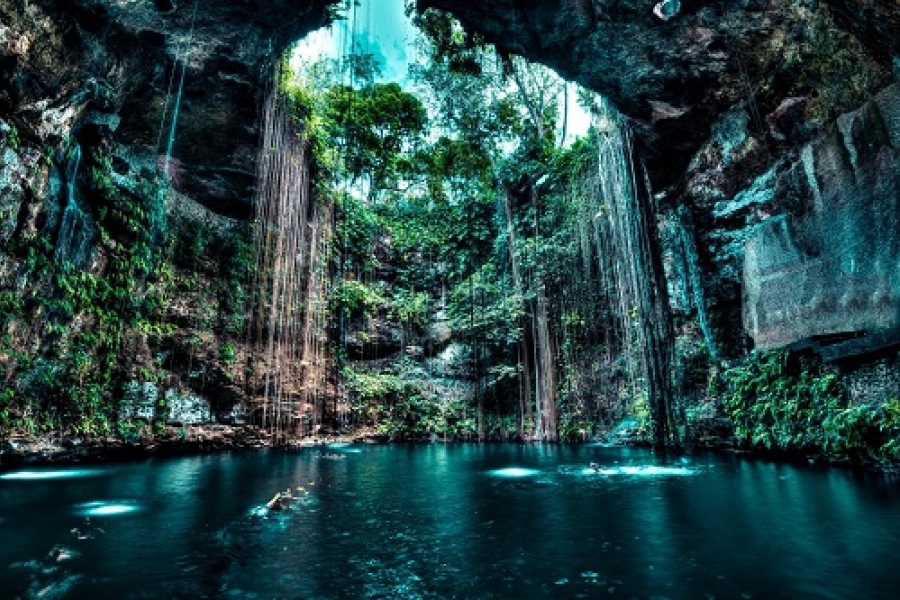
Cenote at Chichen Itza in Yucatán

Even Los Angeles has a river. Never mind that its banks are mostly of concrete and that it runs dry most of the year. There are some parts of the world in which rain sometimes falls in great profusion, but where there are no rivers to be seen. The operative phrase here is “to be seen.”

The Yucatán Peninsula in Mexico, which I plan to visit next winter, is a solid block of limestone into which the rainfall seeps. There is quite a bit of water in Yucatán, but almost all of it is below sea level. Thanks to the giant meteor which caused the Cretaceous Extinction some 66 million years ago, numerous holes were punched through the surface of the limestone causing waterholes (usually referred to as cenotes). Many of these cenotes are interconnected through extensive subterranean caves.

Many of these cenotes make for excellent swimming holes in the subtropical climate of the peninsula, and they are a steady source of water for drinking and washing to the local population.

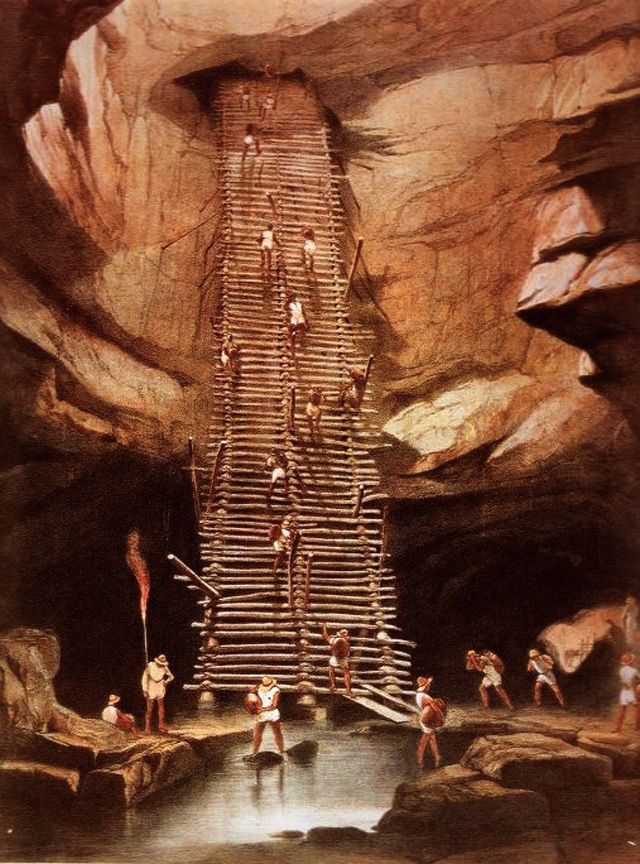
Where matters get more complicated is in the region known as the Puuc Hills, which rise several hundred feet above sea level, yet which sustained a large Maya population in ancient times. During rainy season, water is collected in stone cisterns called chultunes. During the dry season, these sources tend to dry up, and the local Maya must go hundreds of feet down to get at the subterranean rivers and wells. There is a famous illustration by Frederick Catherwood (around 1840) that shows the descent of hundreds of feet at the well in Bolonchen (see below). Shown here is only a portion of the descent to the wells, which continue for several hundred feet from the base of the stairs.

The Log Stairway at the Wells of Bolonchen (Representing Just Part of the Journey to Get Water)

Many place names in Yucatán contain the particle chen, which means well. In addition to Bolonchen, there is Chichen Itza, which, translated, means “The Mouth of the Well of the Itzaés.” A quick glance at a detailed map of this part of Mexico will turn up hundreds of other examples.


A Poem About Travel

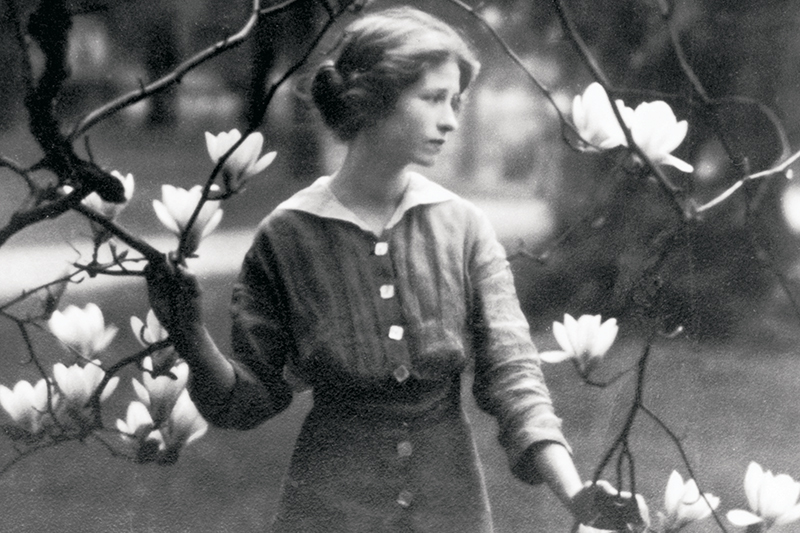
Edna St. Vincent Millay in 1917

As my mind is increasingly turning toward the trip I plan to take to Yucatán and Belize this next winter, I came across this poem by Edna St. Vincent Millay (1892-1950). It is called, simply enough, “Travel”:

Travel

The railroad track is miles away,
And the day is loud with voices speaking,
Yet there isn’t a train goes by all day
But I hear its whistle shrieking.

All night there isn’t a train goes by,
Though the night is still for sleep and dreaming,
But I see its cinders red on the sky,
And hear its engine steaming.

My heart is warm with the friends I make,
And better friends I’ll not be knowing;
Yet there isn’t a train I wouldn’t take,
No matter where it’s going.


Traveling with Mister Thorax

Paul Theroux in 2015

The photograph shows the office of the ultimate travel writer. His first book was The Great Railway Bazaar in 1975. Not coincidentally, that was the first year when the travel bug got me. Its bite was long lasting: I am still suffering from the effects of it. His next travel book was The Old Patagonian Express: By Train Through the Americas (1979). This was the book that set me to thinking about South America, though it was to be almost a quarter century later that I felt I was able to follow in his footsteps.

It was in his 1992 The Happy Isles of Oceania that he was mistakenly called Mr. Thorax by a hotel employee in Australia or New Zealand. I rather like the name.

Below are some of his observations on travel taken from a 2015 Wall Street Journal interview. (Much better, if you can get a copy, is his 2011 book The Tao of Travel.) My own comments on travel are appended in indented text..

I never splurge on: comfort or luxury when I’m traveling alone. I eat in simple restaurants, wandering like a dog rather than taking taxis. Traveling through the Deep South I often stayed at inexpensive chain motels, the ones that serve a free breakfast of weak coffee, Kool Aid and Froot Loops in a Styrofoam bowl.

I’m with Paul—except you won’t find me sharing his breakfast of weak coffee, Kool Aid and Froot Loops.

The difference between travel and tourism: is the difference between walking in the hot sun to meet an angry person who is going to insult me and then tell me his amazing story, and lying in the sun sipping a cool drink and reading, say, “Death in Venice.” The first is more profitable; the second more pleasant. Both are enlightening.

My idea of travel is a combination of the two. During the day, I will be out in the hot sun, ready for anything. At night, I usually read. A lot. Mostly from my Amazon Kindle.

The greatest advantage to being an older traveler: is being invisible, unregarded, ignored. This allows one to eavesdrop and to see much more of a place or a people. There is a detachment, too, in being older: You’re not looking for a new life, not easily tempted. So you see a place clearly. Perfect for writing.

There’s a lot of truth to this. To be in your seventies is to be quite invisible. I would prefer to be totally invisible when confronted by chatty American tourists. (I have been known to answer their questions in Hungarian.)

I am a nightmare to travel with: when I am reporting a book, which is why I always take such trips alone. I seldom think, “Where am I going to eat?” or “Where am I going to sleep?” The true traveler has very little idea of what is coming next.

Here’s where I differ from Paul. Some of the best trips I have taken have been with Martine (Britain, France, Belgium, the Netherlands, Argentina) and my brother Dan (Mexico and Ecuador). I would prefer to travel with someone who is compatible, and I am willing to compromise on destinations providing that I am not absolutely opposed to visiting them.

I never take photographs because: people who take pictures lose their capacity for close observation. Without a camera, you study a thing more carefully and remember it better. Taking a picture is a way of forgetting.

Unlike Paul, I take a lot of pictures, though no selfies and damn few posed pictures in front of famous tourist destinations. I prefer to use my own pictures of the places I visit, though I am not averse to hijacking some off the Internet if I don’t have what I want for my blog postings.


To BZ or Not To BZ

Beach Scene at Caye Caulker, Belize

Normally, I am not really a beach person. As my planned vacation to Yucatán takes place, I am thinking of also including Caye Caulker in Belize as a little side trip, a sort of vacation from my vacation so to speak. Why on earth would I be interested in knocking around on a Caribbean island? Especially when there’s nothing of any archeological import to be found there. I don’t particularly like to swim, snorkel, or dive: Hell, I don’t even like wearing shorts.

The answer goes back to my last trip. Throughout Eastern Guatemala, there was one condiment that was de rigeur on every restaurant table. It was a bottle of Marie Sharp’s Hot Habanero Pepper Sauce. Now I have always been partial to habañero (aka Scotch Bonnet) chiles, ever since my 1975 trip to Yucatán. Until I encountered those Marie Sharp’s sauces, with their motto “Proud Products of Belize,” I was contented with the El Yucateco Salsas de Chile Habañero, which came on hot and fierce, and maybe a little raw. What fascinated me about the Marie Sharp’s product was that it had the heat, but also the sweetness of carrots. How did she do it?

The Product in Question

Mind you, I still like El Yucateco, but Marie has won me over.

Now, how does that translate me wanting to spend a few days on an island off the coast of Belize? When I went to Guatemala, I was intrigued by the cultural mix at the port of Livingston: Maya, Garifuna, etc. I thought it would be fun after tromping through miles of Maya ruins in the jungle to sit under a palapa with a cool drink (perhaps a Belikin beer) and a good book. And available to me would be the best of Maya and Caribbean cooking. That sounds like a culinarily and culturally interesting diversion.

Marie Sharp’s manufacturing complex is actually by Stann’s Creek near Dangriga in Southern Belize, but that’s a tad too jungly for me.

From Chetumal in Mexico, I could take a quick boat ride to Caye (that’s pronounced KEY in Belize) Caulker and pass through customs at Ambergris Caye. So I might very well BZ happy there.


Flamingo Road

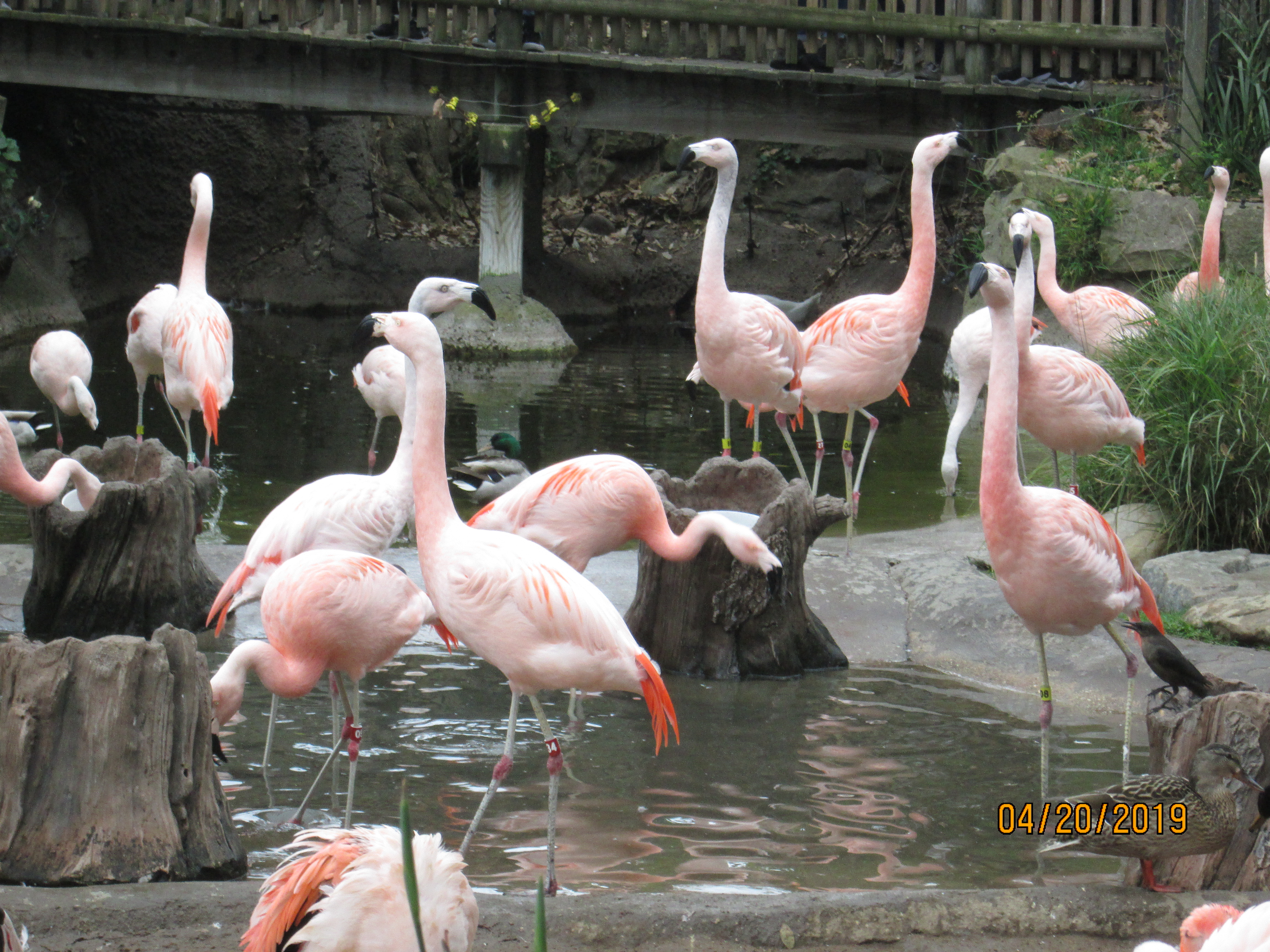
Chilean Flamingos at the Santa Barbara Zoo

On Saturday, Martine and I drove to Santa Barbara for a fish and chips lunch at the Harbor and a visit to the local zoo. Los Angeles has a bigger zoo, but it’s too big, too crowded—and it’s difficult to get buy without multiple stroller collision injuries. They’re always doing construction and forcing large numbers of visitors down narrow pathways, ending up with massive foot traffic jams.

As I mentioned in yesterday’s post, there are two smaller museums that I love: The Living Desert in the Coachella Valley and the Santa Barbara Zoo.

Like all zoos, it is impossible to see all the animals because:

  • Some of them have been withdrawn for various reasons
  • Others prefer to be in hiding, escaping the prying eyes of the gawkers

No matter, I got an eyeful of what I wanted to see, especially Chadwick the African lion, who is usually in the latter category, except that he is visible from the little train ride that circles the 32 acres of the zoo. Plus we saw the elephants, the gibbons, the Humboldt penguins, the giraffes (who have a much harder time of it if they wanted to hide). Oh yes, we also saw (and smelled) the Chilean Flamingos.

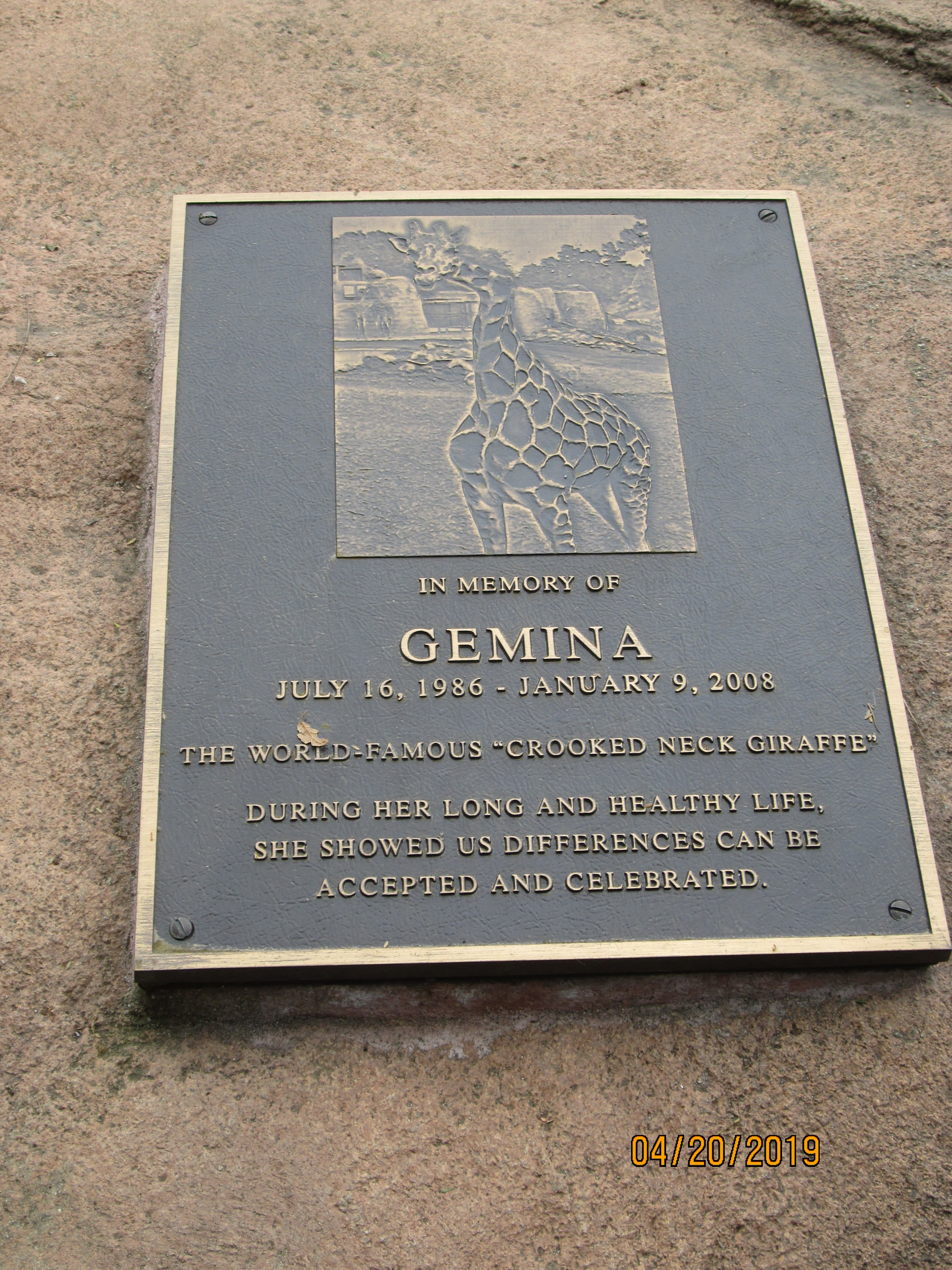
Bronze Plaque Honoring Gemina the Crooked Neck Giraffe

There is even a nice bronze plaque commemorating Gemina, the zoo’s late “crooked neck giraffe,” who died in 2008. I remember seeing her, with her neck that took off at a 90 degree angle midway up. It looked incredibly painful; but Gemina had a longer than normal life and was attractive enough to at least one male giraffe who made her a successful mother with healthy issue. One of these days, I’ll try to find one of my pictures of Gemina. I know I took several on former trips to the zoo.


Did Balzac Ever Go to Java?

Cover of a French Edition of the Voyage

Well, not exactly. But he is known to have drunk approximately fifty cups of Java each day. No doubt that helped inspire him to write this hilarious spoof of voyages to exotic locales. It is not until the last couple of pages that Honoré de Balzac writes:

In truth, soon I will be losing no time in taking the stagecoach once again, travelling back to Paris across the fields of Touraine and Poitou that I thought I should never see again. During my first days back in Paris I had a lot of trouble persuading myself that I had not indeed been to Java, so much had that traveller [M. Grand-Besançon] struck my imagination with his tales.

So in the end it is a delightful hoax. Balzac tells a series of tall tales redolent of earlier (unsubstantiatable) journeys full of tall tales about the flora, fauna, and women of the Far East. Not all of it consists of tall tales, such as this realistic warning to travelers to be alert at all times:

Go inside a shop selling precious cloths; bargain, buy some cashmere or a length of tamava … if you turn your back for a moment while the merchant is rolling up your purchase on the counter, wrapping it and tying it with string, the package flies to the back of the shop and is replaced by another containing inferior goods, that an apprentice has been preparing in the corner of the shop to look exactly like the one you were buying. With no explanation for this miraculous metamorphosis, you return to the shop furious at having been duped by the Chinese everybody had warned you about; but his only response is to laugh at you.

I have read virtually all of Balzac as translated into English, but this is by far the funniest of his works. An English edition entitled My Journey from Paris to Java (Singapore: Editions Didier Millet, 2010) is available.