The Gringo Trail

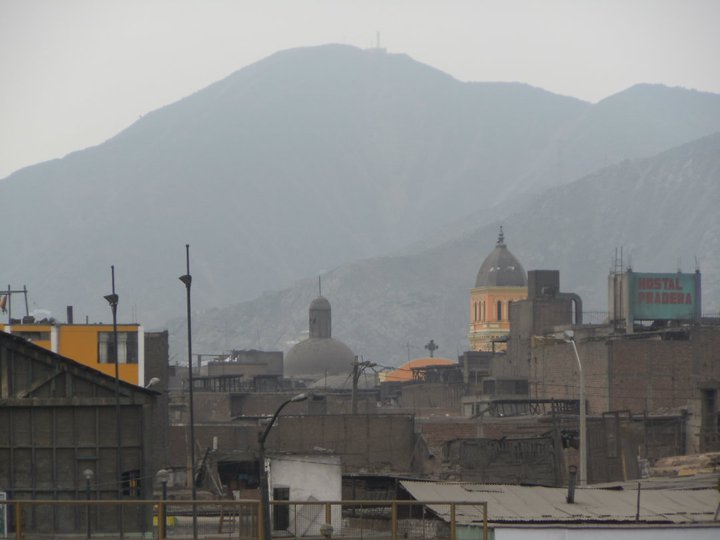
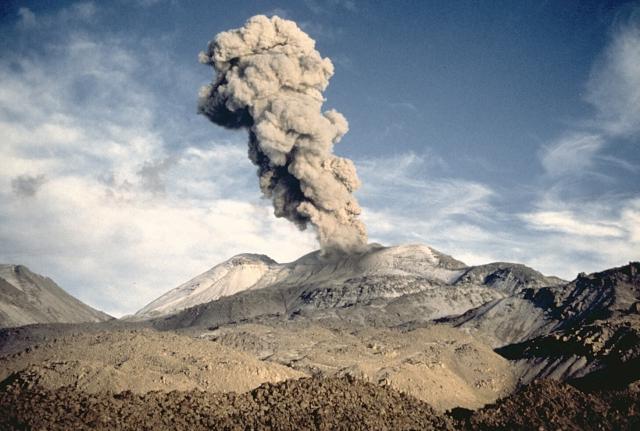
The Volcano El Misti Rises Above the Cathedral of Arequipa

The Volcano El Misti Rises Above the Cathedral of Arequipa

Most tourists visiting South America tend to follow a well-beaten path to such destinations as Iguazu Falls and Machu Picchu. This is so pronounced in Peru that there is a roughly U-Shaped itinerary known as the Gringo Trail. It stretches from Lima south to Arequipa, occasionally taking in such stopovers as Paracas, Nazca, and the Oasis of Huacachina. Then, around Arequipa, there is Colca Canyon (twice as deep as our Grand Canyon), and the even more remote and even deeper canyon at Cotahuasi. From there, the tourist usually heads of Cusco, Machu Picchu, and Lake Titicaca. Backpackers frequently continue on to Copacabana and La Paz in Bolivia and on south.

In September, I myself will be hitting the Gringo Trail. The difference is that I will be avoiding two groups of people that constitute most of the tourists: backpackers and charter bus tour groups. I will probably encounter some of the same people several times, but I will likely not be traveling with them; and I won’t be staying in neither youth hostels nor five star hotels. I don’t mind the backpackers that much, but I dislike getting stuck in a party hostel in which the drinking and loud talk continue far into the wee hours of the morning. It will actually b quite a challenge to be taking the Gringo Trail while avoiding other travelers.

There are other sights in Peru beyond the Gringo Trail, but first I have to see to what extent I am affected by soroche, acut mountain sickness. It would be nice some day to visit Ancash, Huancayo, and Huancavelica. As for the Amazon areas, no thanks: I loathe mosquitoes.

The High Point of My Trip


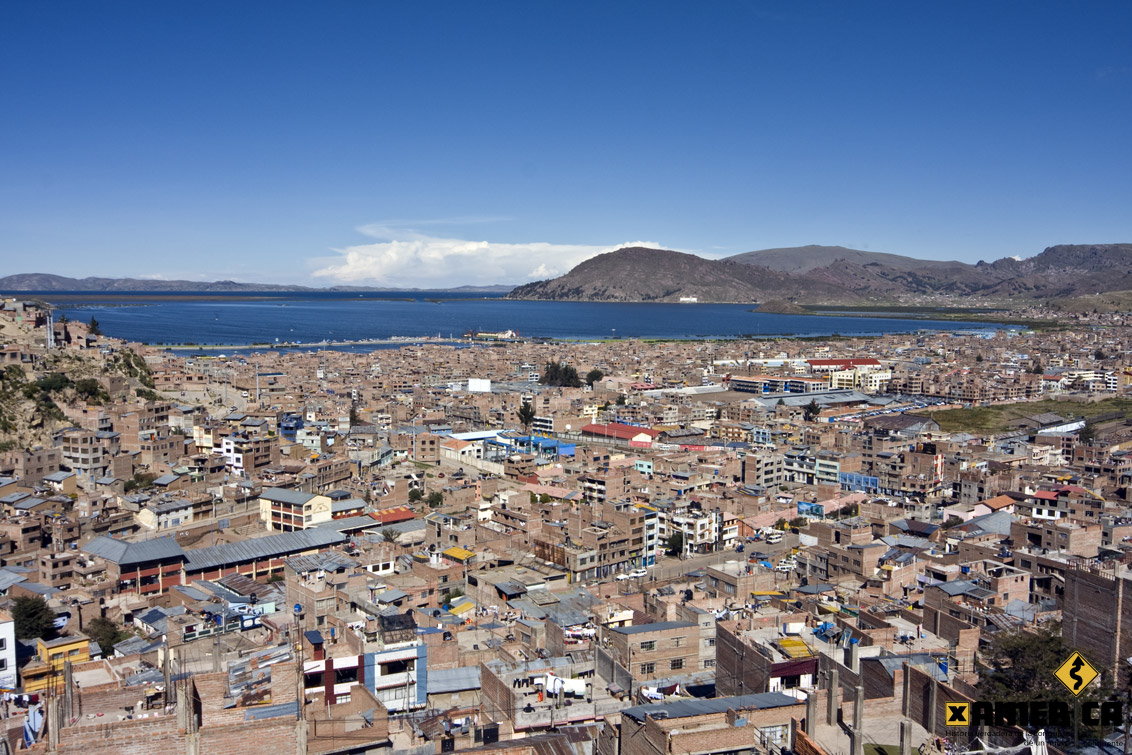
Puno on the Shore of Lake Titicaca

Puno on the Shores of Lake Titicaca

If my upcoming Peru vacation is a success, it will be because I was able to withstand life at 12,000 feet (3,650 meters) altitude. The high point (both literally and figuratively) of my trip will be at Puno, a somewhat ungainly city on the shores of Lake Titicaca. There will be short times during which I will be at 15,000 feet (4,570 meters) or more as I go over mountain passes between Arequipa and Chivay, between Arequipa and Puno, and between Puno and Cusco.

The hotel at which I will be staying—the Casa Andina Classic Tikarani on Jirón Independencia—provides oxygen for its guests as well as mate de coca if I am beginning to feel the onset of acute mountain sickness, or soroche, as the natives call it.

In the end, it is possible I am making too much of all this, but I will be traveling by myself. I have to be prepared to take immediate action in case I am one of the 1-2% of travelers in danger of High Altitude Cerebral Edema (HACE) or High Altitude Pulmonary Edema (HAPE). If that happens, I will immediately return to Arequipa and figure out a Plan B that involves visits to Tacna, Peru and Arica, Chile, cities that figured in the War of the Pacific (1879-1883), in which Bolivia lost its seacoast. (Even so, they still have admirals.)

If I find I can take the altitude, I’ll spend a night on Isla Taquile, which involves a 400 foot climb up a trail to reach the center of town. There, I will spend a night with one of the local families before returning to Puno by launch the next day.

After Puno, I head downhill to Cusco, and later still further downhill to Ollantaytambo and Machu Picchu.


Beats Greyhound Hands Down

Cruz Del Sur (Southern Cross) Is One of Peru’s Premier Bus Lines

Cruz Del Sur (Southern Cross) Is One of Peru’s Premier Bus Lines

For some reason I cannot quite fathom, Martine likes to go to Sacramento via Greyhound. (Perhaps it’s because the airport is many miles north of the city.) Today I was doing some research on returning to Lima from Cusco. Originally, I planned to fly; but then I realized that I would not only have to pony up for the flight, but also I’d have to book a hotel for the night. Then I looked at Cruz Del Sur’s website, and my eyes popped out.

I had some good feelings about South American buses from my experiences in Argentina, but some of the the long-distance Peruvian lines look really good. Probably the best of the bunch are Cruz Del Sur, Ormeño (which has a 6,002 mile route—the longest in the world—between Caracas, Venezuela and Buenos Aires, Argentina), and Oltursa. Many have what are called Executivo or Cama services, which include seats that recline from 160-180º, plus a lot of other extras. The Crucero Suite service includes these, plus meals (included in the price), stewards/stewardesses, entertainment with personal headphones and screens, two restrooms per bus, air conditioning and heating, reading lamps, a kit including blanket and pillow, and bingo. Check out this Cruz Del Sur website in English and compare it to the increasingly trashy public transportation services on offer in the United States.

Of course, nothing is perfect in this world. In the summer of 2013, a Cruz Del Sur bus full of American, European, and Asian tourists was held up outside of Ayacucho by eight armed bandits in the middle of the night. They pulled the bus off the road and proceeded to rob the passengers of over $50,000 in cash and personal goods. You can read the story in Peru This Week. Ayacucho is a dangerous place that served as the center of the Sendero Luminoso (“Shining Path”) guerrilla insurgency in the 1980s and early 1990s.

Peru is a deceptively large country: From Cusco to Lima is a 21-22 hour bus ride with a single stop on the way. I kind of hope it isn’t Ayacucho.


Peru, Here I Come …

I Am Flying LAN Down to Lima

I Am Flying LAN Down to Lima

… but not just yet.

Yesterday evening I book my flight to Peru via Kayak. I got a nice nonstop from LAX to Lima (LIM) on LAN Airlines. Formerly LAN Chile, it is now part of the Latam Group, after having merged with TAM of Brazil—a South American aviation giant. And yet, while airlines in the United States are cutting back on service, LAN provides meals on real plates with real cutlery and free wine. Would I fly a U.S. airline out of the country? Uh, no.

When Martine and I took LAN to Buenos Aires in 2011, we enjoyed our flight as much as possible considering how long we were in the air. The LAX to Buenos Aires run is just about one of the farthest trips one can take in the Western Hemisphere. We both felt that the airline was well managed, especially as compared to Argentina’s own national airlines, Aerolineas Argentinas, which once landed us at the wrong airport—not bothering to tell us until we were in the air. That cost us a $60 cab ride from Ezeiza, as opposed to nearby Aeroparque.

How do I feel about my upcoming trip three months from now? Let’s ask Herbie the Magical llama:

Cool

Cool


Sillustani

Ancient Aymara Burial Towers

Ancient Aymara Burial Towers

This fall, when I travel to Peru, one of the places I hope to visit is Sillustani, near the shores of Lake Titicaca roughly between Juliaca and Puno. When I arrive in Puno by bus from Arequipa, I will have a couple of days to adjust to the 12,500-foot (3,810 meters) altitude around the lake. On one of those days, I hope to take a half day tour to visit the chullpas at Sillustani. These are Aymara burial towers, presumably for noble families, of the pre-Inca Aymara people who lived here.

One of the things I am beginning to learn is that Peru consists of many more pre-Columbian peoples than just the Incas. Before 1400, the Incas were a relatively small tribe who created a large empire, largely due to Pachacuti, a.k.a. Yupanqui, whose reign rapidly spread north to Ecuador and south to Chile.

Below are two local indigenous women photographed at Sillustani:

Two Aymara or Quechua Women

Two Aymara or Quechua Women Working on Their Handicrafts

Notice the spindles in their hands. From what I understand, both men and women spend much of their spare time creating the textiles for which the area is famous.

Indiana Jones in the Flesh

Hiram Bingham III and Indiana Jones

Hiram Bingham III and Indiana Jones

Yes, Virginia, there was a real Indiana Jones. He was the son of a Protestant missionary in Hawaii, who was in turn the son of a Protestant missionary in Hawaii. In fact, if you’ve read James Michener’s Hawaii, his grandpappy was Abner Hale. Hiram Bingham III (1875-1956) had too much of the spirit of wanderlust to be tied down to a clerical life. He was an explorer, aviator, and eventually Governor of Connecticut and U.S. Senator from Connecticut during his long and active life.

He came to my attention as the self-proclaimed discoverer of the ruins of Machu Picchu in Peru, which I hope to visit later this year. He came upon the ruins in 1911, thinking he was the first—even though they appeared on an 1874 map. No matter. Even if he was wrong, Bingham did a great job publicizing the ruins using his association with Yale University and the National Geographic Society. Among other things, he wrote an excellent book entitled Lost City of the Incas: The Story of Machu Picchu and Its Builders in 1948. (He also wrote several other books, including Inca Land: Explorations in the Highlands of Peru and The Ruins of Choqquequirau, among others.)

If he weren’t such a good writer, I might not have forgiven Bingham for being so wrong. Not only was he the first white man at Machu Picchu: He thought he had discovered Old Vilcabamba, the last hideout of the Incas as they fled the Conquistadores. In reality, the last four Inca rulers were based in the jungle at a place called Espiritu Pampa. Curiously, Bingham had been there (see photo below), but thought the place was far too tropical for his beloved Incas.

Bingham (Upper Right) and Peruvian Assistant at Espiritu Pampa (1911)

Bingham (Upper Right) and Peruvian Assistant at Espiritu Pampa (1911)

It is almost pathetic to read Bingham’s forcing the issue regarding his misidentification. He practically ordered furnishings for the rooms from Macy’s to prove his point:

One day we located the burial place of the High Priestess or Mama-cuna, the Lady Superior of the convent, the person chiefly responsible for the training of the Chosen Women. It was a very sightly location on a rock-sheltered terrace on the slopes of Machu Picchu Mountain, about a thousand feet above the highest part of the ruins. The terrace was about forty feet long above some agricultural terraces and connected with the highest by two flights of stairs. It was almost completely overhung by an immense bowlder which looked like a peaked crag of the grey granite mountain. The flat-faced projecting portion of the bowlder was at least fifty feet high. The terrace was constructed largely of rock and gravel. Sheltered from the fierce noonday heat of the sun, it offered an ideal resting place for the Mother Superior.

Yes, but what kind of tea did she drink?

I might be a little hard on the guy, with all his palaver about Chosen Women and Virgins of the Sun. Remember, the Incas had no writing, so Bingham filled his discovery from his own imagination. Mother Superior my Aunt Fanny!


Intihuatana

The Inca Had No Writing, Just Knots, Called Quipu

The Inca Had No Writing, Just Knots, Called Quipus

I spent many vacations between 1975 and 1992 visiting archaeological sites in Mexico. These included not only Mayan and Aztec, but also Totonac, Toltec, Zapotec, Mixtec, Olmec, and whatever peoples built the ruins at Teotihuacán. As a result, I developed a feeling for the strengths and weaknesses of these Meso-American peoples. This year I plan to visit Peru and acquaint myself with the Incas and the various peoples who preceded them in the Andes.

So far my researches have turned up some interesting results. First of all, the Incas had no writing—as such. Instead, they used colored threads of llama, alpaca, or cotton with knots tied into the various strands called quipus. We know which knots stood for the various digits in their base-10 numbering system, but have no idea how they managed to convey any kind of qualitative content, such as “Look out for that Lord Manco: He’s trying to pull a fast one on you.”

In contrast, the Mayans had a hieroglyphic language which is just now being understood, as well as a vigesimal (base-20) numbering system which is relatively easy to understand.

Whereas the peoples of Mexico had no animals they could use to either ride or carry or pull weights—remember: they did not have the wheel!—the Incas developed their own draft animals by breeding guanacos into llamas, alpacas, and vicuñas. Llamas could not bear human riders, but they could bear up to one hundred pounds of weight on their backs; and, unlike horses, they were comfortable about climbing stairs at high altitude. When fighting the conquistadores, the Inca learned to set up ambushes at places where one of their mountain roads turned into stairs. As the horses bunched up afraid to take the stairs, the Incas atop the ridge line would tumble huge rocks down upon their enemy.

An Intihuatana, or “Hitching Post of the Sun” at Machu Picchu

An Intihuatana, or “Hitching Post of the Sun” at Machu Picchu

Who were more advanced, the Incas or the Pre-Columbian peoples of Mexico? My feeling is that they were both remarkable. Where the Mayans excelled in writing, the Incas were great architects and built thousands of miles of roads—many of which exist to this day despite all the earthquakes that have occurred since they were built.

A good example of Inca ingenuity are the Intihuatanas, or “Hitching Posts of the Sun,” that are found at various sites, such as at Pisac and Machu Picchu. An Intihuatana was a stone that was carefully cut so that the Inca savants could note when the sun was approaching a solstice. An excellent discussion of the stone at Machu Picchu, together with angles and measurements, appears in a scholarly article by Dieter B. Hermann, which was translated into English and appears on the net as an Acrobat PDF file. The stone at Pisac was heavily damaged when a camera crane fell on it during the filming of a beer commercial in 2000. The Inca ruins can survive earthquakes, frosts, and thaws for whole centuries … but apparently not wayward humans.


Cockpit Confidential—Reflections

Art Deco Doors at LaGuardia’s Marine Air Terminal

Art Deco Doors at LaGuardia’s Marine Air Terminal

A little more than a month ago, I wrote a posting about Patrick Smith, whose Ask the Pilot website has inspired me to read his excellent new book, Cockpit Confidential: Everything You Need to Know About Air Travel, Questions, Answers & Reflections. If you want to read my original post, you can find it here. I thought I would like write about his book and why I think that anyone who is even remotely interested in travel should read it.

Most of the text is arranged in Question & Answer format, but the things I liked most about the book are the essays interspersed between the chapters. One of the things that has most irritated me about American airports is their swift decline from classy places to visit and soak oneself in the whole culture of flying to something that barely competes with inner city Greyhound bus terminals. In fact, I have never been to a bus terminal in Mexico or Argentina that wasn’t more comfortable than the best American airports I’ve seen. In one essay, Patrick produces a list entitled “Fifteen Things No Terminal Should Be Without,” which includes are such items as:

  • A fast, low-cost public transportation link to downtown. Only Cleveland and Portland, to my knowledge, can boast of this.
  • In-transit capabilities for passengers just transferring to another flight.
  • Complimentary wireless Internet.
  • Convenience stores.
  • Power ports for re-charging your portable electronics.
  • Showers and a short-stay hotel, instead of sleeping on a filthy floor in the terminal.
  • Play areas for children.
  • Better dining options, most especially fewer chain restaurants.
  • An information kiosk.
  • A bookstore.
  • Sufficient gate-side seating to accommodate all the passengers on a flight.
  • Finally, some aesthetic flair, such as the Marine Air Terminal at LaGuardia (departure exit pictured above).

We tend to think of flying as an experience fraught with massive inconvenience (to wit: the TSA, incomprehensible airport public address systems, and grubby terminals) and white-knuckle experiences (like air turbulence, bouncy landings, and ominous announcements from the cockpit). One of the things that Cockpit Confidential accomplishes in its 300 pages is to give you a good feeling for the amazing safety record of airlines around the world. When Malaysian Flight MH370 goes astray, it not only hits the news but stays there for weeks at a time until most TV viewers get a sick feeling in the pit of their stomach about flying in general.

Just to show that he doesn’t sugar-coat the airlines’ safety records, Smith provides a summary of the ten deadliest air disasters of all time (nine of which occurred in the 1970s and 1980s), with a survey of the special circumstances that led to them. He even provides an essay on the events of September 11, 2001 and why it is now totally unlikely that a similar event would ever happen again.

“Exuberant, Profuse, May Rot Your Teeth. Overall Grade: F”

“Exuberant, Profuse, May Rot Your Teeth. Overall Grade: F”

A special area of interest to the author is the subject of airline liveries (i.e. plane decorations), logos, and names. Above, for instance, is his evaluation of Southwest Airlines’ new livery, which he regards as the worst-designed of the top ten U.S. airlines. I was particularly amused by the names of some airlines that I never heard of, and would be especially wary of flying. They include such beauties as Kazanskoe Motorostroitel’noe Proizvodstevennoe Ob’yedinenie (“which is the sound a person makes when gargling aquarium gravel”); Zhezkazan Zhez Air (good for catching a few Z’s); Wizz Air; Kras Air (imagine an h after the s), and U-Land Airlines (now defunct).

In my previous post, I mentioned adding Cockpit Confidential to my TBR pile. Good thing, too, because Patrick’s book is definitely a keeper.


Tarnmoor’s ABCs: Iceland

Land of Fire, Ice—and Sagas

Land of Fire, Ice—and Sagas

I was so very impressed by Czeslaw Milosz’s book Milosz’s ABC’s. There, in the form of a brief and alphabetically-ordered personal encyclopedia, was the story of the life of a Nobel Prize winning poet, of the people, places, and things that meant the most to him. Because his origins were so far away (Lithuania and Poland) and so long ago (1920s and 1930s), there were relatively few entries that resonated personally with me. Except it was sad to see so many fascinating people who, unknown today, died during the war under unknown circumstances.

This blog entry is my own humble attempt to imitate a writer whom I have read on and off for thirty years without having sated my curiosity. Consequently, over the next few months, you will see a number of postings under the heading “Tarnmoor’s ABCs” that will attempt to do for my life what Milosz accomplished for his. I don’t guarantee that I will use up all 26 letters of the alphabet, but I’ll do my best. Today, we’re at the letter “I”:

I have been to Iceland twice, first in 2001 and then in 2013, both times by myself. (The first time, Martine didn’t want to go; the second time, she couldn’t.) During the two trips, I traveled around almost the entire circumference of the island, and through the interior on the Kjölur route, where we traveled on a long dirt road and forded several rivers between Geysir and Akureyri. Would I go again? Yes, in a heartbeat, but I’d like to go with someone so that we could rent a car and see some of the lush countryside off the main routes.

What led me to Iceland was, not surprisingly for a bookworm like me, was reading the Icelandic sagas. In the 13th century AD, there was no better literature being written anywhere in Europe. Other than a handful of Arthurian legends and a few devotional books, there just was no competition to the “Big Five” Sagas of Icelanders, namely: Njals Saga, Grettir’s Saga, Egils Saga, the Laxdaela Saga, and the Eyrbyggja Saga. I have read all five at least twice; the Njals Saga, the greatest of them all, at least three or four times. The last time I went, I visited two museums dedicated to individual sagas, in Hvõlsvollur (Njals Saga) and in Borgarnes (Egils Saga).

Both times, I did all my traveling by bus. Occasionally I took tours when I had to. Otherwise, I used the public Stræto and Sterna buses. It isn’t terribly difficult, as all bus drivers and just about everyone else under the age of 70 in Iceland speaks English. This is a function not only of education, but of the prevalence of English and American television programming.

At least once a day, I would have delicious fish dinners. At the majority of restaurants where I dined, I was no farther than a couple hundred feet from the fishing boats that had just brought in their catch. Until I went to Iceland, I had no idea of what fresh fish really tasted like. Now I do. I would just order the fish special of the day, even if I never heard of that fish species before. It was always scrumptious, whether it was arctic char, salt water catfish, and most especially my favorite—cod. In Southern California, I am allergic to shrimp and lobster. In the cold waters off Iceland, I had no allergy problems.

Until global warming becomes more prevalent, the tourist season in Iceland is a necessarily short one, lasting only from June to August. Already, at the end of August, many tourist facilities are converted back to school facilities and visiting hours are slashed. People start thinking about the darkness of winter. Toward the end of June, the sun never entirely sets. It is up when you go to bed, and up when you awake. I thought I would not be able to sleep under those conditions: If I tire myself out, which I frequently did, there was no problem.

I would love to fly back to Reykjavík with a Kindle loaded with Icelandic sagas.


Killing Batteries

Leif Pettersen

Leif Pettersen

There are some bloggers I have been following for several years. One of them is Leif Pettersen, whose Killing Batteries blog is the best blog I’ve read by a professional travel writer. He has written extensively for Lonely Planet (I believe his is their top writer on Romania and Moldova) as well as other places. According to his personal website:

Leif Pettersen is a freelance writer, humorist, world traveler, polyglot, “slightly caustic” blogger and wino from Minneapolis, Minn. He has traveled through 51 countries and lived in Spain, Romania and Italy.

Pettersen has been a juggler since he was 12 years old, loves chocolate, hates pickles, types with exactly four fingers, and can escape from a straitjacket. He has not vomited since 1993, making him a consummate travel journalist and excellent party guest.

Take a look at his travelogue and tell me if you know anyone who is as well traveled as he is.

As for his Killing Batteries blog site, it’s best to skip some of the “syndicated” material up top and look at the references under “All Time Popular Posts.” From these, you can find links to some of the postings that turned me into an avid follower of his work.