Interdict

Why I Probably Should Not Go Into Politics

Why I Probably Should Not Go Into Politics

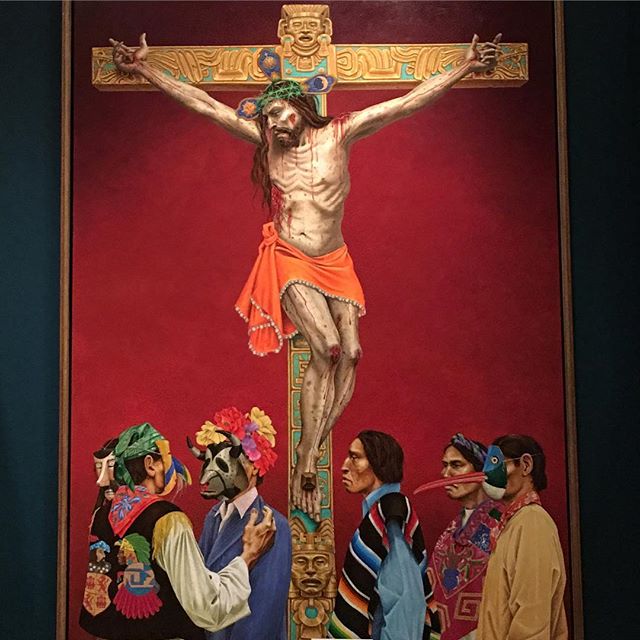
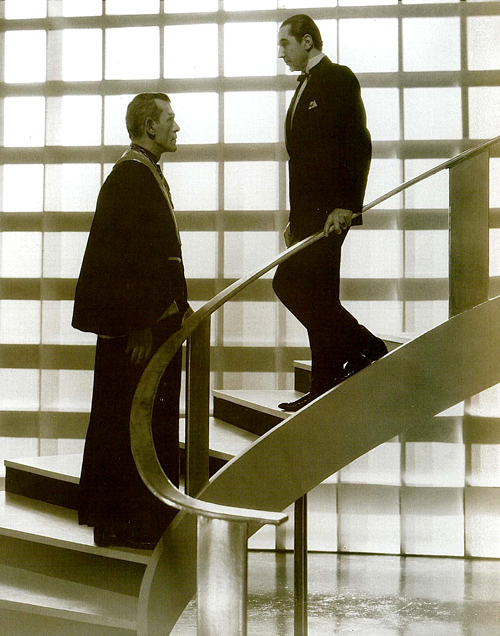
In Catholic Canon Law, the Pope may ban an individual person or even an entire area from participation in the rites of the church. During the Middle Ages, there were many such interdicts, especially when heresy was involved.

If I were elected President of the U.S., I would place under interdict certain Congressional Districts or even States whose voters have habitually elected Tea Party types to lead them. Instead of depriving the residents of participation in the church, however, I would cancel government contracts, prohibit certain senators and representatives from being paid, and remove accreditation from local colleges and universities. That would be tough on Maine, Wisconsin, and Kansas—but if the kids helped oust Governors LePage, Walker, and Brownback respectively, and perhaps even tar and feather them, and ride them out on a rail, it would be worth the effort.

That, of course, would be after I arranged for the messy execution of conservative pundits such as Rush Limbaugh, Glenn Beck, Michael Savage, Sean Hannity, Bill O’Reilly and a few dozen others. Oh, and also most of the people associated with the Trump for President campaign.

I’m afraid I would not be a very constitutional president, but it would certainly make me feel that justice has been served.

The above image, called “Interdict,” appropriately enough, is the work of FotoN-Ike.

Do Not Give Up

Borges Takes On the I Ching

Borges Takes On the I Ching

My mind is still on Hexagram 52 (see yesterday’s post). It seems that Jorge Luis Borges had something to say about the ancient Chinese book of divination (and philosophy) that is germane to the discussion. It is called “For a Version of I Ching”:

The future is as immutable
As rigid yesterday. There is nothing
That is no more than a single, silent letter
In the eternal and inscrutable
Writing whose book is time. He who walks away
From home has already come back.
Our life Is a future and well-traveled track.
Nothing dismisses us. Nothing leaves us.
Do not give up. The prison is dark,
Its fabric is made of incessant iron,
But in some corner of your cell
You might discover a mistake, a cleft.
The path is fatal as an arrow
But God is in the rifts, waiting.

I love the poem’s final four lines. Here they are in Spanish:

Pero en algún recodo de tu encierro
Puede haber un descuido, una hendidura,
El camino es fatal como la flecha
Pero en las grietas está Dios, que acecha.

Happiness perhaps lies in discovering that mistake (descuido, which could also be translated as “neglect” or “omission”) or cleft (hendidura) and taking advantage of it. But then, is God waiting to entrap us anew, or to welcome us for evading His net?

Hexagram 52

Mountain and Mountain

Mountain and Mountain

It was the late 1960s. My late friend Norm Witty, who was much closer to the hippie scene than I ever was, told me all about the I Ching, also known as The Book of Changes. I was impessed and immediately tried to use it for divination. Essentially, the system involves sixty-four possible hexagrams which involve eight different trigrams in combination. These are: Earth, Mountain, Water, Wind, Thunder, Fire, Lake, and Heaven.

Hexagram 52, for instance,  consists of the two trigrams for Mountain, one above the other. I will summarize this hexagram using diferent translations so that you can see some of the difficulties involved.

John Minford saw it thus:

The back
Is still
As a Mountain;
There is no body.
He walks
In the courtyard,
Unseen.
No Harm,
Nullum malum.

That Latin bit comes from early Jesuit attempts at understanding the I Ching in a Christian light. Minford called the hexagram Stillness and commented: “Stillness in your back. Expect nothing from your life. Wander the courtyard where you see no one. How could you ever go astray?”

In the famous Richard Wilhelm translation, it is called “Keeping Still, Mountain.” He goes on:

KEEPING STILL. Keeping his back still
So that he no longer feels his body.
He goes into the courtyard
And does not see his people.
No blame.

Well, that’s a bit different. As is the version by Richard John Lynn who calls Hexagram 52 Restraint: “Restraint takes place with the back, so one does not obtain [sic] the other person. He goes into that one’s courtyard but does not see him there. There is no blame.”

As there are numerous translations, one wonders whether is as much variation in the original Chinese. Apparently, there is. Although one of its uses is for divination, the vastly different interpretations in both Chinese and English, for instance, make it all but impossible to be sure.

I’ll stick with the two mountains and forget about bodies in the courtyard. There it is: mountain above mountain. One would think that would be the maximum of stability. Living as I do on the Pacific Ring of Fire, I don’t see mountains as being all that static. They may give that appearance, but there are pressures from below (volcanism) and the side (plate tectonics) that can result in unexpected cataclysms.

Stillness is a nice idea, but you can never be sure.


Keeping Track

QuickBooks Online: A Valentine

QuickBooks Online: A Valentine

I don’t usually have too much good to say about accounting—seeing that I’m kind of trapped in the profession for now. At the same time, I do believe that people should carefully take care of their own accounting. There are several reasons for this:

  1. If one keeps track of financial accounts and transactions on a regular basis, there is less chance of becoming susceptible to identity theft.
  2. I don’t know about you, but I don’t have trust in banks, so I regularly do bank reconciliations every month. I have spotted errors at least twice a year which I have had the banks rectify.
  3. Thanks to those same reconciliations, I know how much money I have at any given time.
  4. When tax time comes around, a nice detailed General Ledger report will make filling out your 1040 relatively fast and easy.

For my personal accounting, I used to use QuickBooks Pro 2008, which was stored on my home computer. About this time last year, I switched to QuickBooks Online, which costs me $19.99 a month. It’s worth it: My data is in the cloud, making it accessible from any computer with Internet access. And I no longer have to worry about the program becoming outdated, as the online program updates itself at frequent intervals.

There are a few wrinkles, such as occasional weekend downtime for upgrades and occasional bugs, which always seem to get ironed out within a couple of days. Still and all, I feel in better control of my own finances than ever before.

How To Survive Tax Season

Classical Music Is the Key

Classical Music Is the Key

Now that I am working seven days a week (at my advanced age), there are several methods I use just to survive to April 18. (Yes, that is the deadline date this year. Don’t ask why!)

First of all, I no longer listen to the news on the radio on my way to and from work—especially in a presidential election year, when the news is likely to be all bad. Instead, I turn the dial to KUSC-FM at 91.5 and listen to classical music. Bach, Mozart, Brahms, Dvorak, Bruckner, Wagner—that’s what I need to calm me down.

The last time some  guy tried to sell me a hip-hop CD on the beach, I told him I only listen to music by dead white guys who wore powdered wigs. And that’s not far from the truth.

My second coping mechanism is to read a good long book, preferably humorous. This year, that role is being filled by Albert Cohen’s magnificent Belle de Seigneur, which I am reading for the Yahoo! French Literature group. It is a near perfect selection.

Another Side of Me

My Father’s People

My Father’s People

When I was born in Cleveland in 1945, the firstborn in my family, my father got an insurance policy from the First Catholic Slovak Ladies Association (FCSLA) in my name. I still maintain that account, hoping some day, if I have the money, to invest more with them.

My father was a poor factory worker who was born in Prešov  in what is now the Republic of Slovakia, but back in 1911 was part of the Austro-Hungarian Empire under Hungarian administration. It was only in the 1990s that the country became independent—for the first time in its history.

I still get a copy of the FCSLA’s magazine, Fraternally Yours, and read it for news of my Slavik forebears around Ohio and Pennsylvania, where most of the Slovak population is centered. With the most recent issue, I even found out that my old classmate Frank Basa from the Class of ’62 at Chanel High School in Bedford is a Catholic priest in Akron, Ohio.

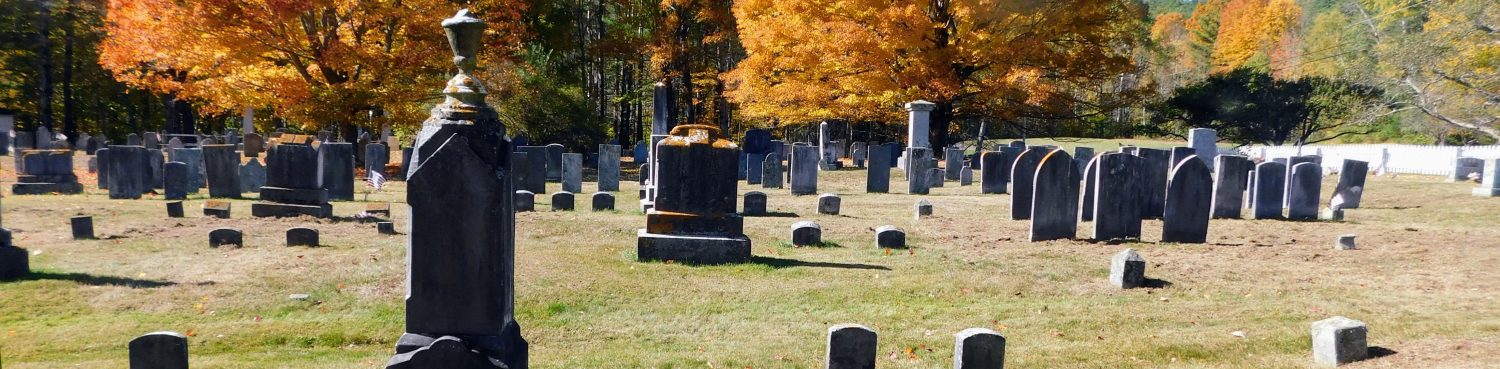
There isn’t too much to tie me to Cleveland these days. All I have are three graves: my father, my mother, and my great-grandmother Lidia. I would like some day to visit Cleveland with Martine and show her the scenes of my youth, sedate as they were.


“It’s Just Catastrophe”

Canadian-Born Poet Anne Carson

Canadian-Born Poet Anne Carson

Some day, if you feel like reading some great ancient Greek tragedies, I recommend you try to find a copy of Anne Carson’s Grief Lessons. She takes four relatively little-known plays by Euripides and turns them into wonderful poems in English, such as the following:

Come here, let me share a bit of wisdom with you.
Have you given much thought to our mortal condition?
Probably not. Why would you? Well, listen.
All mortals owe a debt to death.
There’s no one alive
who can say if he will be tomorrow.
Our fate moves invisibly! A mystery.
No one can teach it, no one can grasp it.
Accept this! Cheer up! Have a drink!
But don’t forget Aphrodite–that’s one sweet goddess.
You can let the rest go. Am I making sense?
I think so. How about a drink.
Put on a garland. I’m sure
the happy splash of wine will cure your mood.
We’re all mortal you know. Think mortal.
Because my theory is, there’s no such thing as life,
it’s just catastrophe.

And here is a kind of prose poem from the February 25, 2016 issue of The New York Review of Books entitled “What To Say of the Entirety”:

What to say of the entirety. The entirety should be smaller. Small enough to say something about. Humans. What if the guy you’re hanging up by this thumbs already has a razorplague of painapples roaming his chest inside. Do you regard that as his own fault? Do you really need to make it worse? Do you think of yourself as a well-loved person? Of course these are separate questions. Like dead salmon and coppermine tailings, separate. So these separations, this anesthesia, we should ponder a bit. Humans. What can you control? Wrong question. Can you treat everything as an emergency without losing the reality of time, which continues to drip, laughtear by laughtear? Where to start? Start in the middle (and why?) so as not to end up there, where for example the torture report ended up after all those years of work. You have to know what you want, know what you think, know where to go. New York City actually. Here we are. Trucks crash by. Or was that another row of doors slammed by gods? They’re soaked, the gods, they’ve tucked their toes up on their thrones as if they don’t know why this is happening. Poor old coxcombs.

I’m still trying to get my head around Anne Carson’s poetry … but then, that’s how I know it’s really good!

Winnie and the Vocative Table

Sir Winston Brings Up a Good Point!

Sir Winston Brings Up a Good Point!

Because at this point in tax season, I am approaching brain death, I will be posting quoted material of interest from other websites. The following anecdote is from The Futility Closet:

A schoolmaster gave a Latin grammar to the 10-year-old Winston Churchill and directed him to learn a series of words.

Churchill found it an “absolute rigmarole” but memorized the list and reeled it off when asked.

‘But,’ I repeated, ‘what does it mean?’

Mensa means a table,’ he answered.

‘Then why does mensa also mean O table,’ I enquired, ‘and what does O table mean?’

Mensa, O table, is the vocative case,’ he replied.

‘But why O table?’ I persisted in genuine curiosity.

‘O table,–you would use that in addressing a table, in invoking a table.’ And then seeing he was not carrying me with him, ‘You would use it in speaking to a table.’

‘But I never do!’ I blurted out in honest amazement.

“Such was my introduction,” he later wrote, “to the classics from which, I have been told, many of our cleverest men have derived so much solace and profit.”

Idarat al-Tawahhush

The Republican Party’s Own Contribution to Beastliness

The Republican Party’s Own Contribution to Beastliness

Last week, I read an excellent article by Juan Cole of Truthdig.Com on the subject of our entering a new era of beastliness as exemplified by Daesh/ISIL/ISIS abroad and Donald J. Trump at home. In fact, the Arabs have a word for it: idarat al-tawahhush, or out and out viciousness.

As Cole writes about the so-called Islamic State:

Most Muslims are on the fence or perfectly happy in secular societies.  They are in a “gray zone.”  Drive them into the arms of extremism either by attracting them with spectacles of power or by scaring them or by scaring non-Muslims into attacking them.

The urgency of this strategy has increased as Daesh’s fortunes on the battlefield in the dusty hinterlands of Syria and Iraq have spiraled down.  Syrian troops are at the gates of Palmyra and on the cusp of driving Daesh out of it.  Russian aircraft are bombing Daesh convoys and positions in Palmyra and near Aleppo, cutting supply lines.  Syrian Kurdish troops allied with Arab fighters have taken vast territory from Daesh in al-Raqqa and left its capital exposed.  In Iraq, Tikrit and Ramadi have fallen.  Kurdish Peshmerga have retaken Sinjar and begun cutting supply lines between al-Raqqa and Mosul.  Local Arab tribes are revolting in Fallujah, and the Iraqi military has announced the beginning of a long campaign to take Mosul.

In America, beastliness is one of the main attributes of currently leading Republican contender Donald Trump. His minions attack women journalists; he broadly attacks wide spectra of our multicultural society; and he threatens to “punish” women who have had abortions. (Is he personally going to spank them?)

Cole’s article continues on the subject of the GOP candidate:

If you take out mass violence, moreover, it is fairly easy to see that Trump himself uses the tactic of “beastliness” just as Daesh does. Where there is already chaos or conflict, he hypes it, as with his promise to kill innocent children related to terrorists or to torture people.  Or he played on existing Islamophobia by proposing a Muslim exclusion act, which is both beastly and an attack on the gray zone.

He also throws verbal firebombs to stir up chaos where there was calm.  He boasts that immigration was not even an issue in the presidential race until he made it one.  But that is because immigration is not an issue.  More Mexicans have been returning to Mexico from the US in recent years than coming here. Most immigrants are unusually law-abiding.  Illegal immigration was a much bigger problem in the 1980s and 1990s and is now a relatively small one.  Most immigrants don’t take jobs away from Americans already here: they do jobs other people don’t want to do.  (Many small midwestern hamlets depending on ranching and small farming have become depopulated as the young people went off to Chicago, and some have only been kept going or revived by Mexican farm and ranch hands).  But Trump tried to tag Mexican-Americans as rapists and drug dealers.

But then, many American voters would be all too willing to fight beastliness with beastliness of their own. And so civilization becomes ever more tattered and frayed as time goes on.


Japan Has Fujiyama and …

... and Ecuador Has Its Cotopaxi

… and Ecuador Has Its Cotopaxi

Heigh ho! It’s off to Volcano Land again. In Peru, I saw Sabancaya in eruption; while in Chile, I almost had to change my itinerary because of Calbuco, which whose eruption graciously fizzled out before I arrived in South America.

Last year, Cotopaxi erupted, as shown in the above picture. But it was not a major event.

This fall, I hope to stay a night or two in the shadow of Cotopaxi. It’s only a couple hours south of Quito along the Panamerican Highway, so it shouldn’t be too difficult.