Books Are Dangerous

Bookmarks from The Last Bookstore

Bookmarks from The Last Bookstore

The wording is ominous:

Books are dangerous!
Report to The Last Bookstore
To sell or trade your books
While you still can!

Founded in 2005, The Last Bookstore claims to be California’s largest bookstore, and it may very well be. “What are you waiting for?” its website asks. “We won’t be here forever.”

This is what I call a Filboid Studge marketing campaign, based on the Saki short story entitled “Filboid Studge: The Story of a Mouse That Helped.” I’ve included a link because the story is very short and outrageously hilarious.

The bookstore at the corner of West 5th and Spring Streets in Downtown Los Angeles was one of the highlights of yesterday’s safari by Martine and me. I took eleven books to donate to the store and wound up buying four titles, including Eve Babitz’s Eve’s Hollywood, which I am currently reading with great excitement.
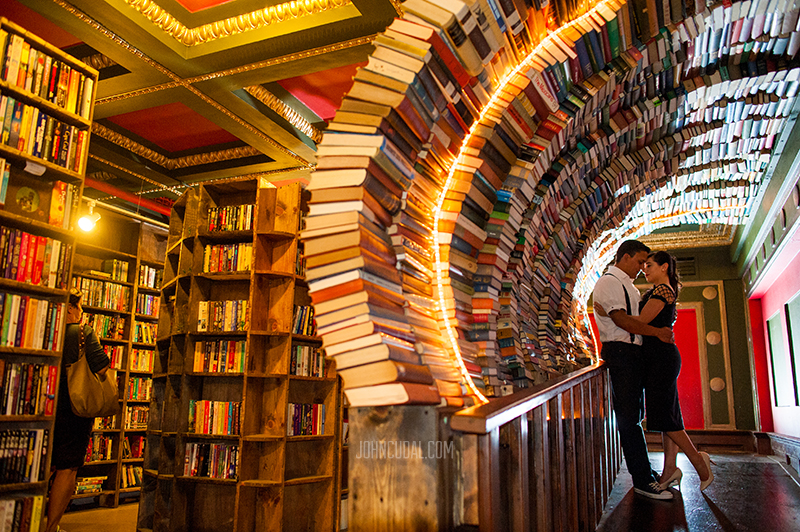
Interior of The Last Bookstore (2nd Floor)

Interior of The Last Bookstore (2nd Floor)

I have been in Los Angeles for half a century now, and I look back at my time here with all the pleasurable hours I spent in bookstores that, for the most part, are no more. There was Papa Bach’s at Santa Monica and Sawtelle; the Westwood Book Company, Butler Gabriel, Campbell’s, Brentano’s, and Borders—all in Westwood; Martindale’s in Santa Monica; Zeitlin & Verbrugge on the West Side; Acres of Books in Long Beach; Brand Books in Glendale; and Pickwick in Hollywood.

They are all gone now. People stare intently at their smart phones and pretend to communicate—but really don’t. They say they could read books on their devices, but never seem to. Perhaps the whole idea of the book is dying while a new generation willfully enslaves itself to a handheld electronic device.

So kudos to The Last Bookstore. Be defiant! Be a dinosaur! Wave your standard proudly!


O Brave New World!

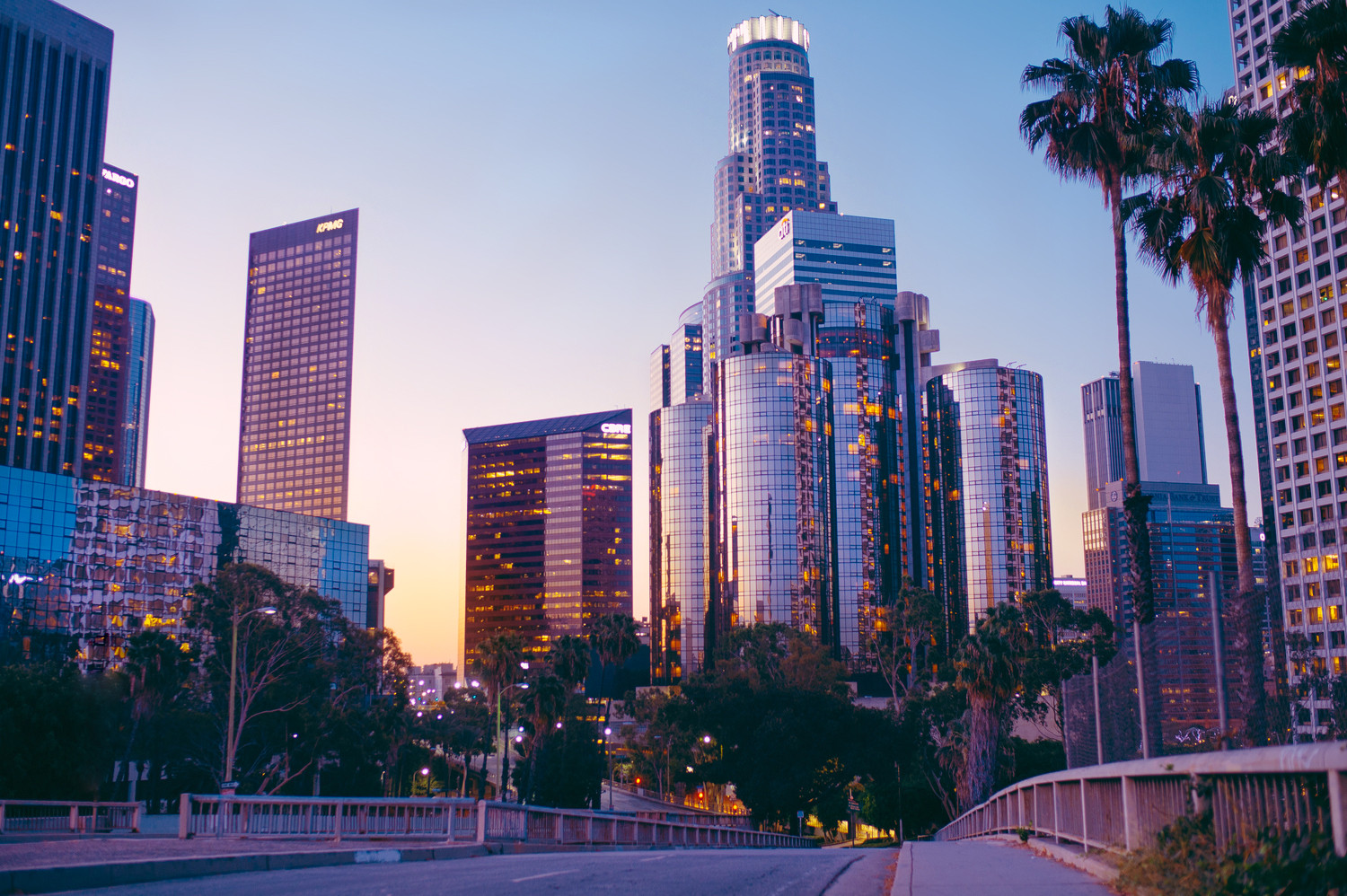
Downtown L.A. Financial District

Downtown L.A. Financial District

Don’t let anyone tell you he or she knows Los Angeles. Why? Because there’s too much for one person to know. There are broad swaths of the county which I have never seen, mostly to the Southwest, all those weird little communities along Interstate 5 like Hawaiian Gardens, Downey, Lynwood, Paramount, Bell Gardens, and Santa Fe Springs.

But thanks to today’s little safari, Martine and I know a little more about the area immediately to the Northeast of Pershing Square. We had three destinations and hit them all:

  • The tantalizingly named The Last Bookstore at West 5th & Spring with its grim motto: “What are you waiting for? We won’t be here forever.
  • The Grand Central Market at West 3rd & Broadway, which I’ve always wanted to visit but never got the chance to.
  • Across the street from the GCM is The Bradbury Building, built in 1893 and the location for scores of Hollywood movies, most notably Blade Runner (1982).

The big surprise was Union Station, where I arrived in Los Angeles on December 28, 1966, on the Santa Fe Railroad’s El Capitan train service. For decades, the station fell into disrepair and disuse as Amtrak hit the skids. But then the city decided to add a substantial suburban rail system called Metrolink, a growing network of subways and light rail lines, and a bus hub. Now its a busy place with new shops opening and crowds of people on the way to and from somewhere.

Tomorrow, the Expo Line will link Santa Monica to downtown L.A. with the nearest stop being a few blocks south of me at Bundy just south of Olympic.

It’s nice to know that, in this day and age, I can find something positive to write about without having to grit my teeth.


Antioch 1097-1098

One of the Most Horrendous Battles in History

One of the Most Horrendous Battles in History

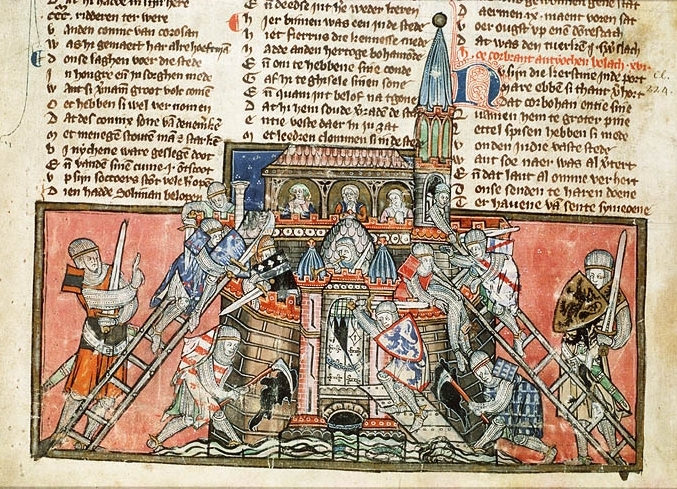
It is generally known that the First Crusade attained its goal, the capture of Jerusalem. But what happened along the way left a taste of ashes in the mouths of its survivors. I have just finished reading Thomas Asbridge’s The First Crusade: A New History. What stuck in my mind was what happened along the way to Jerusalem, at Antioch.

Antioch was one of the great cities of Jerusalem, but it was under the firm control of the Turks. It was a huge city, well fortified, and incorporating portions of two mountains and a powerful citadel. The Crusaders set up for a protracted siege, and protracted it certainly was: It lasted for a year and a half. It was only when Bohemond of Taranto managed to persuade a traitor to let the Latins into the city that the first stage of the siege was ended.

Yes, there was a second stage. After the Crusaders were ensconced within the walls, they were in turn besieged by the huge army of Kerbogha, the Atabeg of Mosul (the same Mosul that is now under the control of ISIS/ISIL/Daesh). Asbridge thinks that he commanded some 35,000 fighters (some said as many as 300,000, which is unlikely), which at that time far exceeded the diminished ranks of the Crusaders.

However greedy and petty the Crusade leaders may have been, they did not lack for bravery. There was some mummery about the lance with which the Roman centurion Longinus had pierced the side of the crucified Christ being found buried in a church. The discovery of this relic raised the spirits of the besieged, such that they sallied forth from the walls of Antioch and routed the Turks, raising the second siege and clearing the way to Jerusalem.

We don’t think much about the Crusades, but the memory of them has not faded from the Muslim man in the street. Are we destined forever to be Crusaders in the Middle East?


The Crown Prince of Grade Z Films

Masque of the Red Death (1964)

The Masque of the Red Death (1964)

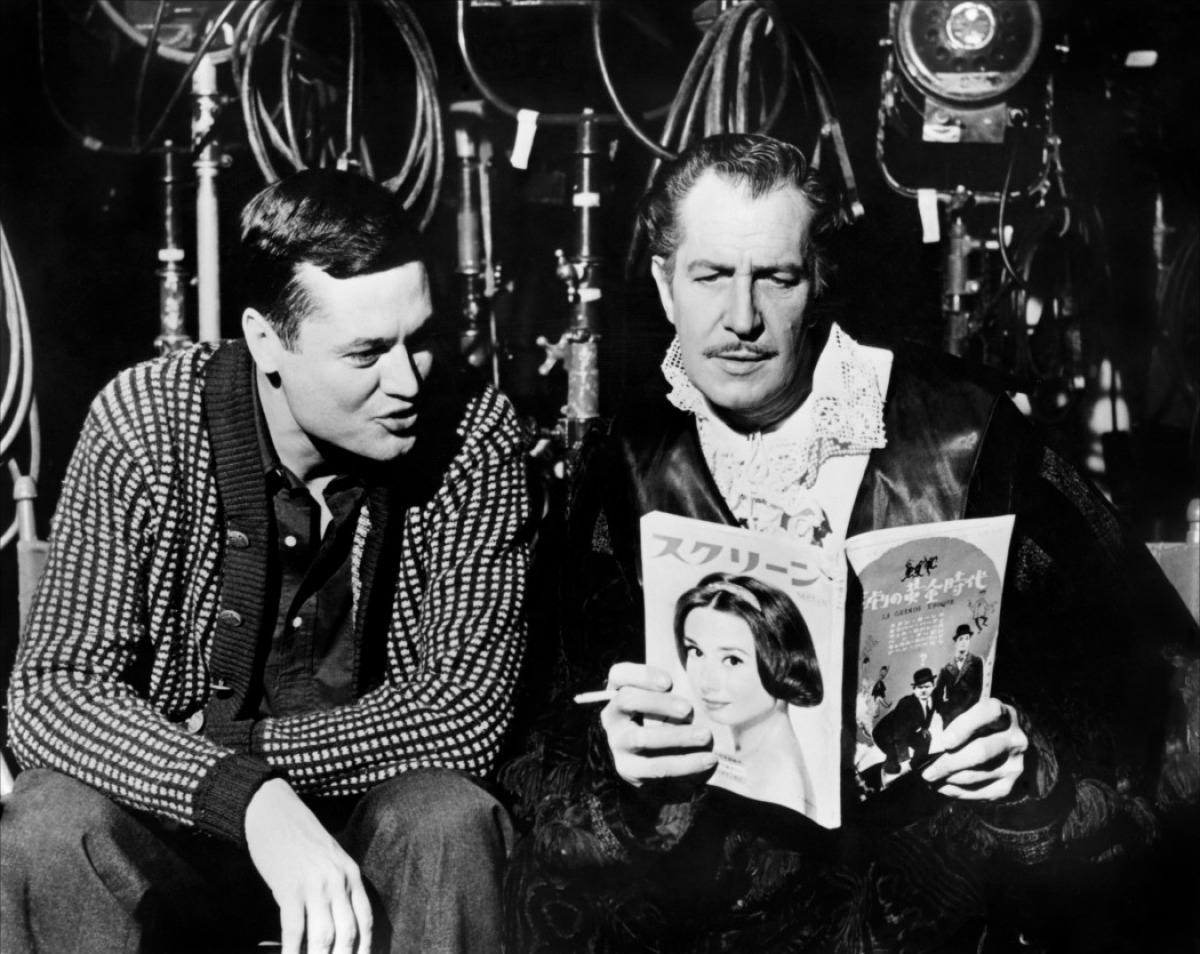
The first time I ever heard of him was when I was a student at Dartmouth. At that time (the mid 1960s) I subscribed to Films and Filming. One issue contained an article entitled “The Crown Prince of Z Films,” referring, of course, to Roger Corman. I was intrigued by what I was hearing of the cheapster director who made so many interesting films for American International Pictures. What I liked most were the Edgar Allan Poe adaptations, usually starring Vincent Price.

Perhaps my favorite was The Masque of the Red Death (1964), about the attempt by a group of dissipated nobles to escape the plague. There were others in the series, including House of Usher (1960), The Pit and the Pendulum (1961), Premature Burial (1962), The Raven (1963), and The Tomb of Ligeia (1964).

A Young Roger Corman (Left) with Vincent Price

A Young Roger Corman (Left) with Vincent Price

When I first met Martine in the late 1980s, I discovered that she was a hard-core Corman addict, liking such films as Attack of the Crab Monsters (1957) and the original The Little Shop of Horrors (1960), which was shot in under a week on a shoestring budget. There are in all about a dozen films he directed that are worth seeing and hold up well over the years. (He also made not a few clinkers, but that’s showbiz!) After he stopped directing around 1970 he continued to produce films and was responsible for some 300+ films over his half century career.

Other than the Poe features, I also enjoyed I, Mobster (1958), A Bucket of Blood (1959), The Intruder (1962) starring William Shatner, Tales of Terror (1962), X: The Man with the X-Ray Eyes (1963) starring Ray Milland, The Wild Angels (1966), The Trip (1967), and Bloody Mama (1970).

Corman introduced us to Jack Nicholson, Peter Fonda, Dennis Hopper, and Bruce Dern, to name just a few. In his films were such stars as Boris Karloff and Peter Lorre.

Perhaps I had a misspent youth, but I sure enjoyed it—and continue to do so….

Adjustments

Fountain in the East Court at the Getty Villa

Fountain in the East Court at the Getty Villa

Now that I am working only two days a week, I decided to take advantage of the extra time to see parts of Los Angeles with which I am relatively unfamiliar. Today, I discussed with my friends Michael and Julie the idea of taking the new Expo Line downtown to visit the Grand Central Market and the Bradbury Building, both of which I have never seen.

Beginning on Friday, May 20, there will be a light rail line connecting Santa Monica and West Los Angeles with downtown—for the first time in sixty years, when the old Red Line Cars were abandoned, as Roger Rabbit claimed, so that L.A. could become the traffic nightmare it is today. Connections could be made to lines that stretch to Long Beach, the San Fernando Valley, Pasadena and Azusa, and even El Segundo.

On Wednesday, I plan to visit the airport early in the morning and sign up for the TSA’s Pre Check program. For a fee of $85.00, I can fly for five years without removing my belt and shoes. No longer will I have to hold up my pants with my right hand while waddling shoeless to reclaim my personal belongings.

Afterwards, I plan to drive to a Metro information center and get cards enabling me and Martine to take a combination of light rail and bus lines virtually anywhere in the area. I’ll also pick up a day pass so that I can take an all-day light rail safari to downtown, Long Beach, and possibly Pasadena.


Ghost Train to Anywhere

Paul Theroux on One of His Mythical Train Rides

Paul Theroux on One of His Mythical Train Rides

For almost forty years, I have been traveling around the world with Paul Theroux—starting with his train ride books The Great Railway Bazaar (1975) and The Old Patagonian Express (1979) to whatever I could get my hands on. Even when I said to myself, “This guy is altogether too snarky,” I followed his adventures with an interest bordering on zeal.

Only now do I realize he is one of the great influences on my life. It was not until November 1975 that I began my own travels (other than back and forth between Los Angeles and Cleveland). My visit to Yucatán opened my eyes and was followed by trips to Britain, Hungary, Czechoslovakia, and a lot more of Mexico. It was as if the floodgates were open, and my eyes were focussed on the world at large, and not just at whatever place I was living at the time.

I have glorious memories of my trips, even the first one to Argentina, when I broke my right shoulder in a blizzard in Tierra del Fuego. I was hooked, and have been ever since.

Yeah, I Second the Motion!

Yeah, I Second the Motion!

A few days ago, I finished reading Theroux’s Ghost Train to the Eastern Star (2008) in which I found the following quotes which resonated with me:

Often on a trip, I seem to be alive in a hallucinatory vision of difference, the highly colored unreality of foreignness, where I am vividly aware (as in most dreams) that I don’t belong; yet I am floating, an idle anonymous visitor among busy people, an utter stranger. When you’re strange, as the song goes, no one remembers your name.

Also, it doesn’t matter any more who’s topping the charts. Taylor Swift doesn’t mean anything to me; and if Kim Kardashian’s ass were offered to me on a silver platter, I would not too politely refuse. I have climbed the Mayan pyramids at Uxmal and Chichén Itzá. I have taken a fall at Magallanes and Rivadavia in Ushuaiah and injured myself. I have visited two Communist Eastern European countries before 1989. I have seen things most people have not seen, and it has changed me forever.

It seemed to me that this was the whole point of traveling—to arrive alone, like a specter, in a strange country at nightfall, not in the brightly lit capital but by the back door, i9n the wooded countryside, hundreds of miles from the metropolis where typically people didn’t see many strangers and were hospitable and did not instantly think of me as money on two legs.

Being a traveler is being something of a loner. I am certainly that. But I wouldn’t have it any other way. I will travel as long as I can.


Serendipity: On Dealing With Disappointment

It’s Not Always a Bad Thing

It’s Not Always a Bad Thing

The following insight comes from Tibetan Buddhist teacher Chögyam Trungpa Rinpoche in his book Cutting Through Spiritual Materialism:

We must surrender our hopes and expectations, as well as our fears, and march directly into disappointment, work with disappointment, go into it and make it our way of life…. If we can open, then we suddenly begin to see that our expectations are irrelevant compared with the reality of the situations we are facing. This automatically brings disappointment. Disappointment is the best chariot to use on the path of the dharma. It does not confirm the existence of our ego and its dreams.

This, along with hundreds of other interesting quotes from Tibetan Buddhist teachers, can be found in Reginald A. Ray’s The Pocket Tibetan Buddhism Reader, a shirt-pocket-sized paperback from Shambala.

Lions and Bulls, Oh My!

A Frequent Theme in Roman Mosaic Art?

A Frequent Theme in Roman Mosaic Art?

At our visit to the Getty Villa on Wednesday, I was surprised to see so many works depicting lions eating other large, powerful beasts. There was a special exhibit entitled “Roman Mosaics Across the Empire.” (Follow the link and you will see a lion biting into a surprisingly nonchalant horse.) The image that caught my eye, however, was the one above, in which a lion is chasing what looks like a Brahma bull.

Roman mosaics can be stunningly beautiful. I remember a show at the Los Angeles County Museum of Art years ago which included various objects retrieved from the ruins at Pompeii and Herculaneum. The mosaics in this exhibit, taken from the Naples Museum of Archaeology, were particularly beautiful—probably because the Romans during that period were more advanced in their art than those of the later Empire, from which most of the works in this special exhibit were drawn.

There were numerous lions, particularly in funerary monuments. Although I do not recall reading anything about lions during Roman times, I am surprised that they appear prominently in so many mosaics and pieces of statuary.

A Pot To Piss In

Greek Reveler Draining His Lizard

Just because they wore togas and spoke Classical Greek, that doesn’t mean that the ancient Greeks were all that high and mighty. One of the more amusing exhibits at the Getty Villa that Martine and I saw yesterday afternoon illustrated a different and more down to earth use for an amphora.

A bibulous reveler is shown urinating into the amphora (or, more technically, a chous) held up by his slave boy while continuing to declaim his sodden oration.

The closer one gets to the ancient Greeks and Romans, the more we see people very much like ourselves. The conditions of their lives were radically different, but they were recognizably human in he same way we are. Read the letters of Cicero or Pliny the Younger and you will enter a whole new world peopled with recognizable characters.


Feathered Glory

Roman Statue Depicting Leda and the Swan

Roman Statue at the Getty Villa Depicting Leda and the Swan

Today, Martine and I spent most of the day at the Getty Villa in Pacific Palisades visiting their collection of ancient Greek, Roman, and Etruscan art. One of the pieces is a statue depicting the rape of Leda by Zeus in the form of a swan.

I cannot think of the subject without recalling William Butler Yeats’s poem, “Leda and the Swan”:

A sudden blow: the great wings beating still
Above the staggering girl, her thighs caressed
By the dark webs, her nape caught in his bill,
He holds her helpless breast upon his breast.

How can those terrified vague fingers push
The feathered glory from her loosening thighs?
And how can body, laid in that white rush,
But feel the strange heart beating where it lies?

A shudder in the loins engenders there
The broken wall, the burning roof and tower
And Agamemnon dead.
Being so caught up,
So mastered by the brute blood of the air,
Did she put on his knowledge with his power
Before the indifferent beak could let her drop?

According to Greek mythology, the children born of that rape were Polydeuces and Helen of Troy. The latter was responsible for the Trojan War when she was willingly abducted by Paris (no relation). Her half-sister was Clytemnestra, daughter of Leda’s legitimate husband Tyndareus. She was traumatized by the god’s rape of her mother. And Clytemnestra, of course, murdered her own husband Agamemnon when he returned from Troy. All this makes Yeats’s poem a wry comment on the inter-relatedness of history.