Arts & Crafts

This evening, I was watching a local newscast on television that made an interesting observation. It regarded arts and crafts as a single thing. It showed young people busily at work in San Pedro at an old army base creating what I see as crafts only. Many of the objects created were interesting. Some were pseudo-random pieces of garbage. Nothing approached the status of what I consider to be art.

It’s like putting an article in Cosmopolitan or a wood carving of an American Indian at the same level as a poem by Emily Dickinson or a novel by Honoré de Balzac or a painting by Rembrandt.

Mind you, crafts are great for making children and teens busy and keeping them out of trouble. They’re great for adult hobbyists who want to create something with their own hands. But they are not an acceptable substitute for high art.

What is happening throughout America is an unwillingness to engage with high art because it is “difficult.” People seem to be less willing to read James Joyce or study a painting by David Hockney or a poem by John Donne. And the older the art is, the more that people shy away from it.

In my own life, I try to engage with difficult art. Why? Because it is more rewarding. I just finished reading a postmodern novel by Hungarian writer László Krasznahorkai, who won the Nobel Prize for Literature in 2025. In his early book The Melancholy of Resistance (1989), each chapter is a single paragraph. The point of view changes with each chapter, and the work is set in a Hungary around the time of the fall of the Communist regime, during which many writers anticipated mass social disruptions.

Each month, I attempt to read at least one difficult book to keep my hand in the game. Also, I love visiting the Getty Center and allowing myself to be challenged by the art on display. It’s worth all the trouble.
The Spaces Between Scenes

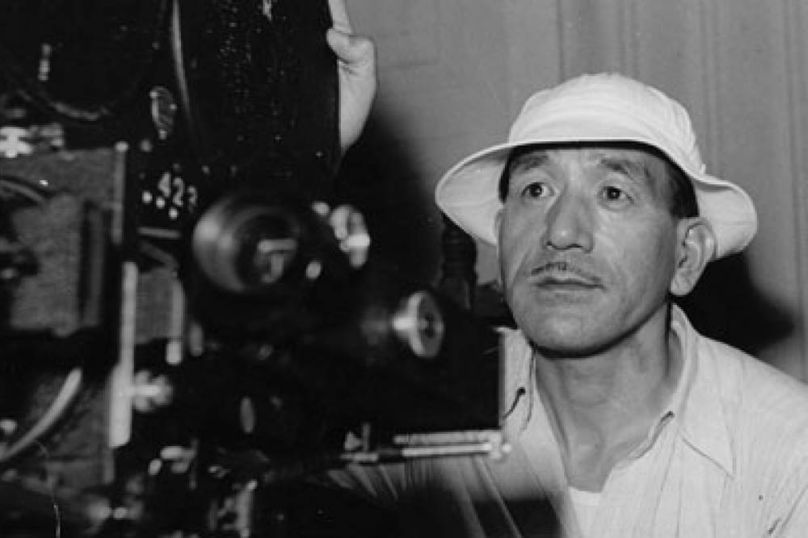
Japanese Film Director Yasujiro Ozu (1903-1963)

I did not post yesterday because I was enthralled by an evening of Yasujiro Ozu films on Turner Classic Movies (TCM). Likely, I will be equally remiss on the remaining Tuesdays in May, because TCM will be screening his films on those days.

If not the greatest filmmaker who ever lived, he is certainly one of the top three. Ever since I saw Late Spring (1949) and Tokyo Story (1953) at Dartmouth College, I have been enthralled by Ozu. I literally cannot let a film of his go unwatched if there is any chance I could see it. Consequently, I was up last night past midnight watching a triple feature of:

  • The Ozu Diaries (2025), a biopic directed by Daniel Raim based on the director’s diaries
  • I Was Born But … (1932), a silent feature by the director
  • The Only Son (1936), the director’s first sound feature

I could have stayed up until 3 am to watch A Story of Floating Weeds (1934), but I was starting to flag past the midnight hour.

What makes Ozu’s films so special?

Most of the dozen or so features I have seen to date concentrate on family relationships, especially where children are involved. This is interesting because Ozu never married. In fact, he lived with his mother until her death in 1961. Yet his portrayals of female characters and children are second to none in the entire history of the cinema. If you see Setsuko Hara as Noriko in Late Spring or the little boys in I Was Born But …, you will know what I mean.

No other filmmaker so lovingly includes scenes in which (apparently) nothing happens. Perhaps there is a scenic shot in which a train passes by. Other times there are empty rooms or laundry hanging up to dry or simple kitchen household objects. In one of his diaries, Ozu admits to being interested in “the spaces between scenes.”

Very Buddhist, this. In fact, Ozu and his mother are buried under a stone in which the only identification is the Japanese character mu, “Nothingness.”

At times, Ozu’s directorial touch is so perfect that even God Himself could do no better if he took a turn behind the camera.

Hap

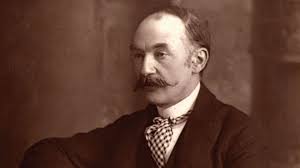
British Poet and Novelist Thomas Hardy (1840-1928)

Although most readers know Thomas Hardy as a novelist, do they know that in mid-career he gave up on the novel and concentrated on producing a body of verse that is as great as his prose, as the following poem demonstrates:

Hap

If but some vengeful god would call to me
From up the sky, and laugh: “Thou suffering thing,
Know that thy sorrow is my ecstasy,
That thy love’s loss is my hate’s profiting!”

Then would I bear it, clench myself, and die,
Steeled by the sense of ire unmerited;
Half-eased in that a Powerfuller than I
Had willed and meted me the tears I shed.

But not so. How arrives it joy lies slain,
And why unblooms the best hope ever sown?
—Crass Casualty obstructs the sun and rain,
And dicing Time for gladness casts a moan. . . .
These purblind Doomsters had as readily strown
Blisses about my pilgrimage as pain.

Man of the West

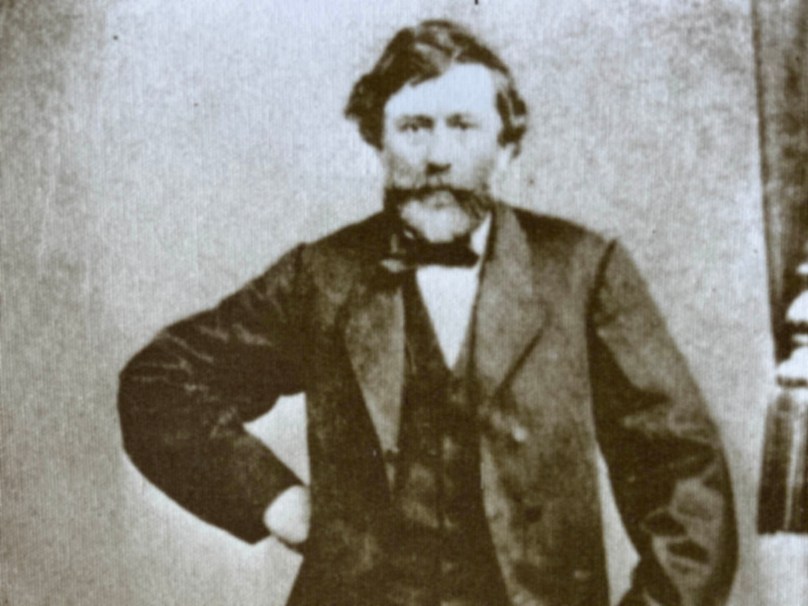
Count Agoston Haraszthy (1812-1869)

The history of the American West is full of restless and heroic figures. One such was a Hungarian count who, among other things, founded the California wine industry when he established Buena Vista Wineries in 1856. He was also sheriff and U.S. Marshal in San Diego and the first U.S. assayer of rare metals. His ending was a tragic one: He disappeared in Nicaragua, where he was active in starting a rum distillery business. Rumors were that he was dragged under by an alligator.

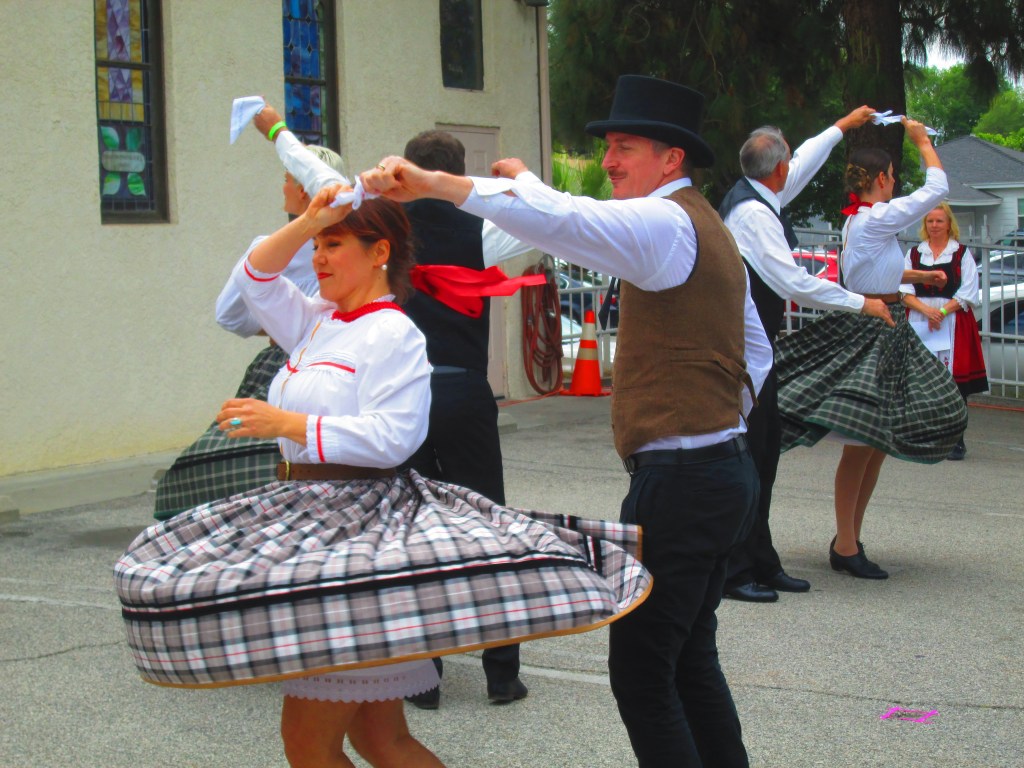
Today Martine and I attended the Majalis Fesztival at the Grace Hungarian Reformed Church in the San Fernando Valley. There I met up with an acquaintance who is active in the Karpatok Hungarian Dance Ensemble. He told me that they were developing a song and dance concert celebrating the life of Agoston Haraszthy.

This afternoon, they previewed one of the numbers in costume:

The Dancer in the Top Hat Plays Haraszthy

I had known a few things about Haraszthy going back to the early 1970s when I fancied myself a wine connoisseur. But, curiously, in time I became more interested in rum, like the Hungarian count. I guess I just have to stay away from Nicaragua and Alligators.

Ever-Spreading Chaos

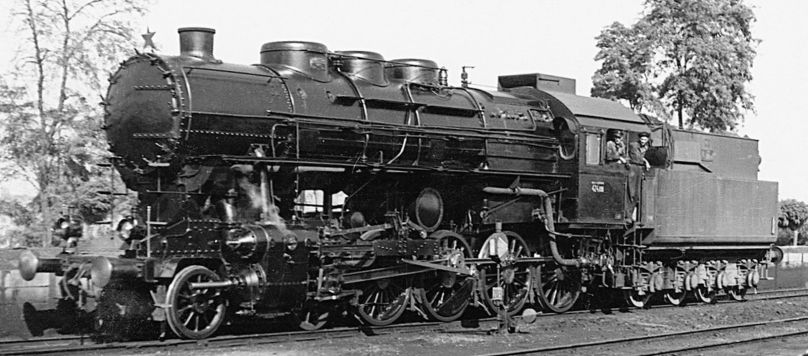
Hungarian State Railways (MÁV) 4-2-4 Steam Locomotive

In Lászlo Krasznahorkai’s great 1989 novel The Melancholy of Resistance, a scheduled train that never shows up throws waiting passengers into a tizzy. A Hungarian novelist, Krasznahorkai is the winner of the Nobel Prize for Literature (2025), the International Booker Prize, and numerous other international literary accolades. Here is a selection from the first page of George Szirtés’s excellent translation of the novel.

To tell the truth, none of this really surprised anyone any more since rail travel, like everything else, was subject to the prevailing conditions: all normal expectations went by the board and one’s daily habits were disrupted by a sense of ever-spreading all-consuming chaos which rendered the future unpredictable, the past unrecallable and ordinary life so haphazard that people simply assumed that whatever could be imagined might come to pass, that if there were only one door in a building it would no longer open, that wheat would grow head downwards into the earth not out of it, and that, since one could only note the symptoms of disintegration, the reasons for it remaining unfathomable and inconceivable, there was nothing anyone could do except to get a tenacious grip on anything that was still tangible; which is precisely what people at the village station continued to do when, in hope of taking possession of the essentially limited seating to which they were entitled*, they stormed the carriage doors, which being frozen up proved very difficult to open.

  • Earlier in the paragraph: “[T]he only two serviceable old wooden-seated coaches maintained for just such an ‘emergency’ were coupled to an obsolete and unreliable 424, used only as a last resort.”