The Tomb of the Hero

Honor Guard at the Tomb of José de San Martín in Buenos Aires

The liberators of South America from the Spanish are honored throughout South America. One keeps running into the names of Bolivar, San Martin, Sucré, and O’Higgins again and again. The honor guard at the Metropolitan Cathedral on the north side of the Plazo de Mayo in Buenos Aires is dressed in the uniforms of the early 19th century, with swords drawn and standing at rigid attention.

Even Jorge Luis Borges, who never served in any country’s military, bragged of being descended from Colonel Manuel Isidoro Suárez, hero of the Battle of Junín in far-off Peru back in 1824. Many of his poems refer to this ancestral hero. Here is the last stanza of “A Page to Commemorate Manuel Suárez, Victor at Junín”:

His great-grandson is writing these lines
and a silent voice comes to him out of the past,
out of the blood:
“What does my battle at Junín matter if it is only
a glorious memory, or a date learned by rote
for an examination, or a place in the atlas?
The battle is everlasting and can do without
the pomp of actual armies and of trumpets.
Junín is two civilians cursing a tyrant
on a street corner,
or an unknown man somewhere, dying in prison.

I have read biographies of Bolivar and San Martín—as well as Gabriel García Márquez’s excellent The General in His Labyrinth, about the former—only to find that the heroes are more honored today than they were in their lifetimes. San Martín became so disgusted with his fellow Argentines that he moved to France. Only many years later did the Argentines invest him with the sanctity he wears today like an uneasy crown.


TEGOBA

That’s Short for “The English Group of Buenos Aires”

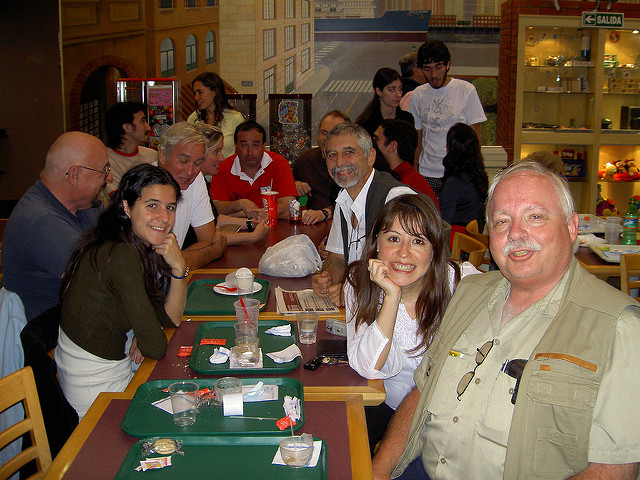
Each time I have gone to Buenos Aires—that’s now three times in all—I have gone to one of the weekly meetings of TEGOBA, The English Group of Buenos Aires. At leastsince 2006, it has been meeting on Friday nights at a cafeteria in the upscale Belgrano suburb of B.A. called FAME, located on Cabildo across the street from the Congreso de Tucuman SUBTE stop.

The above picture was taken in 2006, when I was quite a few pounds heavier. (I’m the walrus at the far right.) At my left is Marta Viajera, who is the coordinator for the group. The others are a combination of Argentinian professionals and visiting Americans, Brits, and others who want to socialize in English over a nice meal.

A few days after this picture was taken, I broke my right shoulder in a blizzard that struck Tierra del Fuego. I slipped on some ice at the corner of Magallanes and Rivadavia and smashed my shoulder into a high curb. Usually, that would make someone turn sour on a place. Instead, I decided I loved Argentina and its people, and I resolved to return. And I did, twice so far. I hope I have it in me to back back at least one more time.

And, to be sure, i will join the group at Avenida Cabildo 2921 for another meeting of TEGOBA.

The World’s Highest Capital City

La Paz, Bolivia, at Night

If you want to land in a capital city so high up that you will get an immediate nosebleed and tumble headfirst down the steps of the airplane, you would pick La Paz, Bolivia. The average altitude of El Alto, where the airport is located, is 13,615 feet (or 4,150 meters). The city itself is about 2,000 feet lower, about the same altitude of Lhasa, Tibet.

In The Old Patagonian Express, Paul Theroux talks about his accident-proneness at high altitude. Taking some aspirin in his hotel room, he drops the water tumbler into the sink. Trying to pick up the pieces, he cut himself badly and decided to seek medical attention:

But I had not gone two blocks when the new towel I had wrapped around my hand was soaked with blood. It did not hurt, but it looked dreadful. I hid it under my arm so as not to alarm pedestrians. Then the blood dripped on the sidewalk and I thought: God damn. It was deeply embarrassing to be walking through this large gray city with a blood-soaked towel on my hand. I began to wish I had tried the rubber band. I left spatters of blood on the crosswalk, and more spatters on the plaza. I asked directions to the pharmacy and saw, when I looked back, that there was a pool of blood where I had paused, and a horrified Bolivian watching me. I tried not to run: running makes your heart beat faster and you bleed more.

Of course, if Theroux had been trying to cope with the altitude by taking aspirin, his blood was not likely to clot soon. He should have chewed coca leaves with an alkaloid, or drank some mate de coca tea. But then, this was the 1970s, and this was not generally known to gringo travelers.

Bolivia has had a violent political history, with presidents changing office approximately once a year—or even more often. In 1948, some angry rebels yanked President Gualberto Villaroel from the balcony of his palace and proceeded to lynch him from a lamppost in the plaza. Fortunately, the present government is a little more stable


Facing South

Skeletoid Academics?

Dartmouth College was the beginning of many things in my life. One of the most influential was the Reserve Room on the ground floor of Dartmouth’s Baker Library. On three sides was a magnificent sequence of frescoes by José Clemente Orozco (1883-1949) which began with the invasion of Mexico by the Conquistadores and ended up with the mess that Mexico was in during the 1930s. One of the most shocking images was the one above of the skeletoid academics giving birth to a baby skeleton.

These frescoes influenced me so much that I would study or even just hang out in the Reserve Room just to imbibe the atmosphere of Orozco’s powerful political murals. It was no accident that the first vacation I took on my own, nine years after my graduation, was a visit to Mayan ruins in Yucatán. Over the next seventeen years, I was to go to Mexico eight times, spending as much as a month on each visit.

José Clemente Orozco

During those visits, my eyes turned further south. I would have loved to go from Yucatán to Belize and on to the Mayan ruins at Tikal in the Petén region of Guatemala. At that time, however, the man in charge was Efraín Ríos Montt, a murderous dog who was responsible for the massacre, rape, and torture of thousands of indigenous people; and the U.S. State Department did not recommend that Americans vacation in Guatemala during his presidency.

Around then, Paul Theroux published The Old Patagonian Express (1979), about taking trains from Boston as far south in the Americas as one could go. I vowed that I would eventually make it to South America, and I did. Since 2006, I visited Argentina (three times!), Uruguay, Chile, Peru, and Ecuador. An despite Mexico’s continuing problem with narcotraficantes, I would not mind going to Yucatán and Chiapas again.


Fairbanks 142

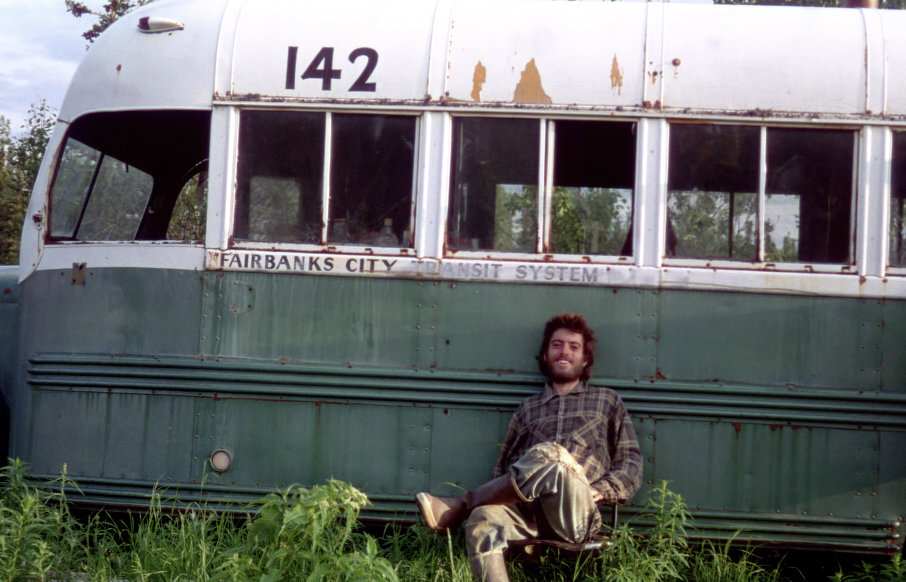
Chris McCandless in Happier Days

In the spring of 1992, a young man named Christopher Johnson McCandless, who styled himself “Alexander Supertramp,” went to a particularly wild part of Alaska near Mount Denali, was unable to return to civilization because the trail to Healy across the Teklanika River was in flood from glacial melt during the summer months and could not be crossed. Within a few weeks, he was dead of starvation with a possible assist from toxins associated with wild potato seeds. He died in the same Fairbanks City Bus #142 where he set up his base cam three months earlier.

Into the Wild by Jon Krakauer is the story of McCandless, a talented young man of many enthusiasms who broke with his family and yearned to live in nature—without money, without maps, without adequate stores of food, weapons, and insecticides (Alaskan mosquitoes are voracious).

There is something about youth that doesn’t love the prudence of later years. I have always admired people like Henry David Thoreau, Sir John Franklin, John Muir, and, yes, Chris McCandless. But I was never able to follow in their footsteps because of ill health arising from a brain tumor which, even when successfully removed, required a lifetime of prudent medication. Without Prednisone alone, I would not have lasted more than a few weeks.

The Magic Bus on the Shore of the Sushana River

Kracauer’s book made me think about my own life. He even wrote a couple chapters about his own attempt to climb a mountain near Petersburg, Alaska, called the Devil’s Thumb. Fortunately, he survived. McCandless didn’t. Why?

Andy Horowitz, one of McCandless’s friends on the Woodson High cross-country team, had mused that Chris “was born into the wrong century. He was looking for more adventure and freedom than today’s society gives people.” In coming to Alaska, McCandless yearned to wander uncharted country, to find a blank spot on the map. In 1992, however, there were no more blank spots on the map—not in Alaska, not anywhere. But Chris, with his idiosyncratic logic, came up with an elegant solution to his dilemma. He simply got rid of the map. In his own mind, if nowhere else, the terra would thereby remain incognita.

If he had only known where he was, if he had a USGS topographic map of the area, he could have returned to receive care, without even taking any heroic effort. He just did not know that he was a scant sixteen miles from a tourist road patrolled by the National Park Service. Even closer were several Forest Service and privately owned cabins that would have provided shelter and some food.

The Kracauer book is a superb read. It is greatly expanded from a 9,000-word article he wrote for Outside magazine in 1995.


Butchart Gardens on a Rainy Day

This Used To Be a Quarry

Everyone knows that gardens always look their best under bright sunlight. There is, however, one garden that looks great even on a rainy day. I am referring to Butchart Gardens, near Victoria, British Columbia. There is something about the plants there that shine in all weathers. When in Los Angeles, I love to hang out at Descanso Gardens, Huntington Gardens, the Los Angeles Arboretum, and the South Coast Botanical Gardens—but none of them hold a candle to Butchart Gardens.

The only garden in North America that I could conceive of as competing with Butchart is in Nova Scotia at Annapolis Royal: The Annapolis Royal Historic Gardens. Perhaps it has something to do with both gardens being more in the temperate climatic zone. In Los Angeles, at certain times of the year, even the most beautiful plants can look a little dusty and bedraggled.

Sign at the Garden Entrance

I have visited both gardens twice, and I love both of them. But then, I wouldn’t be at all surprised that there are other great botanical gardens of whose existence I am not aware. As much as I have traveled, I have seen only little bits here and there. Martine and I went to Annapolis Royal to see the citadel, not even knowing of the garden’s existence. The citadel is nice, but the gardens are spectacular.


Favorite Cities: Québec

View of Quebec Skyline from La Citadelle

One of my favorite cities in North America is French-speaking Québec. Martine and I have visited it twice, once staying in the city itself and once at Lévis, a short ferry ride across the St. Lawrence. It is a wonderfully walkable place, with spectacular views, fascinating little museums such as the old Ursulines’ Convent, and delicious French Canadian food. It is surrounded by 17th century ramparts which can be walked in several hours.

Many of the buildings along the St. Lawrence waterfront are built to resemble 17th century buildings, though they were built much later. There is even a funicular to take one from the waterfront up to the level of the city.

My Favorite Restaurant in Canada

To enjoy Québec to the fullest, it helps to be able to speak some French. Like the Parisians, the Québecoises appreciate it when visitors try to meet them at least halfway. Even when they speak perfect English, some of the residents will pretend not to, especially if they have reason to think that tourists are being ugly Americans.

One of my favorite restaurants in Canada is Aux Anciens Canadiens in the Old Town. Check out the menu, which comes in French and English. And enjoy your caribou and Canadian maple syrup tartine with cream. If you don’t mind having dinner late in the afternoon, lunch prices prevail until 5 pm.

In the weeks to come, I will name some of my other favorite cities around the world.

“We Are Of This Place”

Courtyard of the Indian Pueblo Cultural Center

One of the very best places to visit in Albuquerque is the Indian Pueblo Cultural Center, just a mile or so north of Old Town. I have seen various Indian tribal centers before, but not one in which the overwhelming theme is not what separates them, but what unites them. It was founded and is run by the nineteen Pueblos of New Mexico, not all of which even speak the same language. In fact there are five separate languages among the Pueblos: Tiwa, Tewa, Keres, Towa, and Zuñi.

But then, this unity is what makes the nineteen Pueblos strong—ever since they joined to throw the Spanish out of New Mexico in 1680. Sure, they were reconquered twelve years later, but they continued to act as a tribal family. And when the United States took over the territory during the Mexican War of 1846-1848, they settled down and managed to avoid the suffering felt by the more nomadic Navajo and Apaches. There were no Pueblo leaders who were forced to live in swamps of Florida: They pretty much remained in place for the next three hundred years or so.

Fortunately, the Americans were not quite so insistent about converting the Pueblos. As Dr. Joe S. Sando of Jemez Plueblo wrote:

The Spanish pressured the Pueblo People to limit our ceremonial dances and participation in religious activities. Instead we were forced to attend the Spanish house of worship. How could we relinquish a religion which was not a weekly exercise? Our belief system was interwoven into every part of our daily lives. It was this religion that helped to maintain our peaceful attitudes and balance in our daily lives.

Even so, the 19th century Americans had Pueblo and other Native children to be sent to distant boarding schools back East, where an attempt was made to, in effect, de-racinate them.

The overall impact of the Indian Pueblo Cultural Center is a positive one. There are even dances at certain times, and there is an excellent restaurant called the Pueblo Harvest Café which is one of the best places to eat in the whole city.


Killing Batteries

Leif Pettersen, Travel Writer Extraordinaire

Travel writers tend to be a bloodless crew these days, which is why I find Lonely Planet writer Leif Pettersen such a delight. He is a specialist in travel to Romania and Moldova (you’ve always wanted to go there, haven’t you?). He is the author of a blog called Killing Batteries, which sends you to some of the more interesting pieces he’s written. My favorite posting is entitled “The 10 Best Lonely Planet Articles of All Time (That I Wrote),” which is a good place to start. It will tell you why Florence is not always the best place to go in Italy, delicious local foods that look ugly, rain and other travel buzz-kills, how to travel with friends (and not want to kill them), stuff you should never take on a trip (includes: children and pets), and best places to stage a cathartic breakdown.

One could read travel articles for information, but if Leif is the author, you will also enjoy them, because the man has a great sense of humor.

Pettersen has recently come out with a book entitled Backpacking with Dracula. Remember, he is an expert on travel in Romania. And he thinks one of the safest places in the world to have a cathartic breakdown is Bulgaria. So you can feel comfortable with Pettersen behind the Slivovitz Curtain.

Leaving the Heat Far Behind

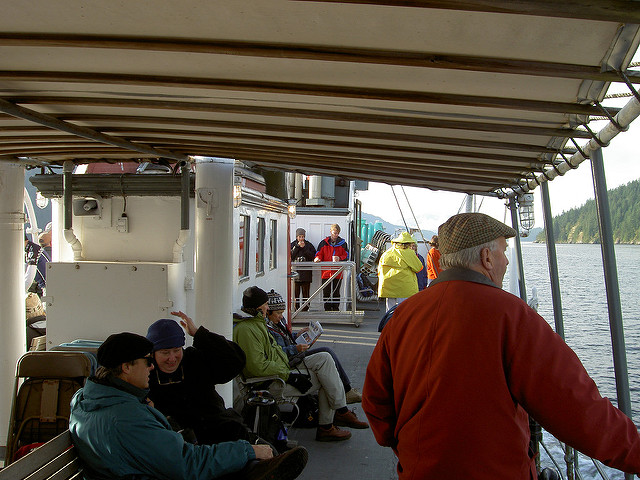
One of the Seagoing Ferries of the Alaska Marine Highway

We’re barely into July, and I’ve already had it with this summer! It started with triple-digit daily temperatures in New Mexico and continued with a Mexican Monsoon heat wave in Southern California. I am looking to take a vacation along Alaska’s Inside Passage using a combination of a flight and a series of short trips on the Alaska Marine Highway. I would not consider taking a regular cruise line for the following reasons:

  • I don’t want to eat myself into an early grave.
  • I don’t want to be sociable with other passengers: I would rather grimace at them than play in their reindeer games.
  • I don’t want to pay a ridiculous single-traveler penalty—because I would be going alone, me and my Kindle loaded with 1,500 books.

The places I would like to visit include Ketchikan, Sitka, Juneau, the Mendenhall Glacier, Skagway, and nearby parts of the Yukon. Ideally, I would go after the first frost has killed off most of the mosquito population. I understand there is a narrow gauge railroad that connects Skagway with Carcross in the Yukon, and I would not be averse to visiting Whitehorse.

My question is: Can I manage to afford two vacations in one year? Perhaps, if I’m lucky. But I have a strong desire to leave summer far, far behind me.