Somewhere To Go

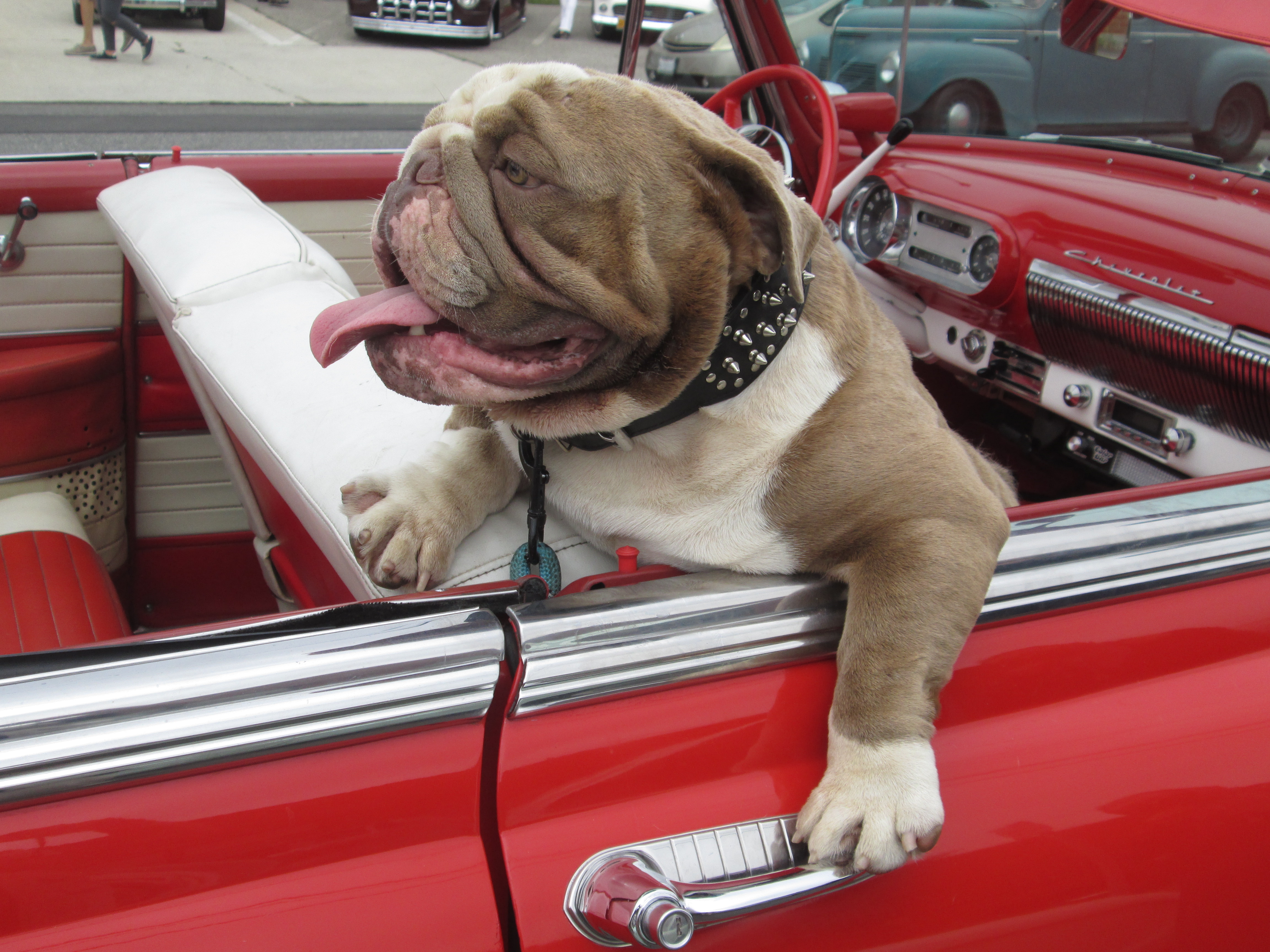
Chewy the Bulldog at the Automobile Driving Museum

The coronavirus outbreak has affected me mostly in two ways:

  1. There has been no place to go. We could take walks to nowhere, of course, but that palls quickly.
  2. We haven’t been able to see our friends in person.

In the last two weeks or so, some destinations have become available. This weekend, we availed ourselves of two of them. Yesterday, we went to the Cruise-In show at the Automobile Driving Museum in El Segundo. Martine has become particularly enamored of the museum, so much so that she donated $300.00 to them to help them out of the plaguey times.

There, we met the bulldog Chewy (picture above), who showed himself to be a real cool customer. Also, my favorite caterer, the Taco Taxi, was there with their super-great Mexican street tacos.
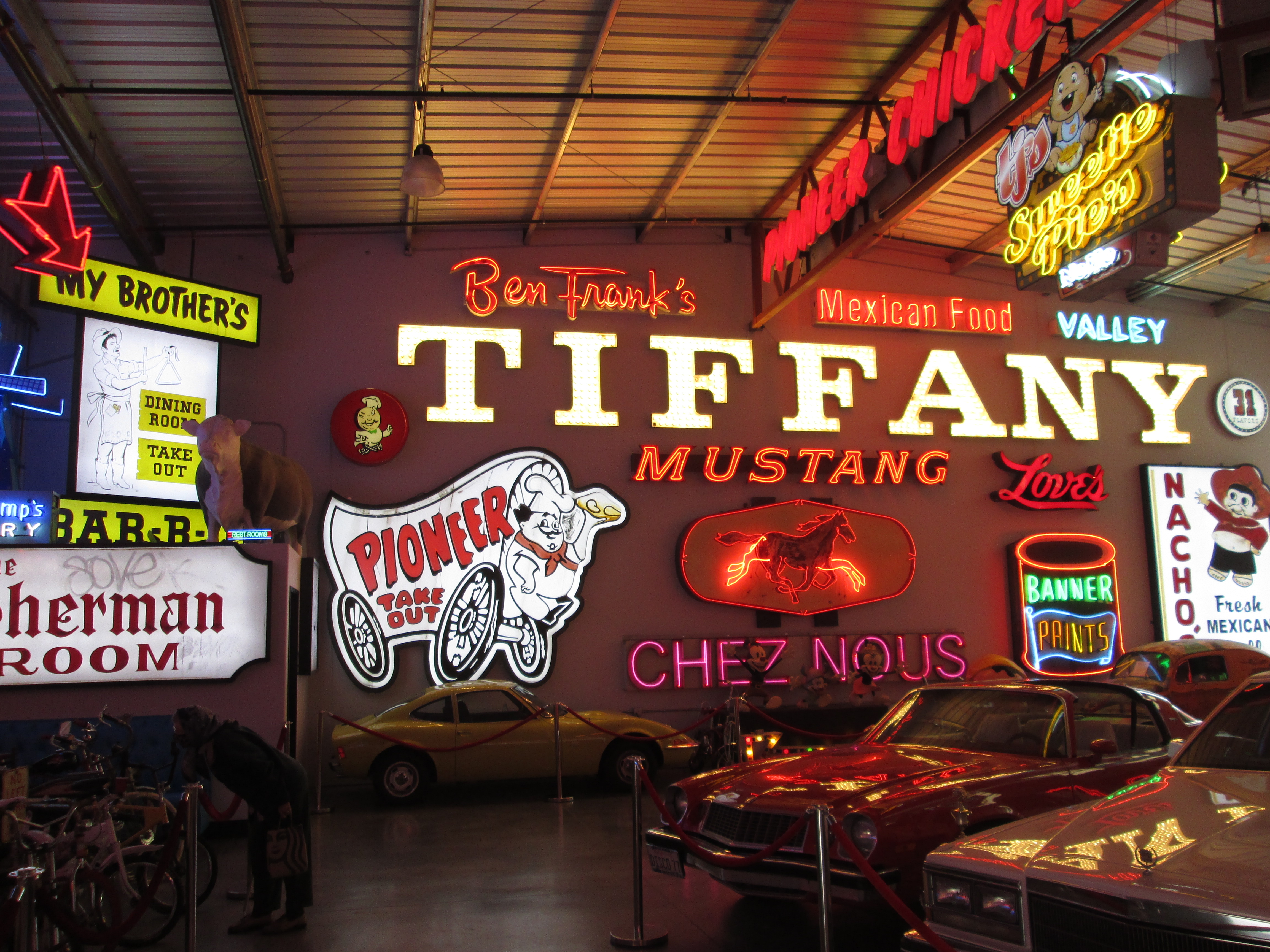
Neon Signs from the SFV Yesteryear

Today we showed up at the Valley Relics Museum in Lake Balboa to see their displays of pop culture hearkening back to the glory days of the San Fernando Valley back in the 1960s and 1970s. Most impressive was a large warehouse (above) filled with neon and other signs of businesses that are no longer. Back around 1970, I used to go to Pioneer Take-Out on Westwood Boulevard near Pico for a bucket of their chicken livers. That’s not an item that can be found at most chicken restaurants.

We had visited the museum once before, but didn’t enjoy it as much because it isn’t air conditioned, and in the Valley the heat can be formidable. Fortunately, today was on the cool side; and we were comfortable.

Manny, Moe and Jack from the Pep Boys

We ended by driving to a late lunch at Lancers Restaurant in Burbank. It’s one of Martine’s favorite sources of American coffee shoppe chow.

 

Plague Diary 28: The Great MAGA Virus

Does Trump Really Want to Kill Off His Supporters?

With the coronavirus rising again, especially in the Southern states that have formed the core of the president’s base, I seriously wonder if the Donald is trying to kill off his staunchest supporters? While eating lunch, I happened upon an article by Fintan O’Toole in the May 14, 2020 issue of the New York Review of Books entitled “Vector in Chief” from which this quote is excerpted:

We must bear in mind that Trump’s “real people,” the ones who make up his electoral base, are disproportionately prone to the chronic illnesses (“the underlying conditions”) that make Covid-19 more likely to prove fatal. A 2018 Massachusetts General Hospital study of more than three thousand counties in the US reported that

poor public health was significantly associated with the additional Republican presidential votes cast in 2016 over those from 2012. A substantial association was seen between poor health and a switch in political parties in the last [presidential] election.

For every marker of the prevalence of poor health (such as diabetes, obesity, days of illness, and mortality rates), there as a marked shift roward voting for Trump. Trump has acted in relation to Covid-19 like the God who tells the Jews to mark their homes with a sign so that the plague he is inflicting on Egypt will pass by their doors—with the malign twist that he has marked out his own chosen people for special harm.

How ironic! Following the example of their Great White Hope in the Whitest of White Houses, the voters attending his rallies in Tulsa and Phoenix are mostly not masked, and sneezing and coughing and shouting streams of coronavirus throughout the crowd. So far, Trump appears to be immune, but that is helped by the fact that he is a germaphobe who washes his hands incessantly with hand sanitizer.

Fort Tejon

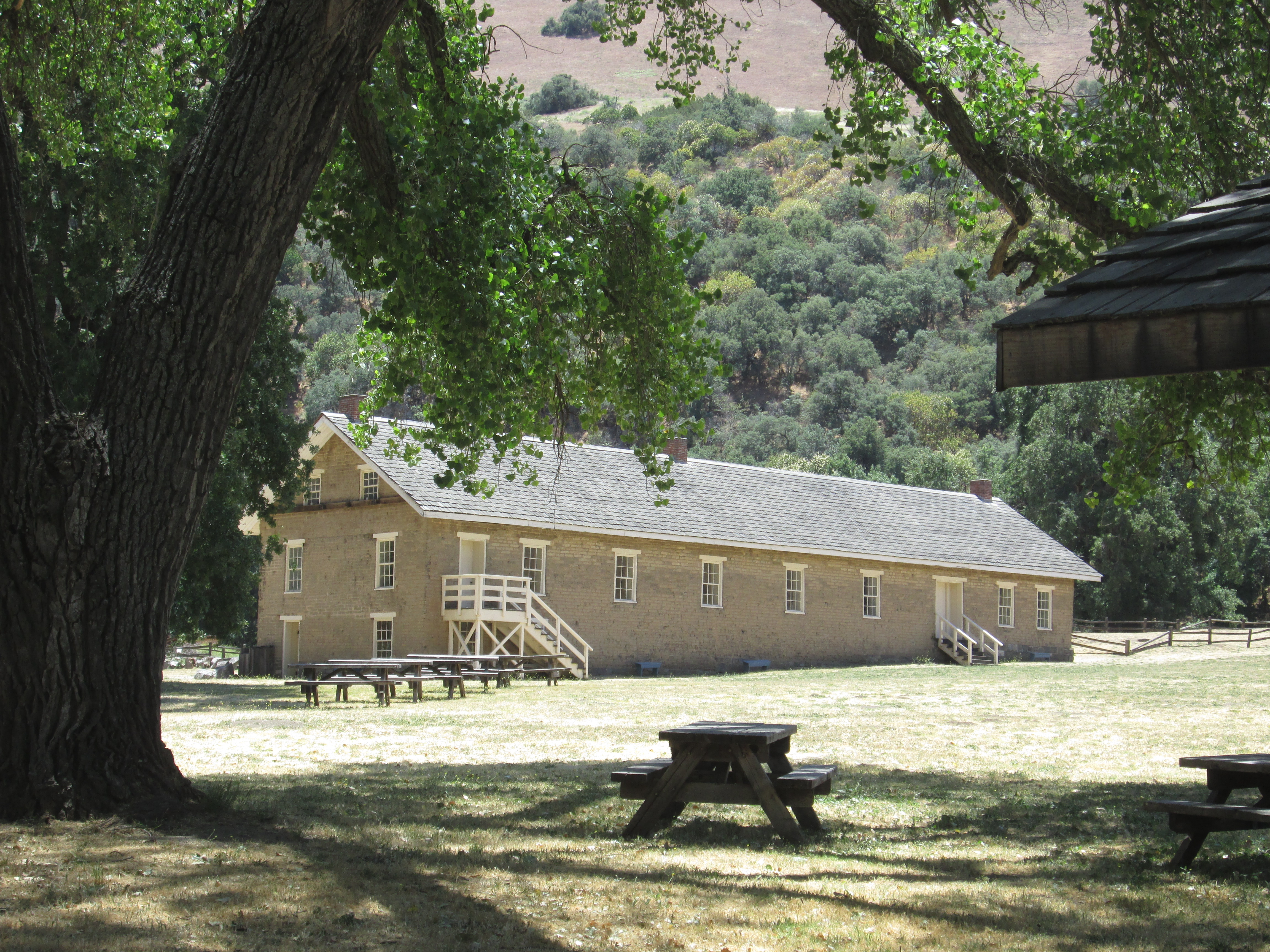
Reconstructed Enlisted Men’s Barracks at Fort Tejon

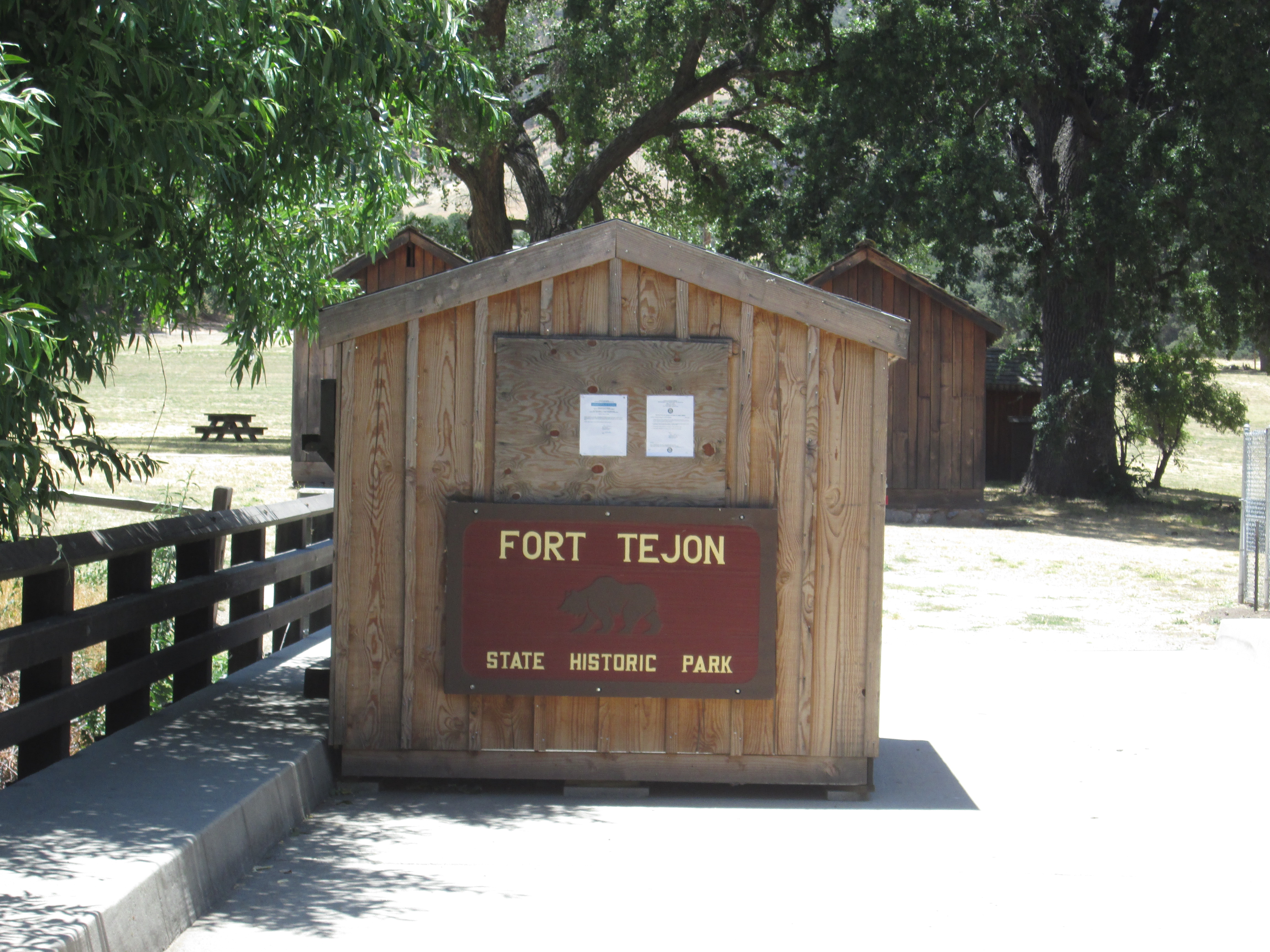
Near the top of the Grapevine along Interstate 5 is an old fort constructed soon after California joined the Union. Beginning in 1854, the fort was occupied by the U.S. 1st Dragoons to protect Southern California from the North and vice versa. Martine and I had been there a couple times before, but we were starved for some sort of destination. Although the Fort Tejon State Historical Park was open, all the buildings and their exhibits were closed in the interest of social distancing. Semi-open as it was, it was still interesting to wander around the premises looking at the reconstructed buildings.

First we drove to the mountain community of Frazier Park on the route to Mount Piños, at 8,847 feet (2,697 meters) the tallest mountain in nearby Ventura County. There, we ate at a little Mexican restaurant before doubling back to the I-5.

Entrance to Fort Tejon

There were never any real battles fought at Tejon—other than sham affairs involving re-enactors—and, what is more, as soon as Fort Sumter was fired upon, the 1st Dragoons were all shipped east, to be replaced by three companies of the 2nd California Volunteer Cavalry. There was some secessionist feeling in Southern California, but there was the staunchly Union Drum Barracks in Wilmington to keep Los Angeles in line. By September 1864, the Fort was decommissioned.

It was blisteringly hot at the Fort, despite the fact that we were a 4,000 feet (1,219 meters) altitude. The temperature was around 90° Fahrenheit (32° Celsius), but dropped down considerably as we returned to the Coast with its “June Gloom” marine layer.

The Buildings at Fort Tejon Looked to Be Made with Adobe Bricks

Most of the reconstructed buildings at Fort Tejon looked very authentic, being made with adobe bricks.

It was nice once again to have places to go, even with all the coronavirus restrictions in place.

Plague Diary 27: An Irish View

Giorgio De Chirico Landscape with Train in Distance

It was in a survey of impressions of the global coronavirus outbreak tin the April 23, 2020 issue of the New York Review of Books hat I saw this remark by Northern Irish Poet Nick Laird:

The prophecies arrive: hundreds of thousands of dead, trillions of dollars spent, millions and millions losing their jobs, their health care, their homes. Soldiers on the streets. Each graph, each blank statistic. Each talking head. Stick a fork in the ass of civilization, it’s done. Don’t be silly, this is a blip. I don’t think so. In the stream of news the poems sit like stones, lambent under the surface. Auden’s “Gare du Midi,” where the man with his little case alights from the train, and steps out “briskly to infect a city/Whose terrible future may have just arrived.”

And here’s the poem to which Laird refers:

A nondescript express in from the South,
Crowds round the ticket barrier, a face
To welcome which the mayor has not contrived
Bugles or braid: something about the mouth
Distracts the stray look with alarm and pity.
Snow is falling, Clutching a little case,
He walks out briskly to infect a city
Whose terrible future may have just arrived.


Trading Bubble Gum Cards

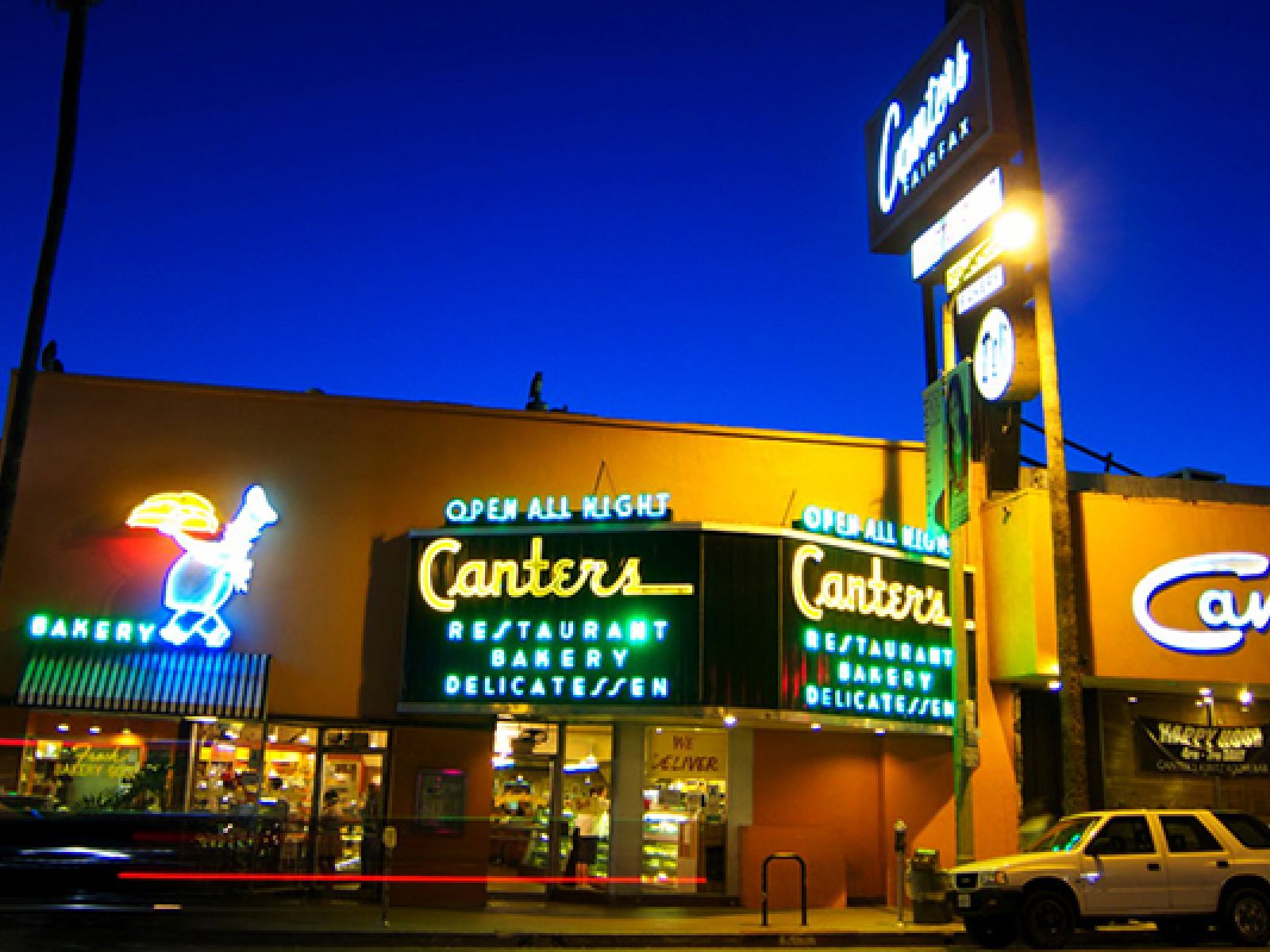
Canter’s Deli on Fairfax

When the restaurants in L.A. started to open, Martine and I decided to go for our first restaurant meal in three months to Canter’s Deli on Fairfax. So on Saturday we actually found space in the deli’s postage-stamp-sized parking lot and wandered in wearing our required face masks. I ordered half of a pastrami sandwich on rye on a cup of bean and barley soup with iced tea. Martine had knockwurst and beans. We shared a plate of kosher dill pickles.

Okay, so it wasn’t a romantic choice; but my patronage of the deli goes back more than half a century. When I went to see movies with my film freak friends, we usually stopped for a late night feed at Canter’s, which at the time professed to be open all night but usually wasn’t. Over a corned beef sandwich or a plate of kasha varnishkes, we argued about which movies were super great and which were shit. These conversations were sometimes heated, as film freaks can be counted on to be opinionated. I referred to these sessions as “trading bubble gum cards,” as they were pretty juvenile.

Two of the friends I went to Canter’s with—who curiously were the most dogmatic in their positions—are no longer with us. Norman Witty died in 2013, and Lee Sanders in 2015. In a way, I miss those days when our opinions meant so much to us. Now, even when discussing even the greatest films, I am more inclined to shrug differences off. (Maybe that’s why I’m still alive.)

Martine and I enjoyed our meal. I know we were putting ourselves at risk, but we were impatient to return to normality even for a short time. As the coronavirus threat dies down, we will return more frequently; but however good Canter’s is, it’s not worth sacrificing our life for their food.


Plague Diary 26: The Latin American Hot Spot

Covid-19 Still Rages in Latin America

I was disappointed to hear that Latin America is still considered a global hot spot for the Coronavirus, particularly Brazil, Peru, and Mexico. According to a bulletin issued yesterday by the U.S. Embassy in Mexico City:

The number of confirmed and suspected cases is still increasing daily in several regions of Mexico. Mexico City, Tabasco, Sinaloa, Aguascalientes, and Yucatan currently report the highest incidence rates of active cases (incidence rate is the number of cases per 100,000 inhabitants in the last 14 days). Hospital occupancy rates are also increasing, with the highest levels in Mexico City, Mexico State, Guerrero, Morelos, and Chiapas. Mexican health authorities have reiterated calls for people to stay home during this time.

Since I would love to re-visit Yucatán and Chiapas, this comes as bad news if i wanted to leave the country for my vacation. More and more, I think I will have several short vacations this year in the Southwestern U.S.


Plague Diary 24: Zoom, Babies, and Barkies

Boredom Times Infinity

There are a number of stereotypes emerging from our months’ long quarantine: Zoom images of not altogether with it participants, small children, and pets—just to name a few. Being retired and not involved in alcoholism or recreational drugs, I am not into Zoom. There are zero circumstances which would call for a number of my friends and acquaintances being dragooned into meeting with me. Besides, I don’t have a camera on my PC at present. If I decide to get Skype or some other video telephony application, I might change my mind. Otherwise, nyet.

Pets and Babies Do Nothing for Me

It seems that most quarantiners have an irresistible urge to feature their pets and small children. That would have meant something to me decades ago, when I wanted to join that particular club. But having my pituitary gland and the chromophobe adenoma that devoured it removed at the age of twenty-one, I became ineligible to have a baby that looked anything like me. Nowadays, when I think of babies, I think of overfilled diapers. And I become comically allergic when I spend more than a couple hours with a dog or cat.

I would very much like to see my friends, but fortunately I am not going crazy from isolation. It seems that I am well-prepared for quarantining:

  • I have a library of several thousand books
  • I own hundreds of DVDs of classic movies, foreign and domestic
  • My cable TV gives me access to hundreds of free movies each week
  • I like to cook
  • I have a telephone

So I don’t have to shove pets and poopy diapers in your face, and I don’t need to appear on Zoom wearing nothing below my navel. You might call it the joys of sublimation.

Plague Diary 23: An Etymological Curiosity

A Look Back to the 1918 Influenza Pandemic

I was scanning the channels early this evening when I made a surprising discovery. There seems to be a term from the 1918 Influenza Pandemic that has become part of our language. The “crawl” on one of the news stations casually mentioned that the term “slacker” derived from scofflaws during the pandemic that refused to wear face masks.

According to the Saturday Evening Post website, then, as now, there was an organized resistance to wearing masks:

[T]he Influenza pandemic of 1918, triggered a comparable patchwork of ordinances and ensuing economic fallout. Some Americans’ reactions a century ago took similar form, particularly a group of fed up San Franciscans who called themselves the “Anti-Mask League.” Although San Francisco saw one of the worst U.S. outbreaks of the pandemic, these dissidents opposed orders from the city’s Board of Health not because of the economic implications, but because they saw it as their right to walk the city maskless. Besides, they didn’t think the things were working anyway.

The more things change, the more hey remain the same. The members of the Anti-Mask League were referred to as slackers.

From the Enid Daily Eagle of September 25, 1918

There are, of course, some differences between the coronavirus and the outbreak following the First World War. All I can do is re-iterate the warning from the newspaper clip above:

Don’t get “scared.”


Plague Diary #22: The Shrunken Universe

In My Life, the Maya Stand for the Universe at Large

The first time I traveled outside the United States, it was to Yucatán in 1975, when I was thirty years old. The last time I traveled outside the United States, it was the same—just as I reached the age of seventy-five. Almost immediately after my return to California, the Universe shrank suddenly. There was my apartment with its books and DVDs (and, yes, VHS tapes); there were the grocery stores and pharmacies and doctors’ offices. and precious little else.

Now, as the coronavirus is pulling out with the tide, the Universe is slowly growing larger. There are changes: people are wearing face masks (or not), and the rate of growth is incremental, with promise of sudden expansion after Independence Day. I have this sudden urge to travel, even if it is to the nearby desert, which is starting to heat up as summer nears. I would be content to travel somewhere in the United States with Martine. Currently, she is uninterested in visiting any foreign country except perhaps Canada.

On my kitchen table is a small pile of Lonely Planet guidebooks which I look into from time to time to remind myself that my present reality is just a small subset of what exists. I would not mind returning to Yucatán to visit the Maya sites that have so far eluded me: Cobá, Chacchoben, Dzibanche, Kinichna, Oxtankah, Calakmul and the Rio Bec sites, Yaxchilan, and Bonampak. Then, too, there are the Maya ruins in adjacent Belize—a new border to cross.

In fact, every time I look, there are more Maya sites to see. Most of them are in jungle terrain, which would mean protecting myself from mosquitoes, garrapatas, and other baddies referred to in Mexico as bichos. I rather like the fact that there is always more to see, to know, to absorb. To quote the Tao Teh Ching, “From wonder into wonder existence opens.”


Rights vs “Rats”

End Quarantine Protest in Huntington Beach

They are both the same word, but “rats” (R1) is the Southern Confederate drawl version of “rights” (R2). They do not, however, refer to the same thing. R1 people are likely to insist that this is a free country, meaning they are free to do anything they want, even if it causes harm, like shouting “Fire!” precipitating a riot in a crowded theater. They are free to think that whatever they believe is true, such as that Covid-19 is a lie.

Myself, I consider myself to be an R2 person. I have certain inalienable rights, but these stop short when they cause harm. If I fire an AR-15 automatic rifle into a crowd, the possibility of killing multiple people puts a limit on my “rats.” Likewise, going to a crowded bar, getting coronavirus, and passing the disease on to my friends and relatives, possibly killing several of them, is to my mind a criminal act.

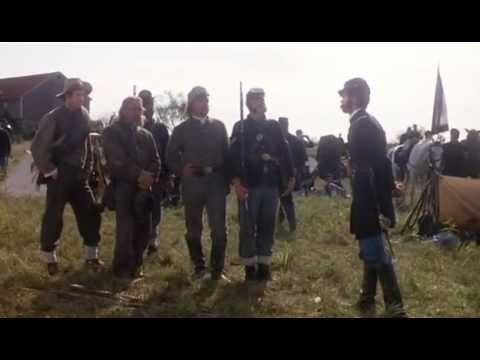
Confederate Prisoners Fighting for Their “Rats”

I first stumbled onto the difference in a scene from the 1993 Ted Turner film Gettysburg, when C. Thomas Howell, playing the part of Lieutenant Thomas Chamberlain, comes across a group of Confederate prisoners and asks them what they were fighting for. He doesn’t quite understand their answer, that it wasn’t for slavery that they were fighting, but for their “rats,” making him wonder why they were talking about vermin. It’s interesting to me that one person’s rights could be seen as another person’s crimes.

I see Trump in a difficult position. The disease is a serious one, and at the same time the economy is in dire straits. On one hand, his return-to-work policy could result in tens of thousands of deaths, especially of those misguided people who believe in him. On the other, it could lose him his presidency if his followers get so an inkling of what is really happening.