Mexican Folk Art: Museo de Arte Popular

A Delightful Museum of Mexican Popular Art

I began my vacation staying at the Hotel La Piazetta at Parque de La Mejorada. At first, it didn’t seem there was very much to see in the immediate area—at first glance. Then I noticed a museum at the corner of Calle 50A and Calle 57 dedicated to Mexican folk art. So one morning, I started by visiting the Church of La Mejorada, which was right across the square. Then I waited for the museum to open at 10 am.

Masked Skeleton

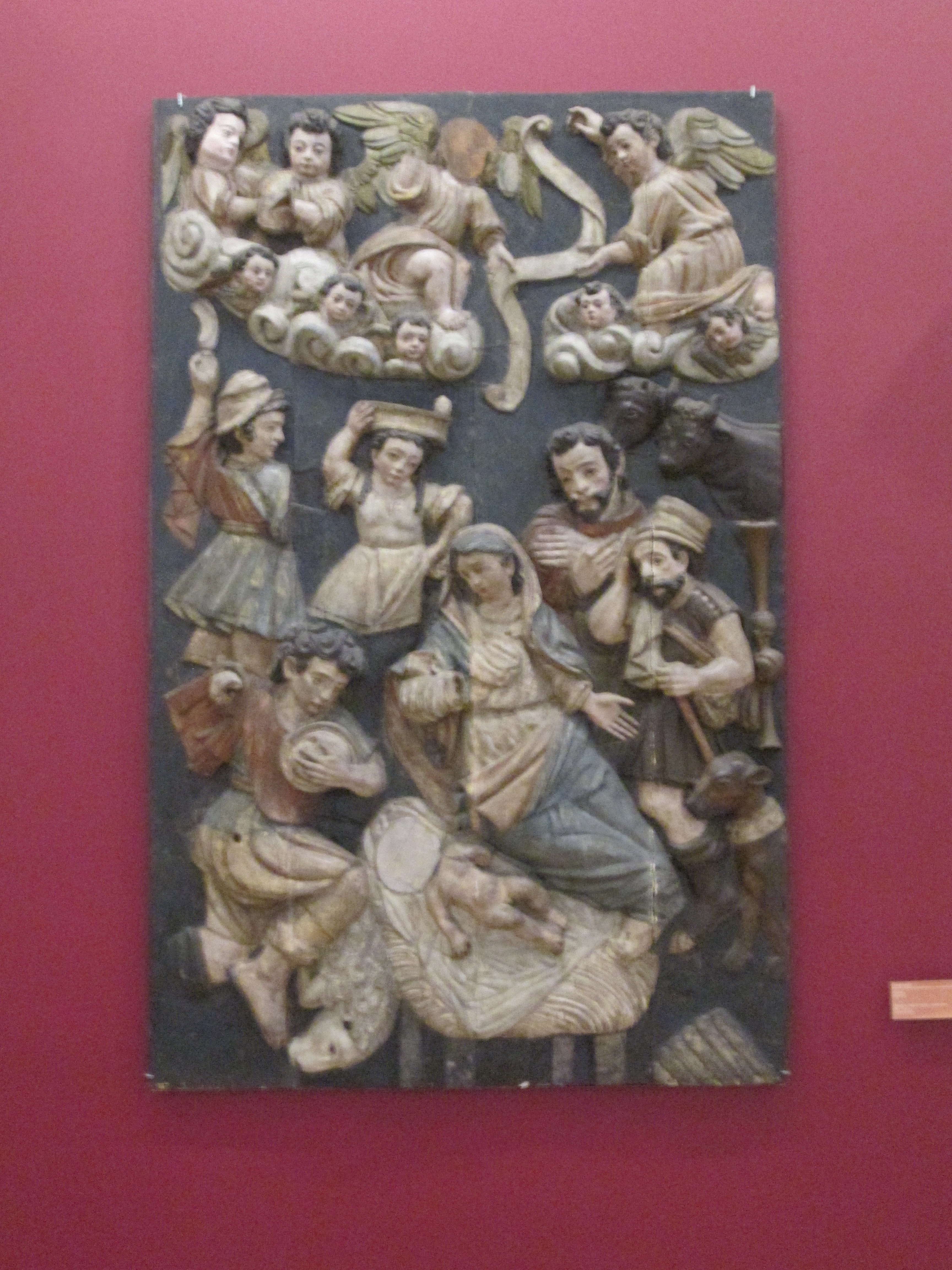
On the ground floor was an exhibit of colorful textiles. They were nice, but I was was after something less abstract. My wish was fulfilled by the galleries on the second floor. There they were: all the Posadaesque skeletons, religious themes, and indigenous designs.

You cannot go far in Mexico without running into artesanias created, in many cases, by common people and readily available to yanqui tourists. Sometimes the work is so fine that it takes your breath away.  You can find something like this in parts of the United States, but most of the energy seems to go into antiques.

The Birth of Christ with Shepherds, Angels, and the Magi

It seems that wherever I have traveled in Mexico, I have run into what I regard as clearly identifiable Mexican folk art. Much of the folk art in Yucatán isn’t even particularly Maya: It seems to be more of a pan-Mexican thing.


House of the Turtle

The House of the Turtle at Uxmal

I have always had a special feeling about turtles. That comes from having lived at the edge of a desert for the last half century suffering from a chronic lack of rain. I strongly suspect that the Maya of the Puuc Hills (redundant: Hill Hills the way that Torpenhow Hill in England means Hillhillhill Hill) felt the same way. One of the simplest, most classical and beautiful structures at Uxmal if the House of the Turtle.

It is named after the row of carved turtles that appear along the top edge:

Detail of Carved Turtle

As I have mentioned previously, the hills of the Puuc are separated from the underground rivers of the Yucatán Peninsula by several hundred feet of impenetrable limestone. The Maya of the Puuc had to dig cisterns (called chultunes) which they hoped would fill with water during the rainy season. In good years, they did. But when a series of dry years came in the Ninth Century A.D., the Maya just walked away from Uxmal. Why obey the local god/king and get a hernia hauling stones to build new structures when they might easily die of hunger or thirst?

All the stones of Uxmal—and, for that matter, all the Maya sites—were hauled by human labor. There were no wheeled conveyances because there were no wheels, and what would be the point anyway when there were no draft animals to pull them over roads which they would have to build of other heavy rocks in the first place?

Looking Through the Two Doorways of the House of the Turtle at the Nunnery Quadrangle

When you think of it that way, you can understand why the Maya just walked away from their ceremonial centers and changed their way of government. It was a miracle that they allowed themselves to be used for so many hundreds of years hauling rocks and putting them into place—even creating such magnificent sites as Uxmal—for little reward in their hardscrabble lives.

The Maya who built Uxmal are still in the neighborhood: It’s just that they are not quite so much involved in major engineering projects. And their homes, if built of stone (or, more likely, cinder blocks) use trucks to do the heavy hauling.


Splashing Out at Uxmal

My Guide, Jorge Mex, at the Governor’s Palace

At the key Maya ruins I visited, I hired a guide all to myself. It only cost a few hundred pesos for an hour or two, and it was worth it for the quality of information conveyed.  At Uxmal, I sought out and hired Jorge Mex (pronounced Mesh), who had been recommended to me by Valerie Pickles, a hotelier at Santa Elena. I could have joined a group tour with a large crowd of ignoramuses who didn’t know the first thing about the Maya, but to have the time of someone who worked with the archeologists at digging and restoring the ruins is worth the extra cost.

As I said before, this was my fourth visit to Uxmal, but it has always ranked first with me; so it was worth the extra effort. At Chichen Itza, I was my own guide: Although Chichen is a spectacular site in many ways, I was less interested.

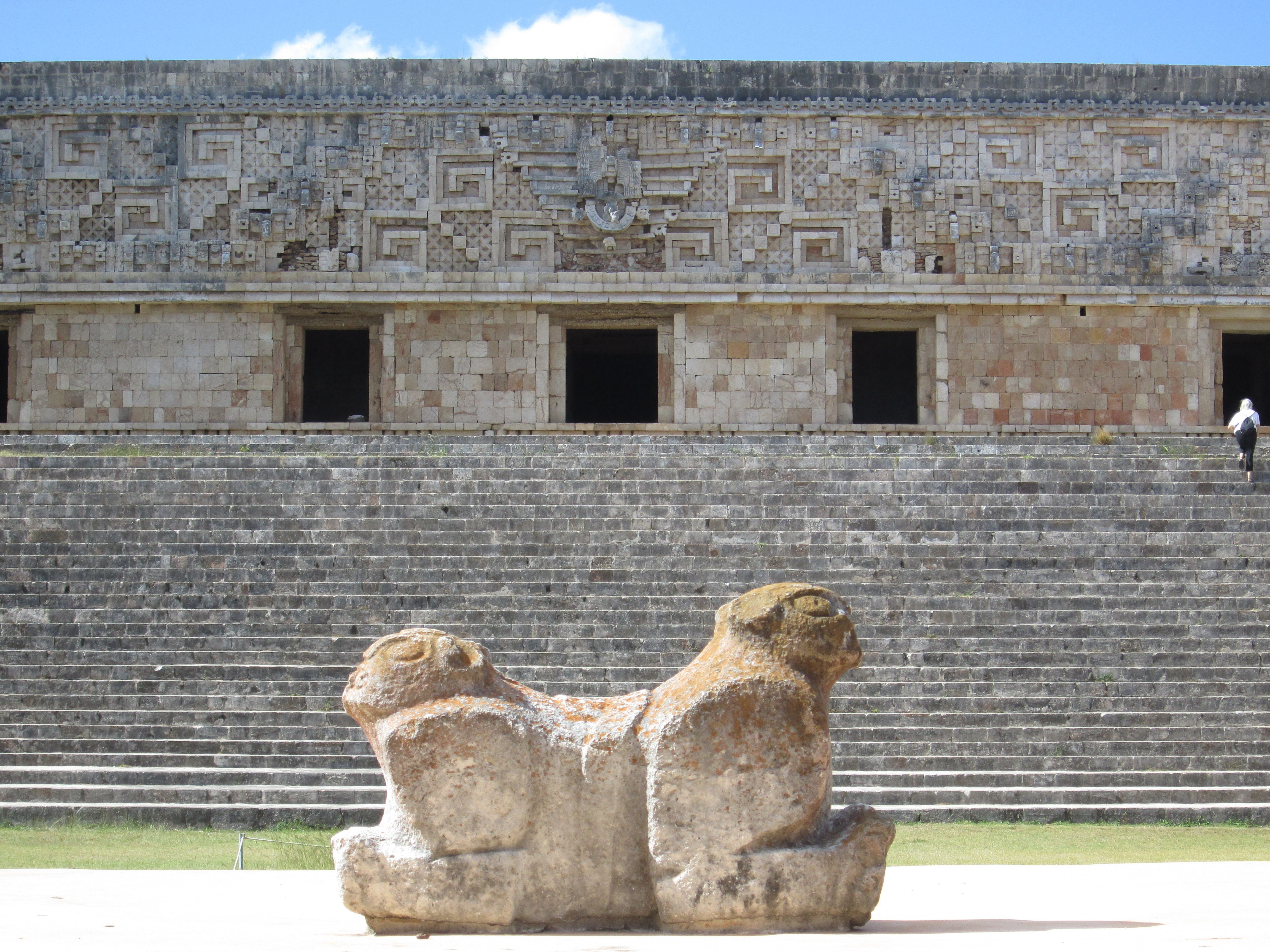
Double-Headed Jaguar Throne at the Governor’s Palace

Although there was a structure at Uxmal called the Governor’s Palace, there was no governor. There was, however, a king who ruled at the time the Palace was built: His name was Chan Chak K’ak’nal Ajaw. Curiously, none of the other god/kings of Uxmal are known by name, according to Robert J. Sharer and Loa P. Traxler’s authoritative The Ancient Maya (Sixth Edition). Unfortunately, the glyphs at Uxmal have been badly weathered.

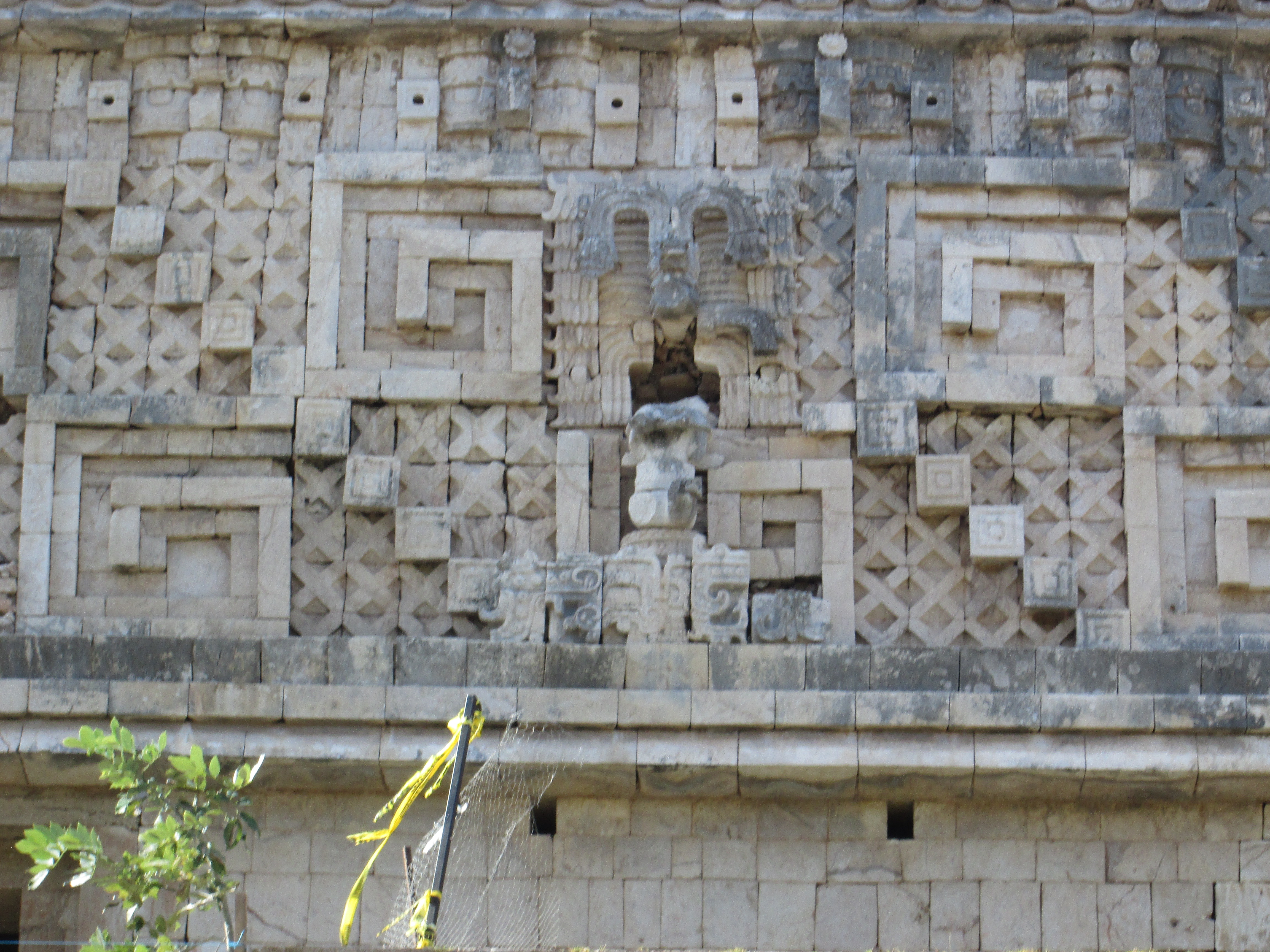
Details of Carved Stones on the Governor’s Palace

Notice the square stones at the bottom of the above photo. They are characteristic of the Puuc (pronounced Pook) style of architecture. The word puuc in Maya means “hill.” The Puuc region included some five or six sites that were in the hill country in the south of the State of Yucatán, ranging up to six hundred feet (183 meters) above sea level. This made access to water for drinking and growing crops a bit of a problem, as the underground river system of the peninsula was too deep, and there were no nearby cenotes (sinkholes) allowing access to the water.


Maya Nuns?

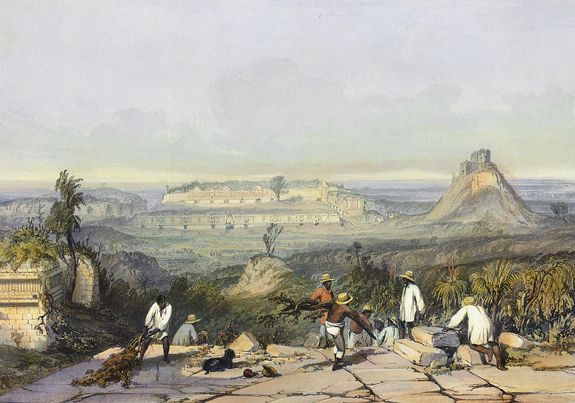
Detail of the “Nunnery Quadrangle” by Frederick Catherwood

The names ascribed to Maya archeological structures has almost nothing to do with their real function, which is mostly unknown to us. The names were assigned by the Spanish or local Maya who were in many cases a thousand years from having inhabited the ruins. Most of the great Maya cities were abandoned around the Ninth Century A.D., and Uxmal was no exception.

By the time John Lloyd Stephens and Frederick Catherwood visited in 1839, the various names were already in use, such as the Templo del Adivino or Pyramid of the Magician, the Nunnery Quadrangle, the Palace of the Governor, and so on.

One of the Buildings of the Quadrangle Today

So if you think there were a bunch of Maya nuns running around in the quadrangle of buildings that bears their name, you can forget about it. I am sure that some twelve hundred years ago, the local residents knew exactly what function every public building served. But we will likely never know.

The buildings have various themes carved in the area above the doors, including snakes, masks of the rain god Chaak, geometrical designs, and even a typical residential Maya hut of recent vintage. There are even a few very worn hieroglyphs which commemorate various dynastic events about which we know very little.

Chaak Masks at the Edge of the Structures (and Note the Maya Hut at the Upper Right)

As I wrote in my previous post entitled “The Crown Jewel,” I regard Uxmal as the greatest of the Yucatec Maya sites because of the excellence of the architecture and the care with which the structures have been restored using the mostly original stones. I remember on my earlier visits seeing piles of carved stones which the archeologists of that time had not yet decided how to use. Now there are fewer of those piles lying around.

Next: The Palace of the Governor


The Crown Jewel

Overview of Uxmal Ruins Today

When John Lloyd Stephens and Frederick Catherwood traveled in Mexico and Central America to visit Maya ruins, the only place where they went twice was Uxmal in Yucatán. Their description of the site appears in both of their books: Incidents of Travel in Central America, Chiapas, and Yucatán and Incidents of Travel in Yucatán.

In fact, there is something about the place which calls one back. I have now visited it a total of four times, usually staying overnight at the Hacienda Uxmal Hotel and spending extra time with what I consider to be the crown jewel of Maya architecture.Over the next few days, I intend to share with you why I feel this way.

Pretty Much the Same View in 1839 as Drawn by Catherwood

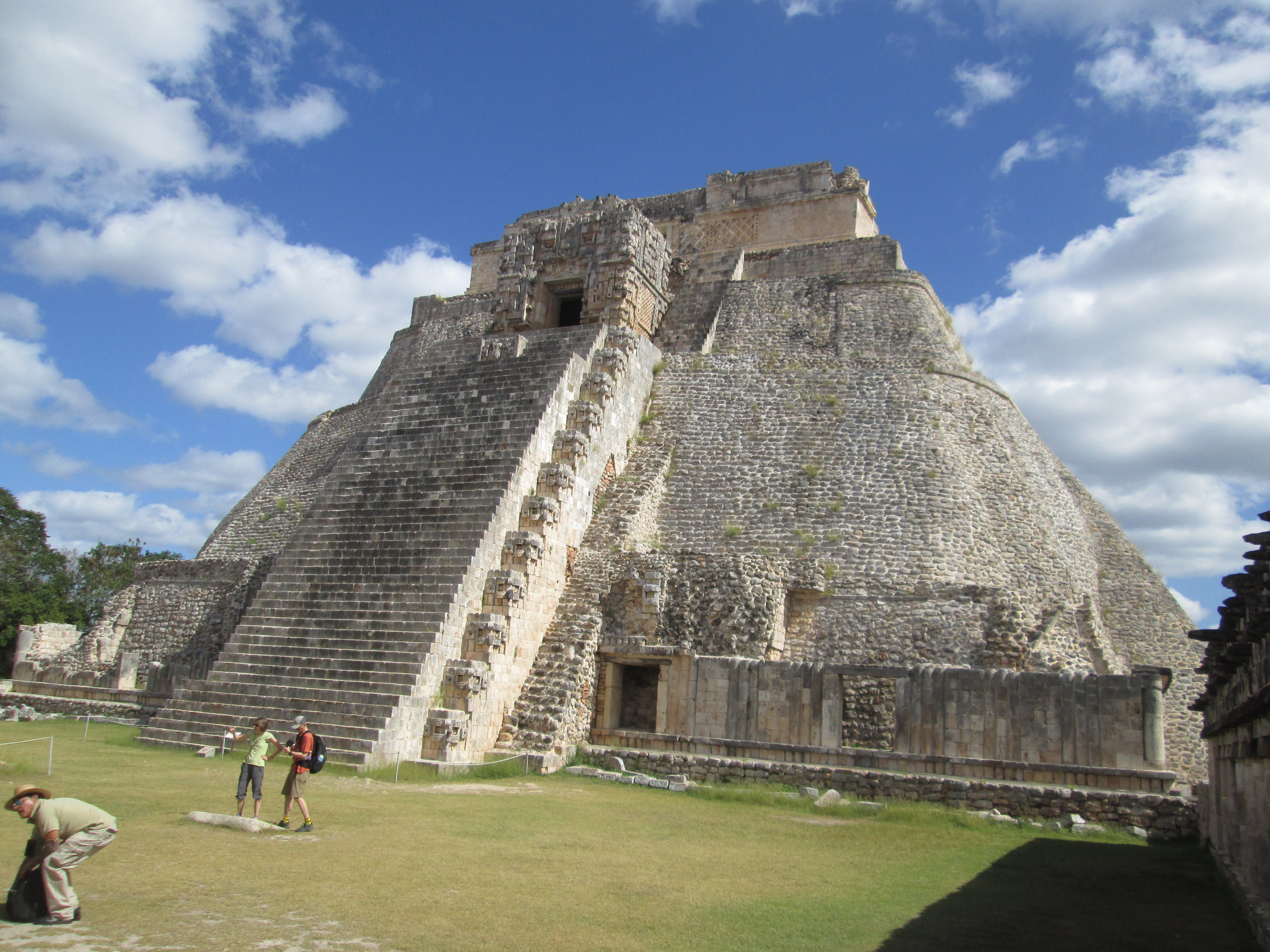
On my first visit, I went on a group tour under the auspices of Turistica Yucateca in Mérida. As the tour van pulled up within sight of the Templo del Adivino, also known as the Pyramid of the Magician, I noted that he crossed himself twice. The Templo del Adivino is shown below in greater detail:

The Templo del Adivino, or Pyramid of the Magician

On previous visits, tourists were allowed to climb the pyramids, and a chain stretched from the base to the top of the Templo del Adivino to help with this. As you can see for yourself, the stairs are steep, with higher than usual risers and narrow treads. When some tourists fell to their deaths from the heights of the pyramid, INAH (the national Institute of Anthropology and History, which controls the archeological zones) began to forbid climbing the ruins. Because “boys will be boys,” some lesser and more easily scalable ruins still allow climbers—but only if the ruins are not as important as the Templo del Adivino or the Castillo at Chichen Itza.

Next: The so-called nunnery quadrangle.


Kind Hearts and Blistered Toes

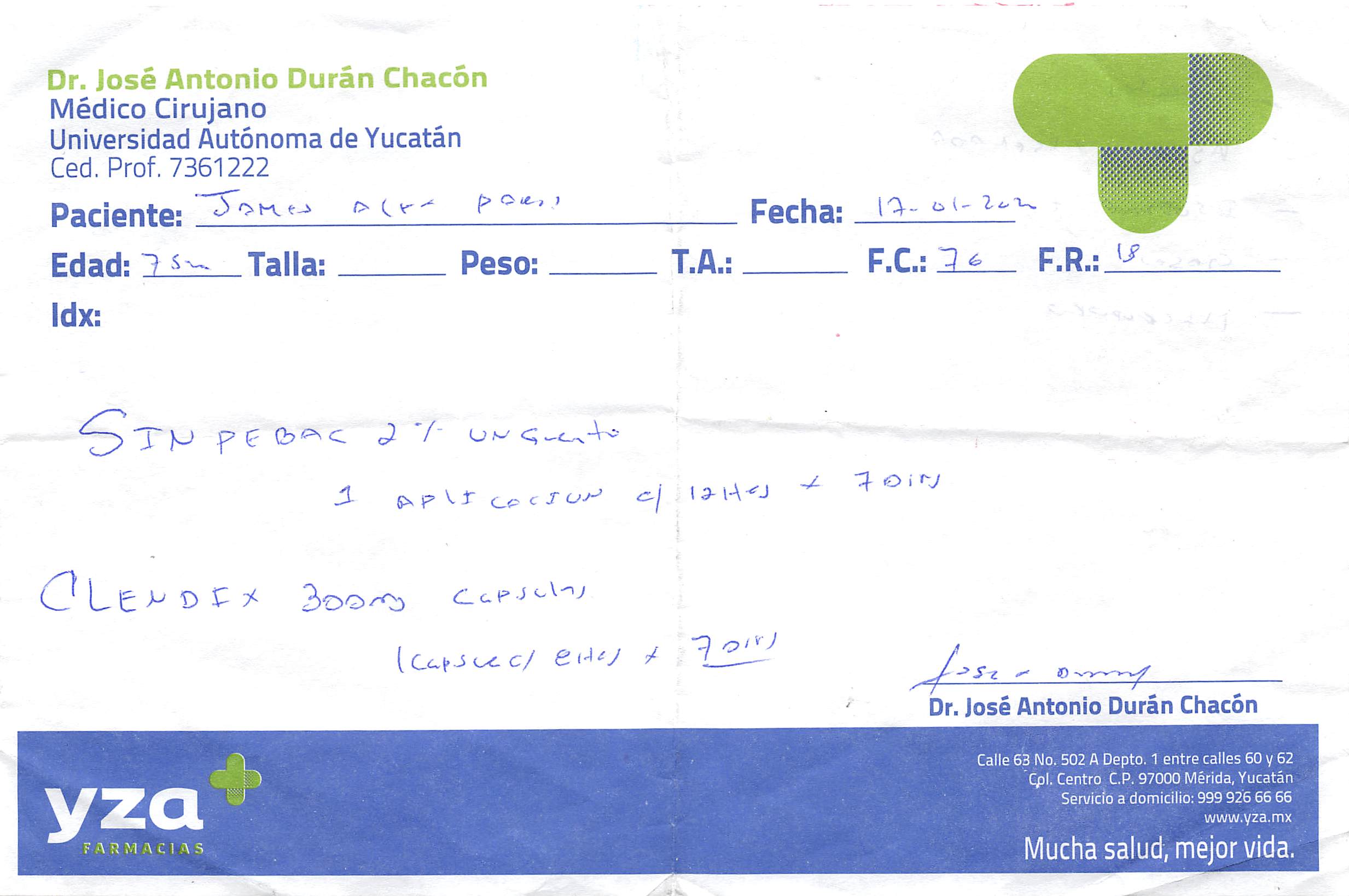
A Mexican Doctor’s Prescription for a Blistered Toe

Whenever I encounter a medical problem in my travels, I go to see one of the local doctors. This trip, I developed a nasty blood blister on my left big toe after just two days in Mérida. As I walked out of the Cathedral of San Ildefonso, I was approached by an English-speaking guide named Rafael. Although I was limping badly, I willingly took his guided tour. As it was winding down, I asked him if he could translate my English into Spanish for me to a Mexican physician. He was willing, and suggested the “Doc-in-a-Box” connected with the big Farmacia Yza on the main square.

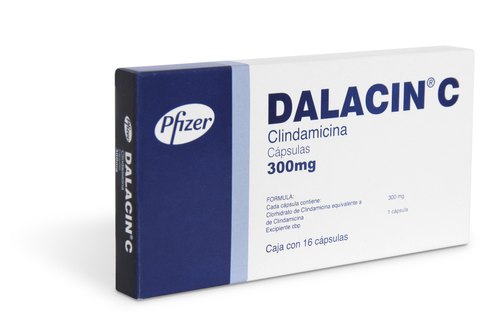
So he and I saw Dr. Durán Chacón, a young locally trained physician, with Rafael translating. Using the bandaging, wound cleanser, antibiotic capsules, and antibiotic ointment he recommended from the Farmacia, the good doctor cleansed my wound and suggested that I bandage the toe twice a day, applying the cleanser and ointment. Three times a day, I took a 300mg Dalacin C Clindamicina capsule for about five days.

The Antibiotic I Was Prescribed

Fortunately, the good doctor’s recommendations worked; and my toe healed in record time. And it only cost me a few hundred pesos, a small fraction of what I would have had to pay Stateside.

Not surprisingly, Rafael invited me to a souvenir shop in which he was a partner. I knew I should express my gratitude for his kindness so I purchased a few nice items to take back to L.A.

Do I think he was being mercenary? Yes and no. He was a small businessman with a kind heart, and he saved my vacation from turning into a medical casualty. Again and again during my trip, I met with kindness; and I tried to express my appreciation in a meaningful way, even if it meant dispensing a few extra pesos.

Pirates of the Caribbean

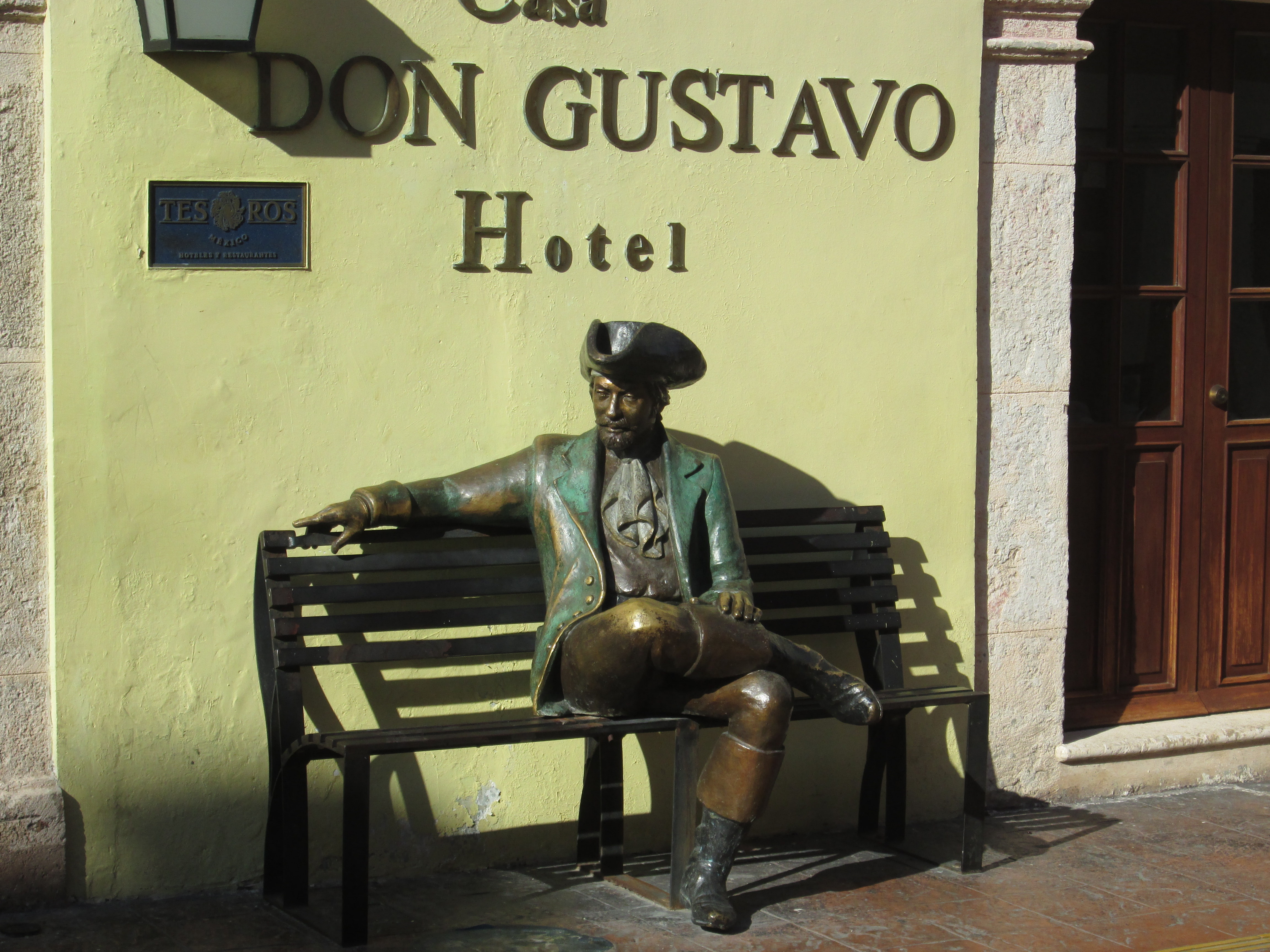
Statue of Pirate on a Bench in Campeche

It was by no means one of the gold and silver ports used by the Spanish treasure fleets (those were in what is today Panama), but the city of Campeche, Mexico, was the main port of Yucatán from the 17th through the beginning of the 19th centuries. The city’s wealth came primarily from a plant used for dyeing textiles called palo de Campeche, salt from evaporation, and shipbuilding. The result was that the city was frequently attacked by pirates.

The most prominent of these were the Dutchman Laurens de Graaf, called Lorencillo, and Jean David Nau, called El Olonés. Of the latter, it was said:

He committed innumerable and famous stumbling against the Spanish viceroyalty of the mainland. In a terrible storm, he lost his ship on the coast of Campeche. All the men were saved, but, arriving on land, the Spanish persecuted them by killing most of them, and also hurting the Olonés. Not knowing this how to escape, he thought about saving his life through a ploy: he took several handfuls of sand and mixing it with the blood of his own wounds he smeared his face and other parts of his body. Then, hiding with great skill among the dead, he remained motionless until the Spaniards left the field of struggle. Since they were gone, he retired to the forest, sold his wounds and took care of them until heal and then headed to the City of Campeche perfectly disguised. In the city, he spoke with certain slaves to whom he promised freedom in case they obeyed him. They accepted their promises and stealing a canoe at night, threw themselves into the sea with the Olonés.

Surviving Fortifications in Campeche

Other pirates included Sir Francis Drake, John Hawkins, Cornelius Jol, Portuguese Bartholemew, Jacobo Jackson, Michel de Grandmont, Henry Morgan, and finally Jean Lafitte, who helped Andrew Jackson win the 1815 Battle of New Orleans during the War of 1812.

What the Spanish and the people of Campeche did was to fortify their city, surrounding the center with walls on all sides and putting separate fortifications on the north and south.

The Fortress of San Miguel, South of the City

With independence from Spain, the pirate menace eventually abated. But many of the walls (baluartes) that surrounded the city still exist and are walkable. You can also visit the two large fortresses that protect Campeche on either side.


Boat People

Oh, Those Evil Mexicans!

For this post to make any sense, you’ll need to know the exchange rate between the U.S. dollar and the Mexican peso around the time of my trip. When I was there, the peso ran around 17.5 to the dollar, or about 6¢ each.

There is not much love lost between cruise ship passengers and Mexicans. (In fact, there is not much love lost between cruise ship passengers and me, for that matter.) They tend to be retirees whose idea of paradise is to rot on some beach somewhere. They know next to nothing about the countries they visit. In fact, they don’t know the language; their wallets are stuffed with dollars; and they basically listen to what their handlers tell them.

I was in Izamal when for a brief moment, I was mistaken for a boat person. I hand just seen the Church of San Antonio de Padua and wanted to get back to my room. There was a taxi tout next to the Centro bus station who said a taxi would cost 100 pesos for the five-block ride. I glared at him, said that was demasiado caro (“too expensive”), and hoofed it back to my room, which I would have done in the first place if I weren’t recovering from a nasty blister on my right big toe. The tout looked surprised: These boat Gringos weren’t supposed to know any Spanish, and certainly wouldn’t know that the in-town taxi rate in Izamal was only 25 pesos.

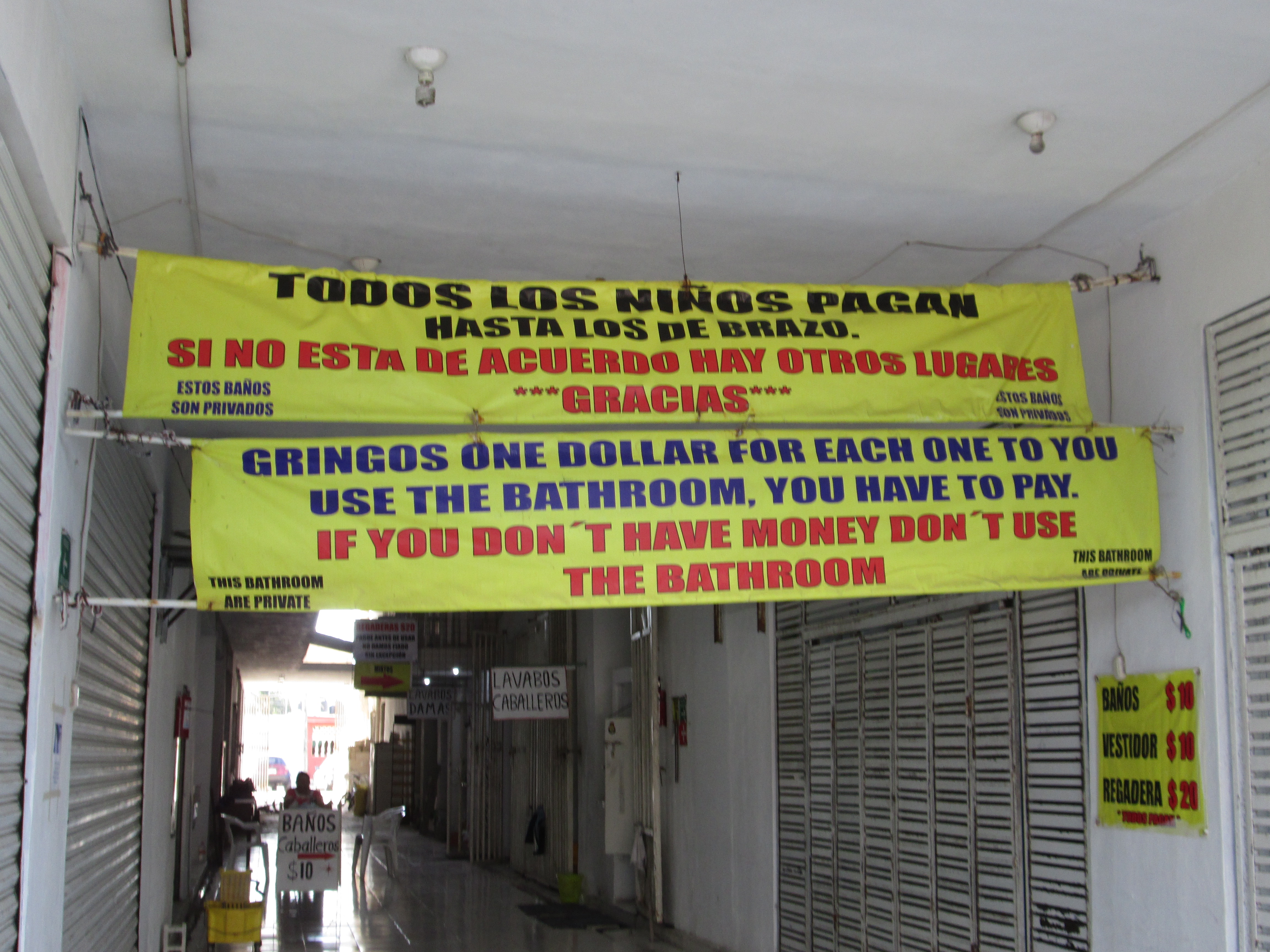
Cut to Progreso, which has two or more cruise ships call each week. The malécon fills up with American cruise ship zombies, who quite naturally have to relieve themselves from time to time. There are bathrooms (sanitarios) in the alleys off the malécon, costing 5 or 10 pesos each. The equivalent price in dollars is 30-60¢, but U.S. coins cannot be exchanged for pesos in Mexico, so the bathroom is charging $1.00 to Gringos. (The sign on the right side of the above photo sets the price in Mexican currency for a bathroom visit to be 10 pesos.)

Finally, also in Progreso, I saw a scene that annoyed me to no end. I purchased a one-way ticket to Mérida for 21 pesos. At the same time, a tout was selling round trip tickets to Mérida for $10.00 each, about four times what I paid. The boat people were grabbing them up as if they were a bargain. Several, seeing that I spoke Spanish while looking like a Gringo, came up to ask me questions. I smiled and answered them … in Hungarian. I have no intention of being a cavaliere servente to a bunch of brain-dead Yanqui tourists.

The Yellow City

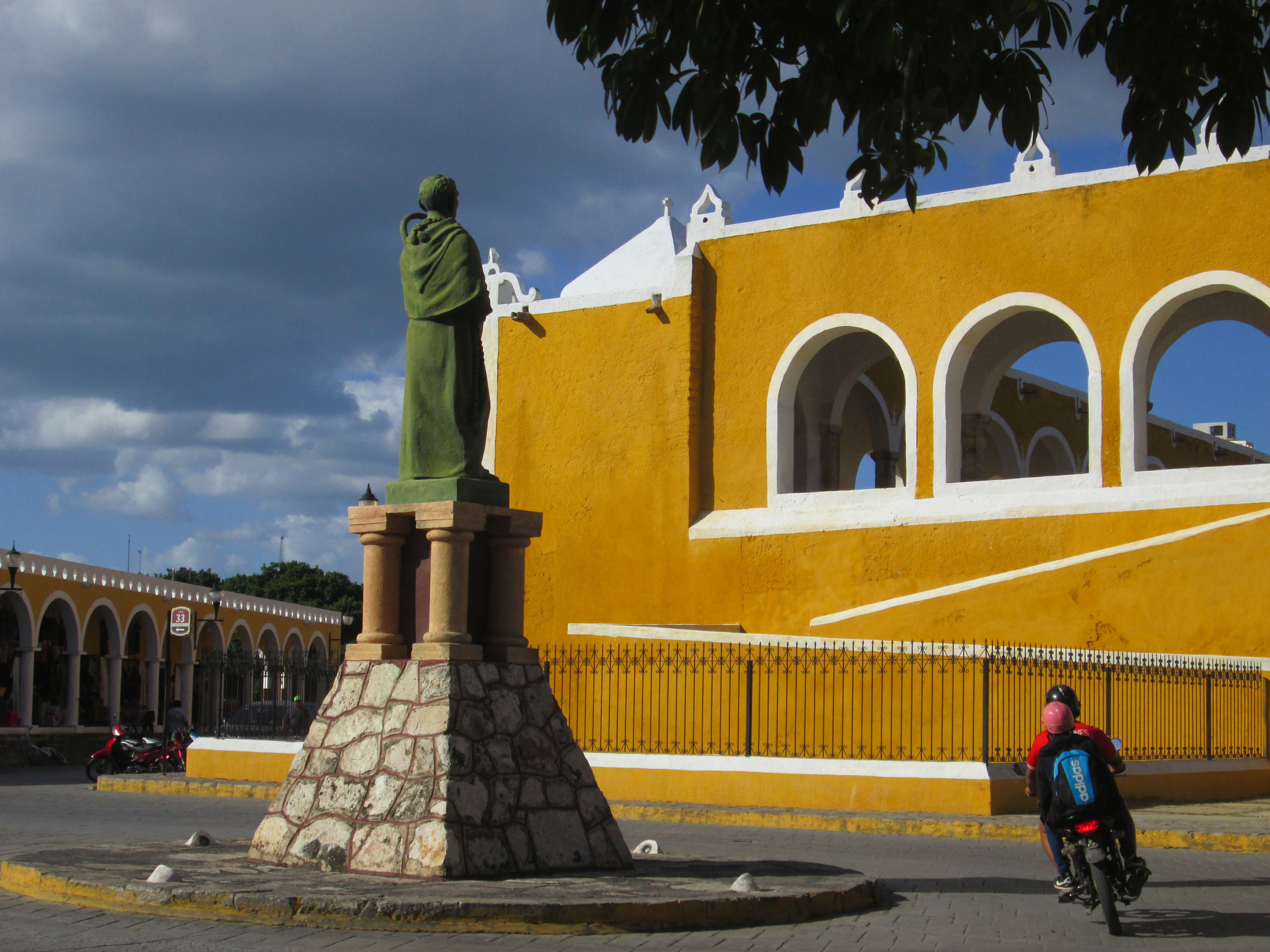
Statue of Diego de Landa Facing the Church of San Antonio de Padua

On my recent trip to Yucatán, I enjoyed staying in smaller towns such as Izamal, each of which seems to have some unique claim to fame. In the case of Izamal, it was the deep yellow color that characterized most of the structures in town. There are a number of reasons for this, but I like the story my guide to the Church of San Antonio de Padua told me: “It’s the color of corn—and we Maya believe that man was created from corn.”

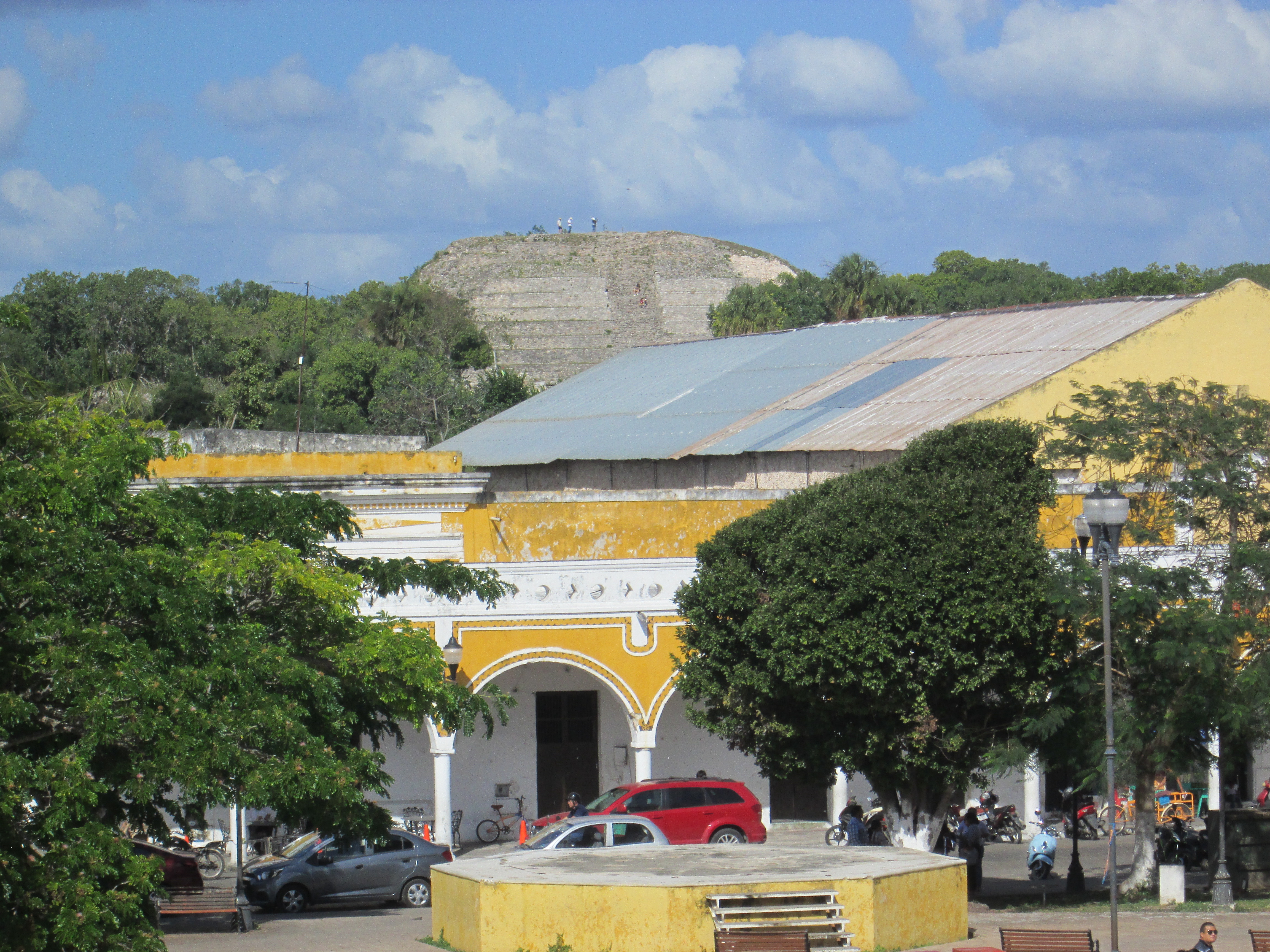
Visible throughout the town are the ruins of ancient Maya structures, particularly the Pyramid of Kinich Kakmo, which is visible from the church:

The Pyramid of Kinich Kakmo Seen from the Church

The church at Izamal is notable for the large size of its footprint, supposedly the second biggest in all of Christendom after St. Peter’s in Rome—and also for two church figures associated with the town. The first is the Franciscan Diego de Landa who is both infamous and famous: the former because as Bishop of Yucatán, he ordered the burning of all the Maya codices as heretical, the latter for writing a book which attempted to atone for his crime by writing Relación de las cosas de Yucatán, which helped scholars of our times understand how to read Maya glyphs.

The other figure who stepped into Izamal’s history is Pope John Paul II, who, during his travels, visited Izamal in August 1993 and served Mass there to a crowd numbering in the tens of thousands. According to an article in the Los Angeles Times:

About 3,000 representatives of indigenous groups of the Americas gathered here to meet with the Pope at a 16th-Century Franciscan sanctuary erected atop a Mayan temple to the sun god. By the Vatican’s count, there are 52 million native peoples in Latin America–26 million in Mexico alone.

“Unfortunately, it must be noted that the richness of your cultures has not been duly appreciated. Neither have their rights been respected as peoples and as communities,” John Paul said. “Sin has also cast its shadow on America in the destruction of not a few of your artistic and cultural creations, and in the violence of which you have so often been the object.”

In a 28-minute speech under a merciless tropical sun that wilted his retinue, John Paul singled out some of those communities by name: Guarani, Quechua, Aymara, Nahuatl, Mixtec. And some farther north as well: Apache, Inuit.

The Church of San Antonio de Padua

I spent only one night in Izamal, though I could have spent several days. At the local mercado, a certain Señor Gordo sold two venison tacos with a cold Coke for a grand total of 25 Pesos, about $1.25.


The Russian Connection

Maya Glyphs—Interpreted Thanks to Two Russian Scholars

When I started my travels in Yucatán in 1975, only a handful of Maya glyphs had been deciphered. In fact, one prominent archeologist—J. Eric S. Thompson—was of the opinion that such glyphs as existed were primarily calendrical. Earlier archeologists had deciphered the vigesimal (base 20) numbering system of the Maya as well as the day glyphs for the two calendar systems. But the notion that the glyphs provided names and descriptions of events was considered as far-fetched.  It was Sir J. Eric S. Thompson who felt that ancient Maya was anti-phonetic.

It took two Russians to show that, yes, the Maya did have a history, and that the history was described on commemorative stelae at the various ruins.

Tatiana Proskouriakoff

First came Tatiana Proskouriakoff (1909-1985), born in Tomsk, who spent much of her professional life with Harvard University and its Peabody Museum. It was she who made a key discovery. According to Wikipedia:

Her greatest contribution was considered the breakthrough for Maya hieroglyphic decipherment in the late 1950s and early 1960s. While researching the chronology of changing styles of Maya sculpture, she discovered that the dates shown on the monumental stelae were actually historical, the birth, accession, and death dates for Maya rulers. Analyzing the pattern of dates and hieroglyphs, she was able to demonstrate a sequence of seven rulers who ruled over a span of two hundred years. Knowing the context of the inscriptions, Maya epigraphers were then able to decipher the hieroglyphs.

The next key person was one of her countrymen who had never even seen a Maya ruin first hand:

Yuri Knorozov

It was only after Thompson died in 1975 that the work of Yuri Knorozov came to the fore. During the height of the Cold War, he wrote a paper entitled “The Writing of the Maya Indians” (1963), followed by his own translations of many of the glyphs. His work opened the floodgates. New scholarly works on the Maya archeological sites come with dates, names, and even history.

If you are interested in the subject, I recommend you read Michael D. Coe’s Breaking the Maya Code, Third Edition (2012). The book is dedicated to Knorozov and his work.