Cankles

The Ancient Greeks Certainly Didn’t Like Them

Semonides of Amorgos (floruit 7th Century BC) is by no means the most famous ancient Greek poet. In Richmond Lattimore’s Greek Lyrics, which I read at Dartmouth in a class on ancient Greek literature in translation, there is a brief quote (the rest of the poem has been lost) to the effect that:

A woman thick around the ankles is no good.

There isn’t much literary quality there. In fact, there isn’t much of anything. But there is something about that line from 2,700-2,800 years ago that has somehow survived whereas many plays by Sophocles and Euripides haven’t.

And are men with thick ankles any good? I know that whenever I visit the doctor, she checks my ankles to see whether the blood is pooling there, indicating poor circulation. (I used to have thicker ankles, but over the last several years it’s been OK.)

There is a word in popular parlance describing the phenomenon. The word is cankles, combining the words calf and ankles. My Mom had cankles, but then she did have problems with blood circulation that eventually precipitated fatal heart failure in her 79th year. Based on my Mom and what I have picked up from my own doctors, cankles go with all kinds of bad things relating to the heart.

Now it is possible for cankles to not be related to heart or kidney failure. I just don’t know what else they could signify, other than obesity.



Bulldozing the Past

Statue of Robert E. Lee on His Horse Traveller in Richmond

Liberals sometimes exhibit some nasty, ultimately destructive traits. I am dismayed by the current trend of paving over any tribute to Confederate heroes. Many of these Confederate heroes, I believe, deserve to be commemorated. The Commander of the Army of Northern Virginia, Robert E. Lee, was by his lights a good man. So what if he owned slaves? He was a great military leader. Given what he had to work with, he was better than any general on the winning side.

General Braxton Bragg, after whom Fort Bragg is named, was nowhere near as deserving as Lee, but he was no ogre deserving only of ignominy. Even the memory of Nathan Bedford Forrest, the greatest cavalry general of the Civil War and the founder of the Ku Klux Klan, deserves to be honored—for some things.

There are no statues honoring Henry Wirz, the Swiss-born commandant of Andersonville Prison, who was the only Confederate officer hanged for murder after the war—and deservedly so.

I love reading about the War Between the States, and I honor the memory of the South’s greatest generals. Why mess with statues honoring them? Why change the name of Fort Bragg? Why ban the Confederate battle flag on NASCAR vehicles and displays? I am perfectly willing to coexist with history, even if some of my political allies are not.

Christopher Columbus Is Also in Danger of Having His Reputation Erased

Christopher Columbus is being eclipsed for the same reason. Again, by his lights, Columbus behaved like most Europeans loose in the New World. He was not an extraordinarily bad man like Pedro de Alvarado or Nuño Beltran de Guzmán, whose bloody careers led to the death of thousands of Mexican and Central American natives. I might not recognize Columbus Day as a major holiday, but few people do. But any attempt to blot out the history of his times only does all of us a disservice.

Who’s next to go? Thomas Jefferson? Abraham Lincoln? Where does it all stop?


More Evil Than Trump

Yes, There Are Forces in America Even More Evil

I have friends who think that all that needs to happen for the good times to come again is for President Squid Lips to be ignominiously defeated and face a lifetime of legal actions arising from his grotesque corruption. But there are worse things to fear.

Most particularly, the people who support Trump are still around. These are the Ayn Rand followers, the ignoramuses of Flyover Country, the rich who want government to make them more rich, the racist haters, the sociopathic gun-lovers, and Confederates who refuse to recognize the surrender at Appomattox. Worst of all are the billionaires and millionaires, the heads of corporations whose sole political principle is self-aggrandizement. Even if the Trumpster dies in office from Coronavirus or STDs or just plain rotting from the inside just like Herod, the people who put him in office are still around. People like the “My Pillow” guy or the various criminals who occupy seats in the cabinet, the Barrs, the Mnuchins, the DeVoses.

Whatever happens to Trump, the United States is in for a long fight to protect their voting rights and their livelihoods and—in the case of African-Americans—their lives.

Election day is only a few months away. The Current Occupant will resume his red-hat rallies in Tulsa (scene of a 1921 massacre of blacks) on June 19 (or Juneteenth, commemorating the emancipation of slaves in Texas). With luck, his cohorts and co-conspirators will dwindle away between now and November—but don’t count on it!


Plague Diary 27: An Irish View

Giorgio De Chirico Landscape with Train in Distance

It was in a survey of impressions of the global coronavirus outbreak tin the April 23, 2020 issue of the New York Review of Books hat I saw this remark by Northern Irish Poet Nick Laird:

The prophecies arrive: hundreds of thousands of dead, trillions of dollars spent, millions and millions losing their jobs, their health care, their homes. Soldiers on the streets. Each graph, each blank statistic. Each talking head. Stick a fork in the ass of civilization, it’s done. Don’t be silly, this is a blip. I don’t think so. In the stream of news the poems sit like stones, lambent under the surface. Auden’s “Gare du Midi,” where the man with his little case alights from the train, and steps out “briskly to infect a city/Whose terrible future may have just arrived.”

And here’s the poem to which Laird refers:

A nondescript express in from the South,
Crowds round the ticket barrier, a face
To welcome which the mayor has not contrived
Bugles or braid: something about the mouth
Distracts the stray look with alarm and pity.
Snow is falling, Clutching a little case,
He walks out briskly to infect a city
Whose terrible future may have just arrived.


A Tribute, Sort Of

David Foster Wallace (1962-2008)

Sometimes I think that David Foster Wallace was the type of writer I should have decided to dislike. Even though I have not ventured into his fiction masterpiece, Infinite Jest, I find myself so liking his essays and speeches that I am consciously rationing his work as if it were a delicacy that was doomed to disappear. Doomed like its author, who after years of depression and unhappiness hanged himself from one of the rafters of his house at the age of 46.

Just because much of his life was a horror story does not invalidated his brilliance or his humor, even though it could not save him.

I have just finished reading his book of essays entitled A Supposedly Fun Thing I’ll Never Do Again. The title essay runs for about a hundred pages and contains some 137 footnotes which are priceless about 7NC (7 Night Caribbean) passenger cruises and the people who taken them, as well as the people who conduct them. Many of DFW’s pieces are footnoted, though I suspect the magazines in which the essays originally appeared probably excised them with editorial exasperation.

My favorites of the seven essays were about tennis, the films of David Lynch, the Illinois State Fair, and, of course, the Caribbean cruises. I have also read his later collection, Consider the Lobster, which I also loved.

Over the next several months, god willing, I will tackle his fiction.


Trading Bubble Gum Cards

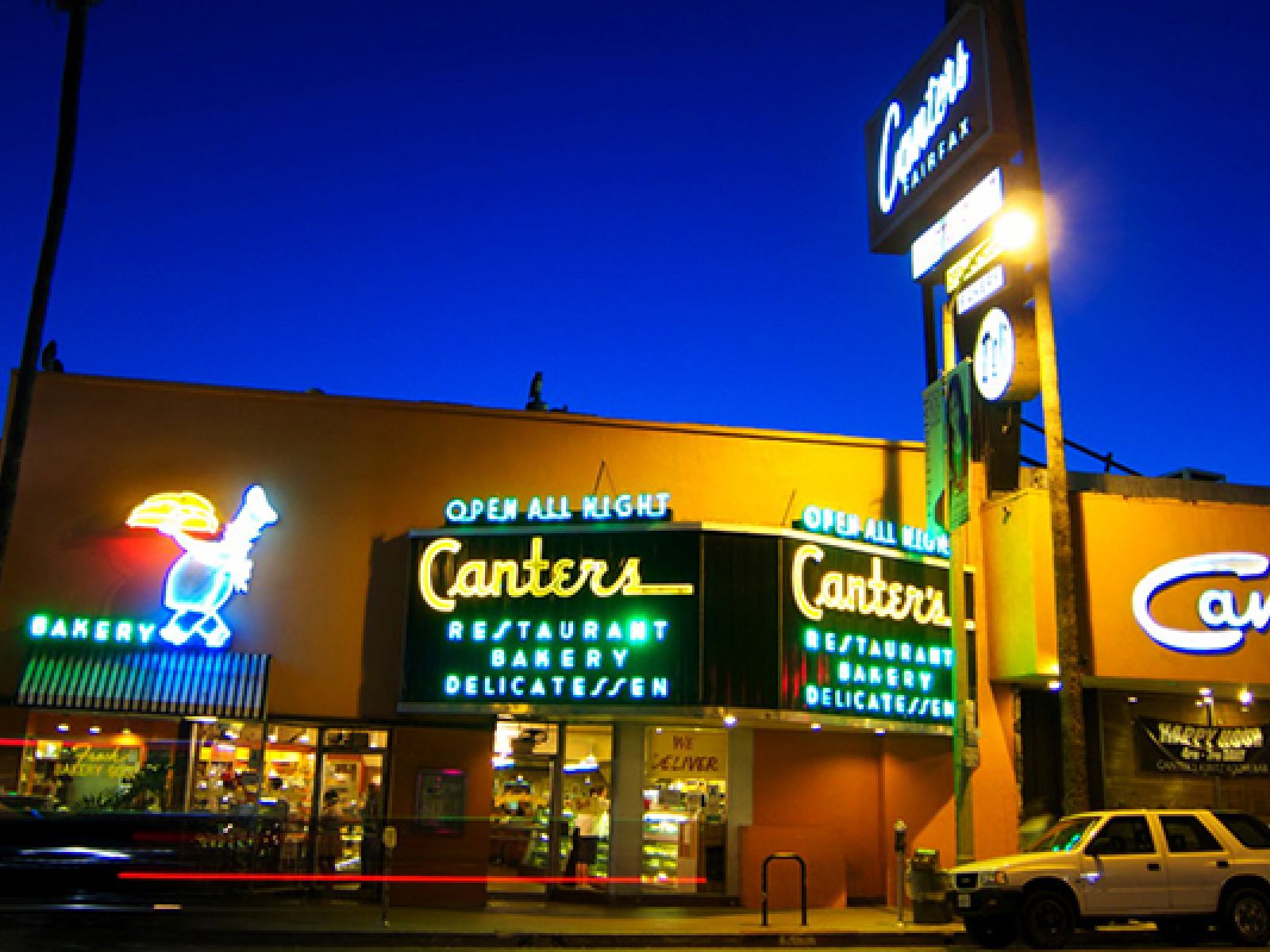
Canter’s Deli on Fairfax

When the restaurants in L.A. started to open, Martine and I decided to go for our first restaurant meal in three months to Canter’s Deli on Fairfax. So on Saturday we actually found space in the deli’s postage-stamp-sized parking lot and wandered in wearing our required face masks. I ordered half of a pastrami sandwich on rye on a cup of bean and barley soup with iced tea. Martine had knockwurst and beans. We shared a plate of kosher dill pickles.

Okay, so it wasn’t a romantic choice; but my patronage of the deli goes back more than half a century. When I went to see movies with my film freak friends, we usually stopped for a late night feed at Canter’s, which at the time professed to be open all night but usually wasn’t. Over a corned beef sandwich or a plate of kasha varnishkes, we argued about which movies were super great and which were shit. These conversations were sometimes heated, as film freaks can be counted on to be opinionated. I referred to these sessions as “trading bubble gum cards,” as they were pretty juvenile.

Two of the friends I went to Canter’s with—who curiously were the most dogmatic in their positions—are no longer with us. Norman Witty died in 2013, and Lee Sanders in 2015. In a way, I miss those days when our opinions meant so much to us. Now, even when discussing even the greatest films, I am more inclined to shrug differences off. (Maybe that’s why I’m still alive.)

Martine and I enjoyed our meal. I know we were putting ourselves at risk, but we were impatient to return to normality even for a short time. As the coronavirus threat dies down, we will return more frequently; but however good Canter’s is, it’s not worth sacrificing our life for their food.


Serendipity: That Professional Smile

Why I Could Never Become a Salesman

Watch TV and you will see them by the hundreds: Actors with that professional corporate smile. Everything is fine. There are no negatives. Well, that’s not me. Let me greet you with a suspicious scowl. I don’t know you and I have no reason to send a ray of sunshine up your ass. I was always good at what I did, but I was hopeless as a salesman. (That never bothered me as that was not my intention.) The following is a long footnote from David Foster Wallace’s long essay on taking a Caribbean cruise for the first time, entitled “A Supposedly Fun Thing I’ll Never Do Again.”

This is related to the phenomenon of the Professional Smile, a national pandemic in the service industry; and no place in my experience have I been on the receiving end of as many Professional Smiles as I am on the [cruise ship]: maitre d’s, Chief Stewards, Hotel Managers minions’ , Cruise Director—their P.S.’s all come on like switches at my approach. But also back on land at banks, restaurants, airline ticket counters, on and on. You know this smile—the strenuous contraction of of circumoral fascia w/ incomplete zygomatic involvement—the smile that doesn’t quite reach the smiler’s eyes and that signified nothing more than a calculated attempt to advance the smiler’s own interests by pretending to like the smilee. Why do employers and supervisors force professional service people to broadcast the Professional Smile? Am I the only consumer in whom high doses of such a smile produce despair? Am I the only person who’s sure that the growing number of cases in which totally average-looking people suddenly open up with automatic weapons in shopping malls and insurance offices and medical complexes and McDonaldses is somehow causally related to the fact that these venues are well-known dissemination-loci of the Professional Smile?


Plague Diary 26: The Latin American Hot Spot

Covid-19 Still Rages in Latin America

I was disappointed to hear that Latin America is still considered a global hot spot for the Coronavirus, particularly Brazil, Peru, and Mexico. According to a bulletin issued yesterday by the U.S. Embassy in Mexico City:

The number of confirmed and suspected cases is still increasing daily in several regions of Mexico. Mexico City, Tabasco, Sinaloa, Aguascalientes, and Yucatan currently report the highest incidence rates of active cases (incidence rate is the number of cases per 100,000 inhabitants in the last 14 days). Hospital occupancy rates are also increasing, with the highest levels in Mexico City, Mexico State, Guerrero, Morelos, and Chiapas. Mexican health authorities have reiterated calls for people to stay home during this time.

Since I would love to re-visit Yucatán and Chiapas, this comes as bad news if i wanted to leave the country for my vacation. More and more, I think I will have several short vacations this year in the Southwestern U.S.


Fun on the Dunes of Arrakis

Poster Art for David Lynch’s Dune (1984) with Kyle MacLachlan

I think it is part of the human condition to fall in love with a book or song or film that one knows is not altogether up to snuff. In suchlike manner do I love the Dave Robicheaux novels of James Lee Burke, Annie Lennox and the Eurythmics singing “Sweet Dreams,” or David Lynch’s magnificent near-miss epic, Dune, based on the Frank Herbert novel of the same name.

Yesterday I saw Dune for the nth time, loving every minute of the film which its director disavowed because he did not get final editing rights. Having read the novel twice, I knew that there were unpardonable lacunae in the story, but I didn’t care. I felt that Lynch managed to get at the heart of the characters, even though he claims not to have read the book.

Alia of the Knife in Dune, Played by Alicia Witt

Please do not confuse my strange taste for any love of camp or any other such outmoded sensibility. The things I like about Dune are not its imperfections, but how close Lynch comes to pulling it all off.

Come to think of it, I feel that way about two other film epics directed by Anthony Mann that have received scant critical praise, including The Fall of the Roman Empire (1964) with Sophia Loren and Stephen Boyd and El Cid (1961) with Charlton Heston and Sophia Loren. Like Dune, both Mann films were vitiated by the penny-pinching producers, but had some excellent bits.

Every director worth his salt has in his filmography films that have ended up as heartbreaks. Think of Orson Welles’s whole career after Citizen Kane, the late works of Josef Von Sternberg (after his Marlene Dietrich masterpieces), Stanley Kubrick’s Spartacus, and Akira Kurosawa’s Dodes’ka-den, over which the filmmaker attempted suicide.

It seems that imperfection is part and parcel of movie-making—perhaps because it is an art form that involves large crowds of people.

Unexpected Angels

Young Volunteers Removing Graffiti

In general, I am not one to praise the younger generation—probably because they have adopted too many aspects of our culture which I find spurious, including smart phones, e-scooters, and in fact the whole gig economy.

Imagine my surprise when I found many young men and women cleaning up the mess in Santa Monica after the looters and other thugs had their way last Sunday. Okay, I guess I was a little tough on them, but after all they shouldn’t ought to have have stepped on my lawn.

More Graffiti Cleanup

I have always loved the look of Santa Monica. In 1966, when I moved into an apartment on Sunset Boulevard near Barrington Avenue, the first trip I took on my own was by bus to Santa Monica and its beach. After having been raised in grungy Cleveland with its dirty red brick, I saw Santa Monica as a pretty town at the edge of the sea. In Cleveland, we had no beach to speak of along the shores of poor, polluted Lake Erie. For many years, I lived in Santa Monica, until I was squeezed out around 1979 when Proposition 13 was adopted by the voters of California. Still, I live within two and a half miles of the ocean and I like to walk there from time to time.