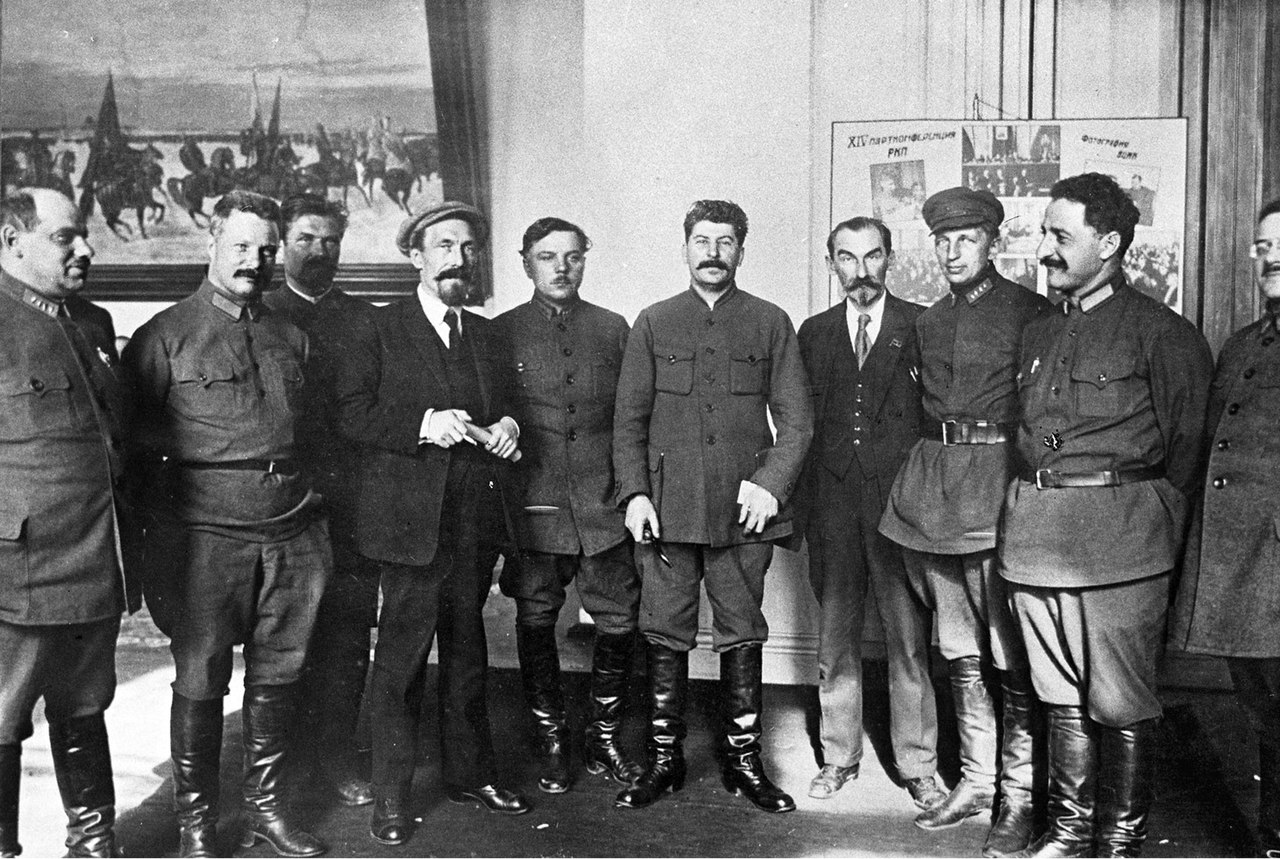
Mount Trumpmore

Oh Great, That’s All We Needed!

If our current president were to get his face of Mount Rushmore, as he has urged, it would be tantamount to painting over the Sistine Chapel with a convocation of demons.

It is the opinion of most right-thinking Americans that Trump deserves no more than a footnote in the history books, similar to the contribution of Aaron Burr (who actually made it to the vice presidency in Thomas Jefferson’s first term) and Benedict Arnold and perhaps the fictional Man Without a Country. Will there be a Trump presidential library? (If there were, it would consist mostly of Tweets and executive statements of dubious legality.) When George W. Bush was in office, I mused that his Prezidenchul Lie-Berry wouldn’t amount to much. Trump’s would be even more laughable.

Think about it: What would be the legacy of Trump? Once you get past the corruption, the braggadocio, the conspiracy theories, and the outright lies, there wouldn’t be much else left. So sad.

When the Emperor Nero was forced to commit suicide by his enemies, he is said by Suetonius to have exclaimed “Oh what an artist dies in me!” I cannot help but think that sounds like our man in Washington, or is it Mar-a-Lago?


Serendipity: The Age of Kali

The Goddess Kali Is Not the Most Welcoming of Hindu Deities

I have just started reading William Dalrymple’s The Age of Kali: Indian Travels & Encounters. He uses the story of Kali as a parallel to what is happening in India as of 1998, when the book was published. I find the following paragraphs from the Introduction an interesting warning for Americans in the age of Trump and rampant Republicanism.

The book’s title [The Age of Kali] is a reference to the concept in ancient Hindu cosmology that time is divided into four great epochs. Each age (or yug) is named after one of four throws, from best to worst, in a traditional Indian game of dice; accordingly, each successive age represents a period of increasing moral and social deterioration. The ancient mythological Golden Age, named after the highest throw of the dice, is known as the Krita Yug, or Age of Perfection. As I was told again and again on my travels around the Subcontinent, India is now in the throes of the Kali Yug, the Age of Kali, the lowest possible throw, an epoch of strife, corruption, darkness and disintegration. In the Age of Kali the great gods Vishnu and Shiva are asleep and do not hear the prayers of their devotees. In such an age, normal conversations fall apart: anything is possible. As the seventh-century Vishnu Purana puts it:

The kings of the Kali Yug will be addicted to corruption and will seize the property of their subjects, but will, for the most part, be of limited power, rising and falling rapidly. Then property and wealth alone will confer rank; falsehood will be the only means of success in litigation. Corruption will be the universal means of subsistence. At the end, unable to support their avaricious kings, the people of the Kali Age will take refuge in the chasms between mountains, they will wear ragged garments, and they will have too many children. Thus in the Kali Age shall strife and decay constantly proceed, until the human race approaches annihilation.


America Subterranean

This Is a Book That Got Me Thinking

I have just finished reading a book recommended to me by my friend Suzanne: Tara Westover’s Educated. Ever since 2016, I have been pondering what it is about the United States of America that gives rise to all these anti-governmental splinter groups that are directly or indirectly associated with Trump’s base.

Tara is an attractive young woman who was raised in a small town in Franklin County, Idaho, of a Mormon survivalist parents. Her father ran a junkyard; and her mother, starting out as a midwife, became a producer of essential oils called Butterfly Express. What the author describes is almost an archetypal experience of a religiously conservative familial craziness:

  • The father is a staunch survivalist who collects guns, including one that could shoot down helicopters such as those involved in Ruby Ridge.
  • Insists that all the children be home-schooled and work in the family junkyard and essential oil business.
  • Doctors and hospitals were to be avoided. Instead, Mrs Westover effected all cures using natural remedies.
  • There was an emphasis on the Old Testament (and, in Tara’s case, The Book of Mormon).
  • Women were expected to dress modestly lest they be considered sluts.
  • There was no involvement with government. Tara did not get her birth certificate until she was nine. (She was born at home.)
  • The males in the family tend to be bullies that enforce compliance with their fringe beliefs.

Tara Was Not Only Smart, But Tough As Nails

Somehow, Tara showed that she had the brains despite her desultory home schooling to get into Brigham Young University, and then Cambridge University in England and Harvard, where she got her PhD.

I don’t normally read best sellers, but Educated was an exception that was definitely worth reading. There was something about her upbringing which was truly horrifying, such as the repeated life-threatening auto and junkyard accidents that had to be dealt with using only the mother’s natural remedies. Today, Tara Westover is no longer in touch with her parents. She, for one, managed to escape.


John Donne’s Last Poem

John Donne (1572-1631)

The last poem by John Donne, written while he was dying, is one I have read and analyzed many times since I first encountered in college. It’s rather somber, but also magnificent. I have included notes at the end.

Hymn to God My God, in My Sickness

Since I am coming to that holy room
Where with thy choir of saints for evermore
I shall be made thy music, as I come,
I tune the instrument here at the door,
And what I must do then, think here before.

Whilst my physicians by their love are grown
Cosmographers, and I their map, who lie
Flat on this bed, that by them may be shown
That this is my southwest discovery [1]
Per fretum febris [2], by these straits to die [3].

I joy that in these straits [4] I see my west [5];
For though their currents yield return to none,
What shall my west hurt me? As west and east
In all flat maps (and I am one) are one,
So death doth touch the resurrectión.

Is the Pacific Sea my home? Or are
The eastern riches? Is Jerusalem?
Anian [6] and Magellan and Gibraltar,
All straits, and none but straits, are ways to them,
Whether where Japhet dwelt, or Cham or Shem [7].

We think that Paradise and Calvary,
Christ’s cross and Adam’s tree, stood in one place.
Look, Lord, and find both Adams met in me;
As the first Adam’s sweat [8] surrounds my face,
May the last Adam’s blood my soul embrace.

So in his purple wrapped, receive me, Lord,
By these his thorns give me his other crown;
And as to others’ souls I preached thy word [9],
Be this my text, my sermon to mine own:
Therefore that he may raise, the Lord throws down.

[1] The southwest discovery is the passage to the Pacific through the Straits of Magellan.
[2] Literally, “through the straits of fever.”
[3] After passing through the straits named after him, Ferdinand Magellan died in the Philippines.
[4] Note how Donne uses the word not only in its literal geographic sense, but also meaning a difficult passage.
[5] West is the direction of the sunset and south the direction of fever.
[6] The Bering Strait.
[7] The sons of Noah, referring to Europe, Africa, and Asia respectively.
[8] Part of his punishment for his disobedience.
[9] Donne was Dean of St. Paul’s Cathedral.

On Taking Surveys

’Tis the Season

Now that we are coming up on another presidential election, my telephone is ringing with invitations to join “Town Halls,” whatever those are; and my inbox is full of invitations to participate in political surveys. In my old age, I have become skeptical to the nth degree. When people in front of supermarkets approach me with clipboards in hand, I wave them away.

To me, participating in a democracy means voting—but not necessarily submitting to a whole slew of ancillary events whose main thrust is to change my mind. Today, I received an e-mail that let me know right up front that I might be too quick to support Joe Biden. Thank you, Mr. Putin!

I know for a fact that the Orange King (no names, please!) is going to be in big trouble when he no longer has access to the power of the presidency. Strange things are happening: The U.S. Postal Service is being gutted to discourage mail-in ballots. That, despite the fact that the Donald himself has voted by mail in the past. Now it is too subject to fraud. Well, yes, everything is subject to fraud that that man touches.

Why do I feel that we have all taken democracy for granted? All one has to do is to elect a corrupt megalomaniac to office before the ground appears to disappear from under one’s feet.


Childless

I Was Fated Never to Be a Parent

So much of my life has been affected by a brain tumor that I had roughly between the ages of ten and twenty-one. Because the tumor—a chromophobe adenoma—controlled my sex hormones, I was potent, but quite sterile. I did not discover until some ten years ago that it was theoretically possible for me to have children’ but by then I was sixty-five years old, and I was in a relationship with Martine, who did not want to bear children for reasons of her own. (In fact, she made me get tested to verify that I could not impregnate her.) So I just resolved to accept my childlessness without complaint.

My friends and acquaintances would always use the same four-word phrase, telling me, “You could always adopt.” I have friends who have done this, but it is not always an easy road. My answer to this suggestion sometimes turned people off: “I don’t want to be responsible for other people’s mistakes.” When I said that to one cute co-worker named Alexis, she hung up on me in exasperation.

I know that raising a child is a long term commitment; but I also know myself, that I would not necessarily be willing to make the sacrifice if the child were not of my blood. If that makes me a bad person, then I must reluctantly admit that I am a terrible person. Better that, sometimes, than making my life and that of my partner possibly a living hell. Sure, the reward can be great, but I have seen cases where it wasn’t.

There was another factor: At times I have a savage temper like my father did. Since I was childless for so many years, I am sometimes not patient with the behavior of children who misbehave. I suspect I might behave as my father did—by swatting the child. In these times, that is considered child abuse.


At the Last Bookstore

The Mystery and Sci-Fi Section

Since the beginning of quarantine, I had only been Downtown once. It wasn’t pleasant because I couldn’t find anywhere to eat, and unless I went to Union Station, there were no restrooms around. Today I decided to go again, mainly to return three books to the Central Library. Although they were not technically due until next month, I thought that as I had finished reading them, I might as well take them back.

Also, I put a hold on three more books which I could pick up at the front of the library once I had been e-mailed that they were available. That would be a big plus, even though I still miss sitting down in the literature section for a few hours reading.

Afterwards, I stopped at the Last Bookstore at 5th and Spring Streets. Last time I went, it had been closed due to the coronavirus. Now it was open, but they did one thing that I liked. Before the virus, the place was crawling with young pseudosophisticates who didn’t care about the books, but took hundreds of pictures with their smart phones to document their spavined lifestyles. Now one has to pay five dollars for admission, which is refunded from the price of books purchased.

I can just imagine it now: What? I have to buy books? Reading is so lame compared to the wonders of my smartphone.

It presented no obstacle to me: I bought five paperbacks. They included three Dave Robicheaux mysteries by James Lee Burke, André Gide’s If It Die, and Isaac Bashevis Singer’s Gimpel the Fool.

As soon as I receive notification that my books are being held for me at the Central Library, I’ll make another trip downtown. And I will likely drop in at the Last Bookstore.


My Muses Part 1

Rita Tushingham

I had always viewed myself as something of an ugly duckling. In grade school, I was always close to being the shortest kid in class. Also, I was always a bit on the scruffy side—and I still am. So when I wound up in college, some six hundred miles from home (and me never having been more than a few miles from home before), I found myself gravitating toward the movies.

The first film I saw projected at Dartmouth’s Fairbanks Hall was Carl Dreyer’s Day of Wrath (1943), a film about witchcraft that got me started thinking about film as an art form. I was particularly impressed by the Danish actress Lisbeth Movin, who plays a young witch married to a minister. I don’t think I had ever seen an actress quite so beautiful. Now, some sixty years later, I still think of her as radiant.

Lisbeth Movin in Dreyer’s Day of Wrath

I was always enthralled by the beauty of certain actresses, even though I felt like Caliban in front of most girls. At the time, Dartmouth College had only male students; so I was relatively safe from making a fool of myself.

My next “muse” was Rita Tushingham who made a big impact on me during the 1960s.

Another View of Lovey Rita

Her eyes were so close together under her bangs, and her nose was the perfect ski jump, but I was enthralled. She had been described by some in the press as “ugly,” but I did not think so. According to an article in the guardian, “A New York Times reporter who met her described her as ‘a slip of a girl, her uncosmeticised face framed in straight dark hair, wearing a sweater and jeans, with those enormous eyes incessantly expressive even when the rest of the small face disappeared behind a big yellow coffee cup.’”

I think it was the eyes that did it. I have always been a sucker for women with eyes that seemed to come to life. Today I saw her first film, Tony Richardson’s A Taste of Honey (1961). She was to appear in other 1960s productions such as The Girl with Green Eyes (1964) and Doctor Zhivago (1965), but it was that gamine Rita of the 1960s that I so dearly loved.

Lend-Lease

American M3 Lee Tank Used by Russians in WW2

I have just finished reading David M. Glantz and Jonathan M. House’s The Battle of Kursk, probably the authoritative study of the campaign that turned the tide on the Eastern Front against the Germans. (For some reason, I always spend part of every summer boning up on military history, particularly the American Civil War, the Roman legions, and the Second World War on the Eastern Front.)

The Soviets were greatly helped by the Lend-Lease program that provided the non-Fascist combatants in the war with surplus military equipment. Russia was the beneficiary of $11 million worth of war supplies (though Britain got the lion’s share), including planes, tanks, and miscellaneous trucks and other military vehicles. Even Britain and Canada joined in, as shown in the below photo:

British Valentine Tank Earmarked for the USSR

Of course, things didn’t always go smoothly. You might be interested in reading a memo by a Comrade Korobkov relating to miscellaneous problems with the tanks arriving by convoy to Murmansk.

The Glantz book contains a couple of amusing nicknames assigned by the Soviet troops to the gifted tanks. Because of its odd layout and insufficient armor, the M3 Lee was referred to as a “grave for seven brothers.” The unreliable and flammable British Valentine and Matilda tanks were called “field crematoriums.”


Kursk

It Was the Greatest Tank Battle in History

People in the United States know very little about World War Two as it was fought in Europe. The real war in Europe was waged on the Eastern Front, after Hitler invaded Russia in the summer of 1941. At first, it was all blitzkrieg, with German victories on all fronts and horrendous Russian losses. Things began to change after Stalingrad, however, when the entire German 6th Army surrendered to the Soviets.

The next big battle was at the Kursk salient. Hitler and his generals planned to attack the salient from two sides, take Kursk, and trap several Soviet armies. This was the intent of Operation Citadel, as shown in the map below:

Operation Citadel as the Germans Planned It

The German General Staff thought the Russians would take fright at the Nazis’ technologically superior tanks and surrender in droves. But the Russians—beginning with Stalin himself—learned their lesson in 1941 and 1942. In July 1943, Stalin realized he had more human and industrial resources to draw on than the Germans. This was similar to Ulysses S. Grant realization during the American Civil War when, after the Battle of the Wilderness, realized that he could afford to take more casualties than Robert E. Lee’s Army of Northern Virginia and still win.

Instead of pinching off the Russians in the salient, General Walter Model advanced only 10 miles on the north, where he was beaten by Rokossovsky’s Central Front. The real battle was in the south, where General Erich von Manstein battled with Nikolai Vatutin’s Voronezh Front over the town of Prokhorovka. Vatutin kept throwing rifle regiments, tanks, and artillery at von Manstein’s Army Group South until, after a 30-mile advance, the Germans could go no further.

The Russians had a very good idea of what the Germans were planning with Operation Citadel, and they had more men (at a 2.5:1 ratio) than the Germans, and more tanks (though not as good). So they planned carefully to fight to the last man, if necessary.

The Battle for Prokhorovka (The Germans in Blue)

By the time Vatutin and Rokossovsky had finished with the German army, there was no more blitzkrieg. Hitler didn’t know it yet, but from this point his armies were in retreat.
.